
Main Courses
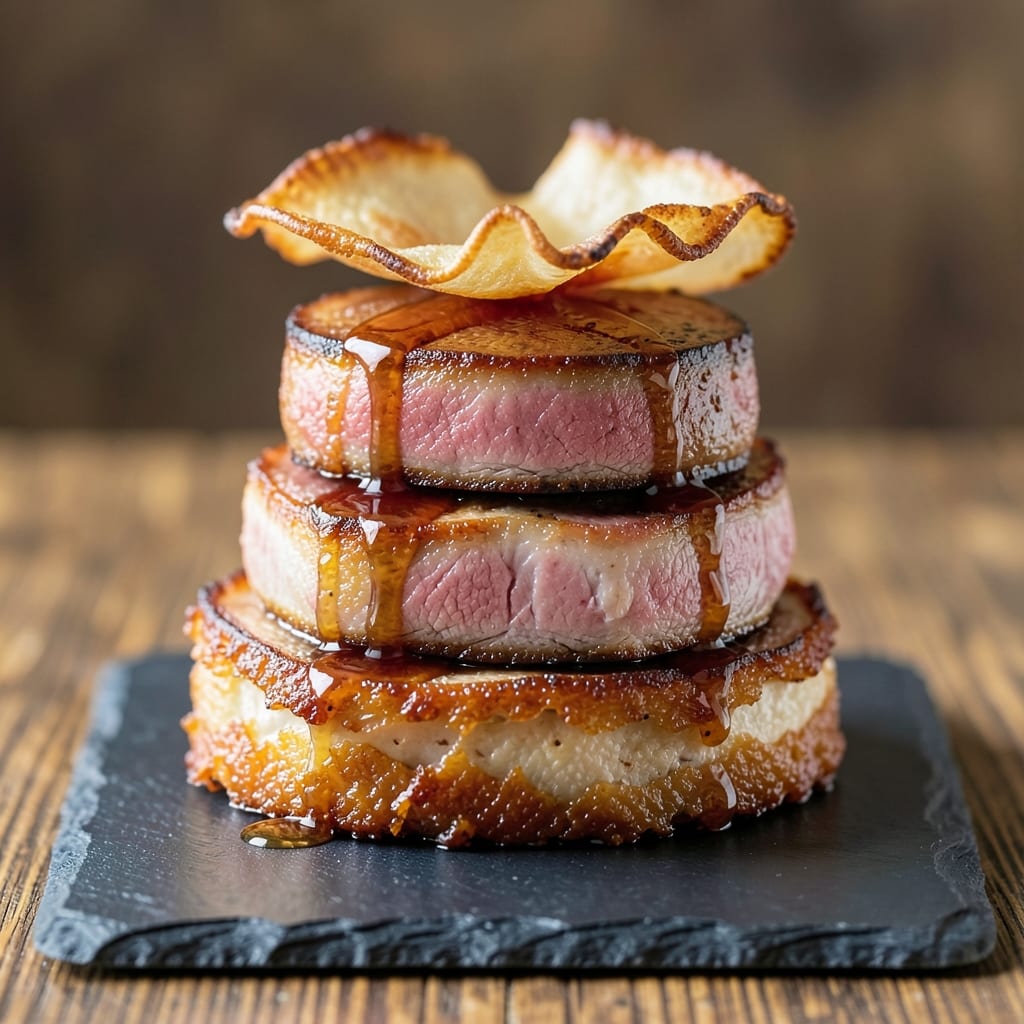
This 3-layer pork recipe delivers a masterpiece that balances texture and flavor in every bite—crispy crackling top, tender juicy center, and sweet caramelized base. 🔥 As a pitmaster who's spent years perfecting pork techniques, I can tell you this method transforms a simple cut into something restaurant-worthy without requiring hours in the kitchen.
The secret lies in layering techniques: first roasting the pork belly for that sweet, sticky glaze, then braising the tenderloin for melt-in-your-mouth juiciness, and finally crisping the crackling with a dry heat finish. Each layer builds on the last, creating depth of flavor and texture that keeps everyone asking for seconds.
What you'll end up with is a showstopping dish that looks as impressive as it tastes—golden crackling that shatters at every bite, succulent pork that falls apart effortlessly, and a rich glaze that adds sweetness without overpowering. The presentation alone makes it perfect for special occasions or when you want to impress guests.
Pair with roasted seasonal vegetables or a crisp apple slaw to complete the meal. This isn't just pork—it's a culinary experience that proves you don't need fancy techniques to create something extraordinary. Let's get cooking with this foolproof method that delivers professional results at home.
Ingredients for 3 layer pork
Six cuts of pork, three distinct textures—crisp, juicy, and caramelized—all coming together for a showstopper.
| Ingredient | Amount | Notes |
|---|---|---|
| Pork Belly (skin-on) 🐖 | 2 lb | Thick-cut, skin left intact |
| Pork Tenderloin 🥩 | 1 ½ lb | Center-cut, trimmed evenly |
| Pork Shoulder (for crackling) 🐷 | 1 lb | Skin-on, rolled tightly |
| Brown Sugar 🍯 | ½ cup | Light or dark variety |
| Honey 🍯 | ¼ cup | Wildflower preferred |
| Apple Cider Vinegar 🍎 | ¼ cup | Unfiltered for depth |
| Garlic Cloves 🧄 | 6 cloves | Minced, fresh preferred |
| Fresh Rosemary 🌿 | ¼ cup | Chopped, stems removed |
| Fresh Thyme 🌿 | ¼ cup | Leaves only, stems discarded |
| Olive Oil 🫒 | ¼ cup | Extra-virgin, fruity |
| Diamond Crystal Kosher Salt 🧂 | 2 tbsp | For curing and seasoning |
| Ground Black Pepper 🌶️ | 1 tsp | Freshly cracked |
| Granulated Garlic 🧄 | 1 tsp | For crackling seasoning |
| Cornstarch 🌾 | 2 tbsp | For crisping crackling |
The pork belly is where the magic starts. Look for thick-cut pieces with a thick layer of fat—this is what gives you that crackling. I always grab mine from Whole Foods or a local butcher shop, where they can cut it to your exact thickness. The tenderloin should be center-cut, not the end pieces, for even cooking. For the crackling, pork shoulder with a thick skin is key—ask your butcher to roll it tightly before you take it home. Fresh herbs matter here: rosemary and thyme from the bulk section have more flavor than pre-packaged sprigs.
No honey? Maple syrup works beautifully—just reduce it slightly to mimic honey's viscosity. Running short on apple cider vinegar? White vinegar or balsamic vinegar will do, though the flavor profile shifts a bit. For the crackling, if you can't find pork shoulder, pork butt with thick skin is your next best bet. The cornstarch is non-negotiable for crispiness—Arrowhead brand is my go-to, but any high-quality cornstarch works. And if you're worried about the pork belly being too fatty, don't be: the fat renders out beautifully during roasting, creating that luscious glaze.
The pork belly and shoulder keep best in the fridge for 3-4 days if wrapped tightly in parchment paper. The tenderloin is more delicate—use it within 2 days for best results. For the glaze ingredients, store the brown sugar and honey in airtight containers away from light, and the vinegar in its original bottle. The fresh herbs? Wrap them in damp paper towels and store in a sealed bag—they'll last 5-6 days. This recipe is even better the next day, as the flavors meld and the crackling gets even crispier. Portion the crackling into single servings before freezing for up to 3 months—just reheat in a 400°F oven for 10 minutes.
Why You'll Love This Recipe
- One-Pan Magic: I swear by this trick—just layer, roast, and walk away. The pork belly crisps up while the tenderloin stays juicy, all on one sheet pan. No fancy gadgets, no stress.
- Sweet-Savory Crunch: That caramelized honey-brown sugar glaze on the pork shoulder? Chef’s kiss. It’s crispy, sticky, and melts in your mouth—like a hug from a BBQ pit.
- Weeknight & Holiday Star: Serve it sliced for tacos on a Tuesday or as the centerpiece for a Sunday feast. Same recipe, different vibes—because good food shouldn’t be one-trick.
- Leftovers That Don’t Suck: The tenderloin stays tender for days, and the crackling? Even better reheated. I meal prep this like crazy—it’s my go-to for lunchboxes or quick dinners.
Step-by-step instructions for 3-Layer pork recipe
Here's how to build the perfect layered pork masterpiece—crispy crackling on top, tender tenderloin in the middle, and sweet glaze at the base.
🔥 Step 1: Prepare the Sweet Glazed Pork Belly Base
In a small saucepan, combine 0.5 cup brown sugar, 0.25 cup honey, 0.25 cup apple cider vinegar, and 6 cloves minced garlic. Bring to a simmer over medium heat and cook for 5-7 minutes until slightly thickened. This will be your sweet glaze for the pork belly.
While the glaze simmers, score the skin of the 2 lb pork belly in a diamond pattern, cutting down to but not through the fat. Rub the belly all over with 0.25 cup olive oil, then sprinkle with 1 tbsp diamond crystal kosher salt and ½ tsp ground black pepper. Place the belly skin-side down in a roasting pan and pour the warm glaze over it, coating both sides. Let it marinate at room temperature for 30 minutes.
🍳 Step 2: Season and Sear the Pork Tenderloin
In a small bowl, mix 0.25 cup chopped fresh rosemary, 0.25 cup fresh thyme leaves, 1 tsp granulated garlic, and 1 tbsp diamond crystal kosher salt. Rub this mixture all over the 1.5 lb pork tenderloin, pressing it into the meat so it adheres well. Let it sit while you prepare the crackling.
Heat a large skillet over medium-high heat with 1 tbsp olive oil. Sear the tenderloin for 2-3 minutes per side until it develops a deep golden-brown crust. Transfer to a plate and let it rest while you work on the crackling layer.
🥘 Step 3: Create the Crispy Pork Shoulder Crackling
Roll the 1 lb pork shoulder tightly with the skin facing out. In a small bowl, mix 2 tbsp cornstarch with 1 tsp granulated garlic and 1 tbsp diamond crystal kosher salt. Rub this mixture all over the rolled shoulder, focusing on the skin. The cornstarch will help create that perfect crackling texture.
Place the rolled shoulder skin-side down on the pork belly in the roasting pan. You're building your layers from bottom to top: glaze-coated belly, then crackling shoulder, with the tenderloin resting on top. This arrangement ensures the crackling cooks against the belly's fat, creating extra crispiness.
🔥 Step 4: Roast the 3-Layer Pork
Preheat your oven to 325°F. Place the pork tenderloin on top of the shoulder in the roasting pan, arranging it so it doesn't touch the belly directly. This keeps the layers distinct while allowing heat to circulate evenly. Cover the pan tightly with foil and roast for 1 hour and 30 minutes.
After 1 hour and 30 minutes, remove the foil and increase the oven temperature to 400°F. Return the pork to the oven uncovered for 20-25 minutes until the pork shoulder crackling is deep golden brown and the pork belly glaze is bubbling and caramelized. The internal temperature of the tenderloin should reach 145°F.
⏰ Step 5: Rest and Serve with Confidence
Let the entire roast rest for 15-20 minutes before slicing. This resting period is crucial—it allows the juices to redistribute, ensuring each slice is perfectly juicy. The crackling will stay crispy, the tenderloin will hold its shape, and the glaze will remain sticky and sweet.
Slice the pork belly and shoulder into ½-inch thick slices, then arrange the tenderloin slices on top. The contrast of textures and flavors—crispy crackling, tender meat, and sweet glaze—will make every bite unforgettable. Serve with roasted vegetables or a fresh salad to balance the richness.
Pro Tips For Making 3 Layer Pork
- CRISP THE BELLY FIRST: The pork belly’s skin needs time to render fat and crisp—don’t rush it. After scoring, salt it generously (about 1.5 tsp per pound) and let it sit uncovered in the fridge for at least 4 hours, or overnight if you can. This isn’t just about flavor; it’s what turns that skin into shatteringly crisp layers.
- SEAR SHOULDER IN BATCHES: Pork shoulder for crackling won’t brown evenly if you crowd the pan. Cut it into 1-inch cubes, then work in batches—don’t skimp on oil (about 2 tablespoons per batch). If the pan smokes like a campfire, lower the heat slightly and give it time. Rushed searing = greasy, not crispy.
- BRINE THE TENDERLOIN: Pork tenderloin dries out faster than the others, so give it a quick brine: 1 cup water, 1 cup honey, 1 tbsp salt, and 1 tbsp brown sugar per pound. Let it soak for 30 minutes max—just enough to plump it up without turning it into a syrup bath. Pat it very dry before cooking; moisture is the enemy of a good sear.
- LAYER BY DONENESS, NOT SIZE: The tenderloin hits 145°F fast, while the shoulder needs to break down to 195°F. Cook the tenderloin first, then the shoulder, and finish the belly last—it’ll hold heat better. If you’re short on time, pull the shoulder at 190°F, wrap it in foil, and let it rest while you crisp the belly. Timing is everything here.
Wine and beer pairings for this 3 layer pork
Red Wine Pairings
For this rich, layered pork masterpiece, I reach for Pinot Noir from Oregon—its bright acidity and red fruit notes cut through the sweet glaze while complementing the crispy crackling. A 2019 Domaine Serene or La Crema delivers the perfect balance, with hints of cherry and earthiness that echo the rosemary and thyme in the recipe. 🍷
White Wine Options
If you prefer white, Viognier from California shines here—its floral and peach notes harmonize with the honey glaze while standing up to the pork's richness. I love Ramey Wine Cellars Viognier, which has just enough body to handle the dish's depth. For something lighter, a Chardonnay with minimal oak (like Bogle Vineyards) works beautifully with the tenderloin's herbal seasoning.
Beer Pairings
For beer lovers, a Belgian Dubbel like Westmalle Trappist offers malty sweetness that mirrors the caramelized glaze while its spicy notes contrast the crispy crackling. If you prefer American craft, a honey-brown ale (like Allagash Honey Brown) provides just the right touch of sweetness without overpowering the dish. 🍺
Non-Alcoholic Pairings
Don't overlook sparkling options! A sparkling apple cider (like Martinelli's) with a splash of ginger ale creates effervescence that cleanses the palate between rich bites. For something more robust, ginger beer (like Brew Dr. Brown's) adds a zesty kick that pairs wonderfully with the pork's complexity. I often serve this at my farm gatherings when alcohol isn't an option.
Regional Pairing Inspiration
In the Southeast, where I grew up, we'd often pair this dish with sweet tea or peach iced tea—the natural sweetness enhances the glaze while the acidity balances the richness. For a modern twist, try a sparkling peach sangria (with white wine and citrus) that echoes the recipe's sweet-savory profile. The key is matching the drink's sweetness and acidity to the pork's layers.
Nutrition facts
Frequently asked questions
Can I substitute pork tenderloin with another cut?
For the middle layer, you could use pork loin chops (thicker cuts work best) or even bone-in pork chops if you prefer more flavor. Just adjust cooking times—bone-in chops need 15-20 minutes at 375°F to reach 145°F internal temp. The key is maintaining similar thickness to the tenderloin so all layers cook evenly.
Why does the crackling layer need cornstarch?
The cornstarch creates a dry, crisp barrier between the skin and fat that prevents steam from forming during cooking. Without it, the crackling would be soft and chewy. The starch absorbs moisture and caramelizes beautifully when exposed to high heat, giving you that perfect shatter when you bite into it. Use Arrowhead brand for best results—it's finer and crisps better than regular flour.
Can I make this dish ahead of time?
Yes! Assemble the entire layered pork up to 24 hours ahead and refrigerate uncovered. The day of serving, roast as directed but increase the final high-heat phase by 5-10 minutes to restore crispiness. For the crackling alone, you can prep it 3 days ahead—just reheat at 400°F for 10 minutes before serving. The flavors actually improve overnight as the glaze sets.
What's the best way to reheat leftovers?
For the best texture, reheat each layer separately. Wrap the tenderloin slices in foil and warm at 300°F for 10 minutes to keep them juicy. Reheat the crackling layer skin-side down on a baking sheet at 425°F for 3-4 minutes until crisp again. The glaze-coated belly can go in a skillet over medium heat for 2-3 minutes per side—just add a splash of water to deglaze. Never microwave!
How do I adjust this for a crowd?
Double each component proportionally: 4 lb pork belly, 3 lb tenderloin, and 2 lb pork shoulder for 12 servings. Use two roasting pans if needed, and increase oven space by using a second rack. For presentation, arrange slices on a large platter with the crackling on top, tenderloin in the center, and glaze-coated belly around the edges. Serve with extra glaze on the side for dipping!