
Main Courses
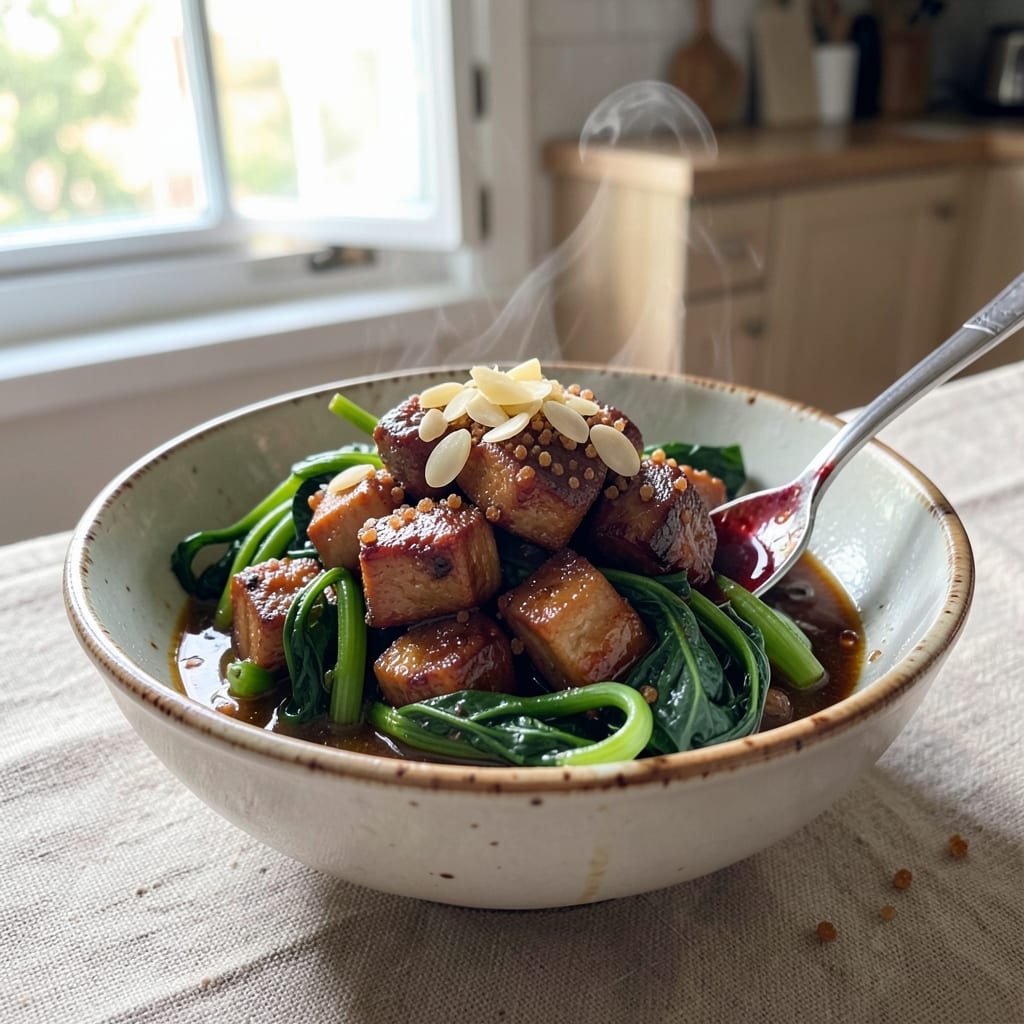
This adobong kangkong recipe with pork brings the bold, tangy flavors of Filipino comfort food to your table with minimal effort. The secret lies in the soy-vinegar braising technique that transforms tender pork into melt-in-your-mouth pieces while keeping the kangkong (water spinach) vibrant and slightly crisp. I first tasted this dish in a Manila kitchen where my Filipino friend swore by the "magic" of balancing sweet, sour, and umami—now I'm sharing that magic with you.
The recipe starts with a quick marinade of soy sauce, vinegar, and garlic that develops deep flavor as it cooks. What makes this dish special is how the pork absorbs the tangy sauce while the kangkong wilts just enough to soak up those rich flavors without losing its natural freshness. The result is a one-pot meal that's hearty enough for a family dinner but simple enough for a weeknight.
By the time you're done, you'll have a steaming pot of tender pork simmered in a glossy, slightly sweet-savory sauce with bright green kangkong that's just tender enough to bite into. The aroma alone will have everyone gathering at the table—it's that good. This dish pairs perfectly with steamed rice to soak up every last drop of that flavorful sauce.
Don't worry if you've never cooked Filipino food before—this recipe is beginner-friendly with clear steps that deliver restaurant-quality results. The key is patience during the simmering process, which allows all the flavors to meld together beautifully. Let's get cooking!
Ingredients for adobong kangkong recipe with pork
Pork, spinach, and vinegar—Filipino magic in one pot. Grab these ingredients for a tangy, umami-packed dinner.
| Ingredient | Amount | Notes |
|---|---|---|
| Pork Shoulder 🍖 | 1 ½ lb | Cut into 1-inch cubes |
| Kangkong (Water Spinach) 🌿 | 1 lb | Trimmed, rinsed well |
| Soy Sauce 🍶 | ½ cup | Dark soy preferred |
| Cane Vinegar 🍶 | 0.3 cup | White vinegar substitute |
| Garlic Cloves 🧄 | 6 cloves | Minced, aromatic |
| Brown Sugar 🍯 | 2 tbsp | Light or dark |
| Bay Leaves 🍃 | 2 whole | Dried, for depth |
| Black Peppercorns 🌶️ | 10 whole | Crushed, for heat |
| Olive Oil 🫒 | 2 tbsp | For searing pork |
| Onion 🧅 | 1 whole | Sliced, for base |
| Green Onions 🌱 | 3 whole | Chopped, for garnish |
| Salt 🧂 | 1 ½ tsp | Adjust to taste |
| Water 💧 | 1 cup | For deglazing |
The pork shoulder is your secret weapon here—it stays tender while absorbing all that tangy sauce. Look for well-marbled cuts at the butcher counter or the meat section of Filipino grocery stores like National Supermarkets if you're near one. If you can't find kangkong (water spinach), regular spinach or bok choy works in a pinch, but it won't have that same signature texture. The soy sauce should be dark—it adds that rich, caramelized depth. If you're using white vinegar as a substitute, add 1 extra tbsp since it's milder. And trust me, the garlic needs to be fresh—none of that jarred stuff.
No dark soy sauce? Regular soy sauce plus 1 tsp molasses gets you close. Running out of cane vinegar? Apple cider vinegar works too, just increase to 0.4 cups. The brown sugar is non-negotiable—it balances the tang, but if you're watching sugar, use coconut sugar instead. For the garlic, I usually smash the cloves with the side of my knife before mincing—releases more flavor. And if your green onions are big, use the white parts for cooking and save the greens for garnish. The onion? Slice it thick—it'll soften as it cooks, adding sweetness to the sauce.
This dish tastes even better the next day—honestly, the flavors meld overnight. Keeps for 3-4 days in the fridge, and freezes beautifully for up to 3 months. I always make a double batch because it disappears fast. Store the sauce separately if you want to reheat just the pork—it reheats best with a splash of water to loosen it up. And if you're serving with rice, cook extra. Everyone will want seconds.
Why You'll Love This Recipe
- One-Pan Magic: I swear by this recipe on busy nights—just toss pork shoulder, kangkong, and the sauce in one pot, and walk away. That vinegar-soy punch does all the work while you sip your coffee.
- Umami Bomb: The garlic cloves sizzling in oil until they’re deep golden? That’s when the real magic happens. The pork stays tender but firm, and the kangkong soaks up the tangy-savory sauce like a dream.
- Leftover Hero: This dish actually improves the next day—pork gets even more flavorful, and the greens wilt just enough to make it heartier. I meal prep this all the time; it’s my go-to for lazy lunches.
- Budget Winner: Pork shoulder is cheap, kangkong grows wild in many places, and the rest of the ingredients? Pantry staples. You’ll spend less than $10 for a meal that feeds four and still leaves you wanting more.
Step-by-step instructions for adobong kangkong with pork
Here's how to create this comforting Filipino dish with tender pork and vibrant greens.
Sear the Pork Shoulder for Deep Flavor
Heat a large pot or deep skillet over medium-high heat. Add the 2 tablespoons olive oil and let it get hot but not smoking. Working in batches if needed, add the 1.5 lb pork shoulder cut into 1-inch cubes, leaving space between pieces. Let them sear undisturbed for 3-4 minutes until they develop a rich golden-brown crust.
This searing step is crucial—it locks in juices and builds the foundation for that deep, savory flavor. Once browned on all sides, transfer the pork to a plate and set aside. You'll notice the pork releases its own juices as it cooks, creating a flavorful base in your pot.
Build the Tangy Soy-Vinegar Base
In the same pot, add the 1 whole sliced onion and cook for 3-4 minutes until softened and slightly golden. Stir in the 6 cloves minced garlic and cook for 30 seconds until fragrant—don't let it burn, or you'll get bitter flavors.
Pour in the 0.5 cup soy sauce and 0.3 cup cane vinegar, scraping up any browned bits from the bottom of the pot. Add the 2 tablespoons brown sugar, 2 whole bay leaves, and 10 whole crushed black peppercorns. Stir well to combine all ingredients, then add the 1 cup water. Bring the mixture to a gentle simmer.
Braise the Pork Until Tender
Return the seared pork to the pot, spooning the sauce over the top to coat it completely. Bring everything back to a simmer, then reduce the heat to low. Cover the pot and let it cook for 1 hour to 1 hour 15 minutes, stirring occasionally, until the pork is fork-tender and easily pulls apart.
Here's where patience pays off—the longer you braise, the more tender and flavorful the pork becomes. You'll know it's ready when the meat separates easily and the sauce has thickened slightly. Keep an eye on the liquid level—if it gets too low, add a splash of water to prevent drying out.
Cook the Kangkong Until Vibrant
Once the pork is tender, add the 1 lb trimmed kangkong (water spinach) to the pot. Stir gently to distribute it evenly among the pork pieces. Cover and cook for 5-7 minutes until the kangkong is bright green and just wilted—it should still have a slight bite to it.
Overcooking the kangkong will turn it mushy, so watch it carefully. The vibrant green color indicates it's still fresh and cooked just enough to soften slightly. The spinach will absorb the rich, tangy flavors from the braising liquid, creating that perfect balance of textures and tastes.
Finish and Serve with Fresh Herbs
Remove the 2 whole bay leaves from the pot. Taste the sauce and adjust the seasoning with the 1.5 teaspoons salt if needed. The dish should be balanced between sweet, salty, tangy, and savory flavors. Stir in the 3 whole chopped green onions just before serving to add a fresh, bright finish.
Serve the adobong kangkong hot, straight from the pot. The tender pork pieces should be swimming in that rich, slightly thickened sauce, with the kangkong adding a pop of color and freshness. This dish tastes even better the next day as the flavors meld together, so consider making extra for leftovers!
Pro Tips For Making Adobong Kangkong Recipe With Pork
- CUT PORK IN STRIPS FIRST: Pork shoulder’s fat renders better in thin slices—about ½-inch thick—so it cooks faster and stays tender. I used to cube it like stew meat, but this way, the vinegar and soy sauce penetrate evenly without turning the meat rubbery.
- BLANCH KANGKONG UNTIL WILTED: Drop the water spinach into boiling water for exactly 30 seconds—just until the leaves soften but stay bright green. Overcooking turns it mushy, and undercooking means you’ll be chewing on tough stems. Drain immediately and shock in ice water to stop cooking.
- SIMMER LOW OR THE VINEGAR BOILS OFF: High heat makes adobo taste flat because the vinegar evaporates too fast. Once the pork and sauce come to a boil, drop the heat to medium-low and let it bubble gently—this keeps the tang sharp and the sauce glossy. I learned this after a batch tasted like soy sauce soup.
- USE GARLIC OIL FOR DEPTH: Sauté minced garlic in 1 tablespoon oil until golden (not brown) before adding the pork—this adds nutty flavor without burning. Skip the raw garlic toss at the end; the heat develops its sweetness better this way. (Yes, even if you’re impatient like me.)
Pro cooking tips for this recipe
Soy-Vinegar Browning
The magic of this dish starts with the soy-vinegar braising technique, where the pork develops a beautiful caramelized crust from the soy sauce while the vinegar keeps the meat tender. I always use dark soy sauce for that rich color—it's worth tracking down at Asian markets or ordering online. The vinegar should be cane vinegar if possible, but apple cider vinegar works in a pinch. The key is to let the pork sear first to build deep flavor before adding the acidic components. 🍶
Pork Timing Secrets
Don't rush the braising—1 hour to 1 hour 15 minutes is non-negotiable for tender pork. I test doneness by piercing a piece with a fork; if it separates easily, it's ready. For extra flavor, I sometimes add 1 tbsp fish sauce during the last 10 minutes of cooking. The sauce should coat the back of a spoon by the end. If it's too thin, uncover and simmer longer to reduce it.
Kangkong Perfection
Water spinach (kangkong) needs gentle handling—add it just when the pork is tender and cook for only 5-7 minutes. Overcooking turns it mushy, which ruins the dish. I like to blanch it first for 30 seconds in boiling water, then shock in ice water before adding to the pot. This keeps it vibrant and slightly crisp. If using regular spinach, reduce cooking time to 3 minutes—it wilts faster. 🌿
Sauce Balance
The sauce should sing with sweet, salty, tangy, and umami notes. Taste as you go: add ½ tsp sugar if too sour, ½ tsp salt if bland, or 1 tsp vinegar if you want more tang. I often finish with 1 tsp toasted sesame oil for depth. The brown sugar is crucial—it prevents the vinegar from overpowering the dish. Trust your taste buds here!
Equipment Upgrades
While this works in any pot, a heavy-bottomed Dutch oven prevents scorching and distributes heat evenly. I use my Le Creuset 5.5-quart for even cooking. For searing, a cast-iron skillet works best—it retains heat and creates that perfect crust. If your pot lacks a lid, cover with aluminum foil to trap steam. And always use a meat thermometer—pork should reach 195°F for maximum tenderness. 🌡️
Nutrition facts
Frequently asked questions
Can I substitute pork shoulder with another cut?
Pork belly or pork ribs work beautifully—they're fattier and stay juicier during braising. For leaner options, try pork tenderloin (cut into ½-inch pieces) but reduce cooking time to 45 minutes. Chicken thighs also work well if you're avoiding pork, though the texture will be slightly different.
What if I can't find kangkong (water spinach)?
No problem! Use regular spinach or bok choy as substitutes, but reduce cooking time to 3-4 minutes—they wilt faster than kangkong. For extra authenticity, add ½ cup chopped cabbage with the spinach to mimic kangkong's slightly crunchy texture. Just avoid romaine or kale, as they stay too tough.
How do I make this dish less sour?
The tangy flavor comes from the vinegar, but you can easily balance it. Add 1 extra tablespoon brown sugar during braising or ½ teaspoon more soy sauce to deepen the umami. For a sweeter finish, stir in 1 teaspoon honey or 1 tablespoon coconut milk during the last 5 minutes of cooking. Taste as you go!
Can I make this in an Instant Pot?
Yes! Sear the pork first in a regular pan, then transfer to the Instant Pot with all sauce ingredients. Cook on high pressure for 20 minutes, then quick-release. Add kangkong and cook for 2 more minutes on sauté mode. The pressure cooker cuts time by half, but the flavors will be slightly less developed compared to stovetop braising.
What's the best way to reheat leftovers?
Reheat gently on the stove over low heat with 2 tablespoons water to prevent drying. Stir occasionally until warmed through (5-7 minutes). For extra richness, add 1 teaspoon soy sauce or ½ teaspoon vinegar to revive the flavors. Microwaving works too, but the sauce may separate—stir vigorously before serving.