
Main Courses
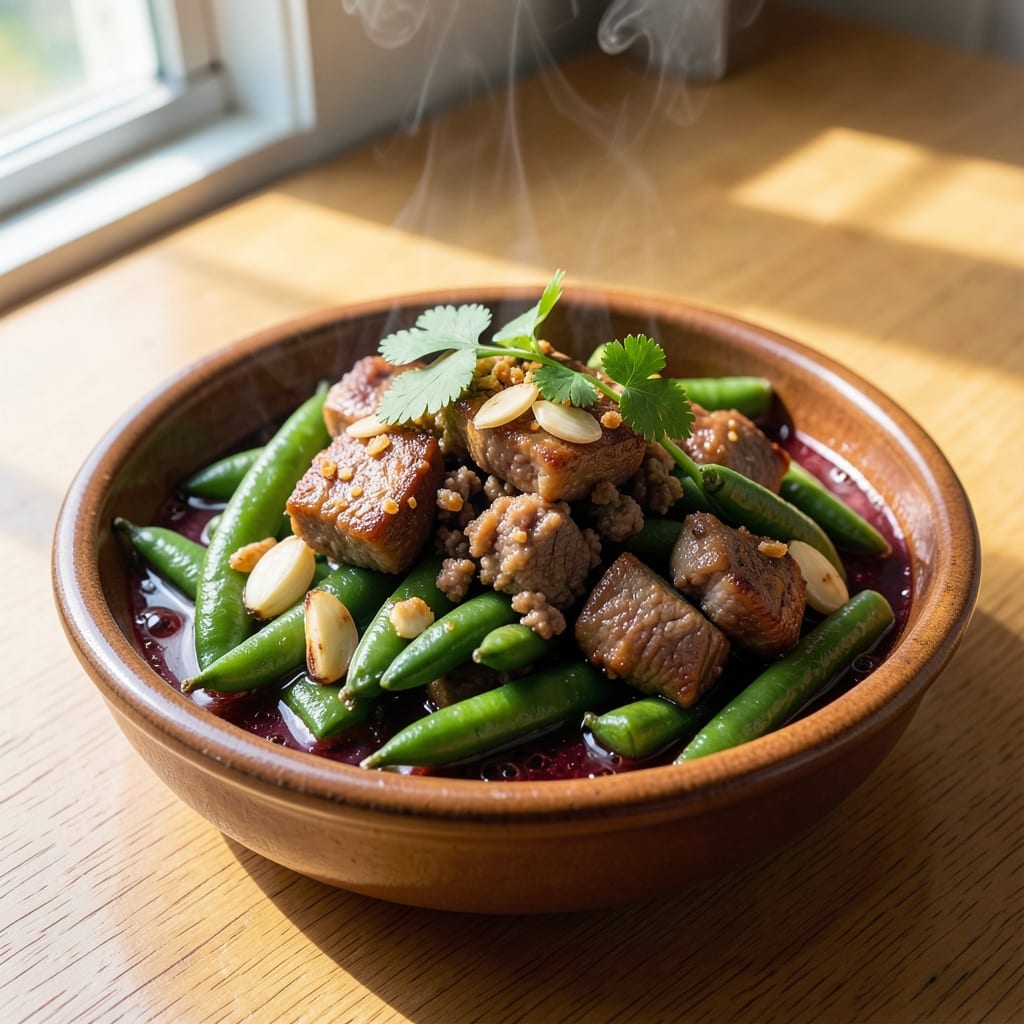
This Adobong Sitaw with Ground Pork recipe brings the bold flavors of Filipino comfort food to your table. The soy-vinegar braise transforms tender silken green beans and savory ground pork into a dish that's tangy, slightly sweet, and deeply satisfying—just like my abuela used to make. The key lies in balancing the acidity and umami through careful simmering, a technique I perfected during my time in Charleston kitchens where pork was always the star.
The beauty of this dish is in its simplicity: just a handful of ingredients that work together to create restaurant-quality results. You'll start with a quick marinade for the pork, then build a rich sauce using soy sauce, vinegar, and a touch of sugar to balance the flavors. The silken green beans—sitaw—absorb the sauce beautifully while maintaining their tender texture, making this a perfect weeknight dinner that still feels special.
What makes this recipe stand out is the harmony of textures and flavors—juicy pork, silky beans, and a glossy sauce that clings to every bite. The dish pairs perfectly with steamed rice, soaking up every last drop of that flavorful braise. It's the kind of meal that brings people together, whether you're serving it at a family gathering or enjoying a quiet night in.
This dish is more than just a recipe; it's a taste of home and tradition. The slow simmering process allows the flavors to meld together, creating a dish that's both comforting and complex. With just a few simple steps, you'll have a meal that's sure to impress anyone lucky enough to try it. Let's get cooking!
Ingredients for adobong sitaw with ground pork
Just 12 ingredients for a dish packed with Filipino soul and tangy-sweet balance.
| Ingredient | Amount | Notes |
|---|---|---|
| Ground Pork 🐖 | 1 lb | Lean or regular, not pre-seasoned |
| Silken Green Beans (Sitaw) 🌱 | 1 ½ lbs | Fresh or frozen, trimmed ends |
| Soy Sauce 🍶 | ½ cup | Light or dark, no sugar added |
| White Vinegar 🍋 | ½ cup | Distilled or white vinegar |
| Brown Sugar 🍯 | ¼ cup | Packed, light or dark |
| Garlic Cloves 🧄 | 6 cloves | Minced, fresh preferred |
| Onion 🧅 | 1 whole | Medium, thinly sliced |
| Bay Leaves 🌿 | 2 whole | Dried, crushed for flavor |
| Black Peppercorns 🌶️ | ½ tsp | Crushed, fresh preferred |
| Olive Oil 🫒 | 2 tbsp | For sautéing, extra-virgin |
| Salt 🧂 | 1 tsp | Kosher or sea salt |
| Water 💧 | 1 ½ cups | For simmering, room temp |
The ground pork is the heart of this dish—look for 80/20 lean-to-fat ratio at your butcher or grocery store's meat counter. Costco or Trader Joe's usually carry good quality, and if you can't find it fresh, frozen works too (thaw in the fridge overnight). The silken green beans—sitaw—are the star, so grab a bunch fresh if possible, or frozen works in a pinch. They should be bright green, not wilted or yellowing. For the soy sauce, I always reach for Kikkoman or Silver Swan—they're reliable and add that authentic umami punch without extra sugar.
No white vinegar? Apple cider vinegar works just as well—it's got a touch more sweetness that pairs nicely. Running short on brown sugar? Honey or maple syrup (same amount) will do, though the flavor shifts slightly. The garlic and onion are non-negotiable for the base flavor, but if you're in a rush, garlic powder and onion powder (half the amount) will get you close. For the bay leaves, if you've got them, crush them lightly between your palms to release more flavor—that's the secret to deeper taste. The olive oil? Any good-quality extra-virgin will work, but California-grown brands tend to have that fruity note I love.
This dish tastes even better the next day—trust me on that—so make extra if you can. Store leftovers in an airtight container in the fridge for up to 4 days, or freeze for 3 months. The sauce thickens as it cools, so a splash of water when reheating keeps it silky. I like to serve it with steamed jasmine rice—it soaks up all that glorious braise. If you've got any leftover sauce, drizzle it over rice bowls or noodles for an easy meal the next day.
Why You'll Love This Recipe
- Pork’s Best Friend: I swear by this combo—ground pork and sitaw together are magic. The meat stays juicy while the beans soak up that tangy-sweet sauce like a sponge, and honestly? It’s the kind of dish where every bite just works.
- One-Pot Wonder: No chopping, no fuss—just brown the pork, toss in the beans, and let the vinegar and sugar do their thing. My lazy Sundays thank me for this; I’ve made it while scrolling through my phone, and it still comes out spot-on.
- Leftover Legend: This stuff tastes better the next day. I double the batch on Sundays, and by Wednesday, it’s my go-to for quick lunches. The flavors meld even more, and reheating? Just a splash of water, done.
- Budget Meal Hero: Ground pork stretches far, and silken beans are cheaper than you’d think. I feed four people for under $10, and between us, this is my wallet’s favorite Filipino dish—no guilt, all flavor.
Step-by-step instructions for soy-vinegar braised silken green beans
This rich, tangy dish transforms simple ingredients into a hearty Filipino classic.
Sauté Aromatics Until Fragrant
Heat the 2 tablespoons olive oil in a large pot or deep skillet over medium heat. Add the 1 whole onion, sliced into thin half-moons, and cook for 3-4 minutes until softened and translucent. This is your flavor foundation—don't rush it.
Add the 6 cloves garlic cloves, minced, and the 0.5 teaspoon black peppercorns. Stir constantly for 1-2 minutes until the garlic turns golden and releases its aromatic oils. You'll smell that irresistible savory depth building—this is where the magic starts. Keep the heat at medium to prevent burning.
Brown the Ground Pork
Push the aromatics to one side of the pot and add the 1 pound ground pork to the empty space. Break it up with a wooden spoon and let it brown for 4-5 minutes over medium-high heat. You want the pork to develop a deep golden crust—this adds incredible texture to the finished dish.
Once the pork is mostly browned, use a spatula to stir it back into the onions and garlic. Cook for another 2 minutes to distribute all those beautiful browned bits throughout the mixture. These bits, called fond, are packed with flavor that will dissolve into the braising liquid later.
Build the Braising Sauce
Pour in the 0.5 cup soy sauce and 0.5 cup white vinegar, scraping up any browned bits from the bottom of the pot. Add the 0.25 cup brown sugar and 1 teaspoon salt, stirring well to combine. The mixture will bubble vigorously—let it simmer for 3-4 minutes until slightly thickened.
Add the 1.5 cups water and the 2 whole bay leaves. Bring to a gentle boil, then reduce heat to low and let it simmer uncovered for 5 minutes. This step develops the sauce's depth and balances the flavors before adding the green beans.
Braise the Silken Green Beans
Add the 1.5 pounds silken green beans (sitaw), trimmed and cut into 2-inch pieces if needed. Stir gently to coat them evenly with the sauce. The beans should be mostly submerged—if not, add a splash more water. Return to a gentle simmer and cook uncovered for 15-20 minutes, stirring occasionally.
You'll know they're done when the beans are tender but still hold their shape—think "fork-tender" rather than mushy. The sauce should coat the beans beautifully, with a glossy sheen. Taste and adjust seasoning if needed, adding a bit more soy sauce for saltiness or vinegar for tang.
Finish and Serve
Remove the 2 whole bay leaves and discard them. Taste the sauce again and adjust the balance—you want a perfect harmony of sweet, salty, tangy, and umami flavors. The beans should be glossy from the sauce, with a rich color and tender texture.
Serve immediately over steamed rice, letting everyone scoop up those flavorful beans and pork mixture. The dish tastes even better the next day as the flavors meld further, but it's so good fresh you won't want to wait! This comforting dish is perfect for family meals or special gatherings.
Pro Tips For Making Adobong Sitaw With Ground Pork
- CRISP THE PORK FIRST: The ground pork should sizzle until it loses its raw pink color—about 3-4 minutes on medium-high heat. I learned this the hard way when my first batch tasted undercooked and greasy; now I make sure it’s fully browned before adding anything else.
- TRIM THE SITAW RIGHT: Cut the silken green beans into 2-inch pieces, but don’t skip the tough ends—trim them first. Leaving them on makes the beans bitter, and no one wants that in their adobo.
- DON’T RUSH THE VINEGAR: Add the white vinegar slowly, a tablespoon at a time, and let it simmer for at least 5 minutes. Dumping it all at once just makes the sauce watery and dulls the flavor.
- SWEAT THE BEANS SEPARATELY: Sauté the sitaw in a little oil for 2-3 minutes before adding them to the pork mixture. This keeps them crisp-tender instead of turning mushy—trust me, it makes a real difference.
Make-ahead tips for leftovers
Prep Ahead Sauce
Make the soy-vinegar base up to 2 days in advance—it tastes even richer after resting. Combine ½ cup soy sauce, ½ cup white vinegar, ¼ cup brown sugar, 1 tsp salt, and 1.5 cups water in a bowl. Store in an airtight container in the fridge. When ready to cook, simply heat this mixture in your pot before adding the pork and beans. This shortcut saves you 15 minutes of prep time on busy weeknights. 💡
Pork Prep Shortcut
Brown the 1 lb ground pork ahead of time and refrigerate it in the sauce mixture (without beans) for up to 12 hours. The pork absorbs the flavors beautifully, giving you a head start. When ready to cook, just reheat everything together with the beans added fresh. I do this on Sundays to have a ready-to-go weeknight meal. 🐖
Bean Prep Efficiency
Trim and cut the 1.5 lbs silken green beans and store them in a ziplock bag with a damp paper towel to keep them crisp. They’ll stay fresh in the fridge for 3 days or frozen for 2 months. When you're ready to cook, just toss them directly into the simmering pork mixture—they cook faster this way. This is my go-to method for meal prep Sundays. 🌱
Complete Meal Assembly
Cook the entire dish ahead and store it in glass containers in the fridge for up to 4 days. The flavors deepen over time, and reheating is simple: just warm on the stovetop over medium-low heat with a splash of water to restore the sauce's glossiness. Serve with pre-cooked rice (microwaveable works fine) for a 5-minute reheat. This is perfect for busy families or potlucks. ✨
Freezer-Friendly Version
For longer storage, freeze the fully cooked adobong sitaw (without rice) in quart-sized freezer bags. Remove as much air as possible to prevent freezer burn. Thaw overnight in the fridge, then reheat gently. The texture holds up well, though the beans may be slightly softer after freezing. This is my secret for having Filipino comfort food ready in a pinch. ❄️
Sauce Boost Hack
If you're short on time, make a double batch of sauce and freeze half. Use the frozen portion to quickly deglaze a pan or toss with noodles later in the week. The sauce keeps its bold flavors even after freezing, making it a versatile pantry staple. I always keep a backup batch on hand—you never know when you'll crave that tangy-sweet kick! 🍶
Nutrition facts
Frequently asked questions
Can I substitute ground pork with another meat?
For a richer flavor, try ground chicken or turkey, but reduce cooking time to 3-4 minutes since they cook faster. If you prefer beef, use 80/20 ground chuck and brown it longer to develop deep flavor. Just remember—pork's fat content makes this dish extra tender and juicy.
How do I keep the green beans from getting mushy?
Cook them just until tender-crisp (15-20 minutes) and avoid overcrowding the pot. If they're already soft, add them to the sauce only in the last 5-10 minutes of cooking. For extra firmness, blanch them in boiling water for 2 minutes before adding to the adobo.
What's the secret to balancing the tangy-sweet flavors?
Taste as you go! Start with equal parts soy sauce and vinegar, then adjust: add more vinegar for tang, soy sauce for saltiness, or sugar for sweetness. The key is slow simmering—this lets the flavors meld without overpowering each other. Think of it like a dance between sweet, salty, and sour.
Can I make this dish in a slow cooker?
Yes! Sauté the aromatics and pork first, then transfer everything to the slow cooker. Cook on low for 4-5 hours or high for 2-3 hours, stirring occasionally. The slow cooker deepens the flavors naturally—just add a splash of water if the sauce gets too thick. Perfect for hands-off cooking!
Why does my adobo taste too salty?
Soy sauce is packed with salt, so reduce it to ¼ cup and add more vinegar or sugar to balance. If it's already cooked, dilute with 1-2 tablespoons water per cup of sauce. Taste before serving—Filipino adobo should be bold but never overwhelming. A pinch of sugar can also help cut the saltiness.