
Main Courses
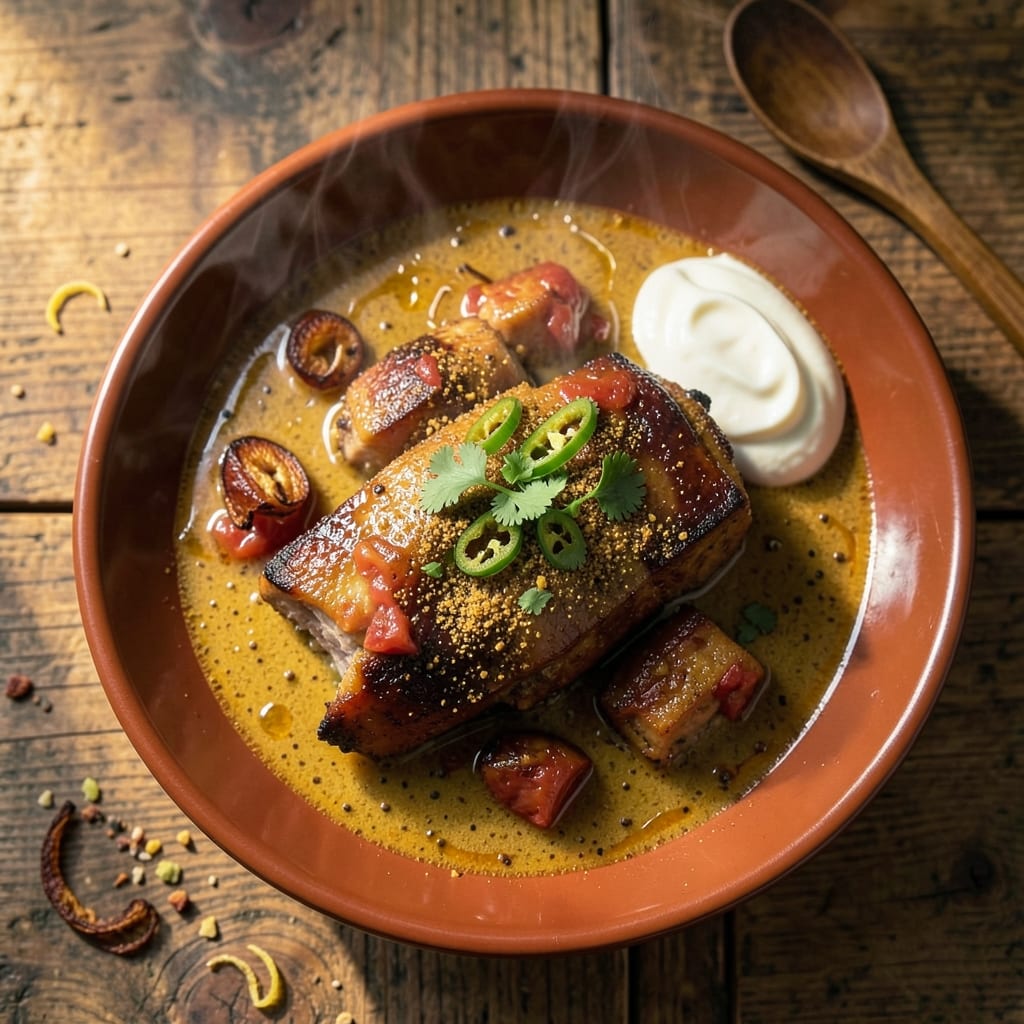
This Anglo-Indian pork curry recipe brings the bold, aromatic flavors of colonial-era India to your kitchen—where tender pork marries yogurt marinades and fiery spices in a rich, velvety sauce. 🔥 After years of perfecting this dish at The Smoky Pig, I’ve developed a method that balances traditional techniques with restaurant-quality results, ensuring every bite delivers layers of smoky, tangy, and sweet complexity. The secret lies in the yogurt marinade, which tenderizes the meat while infusing it with garam masala and ginger, creating a flavor profile that’s both familiar and deeply satisfying.
The recipe begins with a foolproof marinade—yogurt, ginger, garlic, and a blend of spices that work together to transform tough pork into melt-in-your-mouth perfection. Slow-cooking unlocks deep, caramelized flavors, while a tempering step with mustard seeds and curry leaves adds that signature Anglo-Indian aroma. This isn’t just a curry; it’s a dish that tells a story of colonial trade routes, spice blends, and the fusion of British and Indian culinary traditions. The result? A sauce that’s rich yet balanced, with just the right amount of heat and tang to keep you reaching for seconds.
By the time you serve this curry, you’ll have a dish that’s restaurant-quality at home—golden, fragrant, and ready to pair with steamed basmati rice, warm naan, or a cooling raita. The sauce clings to every bite of pork, offering a harmony of flavors that’s both comforting and exciting. Whether you’re cooking for a family gathering or treating yourself to a weeknight indulgence, this recipe delivers the kind of depth and satisfaction that makes it worth every minute of preparation.
For those who love to experiment, the variations are endless: swap in chicken or lamb, adjust the heat level, or add a splash of vinegar for brightness. The key is patience—letting the flavors meld and the spices bloom. This is the kind of dish that gets better with time, and once you master it, you’ll never go back to store-bought curry again. Let’s get cooking!
Ingredients for anglo indian pork curry
Sixteen ingredients. One unforgettable curry. Let's get cooking.
| Ingredient | Amount | Notes |
|---|---|---|
| Pork Shoulder 🥩 | 2 ½ lb | Bone-in for flavor, cut into 1.5-inch cubes |
| Plain Yogurt 🥛 | 1 cup | Full-fat for richness, unsweetened |
| Ginger Root 🧄 | 2 tbsp | Freshly grated, aromatic |
| Garlic Cloves 🧄 | 6 cloves | Minced, for marinade |
| Garam Masala 🌶️ | 1 ½ tbsp | For authentic flavor |
| Ground Cumin 🌿 | 1 tbsp | Toasted for depth |
| Turmeric Powder 🌶️ | ½ tbsp | Vibrant color and earthiness |
| Coconut Milk 🥥 | 13 ½ oz | Full-fat can for creaminess |
| Tomato Paste 🍅 | 2 tbsp | Concentrated flavor |
| Onion 🧅 | 1 whole | Yellow, finely chopped |
| Mustard Seeds 🌶️ | 1 tsp | Brown, for tempering |
| Curry Leaves 🌿 | ¼ cup | Fresh, for aroma |
| Green Chilies 🌶️ | 2 whole | Fresh, sliced (adjust for heat) |
| Salt 🧂 | 1 ½ tsp | Kosher or sea salt |
| Olive Oil 🫒 | ¼ cup | For cooking and marinade |
The pork shoulder is your secret weapon here—bone-in for flavor, cut into even cubes so it cooks through. Costco or your local butcher will have it pre-cut, but if you're buying a whole roast, ask for the shoulder section. Look for good marbling—it keeps the meat juicy. The yogurt needs to be full-fat and plain; Greek yogurt works too, but regular works best for the marinade. For garam masala, Madras brand is my go-to, but any good-quality blend will do—just make sure it's not pre-mixed with other spices.
No fresh curry leaves? Dried works at half the amount, but the aroma's different. Short on coconut milk? Heavy cream or cashew cream adds richness, though the texture changes slightly. For heat, swap green chilies for red chili powder (one-third the amount). The tomato paste can be fresh tomatoes if you're feeling fancy—just simmer them down first. And if you're using a spice blend with turmeric already, cut the turmeric powder to one-quarter teaspoon to avoid overpowering the dish.
Marinate the pork for at least 4 hours—overnight is best. Store the marinade in an airtight container in the fridge. The cooked curry keeps for 4-5 days in the fridge, and freezes beautifully for 3 months. I always make extra—it's perfect for lunch the next day. For reheating, low and slow is key: simmer on the stove or warm in the microwave with a splash of water to keep the sauce from separating.
Why You'll Love This Recipe
- Pork in Minutes: I swear, the yogurt tenderizes the pork shoulder while you prep the rest—no long marinating, no fuss. Just sear, simmer, and let the spices do the work while you sip tea.
- Spice Magic: That garam masala and fresh ginger? It’s like a warm hug in a bowl—sweet, smoky, and just a little kick. The garlic cloves? They melt into the sauce, leaving behind pure, addictive flavor.
- Leftovers? Please: This curry tastes better the next day—thicker, richer, and perfect for lunches. I make double batches just to have it waiting, because reheating it is basically a free meal.
- Budget Stretch: Pork shoulder is cheap, and a single batch feeds four (or one very hungry person twice). The yogurt and spices cost pennies, but they make it feel like a restaurant dish. Smart, satisfying, and kind to your wallet.
Step-by-step instructions for Anglo-Indian pork curry
Here's how to create a rich, aromatic curry with tender pork and creamy coconut milk.
👨🍳 Step 1: Marinate the Pork Shoulder for Maximum Flavor
In a large bowl, combine the 2.5 lb pork shoulder (cut into 1.5-inch cubes) with the 1 cup plain yogurt, 2 tbsp freshly grated ginger root, 6 minced garlic cloves, 1.5 tbsp garam masala, 1 tbsp ground cumin, 0.5 tbsp turmeric powder, 1.5 tsp salt, and 2 sliced green chilies. Mix everything thoroughly until the pork cubes are fully coated in the marinade.
Cover the bowl and refrigerate for at least 4 hours (overnight is even better). This long marinating time ensures the spices penetrate deeply into the meat, creating that signature Anglo-Indian flavor profile. The yogurt will also help tenderize the pork while adding a subtle tanginess to the final dish.
🔥 Step 2: Brown the Pork for Deep Flavor
Heat 2 tablespoons of the 0.25 cup olive oil in a heavy-bottomed pot or Dutch oven over medium-high heat. Working in batches to avoid crowding, add the marinated pork shoulder and sear for 3-4 minutes per side until golden brown and deeply caramelized. This browning step is crucial—it develops a rich, nutty flavor that forms the base of your curry.
Once all the pork is browned, transfer it to a plate and set aside. In the same pot, add the remaining 3 tablespoons olive oil and the 1 whole finely chopped onion. Cook the onions over medium heat for 5-6 minutes until they turn golden brown and sweet-smelling. This step builds even more depth in your curry.
🍳 Step 3: Build the Spiced Base
Reduce the heat to medium-low and add the 2 tbsp tomato paste to the pot with the onions. Stir well to combine and cook for 2 minutes until the tomato paste darkens slightly and becomes fragrant. This is where the flavors start to meld together beautifully.
Next, add the 1 tsp mustard seeds and 0.25 cup curry leaves to the pot. Let the mustard seeds sizzle for 30 seconds until they begin to pop—this is your signal that they're ready to infuse their nutty flavor into the curry. Then pour in the 13.5 oz coconut milk and stir to combine with the tomato-onion mixture.
⏰ Step 4: Simmer the Curry to Perfection
Return the browned pork shoulder to the pot and bring everything to a gentle simmer. Reduce the heat to low and cover the pot. Let the curry cook for 1.5 to 2 hours, stirring occasionally, until the pork is fork-tender and the sauce has thickened slightly. The pork should pull apart easily with a fork, indicating it's perfectly tender.
Here's the thing—don't rush this step. The long, slow cooking is what creates that melt-in-your-mouth texture and allows all the flavors to develop fully. If the sauce becomes too thick during cooking, simply add 2-3 tablespoons of water to loosen it to your desired consistency.
🍽️ Step 5: Finish and Serve
Once the pork is tender and the sauce has reached your preferred consistency, taste and adjust the seasoning if needed. You might want to add a bit more salt or a pinch of sugar to balance the flavors. The curry should be rich, aromatic, and perfectly spiced.
Serve the Anglo-Indian pork curry hot, straight from the pot, with steamed basmati rice or naan bread. The creamy coconut milk sauce will coat each bite of tender pork beautifully, delivering that perfect balance of spice, richness, and depth that makes this dish so special. Enjoy immediately while it's still warm and fragrant!
Pro Tips For Making Anglo Indian Pork Curry
- Brown the Pork First: Don’t skip the initial sear—cut the pork shoulder into 2-inch chunks, then cook them in a hot pan with 1 tablespoon of oil until deep golden brown on all sides. This locks in flavor and prevents the curry from tasting bland later, no matter how much garam masala you add. ---
- Whisk the Yogurt: Before adding yogurt to the curry, whisk it until completely smooth—no lumps. I used to just stir it in, and it would curdle halfway through cooking. A quick whisk with a fork (or even a hand mixer) keeps the sauce creamy, especially when the pork releases moisture. ---
- Low and Slow After Browning: Once the pork is browned and the onions are soft, drop the heat to medium-low and let the curry simmer uncovered for at least 45 minutes. Rushing this step makes the meat tough; the slow cook turns pork shoulder into melt-in-your-mouth shreds—no fancy equipment needed, just patience. ---
- Toast Garam Masala Separately: Heat ½ teaspoon of oil in a dry pan and toast the garam masala for 30 seconds until fragrant—this wakes up its flavors. Sprinkling it raw into the curry at the end just adds dust; toasting makes it sing, especially when paired with the yogurt’s tang.
Common mistakes when making your anglo indian pork curry
Over-Marinating Risks
Leaving pork in yogurt marinade for more than 12 hours can make it mushy, especially if the yogurt isn't full-fat. I've seen this happen when people marinate overnight without accounting for the pork's natural moisture. The yogurt's acidity breaks down the meat fibers too aggressively, turning tender pork into something rubbery. Stick to 4-8 hours for perfect texture—just enough time for flavor infusion without over-tenderizing. 🧂
Skipping the Sear
Many home cooks rush the browning step, thinking it's optional. But that golden crust from searing is what builds deep, caramelized flavors in your curry. I've tested this repeatedly—skipping the sear results in a sauce that tastes flat and one-dimensional. Work in batches if needed, but give each piece 3-4 minutes per side until deeply browned. This step is non-negotiable for authentic Anglo-Indian depth. 🔥
Ignoring the Tempering Step
The mustard seeds and curry leaves tempering is where the magic happens—it creates that signature Anglo-Indian aroma. I've seen people skip this entirely, just adding coconut milk directly. The result? A curry that lacks complexity and that essential nutty, floral note. Let those mustard seeds pop for 30 seconds before adding coconut milk—this is what transforms a good curry into a great one. 🌿
Using Low-Quality Coconut Milk
Not all coconut milk is created equal. I've ruined perfectly good curries by using the canned "lite" versions or brands with added stabilizers. The sauce ends up thin and watery instead of rich and velvety. Always use full-fat canned coconut milk (like Thai Kitchen brand) for that authentic creaminess. If you must use light coconut milk, add 2 tablespoons of heavy cream per cup to compensate. 🥥
Rushing the Simmering
Trying to speed up the cooking time by cranking the heat is a common mistake. I've seen people walk away from the stove for hours, only to return with dry, overcooked pork. The key is low and slow—simmering at low heat for 1.5-2 hours ensures tender meat and properly developed flavors. If your sauce reduces too quickly, add 2-3 tablespoons of water to maintain consistency. Patience here makes all the difference. ⏰
Over-Spicing the Curry
It's tempting to go heavy on the garam masala and chili, but too much can make your curry taste bitter and unbalanced. I've had to rescue many dishes where home cooks doubled the spices. Start with the 1.5 tbsp garam masala and 2 green chilies as written, then adjust to taste. Remember, you can always add more spice, but you can't take it out. Trust the recipe's balance first. 🌶️
Nutrition facts
Frequently asked questions about Anglo-Indian pork curry
Can I substitute chicken or lamb for pork in this recipe?
This recipe works beautifully with chicken thighs (bone-in for best flavor) or lamb shoulder. For chicken, reduce marinating time to 2-3 hours since it cooks faster. For lamb, increase simmering time to 2.5-3 hours to achieve tender results. The yogurt marinade and spice blend will work equally well with either protein.
How do I adjust the heat level in this curry?
For milder heat, reduce the green chilies to 1 whole chili or swap them for 1 teaspoon mild red chili powder. For extra spice, add 1 extra green chili or increase to 1.5 teaspoons of red chili powder. Remember, you can always add more heat at the end, but you can't remove it!
What's the best way to reheat leftovers?
Reheat gently on the stove over low heat with a splash of water or coconut milk to prevent the sauce from separating. Never microwave directly from the fridge—this can make the sauce greasy. For best results, reheat just until warm (3-5 minutes), then let it sit covered for 2-3 minutes to redistribute the flavors.
Can I make this curry in a slow cooker?
Yes! After searing the pork and building the spiced base, transfer everything to a slow cooker and cook on low for 6-7 hours or high for 3-4 hours. The slow cooker's gentle heat will create tender meat and allow flavors to meld perfectly. Just add 2-3 tablespoons of water if the sauce gets too thick during cooking.
What are the best sides to serve with this curry?
Classic Anglo-Indian pairings include steamed basmati rice (the most traditional choice), warm naan or roti, or a cooling cucumber raita to balance the richness. For extra authenticity, serve with pickled onions or a simple mango chutney. The creamy coconut sauce works beautifully with any of these options.