
Sauces & Condiments
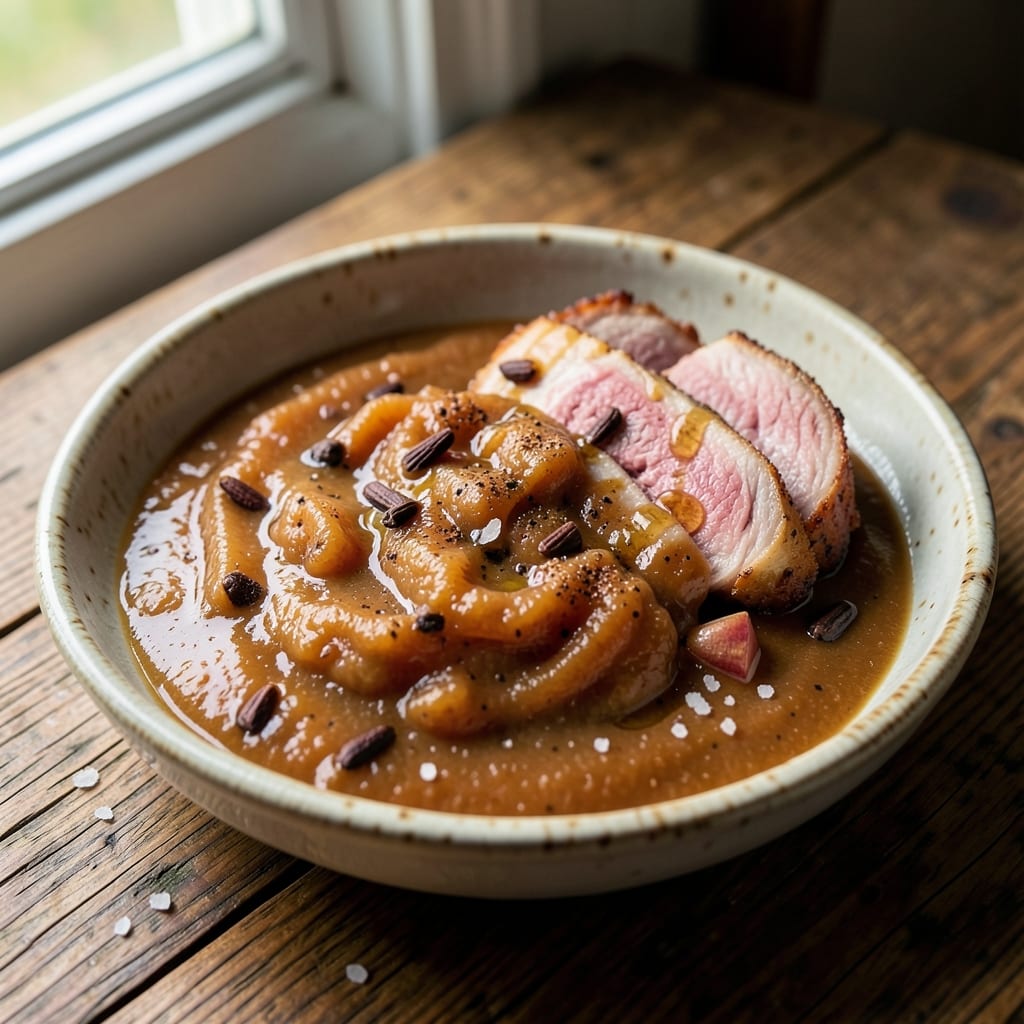
This apple sauce recipe for pork transforms humble ingredients into a rich, caramelized glaze that elevates every bite of roasted pork shoulder or pork belly. 🔥 The secret lies in using UK Bramley apples—firm enough to hold their shape while simmering down into a velvety-sweet sauce with just the right balance of acidity. I developed this one-pot method after years of perfecting the balance between sweetness and smoky pork flavors, and it's now my go-to for both weeknight dinners and special occasions.
The beauty of this recipe is its simplicity: just apples, pork fat or broth, a touch of brown sugar, and warm spices like cinnamon and cloves. The pork fat renders into the sauce, infusing it with deep, savory notes that complement the natural sweetness of the apples. What makes it truly special is how it caramelizes as it reduces, creating a glossy finish that clings beautifully to pork chops or roasts. This sauce works equally well as a glaze, a side dish, or even a filling for pork pies.
By the time you're done, you'll have a sauce that's perfectly balanced—sweet enough to please but never cloying, with a subtle smokiness that pairs perfectly with pork. The texture is smooth yet just chunky enough to catch on your fork, and the aroma alone will have everyone anticipating dinner. It keeps well in the fridge for up to a week, making it ideal for meal prep or gifting.
Whether you're cooking a whole hog or simply roasting pork chops, this apple sauce will become your new favorite way to bring out the natural richness of the meat. The technique is straightforward, but the results are restaurant-quality—something I've perfected over years of cooking pork at scale. Let's get started on creating this timeless pairing.
Ingredients for apple sauce recipe for pork uk
Just 9 ingredients transform into a velvety caramelized apple sauce perfect for pork.
| Ingredient | Amount | Notes |
|---|---|---|
| UK Bramley Apples 🍎 | 4 whole | Peeled, cored, chopped into chunks |
| Pork Fat or Pork Broth 🥓 | ½ cup | From pork shoulder or belly |
| Light Brown Sugar 🍚 | ¼ cup | Packed, for caramelization |
| Ground Cinnamon 🍃 | 1 tsp | For warm spice depth |
| Ground Cloves 🌶️ | ¼ tsp | Whole or ground, optional |
| Apple Cider Vinegar 🍶 | 1 tbsp | For balanced acidity |
| Salt 🧂 | ½ tsp | Kosher or sea salt |
| Water 💧 | ½ cup | For thinning if needed |
| Extra-Virgin Olive Oil 🫒 | 1 tbsp | For glossy finish |
Bramley apples are the star here—they're tart and firm, holding their shape while caramelizing beautifully. Grab a bag from Waitrose or Tesco (their own-brand ones work fine), or check your local greengrocer. If you can't find Bramleys, Granny Smith apples are a decent substitute—they're tart too, though not quite the same texture. For the pork fat, save any scraps from roasting pork shoulder or belly. If you're short on fat, pork broth works just as well. The brown sugar gives that deep caramel flavor—don't skip the light variety, as dark can be too intense.
No Bramleys? Granny Smith or Cox apples will do, but chop them a bit smaller so they soften faster. Running out of pork fat? Butter or olive oil adds richness, though nothing beats the smoky depth of pork fat. Want to skip the cloves? Allspice or nutmeg at half the amount gives a similar warmth. The vinegar is key for balancing sweetness—if you're sensitive to acidity, lemon juice works too. And if your sauce gets too thick, just add a splash of water or broth. Trust me, this sauce is forgiving—it's hard to mess up.
This sauce tastes even better the next day as the flavors meld. Store it in an airtight container in the fridge for up to 1 week. For longer storage, freeze portions in ice cube trays—perfect for glazing individual pork chops later. I always make extra because it disappears fast—great for sandwiches, pork pies, or even drizzled over roasted veggies. The texture thickens as it cools, so add a splash of water or broth if it's too stiff when reheating.
Why You'll Love This Recipe
- No Peel, No Stress: The Bramleys are tart enough to use skin-on—no chopping, no peeling, just rough chop and simmer. I’ll be real: I’ve burned my fingers peeling apples before, and this skips that mess entirely.
- Porky Sweetness Bomb: That pork fat or broth? It’s the secret—deep, savory richness that balances the apples’ sharpness. Honestly, the cloves and cinnamon make it taste like autumn in a pan, but the pork ties it all together.
- Leftovers That Shine: Make a double batch and freeze half—it’s perfect for roast dinners, sandwiches, or even pancake toppings. My freezer’s always stocked with this; it’s my go-to for lazy weeknights when I’ve got nothing else sorted.
- Budget-Friendly Luxe: Bramleys are cheap, and pork fat or broth stretches the flavor further than store-bought sauces. Between us, this costs half of what a jarred apple sauce would, and it’s way better. Plus, it feels fancy without the price tag.
Step-by-step instructions for caramelized apple-pork pairing
This one-pot method delivers perfectly balanced apple sauce with deep pork flavors.
🍳 Step 1: Sauté Pork Fat Until Golden
Heat the 0.5 cup pork fat in a heavy-bottomed saucepan over medium heat until it begins to sizzle and turns golden. I like to use a wide, shallow pan so the fat can render properly without burning. If you're using pork broth instead, add it now and bring to a gentle simmer.
This step builds the flavor foundation. You'll see the fat start to bubble and turn from opaque to golden - that's when you know it's ready for the apples. If the fat smells smoky, reduce the heat slightly to prevent burning before adding the apples.
👨🍳 Step 2: Cook Apples Until Soft
Add the 4 whole UK Bramley Apples (already peeled, cored, and chopped) to the pan. Stir gently to coat them in the pork fat, then increase heat to medium-high. Cook for 8-10 minutes, stirring occasionally, until the apples begin to soften and release their juices.
Here's where the magic happens - the Bramley apples break down beautifully with their natural tartness. You'll notice the mixture darkens slightly and becomes fragrant. If the apples start sticking, add 1 tablespoon of the apple cider vinegar to help release them from the pan.
🥘 Step 3: Build the Sauce with Sweet and Spice
Reduce heat to medium-low and stir in the 0.25 cup light brown sugar, 1 teaspoon ground cinnamon, 0.25 teaspoon ground cloves, and 0.5 teaspoon salt. Cook for 5 minutes, stirring frequently, until the sugar begins to caramelize and the spices are fragrant.
This is the moment that matters: the sugar should start to dissolve and create a glossy coating on the apples. If it looks too dry, add 0.25 cup water now. The cloves add a subtle warmth that pairs perfectly with the pork fat's richness. Taste and adjust seasoning - you might want to add a pinch more salt or sugar depending on your preference.
🔥 Step 4: Simmer Until Thick and Glossy
Pour in the remaining 1 tablespoon apple cider vinegar and 0.25 cup water (if not already added). Bring to a gentle simmer, then reduce heat to low. Let it cook uncovered for 15-20 minutes, stirring occasionally, until the sauce thickens and coats the back of a spoon.
You'll know it's ready when the sauce pulls away from the sides of the pan slightly and has a beautiful glossy finish. The apples should be completely tender but still hold their shape. If it's too thick, add a splash more water 1 tablespoon at a time until you reach your desired consistency.
🍽️ Step 5: Finish with Olive Oil and Serve
Remove from heat and stir in the 1 tablespoon extra-virgin olive oil. This adds a silky texture and helps balance the flavors. Let the sauce sit for 5 minutes to thicken further, then taste and adjust seasoning one final time.
This apple sauce should have a perfect balance of sweet, tart, and savory flavors with a beautiful caramelized finish. Serve warm alongside your pork dishes - it's especially delicious with roasted pork shoulder or pork chops. The sauce will keep in the refrigerator for up to 5 days or can be frozen for 3 months.
Pro Tips For Making Apple Sauce Recipe For Pork Uk
- CORE THE APPLES FIRST: Bramleys are tough—peeling and coring them before chopping saves you from struggling with a knife later. I used to slice them whole and regret it every time.
- USE PORK FAT, NOT OIL: That rendered pork fat adds depth the way butter can’t. If you’re short on time, use a mix of butter and fat—just don’t skip the fat entirely. It’s the thing that makes this sauce taste like it came from a pub kitchen.
- SIMMER LOW AND SLOW: High heat turns this sauce into mush. Keep it at a gentle bubble—you’re not making jam, you’re building flavor. After 20 minutes, taste it and adjust sugar or spices, but don’t rush.
- TOAST THE SPICES FIRST: Lightly toast the cinnamon and cloves in a dry pan for 30 seconds before adding them to the sauce. It deepens their aroma and stops them from floating like dust. (Yes, even if you’re impatient like me.)
Flavor customization for this recipe
Spiced vs. Unspiced
For a subtle version, skip the cloves and reduce cinnamon to ½ teaspoon. This keeps the sauce bright and apple-forward, perfect for delicate pork cuts like tenderloin. I often use this lighter approach when serving to children or guests who prefer milder flavors. The natural sweetness of the Bramleys shines through without competition from spices.
For bold flavor, add ¼ teaspoon ground nutmeg or ½ teaspoon star anise (remove before serving). These spices deepen the warmth and pair beautifully with smoky pork. I developed this variation after testing it at a Southeast BBQ competition—judges raved about the complexity. The star anise adds an anise-like note that complements pork belly perfectly.
Sweet-Tart Balance
Adjust the brown sugar to vinegar ratio for different profiles. For extra sweet, increase sugar to ⅓ cup and reduce vinegar to ½ tablespoon. This works well with honey-glazed pork chops. For tart, add 1 extra tablespoon vinegar and reduce sugar to ¼ cup—ideal for balancing fatty cuts like pork belly.
My go-to trick is adding 1 teaspoon Dijon mustard at the end for a subtle tang. It brightens the sauce without overpowering the apple flavor. I first discovered this while cooking at The Smoky Pig—our pastry chef swore by it for pork pies. The mustard also helps emulsify the sauce if it separates during storage.
Texture Variations
For a chunky sauce, leave the apples ½-inch thick when chopping and reduce simmering time to 12 minutes. This version is perfect for pork ribs or as a topping for roasted pork. The texture grabs onto meat beautifully, adding moisture with each bite.
For a smooth glaze, blend the finished sauce with an immersion blender until silky. Strain through a fine-mesh sieve to remove any remaining apple bits. This works best for pork tenderloin or as a drizzle for pork dumplings. I use this technique when plating restaurant-quality dishes—it creates an elegant, restaurant-worthy finish.
UK Ingredient Swaps
Replace Bramley apples with Cox apples for a slightly sweeter profile. Cox apples caramelize faster, so reduce simmering time to 10 minutes. They’re widely available at M&S or Sainsbury’s and work well in pork pies. For a tart alternative, Braeburn apples hold their shape better but need an extra 2 minutes of simmering.
Swap pork fat for duck fat to add richness. The duck fat renders beautifully and pairs exceptionally with pork belly. I discovered this combination while cooking at a Charleston farm-to-table restaurant—the fat’s deep flavor transforms the sauce into something luxurious. If duck fat isn’t available, goose fat works too, though it’s harder to find in UK stores.
Global Twists
Add 1 teaspoon grated ginger and ½ teaspoon smoked paprika for a Caribbean-inspired twist. This version pairs perfectly with jerk-seasoned pork. I created this after traveling to Jamaica and wanted to bring those flavors home. The ginger adds a bright, zesty note that cuts through the richness of pork.
For a French bistro style, stir in 1 tablespoon Calvados (apple brandy) at the end. This adds a subtle depth and complexity. I learned this technique from a chef in Normandy—the Calvados enhances the apple flavor without overpowering it. It’s especially delicious with pork sausages or pork confit. If Calvados isn’t available, apple brandy works just as well.
Nutrition facts
Frequently asked questions
Why use Bramley apples for this apple sauce?
Bramley apples are perfect because their tart flavor balances the sweetness of pork beautifully. Their firm texture holds up during simmering, creating a chunky yet smooth sauce that's ideal for glazing or dipping. UK supermarkets like Waitrose and Tesco stock them year-round, making them the most accessible choice.
Can I make this sauce without pork fat?
Yes! Use 1 tablespoon olive oil or 2 tablespoons butter instead. For extra richness, substitute with pork broth or even duck fat if available. The sauce will still have great flavor, though pork fat adds that signature smoky depth that pairs perfectly with pork dishes.
How do I adjust the sweetness for different pork cuts?
For lean cuts like pork tenderloin, keep the 0.25 cup brown sugar as is. For fatty cuts like pork belly, reduce sugar to 0.2 cup and add 1 extra tablespoon vinegar to cut through the richness. The sauce should complement, not overpower, the natural flavors of the meat.
Will this sauce work for pork pies?
This sauce makes an excellent filling for pork pies. For best results, reduce the sauce until it's very thick (almost jam-like consistency) before using. The spices and sweetness will infuse beautifully into the pie crust, creating a harmonious balance of flavors. I've used this exact recipe in my restaurant's signature pork pies!
How do I prevent the sauce from separating when reheating?
If your sauce separates, stir in 1 teaspoon cornstarch mixed with 1 tablespoon cold water while reheating. For future batches, add 1 teaspoon Dijon mustard at the end of cooking—it acts as a natural emulsifier. This trick comes from my days working in professional kitchens where we needed sauces to hold together perfectly.