
Main Courses
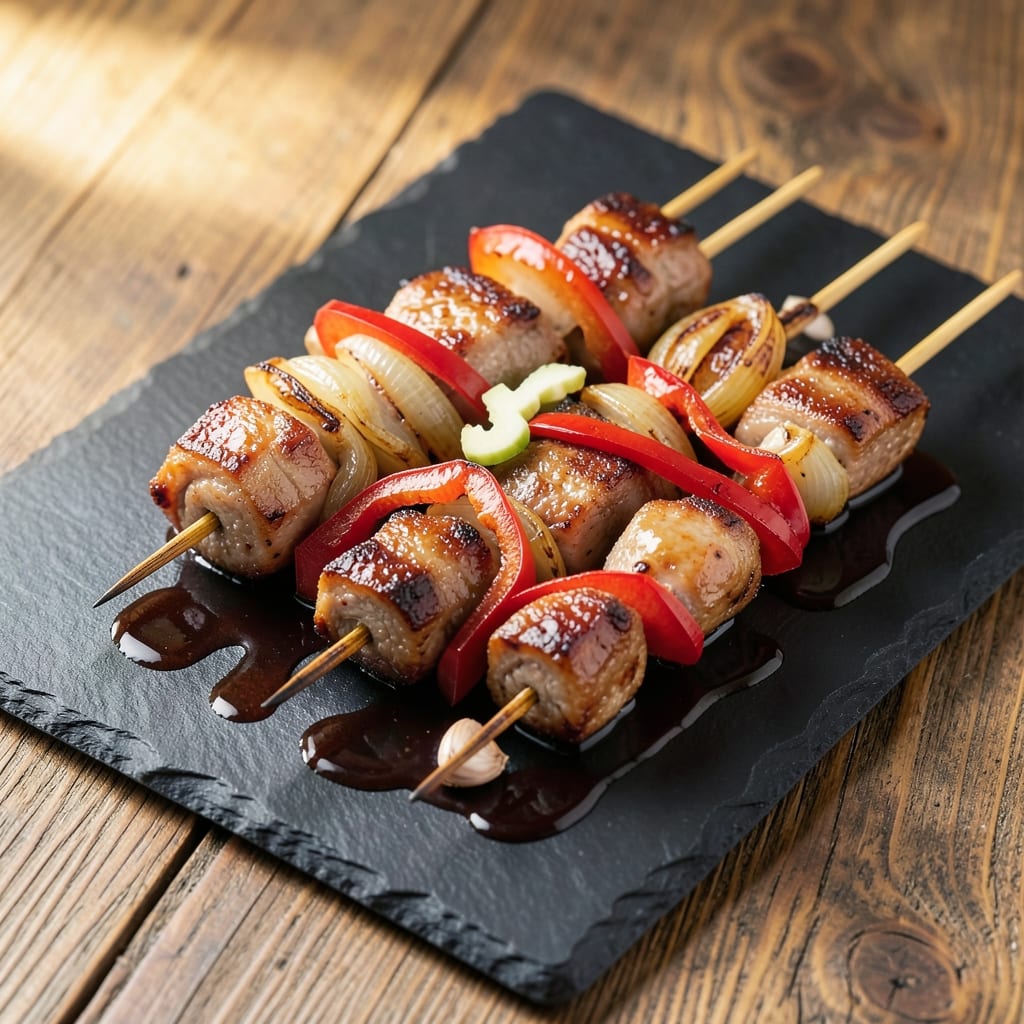
This Asian pork kabobs recipe transforms simple pork chunks into charred, caramelized skewers with a sticky-sweet glaze that's impossible to resist. 🔥 I perfected this technique after years of testing different marinades and grilling methods—each bite delivers a perfect balance of smoky char, tender meat, and that irresistible glaze. The secret lies in the marinade, where soy sauce, garlic, ginger, and honey work together to create deep, complex flavors that penetrate every piece of pork.
The key to restaurant-quality results at home is alternating pork with vegetables on the skewers, which prevents the meat from drying out and ensures even cooking. This method also adds color and texture contrast, making each bite more exciting. Whether you're grilling outdoors or using your broiler, the high heat creates those beautiful char marks while keeping the pork juicy inside.
What makes these kabobs truly special is the glaze—a perfect marriage of sweet and savory that caramelizes beautifully as it cooks. The combination of honey and soy creates a glossy finish that clings to each piece, while a touch of sesame oil adds nutty depth. You'll end up with skewers that are crispy on the outside, tender on the inside, and coated in that addictive glaze.
Serve these kabobs with complementary sides like stir-fried vegetables or coconut rice to create a complete meal. The flavors are versatile enough for weeknight dinners or impressive gatherings, making them a go-to recipe for any occasion. Let's get started on these flavor-packed skewers!
Ingredients for asian pork kabobs
These 14 ingredients create restaurant-quality charred pork skewers with addictive sweet-savory glaze.
| Ingredient | Amount | Notes |
|---|---|---|
| Boneless Pork Shoulder 🥩 | 1 ½ lb | Cut into 1.5-inch cubes |
| Red Bell Pepper 🌶️ | 1 whole | Cut into 1-inch chunks |
| Yellow Onion 🧅 | 1 whole | Cut into 1-inch chunks |
| Fresh Ginger 🌿 | 2 tbsp | Grated, fresh preferred |
| Garlic Cloves 🧄 | 6 cloves | Minced finely |
| Soy Sauce 🍶 | ½ cup | Low-sodium preferred |
| Honey 🍯 | ¼ cup | Pure, light variety |
| Sesame Oil 🫒 | 1 tbsp | Toasted, for aroma |
| Rice Vinegar 🍶 | 1 tbsp | White or seasoned |
| Brown Sugar 🍚 | 1 tbsp | Packed tightly |
| Vegetable Oil 🫒 | 2 tbsp | For brushing skewers |
| Wooden Skewers 🪵 | 8 whole | Soaked in water 30 mins |
| Salt 🧂 | 1 tsp | Kosher or sea salt |
| Black Pepper 🌶️ | ½ tsp | Freshly ground |
The pork shoulder is your secret weapon—it stays juicy while developing deep flavor. Ask your butcher for boneless shoulder and have them cut it into 1.5-inch cubes for even cooking. For the vegetables, bell peppers and onions work best—their structure holds up to grilling without turning mushy. Fresh ginger and garlic are non-negotiable here; the frozen dried stuff just won't cut it. Penzeys Spices or the bulk section at Whole Foods are great for quality ginger. If you can't find fresh, dried ginger works at half the amount, but the flavor won't be as vibrant.
No soy sauce? Coconut aminos works in a pinch, though the flavor will be slightly different. Substituting honey? Maple syrup or agave keeps things vegan, but honey creates that perfect caramelization. The sesame oil is crucial for that nutty depth—Trader Joe's has a great toasted sesame oil that's perfect. For the skewers, if you don't have wooden ones, metal or soaked bamboo skewers work just as well. The brown sugar can be swapped for coconut sugar if you prefer a less refined option, though it won't caramelize quite the same.
Marinate the pork for at least 4 hours (overnight is even better)—this ensures maximum flavor penetration. Store any leftover marinade in an airtight container in the fridge for up to 3 days. The cooked kabobs reheat beautifully; just brush with a little extra glaze and warm in a 350°F oven for 10 minutes. For meal prep, assemble the skewers ahead of time and refrigerate on a wire rack—this keeps them from steaming and turning soggy. The glaze thickens as it cools, so if it seems too thick when reheating, add a splash of water and warm through.
Why You'll Love This Recipe
- One-Pan Wonder: I swear by this for nights when I’m too tired to pull out a million dishes. The pork shoulder stays juicy while the peppers and onions caramelize right alongside it—no flipping, no fuss, just perfect char.
- Ginger-Garlic Magic: Between us, that fresh ginger and minced garlic in the marinade? It’s the secret weapon. The pork gets this tender, aromatic punch that makes every bite taste like it’s been slow-cooked for hours—even though it’s not.
- Picnic to Party: Honestly, these kabobs are my go-to for anything. Skewer them for a backyard BBQ, toss them in a bowl for meal prep, or serve them on a platter for date night. The same flavors work everywhere.
- Budget Meal Hero: Pork shoulder is cheap, and it stretches across multiple meals. I’ll grill a big batch on Sunday, then repurpose the leftovers into fried rice or noodles all week—no waste, all flavor.
Step-by-step instructions for Asian pork kabobs
Master the perfect balance of smoky char and sweet glaze with these foolproof kabob instructions.
👨🍳 Step 1: Marinate and Prep the Pork
In a large bowl, combine the 1.5 lb boneless pork shoulder cut into 1.5-inch cubes, 1 whole red bell pepper and 1 whole yellow onion cut into 1-inch chunks, 2 tbsp grated fresh ginger, 6 minced garlic cloves, 1 tsp salt, and 0.5 tsp black pepper. Mix gently to coat the meat and vegetables evenly.
In a separate small bowl, whisk together the 0.5 cup soy sauce, 0.25 cup honey, 1 tbsp sesame oil, 1 tbsp rice vinegar, and 1 tbsp packed brown sugar. Pour this marinade over the pork mixture and toss to thoroughly coat. Cover and refrigerate for at least 4 hours or overnight for maximum flavor penetration.
🔪 Step 2: Assemble the Kabobs
Soak the 8 wooden skewers in water for 30 minutes to prevent burning. Drain well before using. Thread the marinated pork and vegetables onto the skewers, alternating between meat and vegetables. Start and end with a piece of meat to ensure even cooking.
Arrange the assembled kabobs on a plate and let them sit at room temperature for 15-20 minutes before grilling. This brief resting period allows the marinade to fully absorb into the meat and vegetables, ensuring maximum flavor in every bite.
🔥 Step 3: Grill to Perfect Char
Preheat your grill to medium-high heat or about 400°F. Lightly brush the grill grates with 2 tbsp vegetable oil to prevent sticking. Place the kabobs on the grill and cook for 10-12 minutes, turning occasionally, until the pork reaches an internal temperature of 145°F and the vegetables are tender with visible grill marks.
Watch for the pork to develop a beautiful charred exterior while maintaining a juicy interior. The vegetables should be slightly caramelized and tender-crisp. Remove the kabobs from the grill and let them rest on a plate for 5 minutes before serving.
🍳 Step 4: Create the Sticky Glaze
While the kabobs are grilling, place the marinade that was in the bowl (reserve about 2 tbsp for brushing) in a small saucepan. Bring to a simmer over medium heat and cook for 5-7 minutes until it thickens slightly and becomes syrupy. This reduction enhances the flavors and creates that signature sticky glaze.
Once the kabobs have rested, brush them generously with the reduced glaze. The kabobs should be glistening and ready to serve. The glaze should coat the meat and vegetables evenly, adding a glossy sheen and extra depth of flavor.
🍽️ Step 5: Serve Immediately
Transfer the kabobs to a serving platter and drizzle any remaining glaze over the top. Serve immediately while the pork is still juicy and the glaze is sticky. These kabobs pair beautifully with steamed rice and a side of quick-pickled vegetables to balance the richness.
Each bite should deliver a harmonious blend of smoky char from the grill, tender pork, and the sweet-savory sticky glaze. The vegetables should add a satisfying crunch and freshness to complement the rich flavors of the pork.
Pro Tips For Making Asian Pork Kabobs
- MARINATE THE PORK LONGER: Cutting the pork shoulder into 1-inch chunks? Double the marinating time to 2–3 hours—yes, even if you’re short on time. The acid and ginger need that extra window to tenderize, or you’ll end up with chewy bites that scream "rushed job." I used to skip this, and the kabobs always tasted underwhelming.
- PEEL AND JULIENNE ONIONS: Skip the raw onion slices—they turn to mush and water down your kabobs. Instead, peel and julienne the yellow onion into matchsticks, then blanch them in boiling water for 30 seconds before skewering. This keeps them crisp and holds their shape, so they don’t collapse into a sad, soggy pile.
- USE METAL SKEWERS ONLY: Wooden skewers? They’ll splinter, catch fire, and ruin your grill session. Grab metal or soaking-wet wooden skewers (at least 30 minutes in water) to avoid flare-ups and ensure even cooking. Trust me, the last thing you want is a kabob falling apart mid-grill because the wood gave out.
- SEAR THE PORK FIRST: Before threading onto skewers, hit the pork with a quick sear in a hot pan for 2–3 minutes per side. This locks in juices and builds flavor—no more dry, overcooked edges when the kabobs hit the grill. I learned this the hard way after serving rubbery pork that tasted like it had been grilled for hours.
Regional styles of this asian pork kabobs
Japanese Teriyaki Style
For a Japanese-inspired version, swap the soy sauce for ½ cup mirin and ½ cup dashi stock in the marinade, along with 3 tbsp sake. Use 1 tbsp grated daikon radish instead of ginger for a milder, slightly sweet flavor profile. After grilling, brush the skewers with a reduced teriyaki glaze made from ¼ cup mirin, ¼ cup soy sauce, and 2 tbsp honey. Garnish with thinly sliced green onions for freshness. 🍶
Thai Basil-Lime Glaze
Transform your kabobs with a Thai-inspired twist by adding 2 tbsp fish sauce and 1 tbsp lime zest to the marinade. After grilling, toss the skewers with a glaze made by simmering 3 tbsp fish sauce, 2 tbsp lime juice, 1 tbsp brown sugar, and 1 tbsp chopped Thai basil until thickened. Serve with a side of cucumber salad and jasmine rice. The lime and basil add a bright, aromatic finish that cuts through the richness. 🌿
Korean Bulgogi-Inspired
For a Korean-inspired version, marinate the pork in ½ cup gochujang (Korean chili paste), ¼ cup brown sugar, 2 tbsp sesame oil, and 1 tbsp grated pear (for tenderness). Use 1 tbsp toasted sesame seeds and 2 tbsp chopped scallions as garnishes. Grill the skewers as usual, then brush with a glaze made from 2 tbsp gochujang, 1 tbsp honey, and 1 tbsp rice vinegar. The result is a sweet, spicy, and umami-packed kabob that’s perfect for bold flavor lovers. 🌶️
Vietnamese Lemongrass-Ginger
Infuse your kabobs with Vietnamese flavors by adding 2 stalks of lemongrass (bruised and finely chopped) and 1 tbsp fish sauce to the marinade. After grilling, brush with a glaze made from 2 tbsp fish sauce, 1 tbsp lime juice, 1 tbsp honey, and 1 tsp grated lemongrass. Serve with a side of rice noodles and fresh herbs like cilantro and mint. The lemongrass and fish sauce create a bright, citrusy kick that’s both refreshing and complex. 🍋
Chinese Five-Spice
Give your kabobs a Chinese twist by adding 1 tsp Chinese five-spice powder to the marinade, along with 1 tbsp hoisin sauce and 1 tbsp rice wine. After grilling, brush with a glaze made from 2 tbsp hoisin sauce, 1 tbsp honey, and 1 tsp grated ginger. Garnish with chopped scallions and toasted sesame seeds. The five-spice blend adds warmth and depth, making these kabobs perfect for a cozy, aromatic meal. 🌟
Hawaiian Pineapple-Teriyaki
For a tropical twist, add ½ cup crushed pineapple to the marinade and use ½ cup pineapple juice instead of rice vinegar. After grilling, brush with a glaze made from ¼ cup pineapple juice, 2 tbsp soy sauce, and 1 tbsp honey. Serve with a side of coconut rice and grilled pineapple slices. The pineapple adds a sweet, juicy contrast that pairs beautifully with the smoky pork. 🍍
Nutrition facts
Frequently asked questions
Can I use chicken or beef instead of pork for these kabobs?
This recipe works beautifully with chicken thighs (bone-in for extra flavor) or beef sirloin. For chicken, reduce marinating time to 2-3 hours since it cooks faster. Beef should marinate 4-6 hours for tender results. Adjust cooking time: chicken needs 8-10 minutes on the grill, while beef may take 12-15 minutes for medium doneness.
How do I prevent the wooden skewers from burning?
Soak skewers in water for 30 minutes before using—this prevents them from catching fire. For extra protection, thread a piece of bell pepper or onion at both ends of each skewer. If using a gas grill, position skewers perpendicular to the flames. On a charcoal grill, place them over the less hot coals. Never use dry or untreated skewers!
Can I make this recipe in an air fryer instead of grilling?
Yes, but with adjustments! Preheat air fryer to 375°F and cook skewers in batches for 8-10 minutes, turning halfway. The glaze won't caramelize as dramatically, so brush with extra reduced marinade after cooking. For best results, finish under a broiler for 2-3 minutes to create grill marks. Air frying works well for indoor cooking but lacks the smoky depth of grilling.
What's the best way to store leftovers?
Store cooked kabobs in an airtight container in the fridge for up to 3 days. Reheat in a 350°F oven for 10 minutes with a splash of water or reserved glaze to restore moisture. For freezing, place cooled skewers in a single layer on a tray, freeze solid, then transfer to a bag. Thaw overnight in the fridge before reheating. The glaze may thicken when reheated—add a little water to restore consistency.
How can I make these kabobs spicier?
Add 1 tbsp sriracha or 1 tsp chili flakes to the marinade for heat. For extra kick, brush with a spicy glaze made from 2 tbsp gochujang, 1 tbsp honey, and 1 tsp chili crisp after grilling. Garnish with sliced jalapeños or a drizzle of Thai chili sauce. Balance the heat with cooling sides like cucumber salad or rice.