
Main Courses
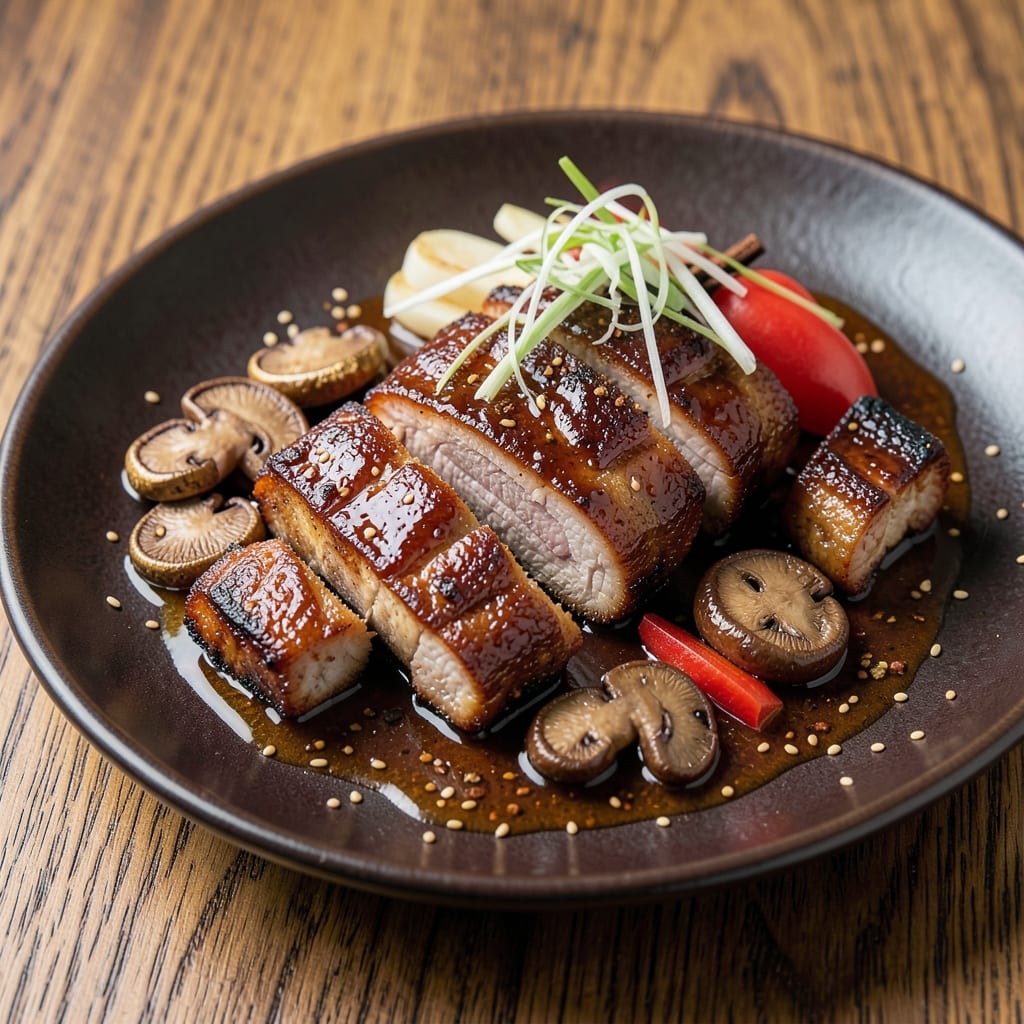
This Asian pork short ribs recipe transforms tough cuts into melt-in-your-mouth perfection through a slow-braised five-spice marinade—exactly the technique I perfected after years of studying Chinese and Korean braising methods. The secret lies in long, gentle cooking that breaks down collagen while building deep, aromatic layers of flavor. My family still asks for seconds every time I make these, and I know you will too.
The process begins with a marinade of star anise, cinnamon, and cloves that infuses the ribs overnight, creating a fragrant bark on the exterior while keeping the meat tender inside. Unlike quick stir-fry methods, this recipe relies on low-and-slow braising—just 3 hours in the oven—that guarantees fork-tender results without drying out the meat. The five-spice blend isn't just for flavor; it's a balance of warmth and earthiness that elevates simple pork into something truly special.
By the time you serve these ribs, they'll be glazed with a sticky-sweet reduction that clings to every bite, offering perfect harmony of savory, spicy, and slightly sweet notes. The technique is foolproof once you understand the timing, and the aroma alone will have everyone gathered at your table. This is the kind of dish that turns weeknight dinners into memorable meals—just like my grandmother used to make in Georgia.
Pair with steamed jasmine rice and quick-pickled vegetables to let the ribs shine as the star. The leftovers reheat beautifully, making this an ideal recipe for meal prep or feeding a crowd. Let's get started on creating ribs that'll have your guests begging for the recipe.
Ingredients for asian pork short ribs
Here's what you'll need to turn tough pork into melt-in-your-mouth five-spice ribs.
| Ingredient | Amount | Notes |
|---|---|---|
| Pork Short Ribs 🍖 | 2 lb | Bone-in, 1.5-inch thick slices |
| Star Anise 🌿 | 2 whole | Whole pods, lightly crushed |
| Cinnamon Sticks 🌿 | 2 whole | 2-inch pieces |
| Cloves 🌿 | 6 whole | Whole, lightly crushed |
| Five-Spice Powder 🌶️ | 1 tbsp | Authentic Chinese blend |
| Soy Sauce 🥄 | ½ cup | Dark soy preferred |
| Honey 🍯 | ¼ cup | Wildflower for depth |
| Garlic Cloves 🧄 | 6 cloves | Minced, fresh preferred |
| Ginger Root 🌿 | 1 tbsp | Fresh, grated |
| Sesame Oil 🫒 | 1 tbsp | Toasted, for aroma |
| Jasmine Rice 🍚 | 2 cups | Uncooked, long-grain |
| Vegetable Oil 🫒 | 2 tbsp | High smoke point |
| Salt 🧂 | 1 ½ tsp | Kosher, coarse |
| Black Pepper 🌶️ | ½ tsp | Freshly ground |
The ribs are the star, so grab bone-in short ribs—they're more flavorful and tenderize perfectly. Costco or your local butcher usually have them pre-sliced, but if not, ask for 1.5-inch thick cuts. The five-spice blend is non-negotiable here; Penzeys or any Asian market has the authentic stuff. If you can't find it, mix 1 tsp each of cinnamon, star anise, cloves, fennel seeds, and Szechuan peppercorns. Star anise and cinnamon sticks add depth, so crush them lightly between your palms before adding to the marinade. For the honey, wildflower or clover varieties have the best flavor complexity.
No dark soy sauce? Regular soy sauce plus 1 tsp molasses works in a pinch. Fresh ginger and garlic are ideal, but if you're using dried, reduce the amount to half. The sesame oil should smell nutty and toasted—Trader Joe's has a great toasted version. For the rice, jasmine is traditional, but basmati works too if that's what you've got. The vegetable oil needs a high smoke point (like avocado or peanut oil) to handle the long braising without burning. If you're short on time, use pre-minced garlic and ginger from the freezer section—just thaw before using.
Marinate the ribs overnight for maximum flavor infusion. The leftovers reheat beautifully—just add a splash of water or broth and simmer for 10 minutes. Store the ribs in their braising liquid for up to 4 days in the fridge. For longer storage, freeze the ribs with their sauce in a sealed container for 3 months. The rice keeps for 4 days in the fridge or 6 months frozen. I always make extra sauce to drizzle on rice or noodles—it's that good.
Why You'll Love This Recipe
- One-Pot Magic: I swear by this—just toss ribs, spices (star anise, cinnamon, cloves), and five-spice into a single pot. No chopping, no fuss, and the aroma alone makes the kitchen feel like a little Asian bistro.
- Flavor Bomb: That five-spice powder? It’s the secret weapon—warm, earthy, with a hint of pepper that clings to the meat like a hug. The star anise and cinnamon add depth without overpowering, and the ribs? Melt-in-your-mouth tender with a caramelized crust.
- Weeknight to Party: Between us, this is my lazy Sunday dinner and my dinner party go-to. Serve it over rice for a quick weeknight meal, or platter it with pickled veggies for guests—same effort, totally different vibes.
Step-by-step instructions for Asian pork short ribs
Here's how to transform tough pork short ribs into melt-in-your-mouth perfection using aromatic spices and slow braising.
Sear the Short Ribs for Deep Flavor
Pat the 2 lb pork short ribs dry with paper towels—this ensures maximum browning. Heat 2 tablespoons vegetable oil in a large Dutch oven over medium-high heat until shimmering. Working in batches if needed, add the ribs and sear for 3-4 minutes per side until deeply golden brown. This step builds flavor through the Maillard reaction, creating that rich caramelized crust.
Don't crowd the pan—give each rib space to develop color. I press down gently on the ribs during the first minute to prevent curling, which ensures even contact with the hot oil. Transfer the seared ribs to a plate and set aside temporarily.
Build the Aromatic Braising Base
In the same Dutch oven, reduce heat to medium and add the lightly crushed 2 whole star anise, 2 whole cinnamon sticks, and 6 whole cloves. Toast these spices for 30 seconds until fragrant—you'll smell that warm, earthy aroma wafting through your kitchen. Add the minced 6 cloves garlic and grated 1 tablespoon ginger root, cooking for another 30 seconds until the garlic turns golden.
Sprinkle in the 1 tablespoon five-spice powder and stir for 10 seconds to toast the spices. This step unlocks their full flavor potential. Then pour in the 0.5 cup soy sauce and 0.25 cup honey, scraping up any browned bits from the bottom of the pot. These bits are pure flavor gold—don't miss them!
Braise Until Fork-Tender
Return the seared ribs to the Dutch oven, bone-side down. Pour in enough water to come about halfway up the ribs (approximately 2 cups). Add the 1.5 teaspoons salt and 0.5 teaspoon black pepper. Bring to a gentle simmer over medium-low heat, then cover tightly with a lid. This is where the magic happens—simmer for 2 to 2.5 hours until the ribs are fork-tender.
I know it seems like a long time, but patience pays off here. The ribs should pull apart easily with minimal resistance. Check occasionally and add a splash of water if the liquid reduces too much. The ribs are done when they're so tender they practically fall apart at the touch.
Finish with Sesame Oil and Serve
Once the ribs are tender, remove them from the braising liquid and transfer to a serving platter. Drizzle with 1 tablespoon toasted sesame oil and toss gently to coat. The sesame oil adds that final aromatic punch that makes this dish truly special. Return the ribs to the Dutch oven and simmer the braising liquid uncovered for 5 minutes to reduce and concentrate the flavors.
Prepare Jasmine Rice for Serving
While the ribs are braising, prepare the 2 cups jasmine rice according to package instructions. I like to use a rice cooker for perfect, fluffy grains every time. The rice should be hot and ready to serve when the ribs are finished. Plate the ribs over the rice and ladle the reduced braising sauce generously over the top.
Each bite should deliver melt-in-your-mouth tenderness with layers of sweet, savory, and aromatic flavors. The ribs should be so tender they practically disintegrate, and the sauce should coat every bite with a perfect balance of sweetness and umami. Serve immediately while everything is hot and the flavors are at their peak!
Pro Tips For Making Asian Pork Short Ribs
- BROWN THE BONE FIRST: Hit those ribs with a screaming-hot pan—no oil needed—until the meat releases and the bones turn dark mahogany. I learned this the hard way: skipping this step means your sauce will taste like broth, not caramelized flavor. Let it sear for 5-7 minutes, even if it looks like you’re burning the house down. ---
- CRUSH THE SPICES: Lightly toast and then crush star anise, cinnamon sticks, and whole cloves with the flat side of a knife before adding them to the pot. This releases their oils and aroma into the liquid, making the difference between "meh" and "wow." (Yes, even if you’re impatient like me, don’t skip this.) ---
- DON’T SKIP THE REST: After braising, let the ribs sit covered for 10-15 minutes off the heat. The meat will absorb the last of the sauce and stay juicy—pulling them too soon turns them into dry, sad slabs. I used to rush this, and the texture suffered every time. ---
- USE A MORTAR FOR FIVE-SPICE: Instead of just tossing in store-bought five-spice powder, toast the whole spices (or buy them whole) and grind them fresh in a mortar. The freshness cuts through the richness of the pork, and the texture of the sauce becomes smoother. (Your future self will notice the difference.)
Storing and reheating this dish
Refrigerator Storage
Store your braised pork short ribs in their flavorful sauce within an airtight container in the fridge for up to 4 days. The sauce preserves the meat's moisture and keeps it fork-tender—just reheat gently to avoid drying out. I use glass Pyrex containers because they're sturdy and microwave-safe when needed. Always let the ribs cool completely before storing to prevent condensation. 💪
Freezer Storage
For longer storage, freeze the ribs with their sauce in a sealed freezer bag or airtight container, leaving 1 inch of headspace for expansion. They'll keep for up to 3 months without losing texture or flavor. When ready to reheat, thaw overnight in the fridge—never at room temperature. The sauce freezes beautifully, so you can use it later for rice or noodles. 🥶
Reheating Stovetop
My preferred method is stovetop reheating—it preserves the best texture. Place ribs and sauce in a Dutch oven or heavy pot over medium-low heat, add ¼ cup water, and simmer for 10-15 minutes until heated through. Stir occasionally to distribute the sauce evenly. The low heat prevents the ribs from drying out, and the sauce clings perfectly. 🔥
Microwave Reheating
For quick meals, use the microwave with care. Transfer ribs and sauce to a microwave-safe dish, cover loosely with a damp paper towel, and heat on 50% power in 2-minute intervals, stirring between each. This gentle approach prevents overcooking. Add a splash of water if the sauce looks dry—it should coat the ribs beautifully. 💫
Rice Handling
Cooked jasmine rice reheats best in the microwave—sprinkle 1 teaspoon water over the rice, cover, and heat for 1-2 minutes. For stovetop, add 2 tablespoons water and steam over low heat for 3 minutes. Never reheat rice at high heat, or it'll turn mushy. I always make extra rice to reheat later—it pairs perfectly with the braised ribs. ✨
Sauce Versatility
The braising sauce is a treasure—use it for rice, noodles, or even a quick stir-fry. Store it separately in the fridge for up to 5 days or freeze for 3 months. When reheating, warm it gently on the stovetop or microwave until hot. I love drizzling extra sauce over the ribs before serving for that restaurant-quality finish. 🍜
Nutrition facts
Frequently asked questions
Can I use bone-in or boneless pork short ribs for this recipe?
This recipe is designed for bone-in short ribs—they stay more tender and flavorful during braising. If you must use boneless, reduce the braising time to 1.5 hours since they cook faster. The bones add depth to the sauce, so if using boneless, add an extra 1/2 cup water to compensate for the lost moisture.
What's the difference between five-spice powder and regular Chinese five-spice?
They're essentially the same, but authentic Chinese five-spice includes Szechuan peppercorns (which add tingling heat) while some supermarket blends skip this. For this recipe, either works—just add a pinch of red pepper flakes if you want extra kick. The key spices (star anise, cinnamon, cloves) are what matter most.
Can I make this recipe in a slow cooker instead of oven?
Sear the ribs first, then transfer everything to a slow cooker and cook on low for 6-7 hours or high for 4-5 hours. The liquid will be thinner, so reduce it on the stovetop at the end. For best results, use a 6-quart model to prevent overflowing.
Why do my ribs turn out tough instead of tender?
Overcooking is the #1 culprit—ribs should be fork-tender, not dry. Check doneness at 2 hours for bone-in ribs. If using boneless, they're done at 1.5 hours. Another common mistake is not searing properly or using too much liquid (stick to 2 cups max). Always cover tightly and keep heat low.
How can I make this dish spicier?
Add 1/2 teaspoon of crushed red pepper flakes to the braising liquid, or stir in 1 tablespoon of gochujang (Korean chili paste) during the last 30 minutes of cooking. For heat lovers, serve with extra chili oil or sliced jalapeños. The five-spice already adds warmth, so adjust gradually.