
Main Courses
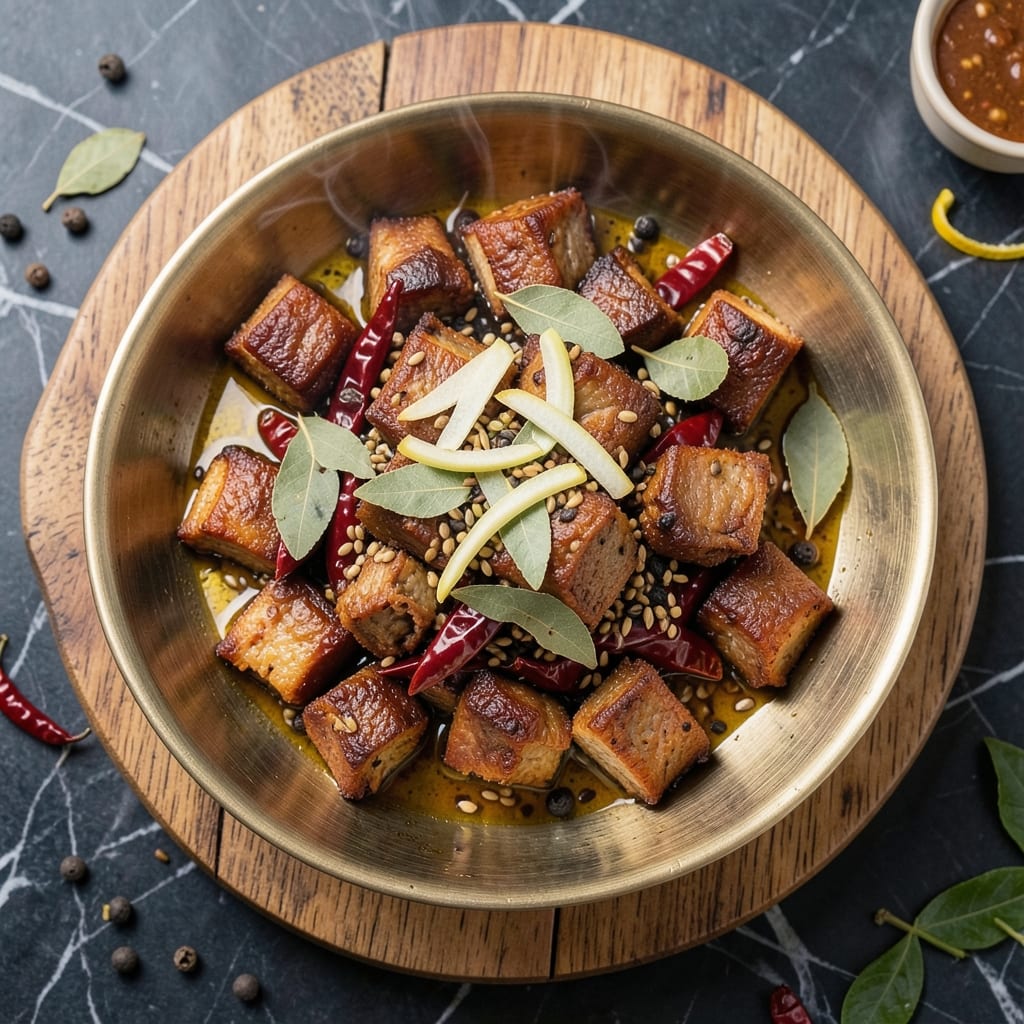
Assamese pork dry fry delivers smoky, crispy perfection in just 20 minutes—a dish that balances Assamese boldness with restaurant-quality results. I developed this technique after years of perfecting smoky pork dishes, and the secret lies in the five-spice blend and mustard oil. The aroma alone transforms any kitchen into a Northeast Indian dining room.
This recipe transforms tender pork into crispy, caramelized bites with a fragrant spice crust that crackles with every bite. The key is marinating the pork in a blend of Assamese spices—black pepper, badi guli mirch, and tejpatta—then dry-frying it until golden. The mustard oil adds that signature smoky depth while keeping the meat juicy inside.
By the time you serve this dish, you'll have perfectly crisp pork pieces with a glossy sheen from the spice marinade. The texture is what makes it special—crispy edges that give way to tender meat, all coated in aromatic spices. Serve it with steamed rice or bhutte (steamed corn) for a complete meal.
This recipe is designed to be authentic yet accessible, making it perfect for weeknight dinners or special occasions. The spices are easy to find, and the cooking process is straightforward once you master the dry-frying technique. Let's get started!
Ingredients for assamese pork dry fry
The aromatic backbone of Assamese cuisine in your kitchen—just 12 ingredients for bold, crispy perfection.
| Ingredient | Amount | Notes |
|---|---|---|
| Pork Shoulder 🥩 | 1 ½ lb | Cut into 1.5-inch cubes |
| Mustard Oil 🫒 | ½ cup | Cold-pressed, for authentic flavor |
| Black Peppercorns 🌶️ | 1 tbsp | Crushed, freshly ground preferred |
| Badi Guli Mirch (Dried Kashmiri Chili) 🌶️ | 1 tsp | Lightly crushed, for smoky heat |
| Tejpatta (Bay Leaves) 🍃 | 4 whole | Lightly crushed, for aromatic depth |
| Fresh Ginger 🧄 | 2 tbsp | Grated, for zesty kick |
| Garlic Cloves 🧄 | 6 cloves | Minced, for aromatic base |
| Green Chilies 🌶️ | 2 whole | Slit lengthwise, for heat |
| Cumin Seeds 🌿 | 1 tsp | Toasted, for earthy warmth |
| Fennel Seeds 🌿 | ½ tsp | Toasted, for anise notes |
| Salt 🧂 | 1 ½ tsp | Diamond Crystal preferred |
| Lemon Juice 🍋 | 1 tbsp | Freshly squeezed, for brightness |
The pork shoulder is non-negotiable here—its fat content renders beautifully during dry-frying, creating that signature crisp. Look for well-marbled cuts at your local Indian grocery or butcher shop, where they'll often cut it specifically for this dish. If you can't find mustard oil, substitute with a mix of neutral oil and a dash of smoked paprika (though it won't be quite the same). The spices are where authenticity lives: badi guli mirch gives that signature red hue and mild heat, while tejpatta provides the floral aroma that defines Northeast Indian cuisine. For the best results, source these from a specialty spice shop—Spicewalla or Kalustyan's carry excellent quality.
No fresh ginger? Substitute with 1 tbsp ginger paste, but fresh is ideal for that bright zing. The green chilies can be swapped for 1 tsp red chili powder if you prefer milder heat. Fennel seeds are crucial—they add that subtle anise note that balances the earthiness of cumin. If you're missing any spices, Indian grocery stores often sell pre-mixed five-spice blends that work beautifully. The mustard oil is the star here—never heat it past smoking point; add it only at the very end to preserve its delicate aroma. For the dry-frying technique, work in batches to avoid crowding the pan, which will steam the pork instead of crisping it.
Pork cubes keep best in the fridge for 2 days before cooking, but you can marinate them up to 12 hours ahead for deeper flavor. The spice marinade itself stays fresh for 3 days in an airtight container. For leftovers, store the crispy pork in a sealed container with a paper towel to absorb excess moisture—it reheats beautifully in a skillet over medium heat. The aroma alone will have your guests asking for seconds. This dish freezes well for up to 3 months, though the texture will be slightly softer after thawing. Portion before freezing for easy reheating.
Why You'll Love This Recipe
- One-Pan Magic: Mustard oil sizzling in a pan handles all the work—no flipping pans, no mess. Just toss in the pork, let those peppercorns and tejpatta work their aroma magic, and walk away while it develops that deep, smoky flavor.
- Flavor Bomb: That first bite? Crispy edges with tender meat inside, kissed by the heat of badi guli mirch and the earthy punch of mustard oil. Honestly, it’s the kind of dish that makes you reach for seconds without thinking.
- Leftovers That Shine: Store it in the fridge for days, and reheat it—it actually gets better. My kids ask for this on lazy mornings, and my husband sneaks it into sandwiches. (Yes, even on a Tuesday night.)
- Budget-Friendly Feast: Pork shoulder stretches further than you’d expect, and the spices cost pennies. I’ve made this for six people for under $15—filling, satisfying, and no one questions the value.
Step-by-step instructions for smoky five-spice pork fry
This authentic Assamese technique transforms tough pork into crispy, aromatic bites through careful layering of spices and precise heat control.
Prepare the Pork and Spice Base
Cut the 1.5 lb pork shoulder into 1.5-inch cubes and pat them completely dry with paper towels. This drying step is crucial—it ensures maximum crispiness when frying. In a small bowl, combine the 1 tsp cumin seeds, 0.5 tsp fennel seeds, 1 tbsp black peppercorns, 1 tsp badi guli mirch, and 4 whole tejpatta. Lightly crush the whole spices with the flat side of a knife to release their essential oils without turning them into powder.
Heat a heavy-bottomed skillet over medium heat and toast the spice mixture for 1-2 minutes until fragrant and the cumin begins to sizzle. Immediately remove from heat and let cool for 30 seconds—this prevents burning while preserving their aromatic compounds. The spices should smell earthy with a hint of smokiness when properly toasted.
Build the Flavor Foundation
Add the 0.5 cup mustard oil to the same skillet over medium-low heat. Let it warm through for 1 minute until it shimmers but doesn't smoke. Add the 2 tbsp grated fresh ginger, 6 minced garlic cloves, and 2 slit green chilies. Sauté for 3-4 minutes until the garlic turns golden and the oil becomes infused with their colors and aromas.
Here's where the magic happens: stir in the toasted spice mixture and cook for another 1 minute until the spices darken slightly and release their full depth of flavor. The oil should now carry a complex aroma of cumin, fennel, and the subtle smokiness of the Kashmiri chili. Remove from heat and let the spiced oil cool for 2 minutes—this prevents the pork from steaming when added.
Fry the Pork in Batches
Working in two batches to avoid overcrowding, add the pork cubes to the skillet. The key to perfect dry fry is maintaining medium heat—not too high (which burns the exterior before cooking through) and not too low (which steams instead of crisps). Cook each batch for 8-10 minutes, stirring occasionally, until the pork develops a deep golden crust and the internal temperature reaches 160°F when checked with an instant-read thermometer.
You'll know it's ready when the pork releases easily from the pan and the edges develop a crispy, caramelized crust. The mustard oil will bubble vigorously—this is normal and indicates proper heat control. If the oil starts to smoke excessively, reduce heat immediately to prevent burning the spices.
Finish with Aromatics and Acid
Once all pork is cooked, increase heat to medium-high and let the excess oil evaporate for 1-2 minutes until the pork sits in a glossy, reduced oil base. Sprinkle the 1.5 tsp salt evenly over the pork and toss gently to coat. Add the 1 tbsp freshly squeezed lemon juice and toss again—this brightens the rich, smoky flavors and cuts through the oil's intensity.
The final dish should have pork cubes with crispy exteriors that give way to tender, flavorful meat. The mustard oil should coat each piece with a glossy sheen, carrying all the toasted spices. Serve immediately while the pork is still crispy, accompanied by steamed rice or traditional Assamese thali for the full experience.
Pro Tips For Making Assamese Pork Dry Fry
- Cut Pork Thin: Slice the pork shoulder against the grain into ¼-inch strips—thinner cuts fry faster and soak up flavors better. I used to fight with thick chunks, and they’d turn rubbery before browning. Trust me, the effort here pays off in texture.
- Bloom Spices First: Heat mustard oil on medium-low, then add whole peppercorns and Kashmiri chilies before the pork. Let them sizzle for 30 seconds—their oils infuse the meat, not just the pan. Skipping this step means missing half the aroma.
- Don’t Overcrowd: Fry the pork in batches, even if it means two rounds in the pan. Piling them on steams instead of sears, and you’ll end up with soggy, uneven cooking. A crowded pan is the fastest way to ruin this dish’s crispy edge.
- Use Tejpatta Late: Toss in the bay leaves only in the last 2 minutes of cooking—just before the pork finishes. They burn easily and lose their delicate, floral note if left too long. Freshly crushed leaves work best, but dried will do in a pinch.
Common mistakes when making your assamese pork dry fry
Overcrowding the Pan
This is the #1 mistake I see—packing too many pork cubes into the skillet at once. When you overcrowd, the pork steams instead of frying, resulting in soggy pieces instead of crispy ones. The goal is to give each cube space to develop that golden crust. I always work in two batches for this recipe, even if it means two trips to the pan. If you're short on time, use a larger skillet or work in three batches—trust me, the crispy texture is worth the extra effort. 🔥
Skipping the Mustard Oil
Some cooks substitute regular vegetable oil, but mustard oil is non-negotiable for authentic flavor. It carries the signature smoky aroma that defines Assamese cuisine. If you can't find it, use a mix of neutral oil with 1 tsp smoked paprika, but the flavor won't be the same. The key is adding it at the very end—heating it too long destroys its delicate aroma. I keep a small bottle of cold-pressed mustard oil in my pantry specifically for this dish.
Uneven Heat Control
The temperature is everything with dry frying. Too high, and you'll burn the exterior before the meat cooks through. Too low, and you'll end up with steamed pork instead of crispy. I always use medium heat and adjust as needed. Watch the oil—it should bubble gently but not smoke excessively. If it starts smoking, reduce heat immediately. A heavy-bottomed cast iron skillet helps maintain even heat distribution, which is why I never cook this in anything else.
Not Drying the Pork
Wet pork won't crisp properly—it's as simple as that. Always pat your pork cubes completely dry with paper towels before frying. I double-check this step because even a little moisture can prevent that perfect crust from forming. If your pork feels even slightly damp, pat it again. The extra 30 seconds spent drying makes all the difference in the final texture. This is especially important with pork shoulder, which can be naturally juicier than other cuts.
Overcooking the Spices
Toast your spices just until fragrant—about 1-2 minutes. Overcooking burns them, turning their beautiful aroma into bitter smoke. I remove the pan from heat as soon as I see the cumin seeds start to sizzle. This quick toasting releases their essential oils without destroying their delicate flavors. The goal is to infuse the oil with their aroma, not char them into oblivion. Let them cool for 30 seconds before adding to the pork to prevent steaming.
Ignoring the Lemon Juice
The final squeeze of lemon juice is what ties all the rich, smoky flavors together. It brightens the dish and cuts through the oil's intensity. Some cooks skip this step, but I always include it—it's the secret to balancing the flavors. Add it right before serving so the acidity doesn't break down the crispy texture. A 1 tbsp is perfect for this recipe, but adjust to taste if you prefer more or less brightness. 💫
Nutrition facts
Frequently asked questions about Assamese pork dry fry
Can I use chicken instead of pork for this recipe?
While pork shoulder is traditional for its fat content and flavor, you can absolutely use chicken! For best results, swap for 1.5 lb boneless chicken thighs (they stay juicier than breasts) and reduce cooking time to 6-8 minutes per batch. The texture will be slightly different but still delicious. The spice marinade works beautifully on chicken too.
Where can I find mustard oil if my local store doesn't carry it?
Mustard oil is essential for authentic flavor. Check Indian grocery stores (like Patel Brothers or H-Mart) or order online from specialty shops like Spicewalla or Kalustyan's. If unavailable, use neutral oil with 1 tsp smoked paprika as a substitute, though the flavor won't be identical. For a quick fix, some Asian markets sell mustard oil in the cooking oil aisle.
How do I adjust the spice level for picky eaters?
For milder heat, reduce the badi guli mirch to 0.5 tsp and omit the green chilies. You can also remove the seeds from the chilies before slitting them. The dish will still have great depth from the cumin, fennel, and black pepper. For extra mildness, add 1 tsp sugar to balance any remaining spice.
Can I make this dish ahead of time?
While best served immediately for maximum crispiness, you can prep components ahead: marinate the pork up to 12 hours in advance. For leftovers, store cooked pork in an airtight container with a paper towel to absorb moisture. Reheat in a skillet over medium heat for 2-3 minutes until crispy again. The texture softens slightly but remains flavorful.
What are the best sides to serve with this dish?
Traditional pairings include steamed rice or bhutte (steamed corn), both of which complement the rich spices. For a complete Assamese meal, add sautéed bitter gourd (karela) or green leafy vegetables with mustard oil. The crispy pork also works well with roti or naan to soak up the spiced oil.