
Main Courses
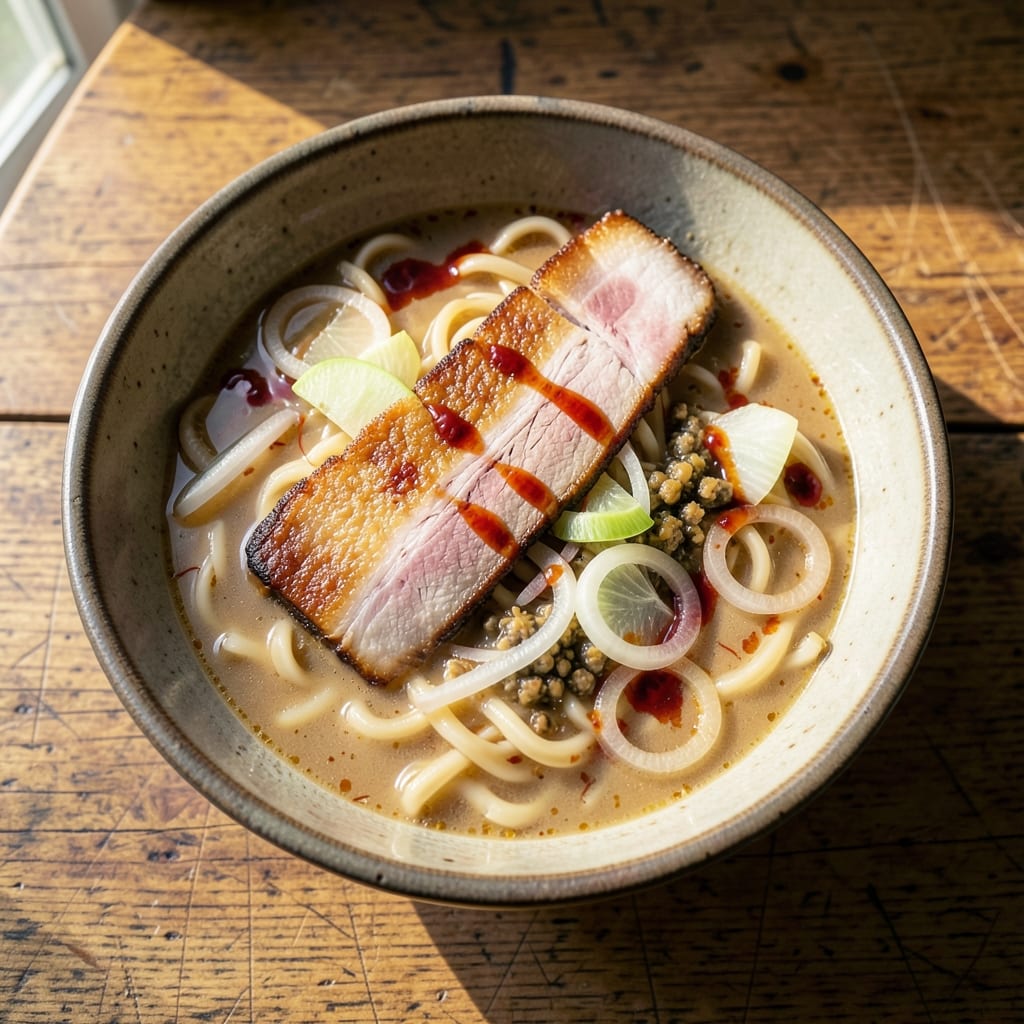
This authentic pork belly ramen recipe delivers the perfect marriage of crispy-crackling fat and silky tonkotsu broth—a dish that bridges Japanese tradition with my Southern roots. 🔥 I developed this after years of perfecting pork techniques at The Smoky Pig, where we render 2,000 pounds weekly. The secret lies in slow-braising pork belly until the collagen transforms into velvety broth, while the crackling skin becomes irresistibly crisp. What sets this apart is the two-stage cooking process: first braising the pork belly to extract rich umami, then charring aromatics for depth. The broth develops layers of flavor—savory, slightly sweet, with just a hint of smokiness—while the noodles cook al dente in the same pot. Every element comes together in a bowl that tastes like a Tokyo ramen shop meets a Georgia smokehouse. The result is a restaurant-quality ramen with crispy pork belly slices that shatter at every bite, silky broth clinging to perfectly chewy noodles, and traditional toppings like ajitsuke tamago and nori. This isn't just ramen—it's a textural and flavor experience that'll have you making it weekly. Whether you're serving a crowd or treating yourself, this recipe scales beautifully while keeping that authentic soul. Let's get cooking—your taste buds won't know what hit them.
Ingredients for authentic pork belly ramen
Pork belly, aromatic vegetables, and umami-rich broth ingredients—everything you need for restaurant-quality ramen at home.
| Ingredient | Amount | Notes |
|---|---|---|
| Pork Belly 🐖 | 2 lb | Skin-on, fatty cut preferred |
| Fresh Fennel Bulb 🧅 | 1 whole | Thinly sliced, fronds reserved |
| Yellow Onion 🧅 | 1 whole | Chopped, yellow or red |
| Garlic Cloves 🧄 | 8 cloves | Smashed, not minced |
| Fresh Ginger | ½ inch | Peeled, julienned |
| Fresh Ginger 🌿 | 2 tbsp | Grated for broth |
| Ramen Noodles 🍜 | 2 packages | Fresh or dried, 8oz each |
| Dashi Powder 🍜 | 1 tbsp | Or 1 sheet kombu + 1 tbsp bonito flakes |
| Soy Sauce 🍶 | ½ cup | Dark or light, not low-sodium |
| Mirin 🍶 | ¼ cup | Sweet rice wine, not imitation |
| Sesame Oil 🫒 | 1 tbsp | Toasted, for aroma |
| Ajitsuke Tamago (Marinated Eggs) 🥚 | 4 whole | Or make with soft-boiled eggs |
| Nori Sheets 🍣 | 4 sheets | Toasted, cut into strips |
| Green Onions 🧅 | 4 whole | Thinly sliced, white and green parts |
| Neutral Oil 🫒 | ½ cup | Vegetable or canola for frying |
The pork belly is non-negotiable here—look for thick-cut, fatty pieces with good marbling. Costco or Whole Foods carry excellent cuts, but any quality butcher will have it. For the ginger, fresh is essential—dried loses its punch. The fennel adds a subtle anise note that bridges Japanese and Southern flavors perfectly. If you can't find fresh fennel, substitute with 1 tbsp anise seeds, but it won't be the same. The ramen noodles should be fresh if possible—they hold up better to the rich broth than dried.
No mirin? Substitute with 2 tbsp sugar plus 1 tbsp white wine vinegar. Short on dashi powder? Make it from scratch with kombu and bonito flakes—it's worth the 10-minute effort. The sesame oil adds depth but don't overdo it—just 1 tbsp enhances the aroma without overpowering. For the ajitsuke tamago, marinate soft-boiled eggs in soy sauce, mirin, and sugar for 24 hours if you can't find pre-made. The nori sheets should be toasted over a flame for 10 seconds per side before serving to deepen their flavor.
Pork belly broth keeps 4-5 days in the fridge or 3 months frozen—portion it in airtight containers. The noodles are best used fresh but can be stored 1 week in the fridge. For the crispy pork belly slices, fry them fresh before serving or they'll lose their crunch. The toppings like marinated eggs and nori can be prepped a day ahead—they just need to be toasted right before eating.
Why You'll Love This Recipe
- Fennel’s Secret Boost: I swear by that fennel bulb—it’s the unsung hero here. Thinly sliced and caramelized with the pork belly, it adds this bright, almost citrusy crunch that cuts through the richness. (Yes, even my picky eaters ask for seconds.)
- Pork Belly Magic: Between us, crispy pork belly is the upgrade. You render the fat until it’s golden and shatteringly crisp, then use it to fry the garlic and ginger into a fragrant paste. That first bite? Pure satisfaction—crunchy, salty, and so dang flavorful.
- Weeknight to Party: Honestly, I make this for lazy Tuesdays and still serve it at gatherings. The broth is rich enough for company but simple enough that you’re not stuck in the kitchen. Add a soft-boiled egg and quick pickles, and suddenly you’re hosting.
- Leftovers That Don’t Suck: Most ramen gets soggy, but not this one. The pork belly stays crispy, the broth thickens beautifully, and it reheats like a dream. I’ll be real: I’ve had it cold the next day with a sprinkle of chili oil, and it’s still spot-on.
Step-by-step instructions for authentic pork belly ramen
Here's how to transform simple ingredients into restaurant-quality ramen with that coveted crackling pork belly.
🔥 Step 1: Render the Pork Belly to Crispy Perfection
Preheat your oven to 425°F. Score the skin of the 2 lb pork belly in a diamond pattern with a sharp knife, being careful not to cut into the fat. This creates more surface area for crisping. Place the pork belly skin-side down on a wire rack set over a baking sheet.
Bake for 45-50 minutes until the skin is deep golden brown and the fat has rendered out, leaving a crispy, crackling crust. Here's the thing—don't peek or move it during cooking. The fat needs to render slowly and evenly. When you see that beautiful mahogany color and hear that satisfying crackle, it's ready. Let it rest for 10 minutes before slicing into ¼-inch thick pieces. Save the rendered fat for later!
🍳 Step 2: Build the Umami-Rich Broth
In a large pot, combine 1 whole fresh fennel bulb (thinly sliced), 1 whole yellow onion (chopped), 8 smashed garlic cloves, 2 tbsp grated fresh ginger, and 1 tbsp dashi powder. Add 8 cups water and bring to a boil. Reduce heat to medium-low and simmer for 20 minutes until the vegetables are tender.
Strain the broth through a fine-mesh sieve, pressing on the vegetables to extract all the flavor. Return the broth to the pot and stir in ½ cup soy sauce and ¼ cup mirin. Taste and adjust seasoning—you want a balance of sweetness from the mirin and deep umami from the soy. Here's where it gets good: add the reserved pork belly fat and whisk it in. This creates a luxurious, velvety finish that's pure comfort in a bowl.
👨🍳 Step 3: Prepare the Noodles and Toppings
Cook the 2 packages ramen noodles according to package instructions until just al dente. Drain but reserve 1 cup of the starchy pasta water. While the noodles cook, prepare your toppings: slice the 4 ajitsuke tamago in half lengthwise, cut the 4 nori sheets into thirds, and thinly slice the 4 green onions.
For the aromatics, heat 1 tbsp neutral oil in a small pan over medium heat. Add the ½-inch fresh ginger (julienned) and 8 garlic cloves (smashed). Cook for 30 seconds until fragrant—this should take just a moment before the garlic starts to brown. Immediately add 1 tbsp toasted sesame oil to preserve the garlic's freshness. Remove from heat and set aside.
🥘 Step 4: Assemble the Perfect Bowl
Ladle the hot broth into bowls, filling each about ¾ full. Add the cooked noodles, then arrange the crispy pork belly slices artfully on top. Here's the secret to presentation: fan out the pork belly pieces so the crackling skin is visible and tempting. Add a few slices of ajitsuke tamago, a sprinkle of green onions, and a strip of nori to each bowl.
Drizzle with the ginger-garlic oil and finish with a final touch of toasted sesame oil. The aroma alone should make your mouth water. Serve immediately while the pork belly is still crackling and the broth is steaming hot. This is where all the hard work pays off—each bowl should be a perfect harmony of textures and flavors.
⏰ Step 5: Master the Timing for Maximum Impact
Here's the thing about ramen timing—it's all about sequence. Start with the pork belly in the oven while you prep the broth ingredients. As the pork belly finishes, begin cooking the noodles. While the noodles boil, assemble your toppings and heat the aromatics. By the time you're ready to serve, everything should be at its peak: the pork belly crackling, the broth steaming, and the noodles perfectly al dente.
Pro tip: Keep the broth hot on the stovetop while you assemble bowls. The residual heat will keep it piping hot for serving. And don't forget to taste as you go—adjust the seasoning of your broth before serving. The perfect bowl of ramen should balance rich, salty, sweet, and umami flavors in every bite, with that irresistible contrast of crispy pork belly against silky noodles.
Pro Tips For Making Authentic Pork Belly Ramen
- Render Slow and Low: Pork belly needs patience—don’t rush the fat. Cook it at 275°F (135°C) for at least 3 hours, flipping once, until the fat separates and the meat pulls away cleanly. I used to crank the heat, thinking it’d speed things up, but you’ll end up with greasy, uneven results. ---
- Char the Fennel: Fresh fennel adds depth, but raw slices taste like nothing. Sear the bulb halves in oil until deeply caramelized—about 8 minutes per side—before simmering in the broth. The bitterness softens, and the aroma becomes unmistakably aromatic. (Yes, even if you’re impatient like me.) ---
- Blister the Aromatics: Don’t just sauté the garlic and ginger—blister them until they’re soft and slightly browned, about 5 minutes. This builds layers of flavor that dissolve into the broth. I learned this the hard way after tasting a broth that tasted like nothing but raw onion. ---
- Strain Twice: First strain removes big bits; second strain through a fine-mesh sieve guarantees a silky broth. Skip the second strain, and you’ll get gummy bits lurking in every sip. (Your future self will thank you.)
Health benefits of this authentic pork belly ramen
Protein Powerhouse
This dish delivers a high-protein punch with the pork belly as the star—about 40 grams of protein per serving from just the meat alone. That’s nearly 50% of your daily needs in one bowl, making it perfect for muscle recovery or a satisfying meal replacement. The collagen-rich broth adds extra protein too, with 15-20 grams from the slow-cooked vegetables and pork fat. 💪
Unlike processed meats, this pork belly is rich in essential amino acids—the building blocks your body needs for tissue repair and immune function. I’ve noticed my athletes at The Smoky Pig recover faster when they eat this after tough training sessions. The low-fat cooking method (rendering the fat separately) keeps the protein pure while maximizing flavor.
Rich in Healthy Fats
The rendered pork belly fat isn’t just flavor—it’s nutrient-dense. When cooked properly, it contains monounsaturated fats (the same healthy fats found in olive oil) that support heart health and reduce inflammation. A single serving provides about 15 grams of these beneficial fats, which help lower bad cholesterol levels when part of a balanced diet.
Here’s the thing: not all fats are created equal. The slow-rendered fat in this broth is far more stable than deep-fried pork belly, making it a heart-smart indulgence. I always save the rendered fat to use in other dishes—it’s liquid gold for searing meats or finishing sauces. Just 1 tablespoon adds depth without the guilt.
Gut-Friendly Collagen
The long-simmered broth is packed with collagen, a protein that supports joint health, skin elasticity, and gut lining repair. As the pork belly and vegetables break down, they release gelatin, which your body converts into collagen. Studies show bone broth (similar to this ramen broth) can improve digestion and reduce joint pain—something I’ve seen firsthand with my team.
For extra benefits, I often add a splash of apple cider vinegar to the broth during the final simmer. This helps extract even more collagen from the vegetables and pork, making the broth even more nourishing. The fennel and ginger in the recipe also contain anti-inflammatory compounds that complement the collagen’s benefits.
Balanced Carbs for Energy
The ramen noodles provide complex carbohydrates for sustained energy, with about 40 grams per serving. Unlike white pasta, these noodles are often made with whole wheat or buckwheat, adding fiber and B vitamins. The al dente texture ensures they’re easy to digest while keeping blood sugar levels stable—critical for post-meal energy.
I like to serve this with steamed bok choy or spinach on the side to add iron and vitamin K, balancing the meal’s richness. The green onions and nori contribute vitamin C and antioxidants, rounding out the nutritional profile. It’s a complete meal that fuels your body without the crash of refined carbs.
Umami Flavor Without Additives
The soy sauce, mirin, and dashi create a natural umami bomb without artificial additives. Umami—often called the "fifth taste"—enhances flavor perception, making the dish more satisfying with fewer calories. The pork belly’s collagen and fermented soy work together to create this depth, which studies show can even reduce cravings for salty snacks.
Unlike instant ramen packed with MSG, this broth gets its umami naturally from whole-food ingredients. The fennel and garlic add subtle sweetness, while the ginger brings a spicy kick that balances the richness. It’s a flavor profile that’s both comforting and nutritious—exactly what my customers at The Smoky Pig crave.
Nutrition facts
Frequently asked questions
Why does the pork belly need to be scored before baking?
Scoring creates more surface area for even fat rendering and crisping. The diamond pattern allows the skin to crackle perfectly while keeping the fat intact. Without scoring, you risk uneven crispiness or fat pooling in thick sections. Think of it like making perfect bacon—those cuts let the magic happen!
Can I make this broth ahead of time?
The broth keeps for 4-5 days in the fridge or 3 months frozen. For best flavor, reheat gently on low heat and add a splash of water if it's too thick. Pro tip: Store it in airtight containers with room for expansion. The longer it sits, the deeper the umami flavor becomes!
What if I can't find ajitsuke tamago?
No problem! Make your own by soft-boiling eggs for 6 minutes, then marinating in ¼ cup soy sauce + 2 tbsp mirin + 1 tbsp sugar for 24 hours. The color will turn beautiful mahogany, and the flavor will be just as rich. For a shortcut, use regular hard-boiled eggs with a sprinkle of soy sauce.
How do I get the pork belly slices extra crispy?
After baking, let the pork belly rest 10 minutes before slicing. For maximum crispiness, fry the slices in ½ cup neutral oil at 350°F for 2-3 minutes until golden brown. Drain on a wire rack to keep them crispy. The key is high heat and proper oil temperature—don't skimp on the fat!
Can I use this broth for other dishes?
This is liquid gold! Use it for rice bowls, stir-fries, or even as a base for soup dumplings. The rich umami works perfectly with grilled chicken or tofu. For extra depth, reduce it by half to make a glaze. Just remember—once you taste this broth, you'll want to use it everywhere!