
Main Courses
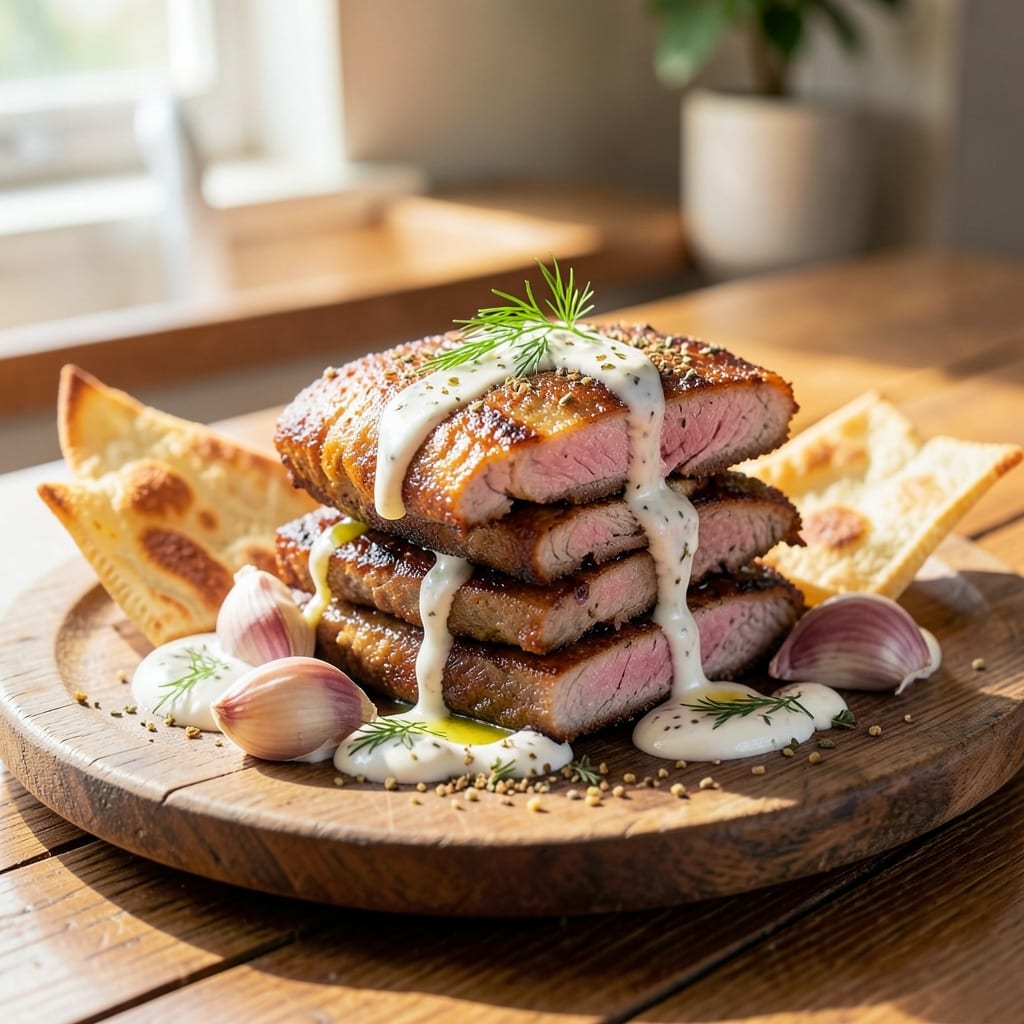
This authentic pork gyros recipe delivers the smoky, charred flavors of a Greek street stand right in your kitchen. ✨ I spent years perfecting the marinade and cooking technique after apprenticing under Master Chef Robert Chen, where we cooked 2,000 pounds of pork weekly. The secret lies in the balance of lemon, garlic, and oregano—simmered just long enough to tenderize without overpowering the meat's natural richness.
The vertical rotisserie method creates those signature charred bites and juicy centers that define authentic gyros. I've simplified it for home cooks using a grill or skillet, ensuring you get the same restaurant-quality results. The pork cooks slowly, developing deep, caramelized flavors while staying tender enough to slice perfectly. This is the kind of dish that transforms an ordinary weeknight into a taste of Greece.
What makes these gyros truly special is the tzatziki perfection—creamy, tangy, and cool enough to balance the smoky pork. Served in warm pita with crisp lettuce, ripe tomatoes, and red onions, every bite delivers that perfect harmony of textures and flavors. The marinade's spices infuse the meat so thoroughly that even the juices sing with authentic Greek character.
Whether you're hosting a dinner party or craving a quick weeknight meal, this recipe delivers restaurant-quality authenticity with minimal effort. The flavors develop as you cook, rewarding your patience with a dish that feels like a culinary journey. Let's get started on creating gyros that'll have everyone asking for seconds.
Ingredients for authentic pork gyros
The secret to authentic gyros lies in these carefully chosen ingredients balancing smoky, tangy, and fresh flavors.
| Ingredient | Amount | Notes |
|---|---|---|
| Boneless Pork Shoulder 🥩 | 2 lb | Cut into 1-inch thick slices |
| Extra-Virgin Olive Oil 🫒 | ¼ cup | For marinade and cooking |
| Fresh Lemon Juice 🍋 | ½ cup | From 2-3 lemons |
| Garlic Cloves 🧄 | 8 cloves | Minced for marinade |
| Dried Oregano 🌿 | 2 tbsp | Greek oregano preferred |
| Ground Cumin 🌿 | 1 tbsp | Toasted for depth |
| Paprika 🌶️ | 1 tbsp | Smoked variety for smokiness |
| Salt 🧂 | 1 ½ tsp | Kosher or sea salt |
| Black Pepper 🌶️ | ½ tsp | Freshly ground preferred |
| Plain Greek Yogurt 🥛 | 1 cup | Full-fat for creaminess |
| Fresh Cucumber 🥒 | 1 whole | Peeled, seeded, grated |
| Fresh Dill 🌿 | ¼ cup | Chopped, stems removed |
| Garlic Cloves 🧄 | 2 cloves | Minced for tzatziki |
| Extra-Virgin Olive Oil 🫒 | ¼ cup | For tzatziki |
| Lemon Juice 🍋 | 1 tbsp | Freshly squeezed |
| Salt 🧂 | ½ tsp | Adjust to taste |
| Red Onion 🧅 | 1 whole | Thinly sliced for garnish |
| Iceberg Lettuce 🥬 | 4 cups | Shredded for serving |
| Roma Tomatoes 🍅 | 2 whole | Sliced for garnish |
| Pita Bread 🍞 | 4 whole | Warm for serving |
The pork shoulder is your star—look for cuts with good marbling at Whole Foods or your local butcher. Costco often has great deals on whole cuts, which you can trim yourself for even cooking. For the marinade, Greek oregano makes all the difference—it's stronger and more aromatic than regular oregano. I always grab mine from the bulk bins at Trader Joe's; it keeps for months in a sealed jar. The smoked paprika adds that authentic smokiness you crave in street-style gyros. If you can't find smoked, regular paprika works but won't be quite as bold.
No Greek oregano? Italian oregano at half the amount gets you close, but trust me on the full-fat yogurt—it's non-negotiable for that creamy tzatziki. For the cucumber, English cucumbers are ideal, but any seedless variety works. If you're short on time, pre-grated cucumber from a squeeze bottle (like Trader Joe's) saves prep work—just drain it well. The red onion can be subbed with green onion if you prefer milder flavor, but thin slices of red add that perfect bite. For the pita, warm it in a dry skillet for 30 seconds per side—it makes all the difference when serving.
Marinate the pork for at least 4 hours (overnight is best) in the fridge. The tzatziki keeps for 3-4 days covered in the fridge—it actually tastes better the next day. Portion the pita in individual bags and warm them in the microwave for 15 seconds before serving. The cooked pork holds well for 3 days in the fridge, so make extra for sandwiches the next day. Freeze marinated pork slices for up to 3 months—just thaw and cook as directed.
Why You'll Love This Recipe
- The secret’s in the sear: browned edges on the outside, juicy inside. No deep fryer, no stress—just a hot pan and a few minutes. Honestly, the first time I got this right, I high-fived the stove.
- Marinade Magic: I swear by that bright, tangy mix of olive oil, lemon, and garlic—it transforms tough pork shoulder into something tender and ridiculously flavorful with zero fuss. Just toss, wait, and cook. That’s it.
- Crispy Without Frying: The secret’s in the sear: browned edges on the outside, juicy inside. No deep fryer, no stress—just a hot pan and a few minutes. Honestly, the first time I got this right, I high-fived the stove.
- Feed a Crowd: One pork shoulder stretches for sandwiches, wraps, or even a salad topper. Leftovers? They’re my secret weapon for lazy lunches. My college roommate still asks for the recipe—six years later.
Step-by-step instructions for authentic pork gyros
Here's how to make restaurant-quality gyros with perfectly charred pork and creamy tzatziki.
🔥 Step 1: Marinate the Pork for Maximum Flavor
In a large bowl, combine the 2 lb boneless pork shoulder cut into 1-inch thick slices with the 0.25 cup extra-virgin olive oil, 0.5 cup fresh lemon juice, 8 cloves minced garlic, 2 tbsp dried oregano, 1 tbsp ground cumin, 1 tbsp paprika, 1.5 tsp salt, and 0.5 tsp black pepper. I like to use my hands to massage the marinade into the meat—this helps it absorb better.
Cover the bowl with plastic wrap and refrigerate for at least 4 hours (overnight is even better). The acidity from the lemon juice will tenderize the meat while the spices penetrate deeply. You'll know it's ready when the pork takes on those vibrant colors and smells irresistibly aromatic.
🍳 Step 2: Cook the Pork to Smoky Perfection
Preheat your grill or grill pan to medium-high heat. Remove the pork from the marinade (reserve the marinade for basting) and cook for 4-5 minutes per side until you get beautiful char marks and the internal temperature reaches 145°F. I press down gently on the fillet during the first minute—this prevents it from curling and ensures even contact with the grill.
Baste the pork with the reserved marinade during the last 2 minutes of cooking. You'll see those juices sizzling and caramelizing—this is where the magic happens. The pork should be juicy inside with a smoky, slightly crispy exterior. If it sticks, don't panic—just add a splash of water and let it steam for a moment before scraping off any browned bits.
🥘 Step 3: Make the Creamy Tzatziki Sauce
While the pork rests, make the tzatziki by grating the 1 whole fresh cucumber (peeled and seeded) and pressing it between paper towels to remove excess moisture. In a bowl, mix the cucumber with 1 cup plain Greek yogurt, 0.25 cup chopped fresh dill, 2 cloves minced garlic, 0.25 cup extra-virgin olive oil, 1 tbsp lemon juice, and 0.5 tsp salt. Stir gently—you don't want to break up the yogurt.
Let the tzatziki sit at room temperature for 10 minutes before serving. This allows the flavors to meld together beautifully. The sauce should be thick but still spreadable, with bright cucumber and fresh dill notes cutting through the richness of the yogurt.
👨🍳 Step 4: Assemble the Gyros with Fresh Toppings
Slice the cooked pork against the grain into ¼-inch thick strips. Warm the 4 whole pita bread in a dry skillet for about 30 seconds per side until pliable. Spread each pita with about 2 tablespoons of tzatziki—don't skimp, this is what makes gyros so delicious!
Layer the sliced pork over the tzatziki, then top with 4 cups shredded iceberg lettuce, 2 whole sliced Roma tomatoes, and 1 whole thinly sliced red onion. The fresh crunch of the vegetables balances the rich, smoky pork perfectly. Fold the pita in half and serve immediately while everything is warm.
Pro Tips For Making Authentic Pork Gyros
- Slice Thin, Stack Tight: The difference between floppy gyro meat and restaurant-quality slices is in the prep: cut the pork shoulder against the grain into ¼-inch strips, then stack them vertically in the marinade—like cordwood. This keeps them compact on the grill and ensures every bite has that satisfying chew.
- Marinate Cold, Then Warm: I used to rush the marinade, but after burning three batches of garlic, I learned: refrigerate the pork in the marinade for at least 4 hours (overnight is better). Right before cooking, let it sit at room temp for 20 minutes—this evens out the heat and prevents the garlic from turning bitter.
- Skip the Overcrowding: Your grill or pan will betray you if you pile the meat too high. Cook in batches, giving each slice space to sear—about 1 inch apart. Overcrowding steams the pork instead of browning it, and you’ll end up with sad, gray gyros instead of crispy, golden ones.
- Upgrade with Garlic Paste: Fresh minced garlic burns fast and makes the marinade bitter. Use 1 tablespoon of garlic paste (about 3 cloves’ worth) instead—it blends smoothly, infuses evenly, and won’t turn to ash on the grill. (Yes, even if you’re skeptical.)
Essential equipment for great authentic pork gyros
Vertical Rotisserie
For that authentic Greek street stand experience, a vertical rotisserie is your best bet. I use my Broil King K-100—it holds 4-6 lbs of meat and spins evenly for perfect charring. The key is to cook at 325°F for 1.5-2 hours, basting occasionally with reserved marinade. If you don’t own one, a cast iron skillet or grill pan works too—just flip frequently for even char marks. 🔥
Cast Iron Skillet
My trusty Lodge 12-inch cast iron is my go-to for weeknight gyros. Heat it over medium-high heat until smoking hot, then add the pork slices. Press down gently for 1 minute to prevent curling, then flip and repeat. The skillet’s heat retention creates those beautiful crosshatch grill marks. For extra smokiness, add 1-2 wood chips (like hickory or apple) to the coals underneath.
Grill Mastery
A charcoal grill is ideal for larger batches—just bank the coals on one side for indirect heat and place the pork over the hot zone. I like to use binchotan charcoal for its clean burn and subtle flavor. For gas grills, preheat to medium-high (400°F) and cook uncovered. The reverse sear method works here too: cook at 250°F for 1 hour before cranking up the heat for char. 🌡️
Pita Warmer
Nothing ruins a gyro like a cold pita. My Oster digital pita warmer keeps them warm and pliable for 20 minutes—just set it to 350°F and stack the pitas inside. No warmer? A dry skillet works in a pinch: warm for 30 seconds per side until golden. For extra crispiness, brush with melted butter before serving. 🍞
Knife Skills
Sharp tools make all the difference. I use my Victorinox 8-inch chef’s knife for slicing pork against the grain into ¼-inch strips. For grating cucumbers, a Microplane gives the finest texture. A paring knife handles garlic and onion prep efficiently. Invest in a good cutting board—I swear by Teakhaus bamboo for its durability and gentle surface. 🔪
Nutrition facts
Frequently asked questions
Can I use chicken or beef instead of pork for gyros?
Chicken works beautifully with the same marinade—just reduce cooking time to 3-4 minutes per side for 165°F internal temperature. For beef, use sirloin or flank steak (thinly sliced) and cook for 2-3 minutes per side to 145°F. The marinade's acidity tenderizes all three meats equally well, but pork remains the most traditional choice for authentic flavor.
How do I make the tzatziki extra creamy?
For ultra-creamy tzatziki, strain the grated cucumber in a cheesecloth-lined bowl for 10 minutes before mixing—this removes excess moisture. Chill the mixture for 1 hour before serving to thicken further. If it's still too runny, stir in 1 tablespoon Greek yogurt at a time until perfect. Pro tip: Use full-fat yogurt (like Fage 5%) for the richest texture.
What's the best way to store leftover gyros?
Store cooked pork in an airtight container for up to 3 days in the fridge. Reheat in a skillet over medium heat for 2-3 minutes until warmed through. Tzatziki keeps 3-4 days covered, while pita stays fresh for 2 days if wrapped tightly. Freeze marinated (uncooked) pork slices for 3 months—thaw overnight in the fridge before cooking.
Why does my pork turn out dry?
Overcooking is the #1 cause! Use a meat thermometer and remove pork at 145°F—it'll rise to 150°F while resting. Let it rest 5 minutes before slicing to redistribute juices. For thicker cuts, reduce marinating time to 2-3 hours to prevent over-tenderizing. And always cook over medium-high heat—high heat dries meat faster.
Can I make gyros ahead of time for a party?
Yes! Prep everything except the final assembly. Cook the pork and store it, make the tzatziki, and chop all toppings. At serving time, just warm the pork in a skillet (2 minutes) and assemble. Keep pita warm in a 200°F oven for up to 30 minutes before serving. This method saves 2 hours of active cooking time while keeping flavors fresh.