
Main Courses
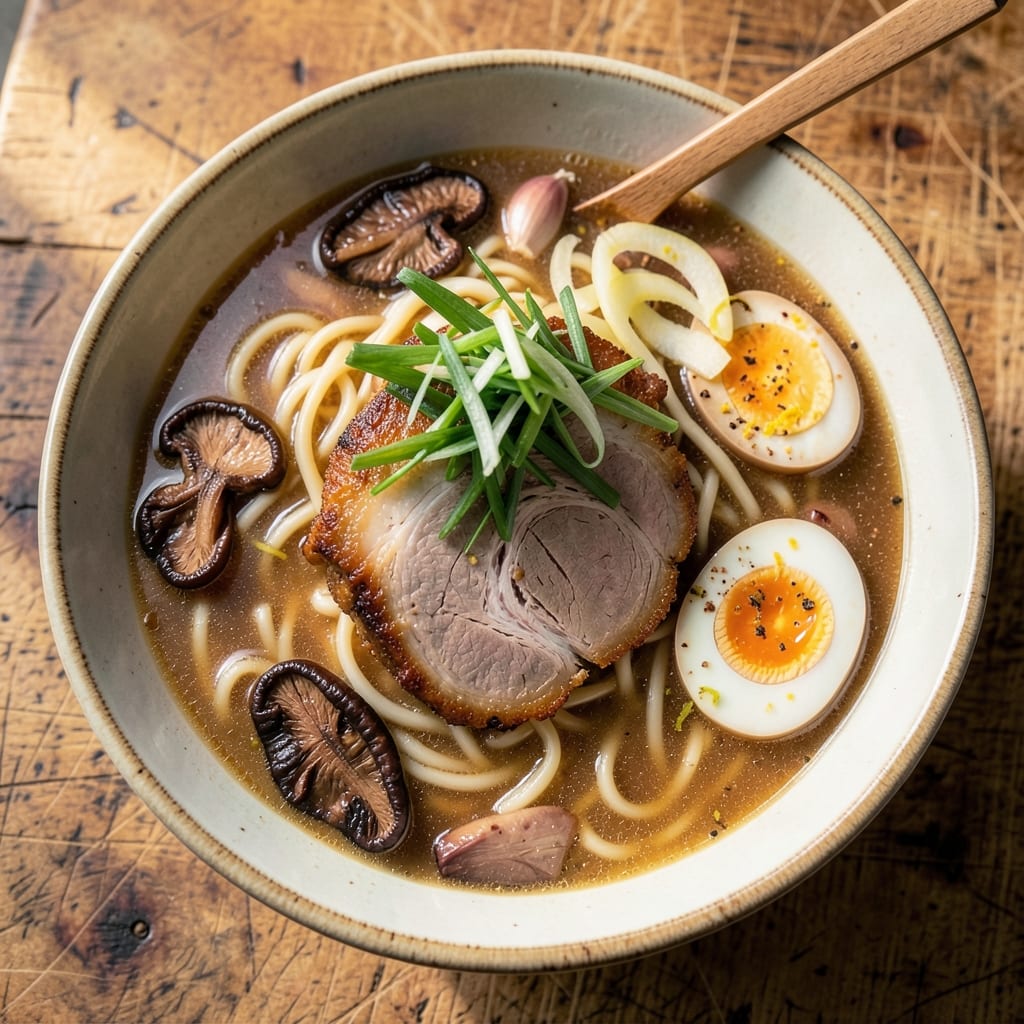
This authentic pork ramen recipe delivers the rich, silky broth and chewy noodles that define Japan’s most beloved comfort food. 🌟 After years of perfecting the balance between pork fat and aromatic spices, I’ve recreated the restaurant-quality experience at home—no shortcuts, just deep umami flavor built through slow simmering and precise technique.
The secret lies in the broth: pork bones simmered for hours until the collagen dissolves into a velvety, golden liquid, while chashu pork transforms tough cuts into tender, melt-in-your-mouth slices. Fresh ingredients like ajitsuke tamago (marinated egg) and menma (fermented bamboo shoots) elevate every bowl, delivering that perfect harmony of textures and flavors.
What you’ll achieve is a restaurant-quality ramen bowl with a silky broth that coats your spoon, chewy noodles that hold their shape, and layers of savory, smoky, and slightly sweet notes. The aroma alone will have everyone gathering around your table, anticipating that first slurp of perfect ramen.
This recipe serves as a complete meal—each component plays a role in creating balance—so you’ll learn how to prepare the broth, cook the noodles to perfection, slice the pork just right, and assemble it all like a pro. Let’s get started on crafting your own bowl of umami heaven.
Ingredients for authentic pork ramen
Pantry staples meet umami powerhouse ingredients for restaurant-quality ramen at home.
| Ingredient | Amount | Notes |
|---|---|---|
| Pork Bones 🍖 | 2 lb | Marrow and knuckle bones preferred |
| Pork Shoulder 🥩 | 1 ½ lb | For chashu pork slices |
| Dried Shiitake Mushrooms 🍄 | 8 whole | Rehydrated for broth |
| Green Onions 🧅 | 1 whole | White and green parts separated |
| Fresh Ginger 🌿 | ½ cup | Julienned, peeled |
| Garlic Cloves 🧄 | 8 cloves | Smashed, peeled |
| Ramen Noodles 🍜 | 8 oz | Fresh or premium dried |
| Ajitsuke Tamago 🥚 | 4 whole | Marinated eggs, store-bought or homemade |
| Menma 🌱 | 1 cup | Fermented bamboo shoots |
| Sesame Oil 🫒 | 1 tbsp | Toasted for aroma |
| Soy Sauce 🍶 | ½ cup | Kikkoman preferred |
| Miso Paste 🍶 | 2 tbsp | Red miso for depth |
| Sugar 🍚 | 2 tbsp | White or brown |
| Dried Bonito Flakes 🐟 | 1 tbsp | For garnish |
| Nori Sheets 🍣 | 4 sheets | For serving |
The pork bones are your foundation—marrow and knuckle bones add richness you can't get from regular cuts. Costco or Asian markets usually carry them pre-packaged. If you can't find them, substitute with pork neck bones, but expect slightly less gelatin. The shiitake mushrooms? Dried is non-negotiable—fresh won't give that deep, earthy flavor. Soak them in hot water for 20 minutes before adding to the broth. For the pork shoulder, look for well-marbled cuts—the fat renders down beautifully during the long braise.
No ajitsuke tamago? Make your own—marinate hard-boiled eggs in soy sauce, mirin, and sugar for 24 hours. Short on menma? Substitute with thinly sliced carrots or daikon radish, but skip the fermentation for a milder taste. The miso paste can be white or red—red adds more depth, while white keeps it cleaner. For the noodles, fresh ramen is ideal, but premium dried brands like Nissin or Maruchan work well too. If you're using dried, soak them for exactly 30 seconds before serving—any longer and they'll turn mushy.
The broth keeps for 5 days in the fridge or 3 months frozen—make extra, you'll want it. Store the chashu pork separately in its marinade for 1 week. For the noodles, cook them fresh when serving—they lose their chewiness if pre-cooked. Garnishes like bonito flakes and nori should be stored in a cool, dark place—nori stays fresh for months if kept sealed, while bonito flakes lose potency after 2 weeks. Freeze any unused nori sheets for up to 6 months.
Why You'll Love This Recipe
- Simmer Happens: I swear by the slow-cooked pork bones—they melt into a cloudy, collagen-rich broth that’s actually worth the wait. Honestly, once you taste that deep umami from the shiitakes and ginger, you’ll never go back to instant packets.
- No-Fuss Feast: This feeds four for under $15 (yes, even with fresh ginger and good pork). The pork shoulder shreds like a dream, and the dried mushrooms add texture without extra prep—just soak, slice, and toss.
- Leftovers That Shine: The broth gets better the next day—richer, deeper, like a secret upgrade. I freeze portions for lazy nights, and reheating? Just a splash of water, a quick stir. That’s my kind of meal prep.
- Weeknight Magic: Between us, this is my go-to when I’m exhausted but craving something special. Thirty minutes of active time (mostly chopping green onions), then hands-off simmering while I scroll or zone out. Comfort food, but make it efficient.
Step-by-step instructions for authentic pork ramen
Let's build this umami-rich ramen bowl with rich broth and tender pork that'll transport you to Tokyo.
🔥 Step 1: Char and Simmer the Pork Bones for Deep Flavor
Preheat your oven to 450°F. Place the 2 lb pork bones on a baking sheet and roast for 20 minutes until they develop a deep golden-brown crust. This caramelization creates layers of flavor in your broth.
Transfer the charred bones to a large stockpot and cover with 8 quarts cold water. Bring to a boil, then reduce heat to medium-low and skim off any foam that rises to the surface. This removes impurities and gives you a crystal-clear broth. Simmer uncovered for 2 hours until the bones are tender and the broth has reduced by about 1/3.
🍳 Step 2: Build Layers of Umami with Aromatics
While the bones simmer, prepare your aromatics. Soak the 8 whole dried shiitake mushrooms in hot water for 30 minutes to rehydrate, then slice them. In a separate pot, heat 1 tablespoon sesame oil over medium heat and sauté the 0.5 cup julienned fresh ginger and 8 smashed garlic cloves for 2 minutes until fragrant.
Add the rehydrated shiitake mushrooms, 0.5 cup soy sauce, 2 tablespoons miso paste, and 2 tablespoons sugar to the broth. Simmer for 30 minutes to infuse all those umami flavors. Strain the broth through a fine-mesh sieve into a clean pot, pressing gently on the solids to extract maximum flavor. Discard the solids.
🍳 Step 3: Cook the Chashu Pork Shoulder
In a separate pot, combine the 1.5 lb pork shoulder, 0.5 cup soy sauce, 2 tablespoons sugar, and 1 cup water. Bring to a boil, then reduce heat to low and simmer for 2 hours until the pork is fork-tender. Let it cool slightly, then slice into ¼-inch thick pieces against the grain for maximum tenderness.
For extra flavor, you can finish the pork in a hot skillet with a little sesame oil for a quick sear just before serving. This step is where the magic happens—the pork becomes melt-in-your-mouth chashu that'll make your ramen unforgettable.
🥘 Step 4: Assemble the Ramen Bowls
Bring a pot of water to a boil and cook the 8 oz ramen noodles for 3 minutes less than package instructions (they'll finish cooking in the hot broth). Drain and rinse briefly with cold water to stop the cooking process.
Divide the noodles among four deep bowls. Ladle the hot broth over the noodles until each bowl is ¾ full. Top each bowl with 4 slices chashu pork, ¼ cup menma, 1 ajitsuke tamago, and a drizzle of sesame oil. Garnish with 1 tablespoon dried bonito flakes and a strip of nori sheet.
🍽️ Step 5: Serve with Fresh Garnishes
Slice the remaining green onions into ½-inch pieces, separating the white and green parts. Scatter the white parts over each bowl for color, and sprinkle the green parts on top just before serving. The contrast of colors and textures makes this ramen visually stunning.
Serve immediately with chopsticks and a small bowl of soy sauce for dipping. The first sip of that silky, umami-packed broth should make you close your eyes and savor every moment. This is ramen done right—authentic, comforting, and packed with flavor in every bite.
Pro Tips For Making Authentic Pork Ramen
- CHAR THE BONES FIRST: I learned this the hard way—skipping the quick sear on pork bones before simmering means you’ll end up with a broth that’s pale and lacking depth. Hit them with a dry pan over medium-high heat until they turn a deep mahogany color (about 5-7 minutes), then add a splash of water to deglaze. That crust is where the flavor hides.
- SOAK MUSHROOMS IN COLD WATER: Dried shiitakes absorb like sponges, but hot water just makes them tough and bitter. Soak them in cold water for at least 30 minutes—45 if they’re thick—then use that soaking liquid for the broth. Discard the mushrooms after rehydrating; they’re just flavor carriers here, not the star.
- SIMMER LOW AND LONG: After the initial boil, drop the heat to a bare simmer—just enough to see tiny bubbles breaking the surface, not a rolling rage. Pork shoulder needs 2-3 hours to break down properly, and rushing it turns the broth cloudy and the meat stringy. Cover the pot and let it do its thing; patience here makes all the difference.
- GINGER: GRATE, DON’T SLICE: Thin slices of ginger just float and turn your broth into a muddy mess. Use a microplane or the finest grater to get a fine, almost paste-like texture—it dissolves completely and infuses flavor without leaving behind bitter chunks. A tablespoon of fresh ginger (about 1-inch knob) is enough; no need to overdo it.
Serving suggestions for this dish
Broth Presentation
Serve the broth in deep, wide bowls to showcase its golden hue—this isn't just about flavor, it's about the visual experience. I use 4-quart ceramic ramen bowls from Kinto because they hold heat beautifully and make the broth look like liquid gold. The depth also prevents spills when slurping that first mouthful. 🌟
Chashu Slice Placement
Arrange the chashu pork slices in a fan shape across the noodles—they should peek out slightly from under the broth. This creates visual interest and makes each bite feel like a surprise. I like to place the fattier slices on top for extra richness when you take your first slurp. For an extra touch, lightly sear the slices in a hot skillet with 1 tsp sesame oil right before serving to add a smoky aroma.
Garnish Layering
Build your garnishes in layers for maximum texture contrast. Start with menma at the bottom for earthiness, then add the ajitsuke tamago (marinated egg) slightly off-center. Finish with green onion whites scattered around the bowl and green onion tops sprinkled on top—this adds a pop of color and freshness. The nori strip should drape elegantly over the edge of the bowl, while bonito flakes add a delicate crunch that disappears instantly when you slurp.
Soy Sauce Ritual
Provide a small lidded ceramic dish of Kikkoman soy sauce for dipping—traditional ramen shops always do this. I like to include a small spoon so guests can adjust the saltiness to their preference. For an extra touch, add a pinch of white pepper to the soy sauce before serving—it adds a subtle kick that pairs perfectly with the rich broth. This simple ritual transforms your ramen from a meal to an experience.
Chopstick Etiquette
Place two pairs of chopsticks per bowl—one for eating and one as a backup. I always include a small napkin with each serving (traditional ramen shops do this too) and a mini bowl of hot water for rinsing chopsticks between bites. This keeps your hands clean and adds that authentic Japanese dining experience. For guests unfamiliar with chopsticks, include a fork on the side—no one should miss out on this delicious meal.
Family-Style Serving
For gatherings, prepare a large communal pot of broth and let everyone serve themselves at the table. This creates a lively atmosphere where everyone can customize their bowl. I like to set out small bowls of extra toppings—like additional chashu, menma, or nori—so guests can build their perfect ramen. The shared experience makes it feel like a restaurant-quality meal without the fuss. 💛
Nutrition facts
Frequently asked questions
Can I substitute chicken or beef for the pork in this recipe?
The pork is essential for authentic flavor—pork bones create that signature silky, umami-rich broth that defines pork ramen. Chicken would make a lighter broth, while beef would be too heavy. If you must substitute, use pork shoulder for the chashu and pork bones for the broth—no other protein delivers the same depth of flavor.
How do I adjust the spice level for picky eaters?
This recipe is naturally mild, but you can reduce the heat by omitting the bonito flakes (they add subtle smokiness) and using white miso instead of red. For extra mildness, skip the sesame oil in the chashu marinade and add a pinch of sugar to balance any lingering saltiness.
Why does my broth look cloudy instead of clear?
Cloudiness usually means you didn't skim enough foam during the initial boil or simmer. For crystal-clear broth, skim aggressively for the first 10 minutes of simmering, then strain through a fine-mesh sieve after the 2-hour cook time. If it's still cloudy, simmer uncovered for an extra 30 minutes to evaporate more liquid.
Can I make the broth ahead of time?
The broth actually tastes better after 24 hours of refrigeration—the flavors meld together. Store it in an airtight container and reheat gently on low heat before using. For longer storage, freeze in 1-cup portions for up to 3 months. Thaw overnight in the fridge before reheating.
What's the best way to reheat leftovers?
Never microwave ramen—it ruins the texture! Instead, reheat the broth separately until steaming, then add the noodles and toppings to warm through for 2-3 minutes on the stove. For chashu pork, warm it in a skillet with a splash of water to prevent drying. The noodles should be al dente—never soggy.