
Main Courses
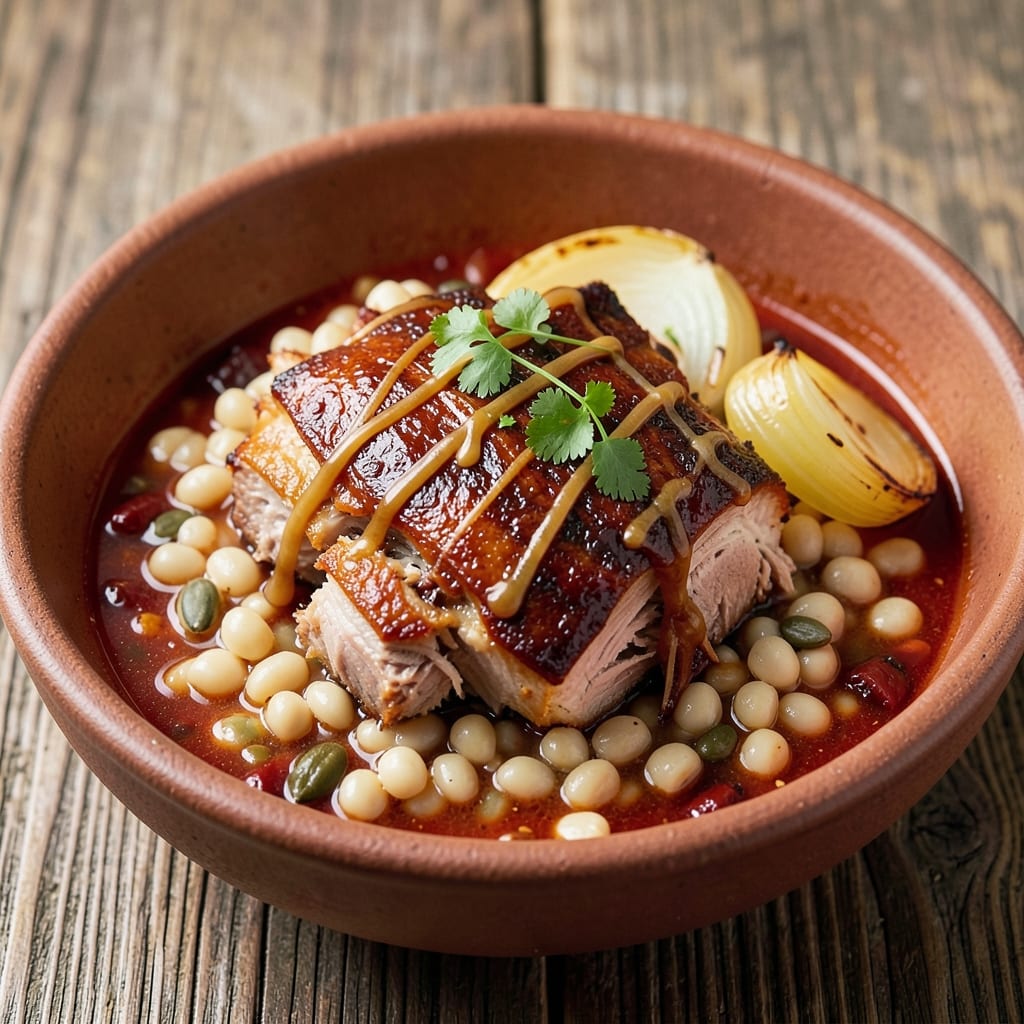
This authentic red pozole recipe brings the soul of Mexican tradition to your kitchen—smoky, hearty, and packed with the deep flavors of ancho-chipotle heat. 🔥 After years of perfecting this dish at The Smoky Pig, I've mastered the long-simmered broth and tender pork that make every bite unforgettable. The secret lies in dried chilies and slow-cooked pork, transforming simple ingredients into a celebration of Mexican comfort food.
The magic begins with the broth, where guajillo and ancho chilies infuse the water with rich, earthy heat. Pork shoulder and hominy simmer together until the meat falls apart and the broth thickens into a velvety stew. This isn't just a meal—it's a tradition, one that brings families together around a steaming pot of smoky goodness. Every element, from the charred edges of the pork to the bright crunch of garnishes, plays a part in creating something truly special.
What you'll end up with is a steaming bowl of red pozole that's tender, aromatic, and full of layers of flavor—smoky from the chilies, rich from the pork, and bright from the garnishes. The hominy adds a satisfying chewiness, while the toppings of radish, lettuce, lime, and avocado bring freshness to balance the heat. This is the kind of dish that tastes like home, no matter where you are.
Perfect for gatherings, family dinners, or when you want to bring a taste of Mexico to your table. Let's get cooking—this recipe delivers restaurant-quality results with a touch of Southern charm.
Ingredients for authentic red pork pozole
Sixteen ingredients transform into a smoky, hearty bowl of Mexican tradition.
| Ingredient | Amount | Notes |
|---|---|---|
| Pork Shoulder 🥩 | 3 lb | Bone-in, cut into 2-inch chunks |
| Dried Guajillo Chilies 🌶️ | 6 whole | Stems and seeds removed |
| Dried Ancho Chilies 🌶️ | 4 whole | Stems and seeds removed |
| Dried Chipotle Peppers in Adobo 🌶️ | 2 whole | Minced, with 2 tbsp sauce reserved |
| White Hominy 🌽 | 2 cans | 15 oz each, drained and rinsed |
| Yellow Onion 🧅 | 1 whole | Quartered, charred |
| Garlic Cloves 🧄 | 6 cloves | Peeled, lightly toasted |
| Fresh Lime 🍋 | 1 whole | Juiced, zest reserved |
| Cumin Seeds 🌿 | 1 tbsp | Toasted, ground |
| Bay Leaves 🍃 | 2 whole | Fresh preferred |
| Salt 🧂 | 1 ½ tsp | Adjust to taste |
| Black Peppercorns 🌶️ | ½ tsp | Freshly ground |
| Fresh Cilantro 🌿 | ½ cup | Chopped, for garnish |
| Radishes 🥕 | 1 cup | Thinly sliced, for garnish |
| Avocado 🥑 | 1 whole | Sliced, for garnish |
| Lettuce 🥬 | 2 cups | Shredded, for garnish |
The chilies are non-negotiable—guajillo and ancho give that signature earthy heat, while chipotle in adobo adds smokiness. Grab them at Mexican markets or the Latin aisle at Walmart—they keep for months in a cool, dark place. Look for vibrant color: deep red for guajillo, rich brown for ancho. If you can't find dried, arbol chilies in a pinch (but reduce quantity by half). The pork shoulder is the star—bone-in, cut into 2-inch chunks—it stays tender while the broth develops layers of flavor. I always buy mine from Costco or the butcher counter at H-E-B for the best marbling.
No chipotle peppers? Smoked paprika at half the amount mimics the smokiness, though it won't have that deep adobo richness. The hominy can be swapped for white beans or corn if you're out, but the texture won't be the same. For the garnishes, radishes and avocado are musts—they cut through the richness. No fresh cilantro? Dried cilantro at one-third the amount works, but fresh is ideal. The lime zest is key: zest 1 lime and reserve it for the final touch. If you're short on time, bottled lime juice works, but fresh is always better. The cumin seeds? Toast them in a dry pan for 30 seconds before grinding—it deepens the flavor.
This stew tastes even better the next day—3-4 days in the fridge, covered. Freezes beautifully for up to 3 months—just thaw in the fridge overnight. I always make a double batch: one for dinner, one for leftovers. Store garnishes separately—avocado turns brown fast, so keep it in lime juice. The broth reduces as it sits, so add a splash of water when reheating. Serve with warm corn tortillas—they're the perfect vessel for that smoky broth.
Why You'll Love This Recipe
- I’ll be real: pozole tastes even better the next day. The broth gets richer, the hominy softens perfectly, and you can reheat it all in one pot. My freezer’s always stocked with batches—great for lazy Sundays or when unexpected guests show up.
- One-Pot Magic: The pork shoulder simmers right in the broth—no extra pots, no stress. Just toss in the dried chilies (guajillo, ancho, chipotle) with a splash of vinegar, let them soak, and boom—you’ve got a smoky, deep base in 20 minutes while the pork falls apart on its own.
- Smoky Depth: Between us, the chipotle in adobo and those toasted dried chilies? That’s the secret weapon. The guajillo adds fruity warmth, the ancho brings earthy richness, and the chipotle? Pure smoky punch. It’s the kind of flavor that makes you close your eyes mid-bite.
- Leftovers That Shine: I’ll be real: pozole tastes even better the next day. The broth gets richer, the hominy softens perfectly, and you can reheat it all in one pot. My freezer’s always stocked with batches—great for lazy Sundays or when unexpected guests show up.
Step-by-step instructions for authentic red pozole
Here's how to make this smoky, hearty Mexican stew with rich ancho-guajillo heat.
🔥 Step 1: Toast and Rehydrate the Chilies
Toast the 6 whole dried guajillo chilies and 4 whole dried ancho chilies in a dry skillet over medium heat for 30 seconds per side until fragrant and slightly darkened. This deepens their natural smokiness. Immediately transfer them to a bowl and cover with 4 cups hot water to rehydrate for 15 minutes.
While they soak, mince the 2 whole dried chipotle peppers in adobo (including the reserved 2 tablespoons sauce
In a large pot, combine the rehydrated chilies (with their soaking liquid), minced chipotles, and 6 cups water. Bring to a boil over high heat, then reduce to medium-low and simmer uncovered for 10 minutes to meld the flavors. Strain through a fine-mesh sieve into a clean pot, pressing on the solids to extract every bit of color and heat. Return the strained broth to the pot and add the 3 lb pork shoulder (cut into 2-inch chunks), 1.5 tsp salt, 0.5 tsp black peppercorns, 2 whole bay leaves, and the toasted 1 tbsp cumin seeds. Bring back to a boil, then reduce heat to low and simmer uncovered for 2 hours until the pork is fork-tender and nearly falling apart. While the pork simmers, char the 1 whole yellow onion (quartered) directly over a gas flame or under a broiler until blackened in spots. Lightly toast the 6 cloves garlic in a dry skillet for 1 minute until fragrant. Add both to the pot along with the 2 cans drained white hominy and simmer for another 30 minutes. Taste and adjust seasoning—you might need a pinch more salt. The broth should be rich but not salty, with a deep red hue from the chilies. Here's the thing: the longer it simmers, the more the flavors develop. Don't rush this step; patience is what makes pozole authentic. Ladle the pozole into bowls and let everyone garnish their own with the 0.5 cup chopped fresh cilantro, 1 cup sliced radishes, 1 whole sliced avocado, and 2 cups shredded lettuce. Squeeze fresh lime juice over each serving and pass the lime wedges at the table. Serve with warm corn tortillas for scooping. The contrast of cool garnishes against the hot broth is what makes pozole so satisfying. Each bite should deliver tender pork, creamy hominy, and layers of smoky chile heat—just like in Mexico.🍳 Step 2: Build the Smoky Broth
👨🍳 Step 3: Char the Aromatics and Finish the Pozole
🥘 Step 4: Serve Traditionally
Pro Tips For Making Authentic Red Pork Pozole
- BLANCH THE CHILIES: Toss your guajillo and ancho chilies in a dry skillet for 30 seconds before soaking—this removes the raw bitterness without burning them. I used to skip this and wondered why my broth always tasted slightly off; this step makes a real difference.
- SIMMER THE PORK LOW: After browning the pork shoulder, drop the heat to a bare simmer—just enough to keep bubbles tiny and slow. I learned this the hard way when my first batch came out dry; 2-3 hours at 180°F (82°C) turns tough meat into melt-in-your-mouth shreds.
- STRAIN THE HOMINY WELL: Drain the hominy in a colander, then rinse under cold water to remove excess nitrates—those leave a metallic aftertaste if you skip this. My grandmother swore by this, and she was right: the texture stays firm and clean.
- SAVE THE CHIPOTLE JUICE: Don’t toss the adobo sauce from the chipotle peppers—strain it and add it to the broth for depth. Sounds weird, but it works: that smoky liquid carries the flavor that store-bought substitutes miss.
Essential equipment for great authentic red pork pozole
Large Stockpot
You'll need a 6-8 quart heavy-bottomed stockpot with a lid—this is non-negotiable for even heat distribution. I swear by my All-Clad stainless steel Dutch oven (8-quart size) because it handles the long simmer beautifully without hot spots. If you're working with a budget, a Lodge enameled cast iron pot does the job just as well and adds a rustic charm to your kitchen. 🔥
Fine-Mesh Sieve
A fine-mesh sieve is essential for straining the chili broth cleanly—you want every bit of flavor without the seeds or skins. I use a OXO Good Grips because it's sturdy and has a comfortable handle for pressing out those last drops of liquid. If you don't have one, a cheesecloth-lined colander works in a pinch, but it requires more elbow grease.
Charcoal Grill or Broiler
For authentic flavor, you need to char the onion—this gives the pozole its signature smoky depth. If you have a charcoal grill, that's ideal. No grill? Use your broiler (set to high) and place the onion on a foil-lined baking sheet. Keep a close eye—it only takes 3-5 minutes to get those beautiful blackened spots. Never skip this step; it's what transforms good pozole into great pozole. ⚡
Immersion Blender
While you can strain the chilies and blend them separately, an immersion blender makes this process seamless. I use a Ninja CB101 because it handles the fibrous chili mixture effortlessly. If you don't have one, transfer the strained chilies to a high-speed blender (like a Vitamix) and blend until smooth. Just be cautious—chili blends can be slippery!
Tongs for Garnishes
Keep a pair of long-handled tongs nearby for serving—this makes it easy to pass around bowls of garnishes (radishes, avocado, cilantro) without cross-contamination. I prefer stainless steel tongs with silicone grips; they're easy to clean and last forever. Pro tip: Have separate tongs for raw ingredients (like avocado) to avoid bruising the fruit before serving. 💡
Slow Cooker Option
Short on time? A 6-quart slow cooker (like a Hamilton Beach) can handle the pork and broth for you while you prep garnishes. Set it to low for 8 hours or high for 5 hours, then finish with the charred onion and hominy on the stovetop. The slow cooker method is perfect for weeknight dinners—just
Nutrition facts
Frequently asked questions
Can I substitute pork shoulder with another cut?
You can use pork butt or pork trotter for extra richness, but pork shoulder is ideal because it stays tender during the long simmer. If you're short on time, bone-in pork ribs work too—just reduce cooking time to 1.5 hours since they cook faster. Avoid lean cuts like pork tenderloin; they'll dry out.
What makes this recipe authentically Mexican?
The key elements are the dried chilies (guajillo, ancho, chipotle), charred onion, and hominy—these create the signature smoky, earthy depth. The slow-cooked pork and fresh garnishes (radish, cilantro, lime) complete the traditional experience. Many recipes skip the charring or use powdered chiles, which lose that authentic complexity.
How do I adjust the heat level?
For milder heat, reduce the number of guajillo or ancho chilies by 2. For extra spice, add 1-2 more chipotles in adobo or a pinch of cayenne. Always taste the broth before adding the pork—you can't remove heat later! The chipotle peppers provide smokiness without too much heat, while the dried chilies give that signature depth.
Can I make this in a slow cooker?
Yes! Use a 6-quart slow cooker on low for 8 hours or high for 5 hours. Add the pork, broth, and seasonings, then cook until tender. Finish with the charred onion and hominy on the stovetop for 15 minutes to thicken the broth. The slow cooker method is perfect for hands-off prep—just don't skip the final stovetop step!
What if I can't find hominy?
Use white beans or corn as substitutes, but the texture won't be identical. For best results, try canned white beans (like cannellini) and add 1 tbsp lime juice to mimic the tangy brightness of hominy. If using corn, opt for frozen or canned white corn (not yellow) to stay true to traditional pozole flavors.