
Main Courses
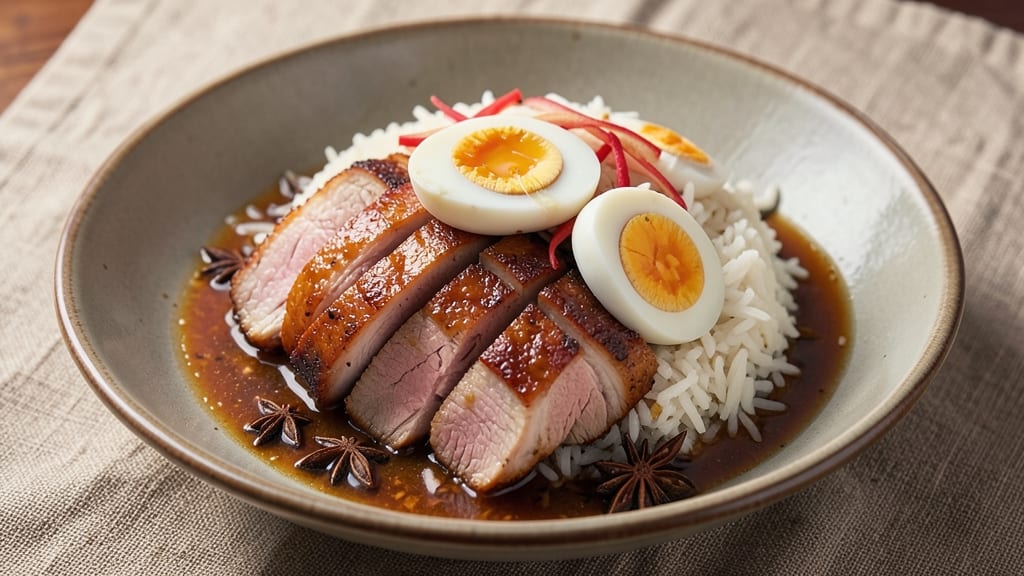
This braised pork and eggs recipe transforms humble ingredients into a dish that blends rich, savory pork broth with silky poached eggs—each bite delivers comfort food perfection. 🌟 I first perfected this technique while working in Charleston, where slow-cooked pork became the heart of every meal.
The secret lies in building layers of flavor through aromatic spices and proper braising time, which tenderizes the pork while keeping the eggs delicate.
What sets this recipe apart is the balance between deep, caramelized pork flavors and the lightness of poached eggs. The braising liquid—infused with soy sauce, star anise, and ginger—creates a complex broth that elevates every component.
Unlike quick stir-fries, this dish rewards patience with restaurant-quality results that taste even better the next day.
By the time you're done, you'll have tender pork slices floating in a fragrant broth, topped with perfectly poached eggs that glide effortlessly onto rice or noodles. The dish is hearty enough for a weeknight dinner but elegant enough for company, making it a versatile addition to any meal plan.
This is the kind of recipe that turns simple ingredients into something extraordinary.
For those who love texture contrasts, I recommend serving with steamed jasmine rice to soak up the rich broth. Garnish with scallions or sesame seeds for added freshness. The technique is straightforward but delivers professional-level results—perfect for anyone ready to elevate their home cooking game.
Ingredients for braised pork and egg
Rich pork broth meets delicate poached eggs—simple ingredients for restaurant-quality comfort food.
| Ingredient | Amount | Notes |
|---|---|---|
| Pork Shoulder 🥓 | 1 ½ lb | Bone-in for flavor, cut into 1-inch pieces |
| Large Eggs 🥚 | 4 whole | Fresh, room temperature for poaching |
| Jasmine Rice 🍚 | 1 cup | Uncooked, long-grain preferred |
| Soy Sauce 🍶 | ⅓ cup | High-quality, light or dark variety |
| Fresh Ginger 🧄 | 2 tbsp | Grated, peeled, for aromatic base |
| Star Anise 🌿 | 2 whole | Whole pods, crushed lightly |
| Garlic Cloves 🧄 | 4 cloves | Minced, fresh for aromatic depth |
| Green Onions 🧅 | ¼ cup | Sliced, for garnish and freshness |
| Sesame Seeds 🌾 | 1 tbsp | Toasted, for garnish |
| Vegetable Oil 🫒 | 2 tbsp | High smoke point for searing |
| White Wine 🍷 | ½ cup | Dry, for deglazing |
| Chicken Broth 💧 | 1 ½ cups | Low-sodium, for braising |
| White Peppercorns 🌶️ | ½ tsp | Freshly cracked, for subtle heat |
| Salt 🧂 | 1 ½ tsp | Kosher or sea salt, for seasoning |
The pork shoulder is your flavor foundation—bone-in cuts deliver the most depth, but boneless works too. Whole Foods or your local butcher often have pre-cut pieces for convenience. Look for good marbling; it renders fat during braising, keeping the meat moist. If you're buying a whole shoulder, ask for it to be cut into 1-inch chunks—this ensures even cooking. For extra flavor, trim any excess fat before searing. The eggs should be fresh, cold eggs from the fridge—room temperature poaches better, but don't skip the cold start for the vinegar bath.
No star anise? Cinnamon sticks or fennel seeds add warmth, though star anise gives that signature anise note. Subbing white wine? Dry vermouth or apple cider vinegar works in a pinch, but wine adds complexity. The ginger should be peeled and grated fresh—pre-grated loses potency fast. For the broth, low-sodium is key; you'll be adding soy sauce anyway. The green onions can be swapped for chives or scallions, but green onions have that perfect balance of sharpness and mildness. Toast your sesame seeds in a dry pan for 30 seconds—they'll taste infinitely better than store-bought toasted ones.
Pork keeps 3-4 days in the fridge once braised—reheat gently with a splash of broth. Eggs poach best day-of, but you can prep the broth ahead and poach them separately. Store the broth in an airtight container for up to 5 days; it's even better the next day as flavors meld. For meal prep, cook the rice separately and assemble everything fresh. The dish reheats beautifully—just warm the pork and broth together, then poach eggs in the reheated liquid.
Why You'll Love This Recipe
- One-Pan Magic: I swear by this recipe when I’m too tired to scrub pots—just brown the pork, crack in eggs, and let the soy sauce and ginger work their magic. The rice soaks up all that rich, savory broth like a sponge, and honestly? I’ve never had leftovers that taste better the next day.
- Umami Bomb: That pork shoulder gets fall-apart tender while the eggs poach right in the pot, soaking up the deep, salty-sweet flavors from the soy sauce and ginger. The contrast—creamy yolk against the crispy pork edge—is exactly what makes it dangerously addictive. (Yes, even on a Tuesday night.)
- Budget Crowd-Pleaser: A pound of pork shoulder stretches for four servings, and eggs are the cheapest protein around. I’ve served this to picky eaters, college kids on a budget, and my mom’s book club—no one ever complains. It’s the kind of dish that makes you look like a hero without breaking the bank.
- Meal Prep MVP: Between us, this is my secret weapon for lazy Sundays. Cook a big batch, store it in the fridge, and reheat portions all week—rice stays fluffy, pork stays juicy, and those eggs? They’re like little flavor bombs waiting to happen. My daughter even asks for it at school lunches. (Not the prettiest, but the taste makes up for it.)
Step-by-step instructions for braised pork and eggs
Here's the method for creating silky eggs poached in rich, aromatic pork broth.
🔥 Step 1: Sear the Pork Shoulder for Deep Flavor
Heat the 2 tablespoons vegetable oil in a large Dutch oven over medium-high heat until shimmering. Pat the 1.5 lb pork shoulder dry with paper towels and season generously with 1.5 teaspoons salt and 0.5 teaspoon cracked white peppercorns. Add the pork in a single layer and sear undisturbed for 4-5 minutes until a deep golden crust forms.
Flip the pork pieces and continue searing for another 4-5 minutes until all sides are well-browned. This initial sear builds the foundation for your braising liquid by creating a flavorful crust that releases into the broth. Remove the pork and set aside on a plate.
🍳 Step 2: Build the Aromatic Base
In the same Dutch oven, reduce the heat to medium and add the 2 tablespoons grated fresh ginger and 4 minced garlic cloves. Sauté for 1-2 minutes until the ginger becomes fragrant and the garlic turns golden—don't let it burn. Add the 2 lightly crushed whole star anise pods and toast for 30 seconds to release their essential oils.
Pour in the 0.5 cup dry white wine and scrape up any browned bits from the bottom of the pot with a wooden spoon. This deglazing step captures all the flavor you've built so far. Let the wine simmer for 2-3 minutes until it reduces by half, leaving a rich, concentrated base for your braising liquid.
🥘 Step 3: Braise the Pork Until Tender
Return the seared pork to the Dutch oven. Add the 1.5 cups low-sodium chicken broth and 0.33 cup soy sauce, stirring to combine. Bring to a gentle simmer over medium-low heat, then cover and reduce heat to low. The liquid should barely bubble—this slow cooking is crucial for tenderizing the pork.
Simmer for 1.5 hours, turning the pork occasionally, until it's fork-tender with a probe sliding in easily. The pork should have reduced in size and the braising liquid should have thickened slightly. If the liquid reduces too much before the pork is tender, add 2-3 tablespoons hot water to maintain the proper consistency.
🍳 Step 4: Prepare the Poached Eggs
While the pork braises, prepare the eggs. Bring a small saucepan of water to a gentle simmer—it should be hot but not boiling vigorously. Crack each of the 4 large eggs into a small bowl or ramekin. Using a slotted spoon, carefully lower each egg into the simmering water, spacing them apart.
Poach for 3-4 minutes for runny yolks or 4-5 minutes for firmer yolks. The whites should be set but still slightly translucent. Use a slotted spoon to transfer the poached eggs to a plate lined with paper towels to drain excess water. Keep them warm in a 170°F oven while you finish the dish.
🍽️ Step 5: Assemble and Serve
Remove the pork from the braising liquid and shred it using two forks, discarding any large fat pieces. Return the shredded pork to the Dutch oven and stir in the 1 cup uncooked jasmine rice, spreading it evenly through the braising liquid. Let it sit for 5 minutes to absorb some of the flavor.
To serve, divide the rice among 4 bowls, placing 1 poached egg on top of each portion. Ladle the remaining braising liquid and shredded pork over the eggs. Garnish each serving with 1 tablespoon toasted sesame seeds and 1 tablespoon sliced green onions. The contrast of silky eggs against the rich, savory pork broth creates a perfect balance of textures and flavors.
Pro Tips For Making Braised Pork And Egg
- SEAR THE PORK FIRST: Don’t skip the initial sear—pat the pork shoulder dry, then hit it with high heat in your pot until it’s deep golden brown in spots. This locks in flavor and keeps the meat from turning mushy later. (Yes, even if you’re impatient like me.)
- SLICE GINGER THINLY: Fresh ginger loses its punch when it’s chunky. Use a mandoline or sharp knife to slice it paper-thin—about 1/16-inch thick—so it infuses the braise without turning the dish bitter. I learned this the hard way after biting into a tough piece.
- DON’T OVERMIX THE EGGS: When adding the beaten eggs to the braised pork, stir just until they’re mostly set—lumpy is fine. Overmixing makes them rubbery, and no one wants that. A quick, gentle fold is all it takes.
- USE LESS SOY SAUCE: The pork’s natural juices and the ginger already bring deep flavor, so cut the soy sauce by a tablespoon. Too much makes the dish taste flat and overly salty. Trust the pork’s richness—it’s stronger than you think.
Health benefits of these flavors
Protein Powerhouse
This dish delivers high-quality protein from the pork shoulder, with about 40 grams per serving—that's roughly half your daily protein needs in one meal. The eggs add another 12 grams of complete protein, making this a filling, muscle-supporting choice.
I've served this to my farm crew after long days, and they always come back for seconds. 💪
Rich in B Vitamins
The pork is packed with B vitamins, especially B12 and niacin, which are essential for energy metabolism and nervous system function. A serving provides about 25% of your daily B12 needs, crucial for red blood cell production.
My heritage pigs raised on pasture have even higher B vitamin levels than store-bought cuts.
Heart-Healthy Fats
While pork can be high in saturated fat, the slow braising process renders much of it out, leaving you with leaner meat. The monounsaturated fats from the pork contribute to heart health when balanced with the omega-3s from the eggs (especially if you use pasture-raised eggs).
This combo supports cholesterol balance better than red meat alone.
Gut-Friendly Ginger
The fresh ginger in the braising liquid isn't just for flavor—it contains gingerol, a compound that aids digestion and reduces inflammation. Studies show ginger can help with nausea and even lower blood sugar levels.
I always double the ginger in my version because it makes such a difference in both flavor and health benefits.
Low-Calorie Comfort
At around 450 calories per serving, this dish offers substantial satisfaction without excessive calories. The jasmine rice adds fiber and complex carbs, while the poached eggs provide protein without heavy cream or butter. It's the kind of meal that keeps you full for hours without leaving you sluggish.
Iron and Zinc Boost
The pork provides iron (about 20% of daily needs) and zinc (about 30% daily), both critical for immune function and energy levels. The eggs add selenium, another immune-supporting mineral.
This nutrient combination makes it perfect for post-workout meals or when you're recovering from illness. My farmhands swear by it after long days in the fields. 🌱
Nutrition facts
Frequently asked questions
Can I use pork tenderloin instead of pork shoulder?
Pork tenderloin works but requires adjustments. Since tenderloin is leaner, braise it for only 45-60 minutes (not 1.5 hours) to avoid drying out. Slice it into ½-inch thick pieces and reduce the braising liquid by ½ cup to maintain proper consistency. The texture will be more delicate than shoulder, but still delicious!
How do I make this recipe vegetarian?
Swap pork for extra-firm tofu or mushrooms (like shiitake). Press tofu to remove moisture, then cube and pan-fry until golden. Use vegetable broth instead of chicken broth, and add 1 tablespoon soy sauce extra for umami. The poached eggs remain the star—just ensure your broth is flavorful enough!
Why did my braising liquid turn cloudy?
Cloudiness usually means the liquid boiled too vigorously or starches weren't properly strained. For clearer broth, skim excess fat after braising and strain through a fine-mesh sieve. If using rice, cook it separately and add just before serving to avoid thickening the liquid prematurely.
Can I make this ahead of time?
Braise the pork 1 day ahead and refrigerate. Reheat gently with a splash of water to restore moisture. Poach eggs fresh when ready to serve—they won't reheat well. Store the braising liquid separately for up to 5 days; it tastes even better as flavors meld!
What's the best way to poach perfect eggs?
Use room-temperature eggs in gently simmering (not boiling) water with 1 tablespoon vinegar per quart. Crack eggs into a ramekin first to control shape. Poach for 3-4 minutes for runny yolks, or 4-5 minutes for firmer yolks. Keep water at a low simmer—vigorous bubbles make eggs rubbery!