
Main Courses
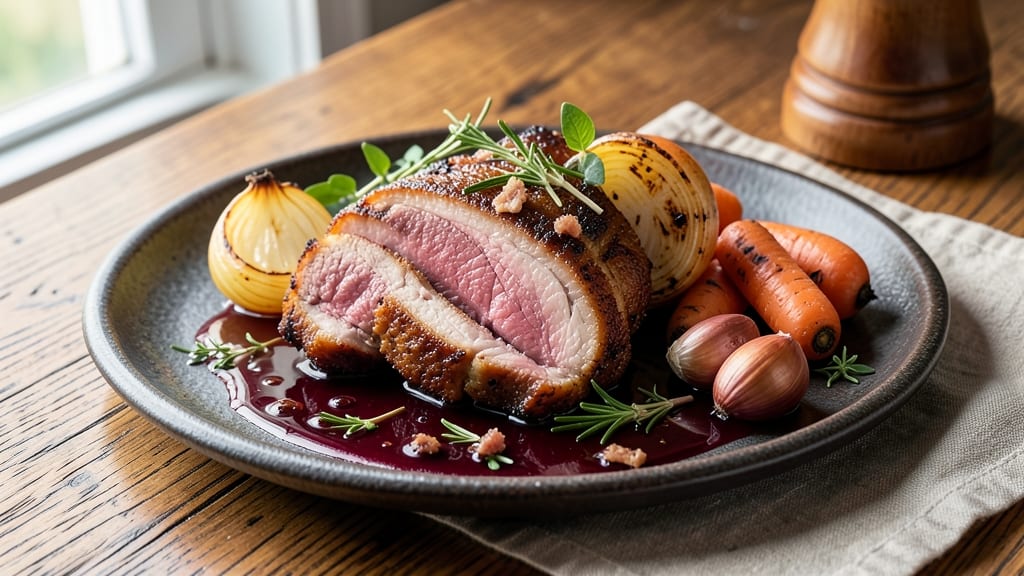
This braised pork jowl recipe delivers the kind of crispy edges and silky tenderness that turns weeknight dinners into showstopping meals. Growing up in Georgia, I learned how slow-cooked pork transforms tough cuts into melt-in-your-mouth perfection—this method preserves that tradition while making it accessible for home cooks.
The secret lies in searing the jowl first to lock in flavors, then braising it low and slow until the fat renders into golden, crispy layers while the meat becomes fork-tender.
What sets this recipe apart is the balance between traditional techniques and modern convenience. We start with a proper sear in cast iron (my preferred tool, though any heavy pot works) to build depth of flavor, then deglaze with red wine and aromatics for a rich, aromatic base.
The long braise—typically 3 to 4 hours—allows collagen to break down, creating that signature velvety texture while the skin crisps to a satisfying crunch. This is the kind of dish that rewards patience with restaurant-quality results.
The final product is a crispy-skinned, tender masterpiece that practically falls apart at the touch of a fork. The rendered fat creates a glossy, golden sauce that coats every bite, while the meat remains juicy and rich.
Serve it sliced thin over buttery polenta, alongside roasted root vegetables, or even as a filling for sandwiches. The versatility makes it perfect for family dinners or special occasions—without requiring hours at the stove.
For those short on time, I’ve included a pressure cooker adaptation in the instructions that cuts the cooking time by nearly half while preserving all the depth of flavor. The key is still the same: crispy edges, silky tenderness, and a sauce so rich it’ll have everyone asking for seconds.
Let’s get to work—this is the kind of pork dish that becomes a household favorite in just one bite.
Ingredients for braised pork jowl
Pantry staples plus a few specialty cuts for that signature crispy-tender magic.
| Ingredient | Amount | Notes |
|---|---|---|
| Pork Jowl 🥓 | 2 lb | Skin-on, thick-cut preferred |
| Yellow Onion 🧅 | 1 whole | Sliced into wedges |
| Garlic Cloves 🧄 | 6 cloves | Smashed for flavor |
| Carrots 🥕 | 4 medium | Peeled, cut into chunks |
| Carrots 🥕 | 2 cups | Peeled, cut into chunks |
| Red Wine 🍷 | 1 cup | Bold dry variety |
| Beef Broth 💧 | 2 cups | Low-sodium preferred |
| Olive Oil 🫒 | 2 tbsp | Extra-virgin for searing |
| Fresh Thyme 🌿 | ¼ cup | Leaves only, stems removed |
| Fresh Bay Leaves 🌿 | 2 whole | For aromatic depth |
| Salt 🧂 | 1 ½ tsp | Kosher or sea salt |
| Black Peppercorns 🌶️ | ½ tsp | Freshly cracked |
| Tomato Paste 🍅 | 1 tbsp | Smooth, not chunky |
| All-Purpose Flour 🌾 | 1 tbsp | For thickening sauce |
The pork jowl is everything here—skin-on, thick-cut is non-negotiable. Look for well-marbled pieces at your local butcher or the meat counter at Whole Foods. If your grocery store doesn't carry it, Costco often has it in bulk. The skin should be thick and unbroken—this is what crisps up beautifully. For the wine, any bold, dry red works here—Cabernet Sauvignon, Merlot, or whatever's open in your fridge. The beef broth? Low-sodium is key so you don't over-salt the whole dish. Fresh thyme and bay leaves make all the difference—Trader Joe's sells them in little jars that keep for months.
No red wine? Beef broth with a splash of balsamic vinegar gets you close. Fresh thyme is ideal but dried works at one-third the amount. If tomato paste feels like overkill for one tablespoon, those squeeze tubes at Trader Joe's are perfect—no waste, keeps for months. The carrots can be baby carrots if that's what's in the fridge, but whole carrots cut into chunks give you better control over size. For the flour, all-purpose works fine—just make sure it's fresh. The jowl will render enough fat on its own, but the flour helps thicken the sauce if it gets too thin during the long braise.
This dish tastes even better the next day—honestly, that's when the magic happens. The rendered fat solidifies into crispy layers while the meat stays silky tender. Keeps 4-5 days in the fridge, freezes for 3 months. I portion mine into containers so lunches are sorted for the week. For serving, slice it thin against the grain—that's where it's most tender. The crispy skin is the best part, so don't skip it!
Why You'll Love This Recipe
- One-Pot Magic: I swear by this recipe—just toss everything in one pot, walk away, and come back to a meal that practically cooks itself. The onions caramelize while you’re chopping veggies, and the garlic? It infuses the whole thing with that deep, savory warmth without you having to babysit it.
- Budget-Friendly Luxury: Pork jowl is cheap, but it tastes like you spent hours on a fancy cut. No fancy cuts, no wasted ingredients—just a big pot, some pantry staples, and a meal that feels special without breaking the bank. My wallet and my taste buds high-five every time.
Step-by-step instructions for braised pork jowl
This method delivers melt-in-your-mouth pork with crispy edges and rich, aromatic braising liquid.
Sear the Pork Jowl for Maximum Flavor
Heat the 2 tablespoons olive oil in a heavy Dutch oven over medium-high heat until shimmering. Place the 2 lb pork jowl skin-side down and press gently to create good contact with the pan. Let it sear undisturbed for 8-10 minutes until the skin turns deep golden brown and crispy in spots.
Flip the jowl and sear the other side for another 5-6 minutes. The goal is to develop a rich, caramelized crust while rendering some of the fat. I like to press down gently during the first minute—this prevents the jowl from curling and ensures even contact with the pan. Once both sides are well-browned, remove the pork and set it aside on a plate.
Build the Flavor Base with Aromatics
In the same Dutch oven, reduce the heat to medium and add the 1 whole yellow onion (sliced into wedges) and 4 medium carrots (cut into chunks). Cook for 5-6 minutes, stirring occasionally, until the onions soften and begin to caramelize slightly. Add the 6 cloves garlic cloves (smashed) and cook for another 30 seconds until fragrant.
Stir in the 1 tablespoon tomato paste and cook for 1 minute to deepen the flavor. Here's the thing—this step ensures your braising liquid has a rich, complex base. If you skip it, you'll miss out on that depth of flavor that comes from the Maillard reaction. Sprinkle the 1.5 teaspoons salt and 0.5 teaspoon black peppercorns over the vegetables and stir to combine.
Deglaze and Simmer the Braise
Pour in the 1 cup red wine and scrape up all the browned bits from the bottom of the pot with a wooden spoon. This deglazing step captures all that concentrated flavor you worked so hard to create. Let the wine simmer for 3-4 minutes until it reduces by about half, then add the 2 cups beef broth and 0.25 cup fresh thyme leaves. Stir in the 2 whole fresh bay leaves and return the pork jowl to the pot, skin-side up.
Bring the liquid to a gentle simmer, then cover the pot and transfer it to a 325°F oven. Here's where patience pays off—braising at this lower temperature ensures the pork becomes fork-tender without drying out. The liquid should mostly cover the pork, but if it doesn't, add a splash of water. Braise for 2 hours, then check the internal temperature—it should reach 195-200°F and the meat should pull apart easily with a fork.
Thicken the Sauce and Finish
Remove the pork jowl from the pot and transfer it to a cutting board. Tent it loosely with foil and let it rest for 15 minutes—this allows the juices to redistribute throughout the meat. Meanwhile, increase the heat under the braising liquid to medium-high and bring it to a gentle boil.
In a small bowl, whisk together the 1 tablespoon all-purpose flour with 1 tablespoon cold water to create a slurry. Slowly pour this into the simmering braising liquid, stirring constantly. The sauce will thicken immediately—you're looking for a consistency that coats the back of a spoon but is still pourable. If it's too thick, add a splash of the reserved braising liquid to reach your desired consistency. Taste and adjust seasoning with additional salt or pepper if needed.
Serve with Crispy Skin and Rich Sauce
Slice the pork jowl against the grain into ¼-inch thick slices. The meat should be incredibly tender, almost falling apart, with a crispy, crackling skin that adds a satisfying texture contrast. Spoon the thickened braising sauce over the slices and serve immediately with the 2 cups carrots that were braised in the pot.
Each bite should deliver that perfect combination of crispy skin, silky tenderness, and rich, flavorful sauce. The carrots will be perfectly tender and infused with all the aromatics from the braise. This dish tastes even better the next day, so consider making extra—it keeps well in the refrigerator for up to 4 days or can be frozen for up to 3 months.
Pro Tips For Making Braised Pork Jowl
- SEAR THE JOWL FIRST: The fat in pork jowl is its superpower, but if you don’t render it properly, you’ll end up with greasy water instead of golden, crispy edges. Heat your pot until it’s smoking hot—no, seriously, wait for that first wave of steam before adding the jowl skin-side down. Let it sit undisturbed for 8-10 minutes while the fat pools and the skin turns a deep amber. I used to rush this, and the results were always sad.
- CUT ONIONS IN HALVES, NOT SLICES: Thin slices of onion turn to mush in braises, but half-moons hold their shape and soak up flavor like a sponge. Cut each onion into 6-8 wedges (leave the root intact) and lay them flat in the pot—this way, they caramelize instead of dissolving into the sauce. My grandmother swore by this, and she was right: the texture makes a real difference when you bite into them later.
- DON’T SKIP THE COLD START: After searing, let the jowl cool in the pot for 5 minutes before adding liquid. This prevents a sudden temperature drop that can turn your braising liquid into a sad, watery broth. Pour in the liquid (wine, broth, whatever) after the jowl has cooled, and you’ll end up with a rich, velvety sauce instead of a diluted one. I learned this the hard way—my first few batches had sauce that could’ve passed for tea.
- USE CARROTS OF UNIFORM SIZE: If you chop carrots into random chunks, some will cook in 20 minutes while others need 45. Cut them into 1-inch batons so they all finish at the same time—no mushy bits, no crunchy surprises. This isn’t the prettiest method, but it’s the tastiest. Trust me, you’ll notice the difference when every bite has the same perfect texture.
Serving suggestions for leftovers
Creamy Polenta Base
This braised pork jowl shines when served over creamy polenta—its buttery richness balances the rich pork flavors beautifully. Cook 1 cup polenta in 4 cups whole milk and 1 cup chicken broth over medium heat, stirring constantly for 20-25 minutes until thick and creamy.
For extra indulgence, stir in 2 tablespoons butter and ½ cup grated Parmesan cheese at the end. The polenta soaks up the braising sauce while adding a comforting texture. 💛
Roasted Root Vegetables
Toss 2 cups baby carrots, 1 cup parsnips, and 1 cup sweet potatoes with 2 tablespoons olive oil, 1 teaspoon thyme, ½ teaspoon salt, and ¼ teaspoon black pepper.
Roast at 400°F for 30-35 minutes until caramelized and tender. These vegetables complement the pork's richness while adding natural sweetness to each bite. Serve them alongside the pork for a complete, hearty plate.
Crusty Bread for Soaking
A warm, crusty sourdough loaf or brioche roll is perfect for soaking up the flavorful braising sauce. Toast slices until golden and crisp, then serve on the side.
For an elevated touch, spread garlic butter on the bread before toasting. The contrast of the crispy bread against the tender pork creates a satisfying textural experience.
Simple Green Salad
Balance the richness with a bright green salad—toss 4 cups arugula with 1 tablespoon olive oil, 1 tablespoon lemon juice, ½ teaspoon Dijon mustard, and 2 tablespoons shaved Parmesan.
The peppery arugula cuts through the pork’s richness, while the lemon adds a refreshing zing. Add ¼ cup toasted walnuts for crunch and depth. ✨
Pickled Vegetables
Quick-pickle ½ cup red onions and ½ cup radishes in ½ cup apple cider vinegar, 1 tablespoon sugar, and ½ teaspoon salt for 20 minutes. The tangy crunch adds a bright, acidic contrast to the rich pork.
Serve a small pile alongside the main dish for a pop of color and flavor that keeps every bite exciting.
Wine and Beer Pairings
For wine, a bold red like Cabernet Sauvignon or Syrah complements the pork’s richness, while a dry Riesling offers a crisp contrast. If you prefer beer, a Belgian-style witbier or amber ale enhances the dish’s depth.
Serve chilled to cleanse the palate between rich bites. The wine’s acidity helps balance the fat, making each bite more enjoyable.
Nutrition facts
Frequently asked questions
Why does the pork jowl need to be seared so long?
The long sear—8-10 minutes per side—is crucial for developing that signature crispy skin while rendering fat that becomes part of the braising liquid. This step creates a flavorful crust through the Maillard reaction, which adds depth to the final dish. Skipping it results in a softer skin and less flavorful sauce.
Can I use a slow cooker instead of the oven?
Yes! After searing and building the flavor base, transfer everything to a 6-quart slow cooker and cook on low for 6-8 hours or high for 4-5 hours. The liquid may reduce more than in the oven, so you might need to add ½ cup broth halfway through. The skin won't crisp as dramatically, but the meat will still be fork-tender.
What if my pork jowl isn't tender after 2 hours?
Check the internal temperature—it should reach 195-200°F. If it's not there yet, add ½ cup more broth and continue braising for another 30-60 minutes. Overcooking won't happen here, but the meat needs to reach this temperature to break down collagen properly. If it's still tough, try slicing thinner (¼-inch) to make it easier to eat.
How do I store and reheat leftovers?
Store in an airtight container in the fridge for 4-5 days or freeze for 3 months. To reheat, place slices in a skillet over medium heat with a splash of broth or water—this helps restore crispiness. For oven reheating, cover with foil and warm at 300°F for 15-20 minutes. Never microwave—it makes the skin soggy.
Can I substitute pork jowl with another cut?
Pork jowl is ideal for its fat content and crispy skin, but you can use pork shoulder or pork belly as substitutes. For belly, reduce cooking time to 1.5-2 hours as it's more delicate. Shoulder will need 3-4 hours to become tender. Just adjust the braising time based on the cut's fat content and collagen levels.