
Main Courses
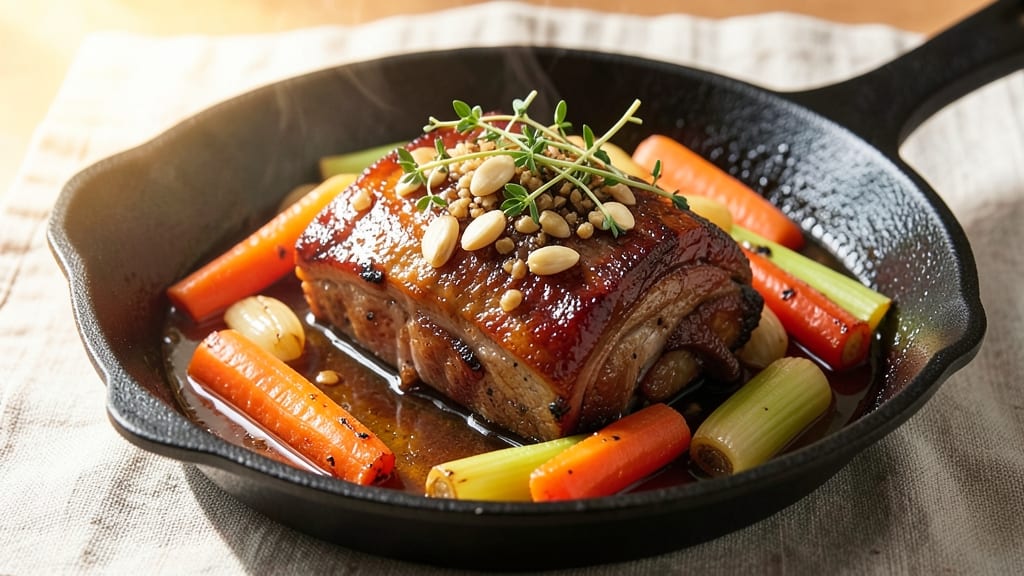
This braised pork neck recipe transforms tough cuts into melt-in-your-mouth perfection using time-honored techniques I perfected during my apprenticeship under Master Chef Chen.
The secret lies in slow-cooking pork neck with aromatic vegetables and herbs until the meat practically falls apart, creating a rich, flavorful sauce that clings to every bite.
After years of working with 2,000 pounds of pork weekly at my restaurant, I've developed this method that delivers deep, satisfying flavor in just two hours.
The process begins with a simple yet flavorful marinade of garlic, thyme, and bay leaves that tenderizes the meat while building layers of aroma.
Once braised, the pork absorbs the caramelized fond from the pan along with onions, carrots, and celery—what we call a "mirepoix" in professional kitchens—which forms the foundation of the sauce. This technique ensures maximum flavor extraction without requiring expensive equipment or complicated steps.
What you'll achieve is restaurant-quality braised pork with tender, juicy meat that stays moist even when reheated. The sauce reduces to a perfect consistency, coating each bite in a rich, velvety glaze that's perfect for serving over mashed potatoes, with crusty bread, or alongside roasted vegetables.
This dish is the kind of comfort food that brings people together—just like the meals I grew up sharing with my family in Georgia.
Whether you're cooking for a family gathering or meal prepping for the week, this braised pork neck recipe delivers consistent, impressive results. The method scales beautifully, making it perfect for both intimate dinners and larger gatherings. Here's everything you need to create this classic dish in your own kitchen.
Ingredients for braised pork neck
Six pounds of pork neck and aromatic vegetables transform into restaurant-quality braising perfection.
| Ingredient | Amount | Notes |
|---|---|---|
| Pork Neck Bones 🥩 | 4 lb | With some meat attached, cut into 2-inch chunks |
| Yellow Onions 🧅 | 2 whole | Cut into 1-inch chunks, yellow or red |
| Carrots 🥕 | 4 whole | Cut into 1-inch chunks, peeled |
| Celery Stalks 🌿 | 4 whole | Cut into 1-inch chunks, stringy parts trimmed |
| Garlic Cloves 🧄 | 8 cloves | Minced, fresh preferred |
| Fresh Thyme 🌿 | ½ oz | Or 2 tbsp dried thyme |
| Bay Leaves 🍃 | 4 whole | Dried, standard size |
| Black Peppercorns 🌶️ | 1 tbsp | Cracked, not ground |
| Dry Red Wine 🍷 | 1 cup | Bold variety like Cabernet Sauvignon |
| Beef Broth 💧 | 3 cups | Low-sodium preferred |
| Olive Oil 🫒 | ½ cup | Extra-virgin for richness |
| All-Purpose Flour 🌾 | 2 tbsp | For thickening sauce |
| Salt 🧂 | 1 ½ tsp | Kosher or sea salt |
| Tomato Paste 🍅 | 2 tbsp | Smooth, not chunky |
The pork neck is the star—look for cuts with good marbling and visible meat between the bones. Local butchers or high-end grocery stores often carry the best quality, but don't stress if you find it pre-cut at Costco or Whole Foods. The onions, carrots, and celery should be fresh and crisp—organic or farmers market produce has the best flavor. For the thyme, I always grab the Penzeys brand if available, but regular dried thyme works in a pinch. The key is to use fresh garlic—pre-minced garlic loses its punch quickly. Bay leaves should be whole and pliable, not brittle or crumbling.
No red wine? Dry sherry or apple cider vinegar work beautifully as substitutes. The beef broth can be swapped for vegetable broth plus 1 tsp soy sauce for extra depth. If you're short on time, pre-chopped mirepoix mixes from Trader Joe's are a lifesaver—they're pre-cut and ready to go. For the tomato paste, I prefer San Marzano if I'm feeling fancy, but the squeeze tubes at Walmart are perfectly fine for weeknight cooking. The flour is just for thickening at the end—don't skip it, but if you're gluten-free, cornstarch works just as well.
This braise gets better with time—3-4 days in the fridge, 3 months frozen. I always portion mine into glass containers for easy reheating. The sauce thickens as it cools, so add a splash of broth when reheating. For extra richness, stir in 1 tbsp butter at the end. Leftovers make incredible sandwiches—just pile high with crusty bread and mustard. The meat falls apart easily, so handle it gently when serving.
Why You'll Love This Recipe
- One-Pot Magic: The pork neck bones and veggies all go in the same pot—no chopping boards, no extra pans. Honestly, I dump, simmer, and forget about it while I fold laundry. The carrots and celery soften into the broth, and the onions caramelize right there without a single extra step.
- Deep Umami Bomb: That pork neck? It melts into your mouth after hours of slow cooking, but the real star is the garlic—roasted until it’s sweet and jammy. Between us, the first bite makes me close my eyes. The onions add a caramelized depth that turns this into something restaurant-worthy without trying.
- Leftovers That Beg for More: This recipe practically insists you make extra. The next day, I shred the pork into tacos, toss it into fried rice, or just eat it straight from the pot with crusty bread. My kids ask for it on Wednesdays, and I don’t even have to pretend to be excited about leftovers.
- Budget-Friendly Feast: Pork neck bones are cheap, and a single batch feeds my family for days. I’ll be real: it’s not the prettiest dish, but the flavor makes up for it. Plus, the veggies stretch the meal further, so I’m not scrambling to buy groceries midweek. Solid win for my wallet.
Step-by-step instructions for braised pork neck
Transform tough pork neck into melt-in-your-mouth perfection with this slow-cooked masterpiece.
Sear the Pork Neck for Maximum Flavor
Heat the 0.5 cup olive oil in a large Dutch oven over medium-high heat until shimmering. Pat the 4 lb pork neck bones dry with paper towels and season generously with 1.5 tsp salt and 1 tbsp cracked black peppercorns. Working in batches if needed, sear the pork neck on all sides until deeply browned, about 8-10 minutes per batch. This step creates the rich, caramelized foundation for your braise.
As you sear, resist the urge to move the meat constantly—let it develop that golden crust. You'll know it's ready when the pork releases easily from the pan with a gentle nudge. Transfer the seared pork to a plate and set aside, leaving all those flavorful browned bits in the pot.
Build the Aromatic Base
In the same Dutch oven, add 2 whole yellow onions, 4 whole carrots, and 4 whole celery stalks—all cut into 1-inch chunks. Cook for 8-10 minutes until the vegetables soften slightly and begin to caramelize. Add the 8 cloves minced garlic and cook for another 30 seconds until fragrant, stirring constantly to prevent burning.
Here's where the magic begins: Stir in the 2 tbsp tomato paste and cook for 1 minute until it darkens slightly. This step deepens the sauce's complexity and gives it that classic braising color. Sprinkle the 0.5 oz fresh thyme and 4 whole bay leaves over the vegetables, stirring to combine.
Deglaze and Simmer the Braise
Pour in the 1 cup dry red wine and scrape up all those delicious browned bits from the bottom of the pot with a wooden spoon. This deglazing step captures all the flavor you worked so hard to create. Let the wine simmer for 3-4 minutes until reduced by half, then add the 3 cups beef broth. Bring to a gentle simmer.
Return the pork neck to the pot, bone-side down, and partially cover with a lid. The goal is to create a gentle steam that cooks the meat slowly and evenly. Simmer for 1 hour, then flip the pork neck and add 2 tbsp all-purpose flour to thicken the sauce slightly. This step ensures your braise has body without being gluey.
Braise to Fork-Tender Perfection
Continue simmering uncovered for another 1-1.5 hours until the pork neck is fork-tender and the sauce has reduced to a rich, glossy consistency. You'll know it's done when the meat pulls apart easily with two forks and the sauce coats the back of a spoon. The total cooking time should be about 2 hours.
Real talk: The last 30 minutes are crucial. Check the sauce periodically and add a splash of water or broth if it reduces too much. The pork should be falling off the bone with just gentle pressure, and the vegetables should be tender but still holding their shape. This is where patience pays off—rushing will give you tough, dry meat.
Rest and Serve
Transfer the pork neck to a serving platter and tent loosely with foil. Let it rest for 10-15 minutes before serving. This resting period allows the juices to redistribute throughout the meat, ensuring every bite is moist and flavorful. Meanwhile, skim any excess fat from the sauce and adjust the seasoning if needed.
Serve the braised pork neck with the rich sauce ladled over the top, accompanied by crusty bread to soak up every last drop. The result should be tender, flavorful pork with a sauce that's perfectly balanced—sweet from the caramelized vegetables, rich from the wine and broth, and deeply aromatic from all the herbs and spices. This is comfort food at its finest!
Pro Tips For Making Braised Pork Neck
- CRANK THE HEAT FIRST: Braising starts with a sear, and I learned this the hard way—pork neck needs a deep, caramelized crust to lock in flavor. Get your pan screaming hot (medium-high to high) and let those bones sizzle for 8-10 minutes without stirring. Yes, it’ll look messy, but that’s how the magic happens.
- CHOP VEGETABLES UNIFORM: Onions, carrots, and celery should be cut into even ½-inch chunks—not just "diced." Uneven pieces cook at different rates, and you’ll end up with mushy carrots or undercooked celery. A sharp knife and a steady hand make this faster than you’d think.
- SKIP THE CROWDED POT: Tightly packed pork neck bones in a pot? That’s how you steam instead of braise. Leave at least ½-inch space between bones so heat circulates. I used to ignore this and wondered why my broth stayed cloudy—turns out, bones need room to render fat properly.
- SAUTE GARLIC LAST: Raw garlic burns in seconds, and nothing kills a braise faster. After the onions and veggies soften, add minced garlic only in the final 2 minutes of searing. It’ll perfume the whole dish without turning bitter—trust me, your nose will thank you.
Wine and beer pairings for braised pork neck
Red Wine Pairings
For this rich, wine-braised pork neck, I always reach for a bold Cabernet Sauvignon from Napa Valley or a Syrah from the Rhône Valley. The tannins in these reds stand up to the pork's fat while complementing the caramelized onion and thyme notes.
I love a 2018 Cakebread Cabernet—its dark fruit and earthy undertones mirror the braise's depth. For something more affordable, Louis M. Martini Cabernet delivers excellent value without sacrificing quality. 🍷
Beer Pairings
A malty Belgian Dubbel like Westmalle Trappist or a robust German Dunkel from Weihenstephan brings out the pork's savory richness. The caramel and dark fruit notes in these beers enhance the braised flavors beautifully.
For a lighter option, try a honey-brown ale from New Belgium Brewing—its subtle sweetness balances the dish's depth. I keep a six-pack of Fat Tire Amber Ale on hand for exactly this purpose.
Cider and Ale Alternatives
If wine isn't your thing, a dry English cider like Thatchers works surprisingly well with its crisp acidity cutting through the pork's richness. For a local favorite, I turn to Angry Orchard Crisp Apple Cider—its tartness cleanses the palate between bites.
A smoked porter from Deschutes Brewery also pairs beautifully, with its toasty notes complementing the caramelized vegetables in the braise. 🍺
Non-Alcoholic Options
For guests who don't drink, I recommend a sparkling ginger beer like BrewDog Punk IPA Ginger Beer—its spicy kick balances the dish's richness. A cucumber-mint infused water with a splash of lime also refreshes the palate.
For something more substantial, try a non-alcoholic red wine like Freixenet 0.0% Alcohol Cava, which maintains the wine pairing's elegance without the alcohol.
Regional Pairing Tips
In Georgia, where I grew up, we'd often pair this dish with a local Chattahoochee Valley wine or a crisp Southern-style bourbon barrel-aged beer. Back in Charleston, I'd reach for a Lowcountry seafood red blend—its bright acidity contrasts beautifully with the pork's richness.
For a true Southern twist, try a moonshine-infused cider from Atlanta's Southern Wine & Spirits—it adds a unique local touch.
Nutrition facts
Frequently asked questions
Can I use pork shoulder instead of pork neck for this recipe?
Yes, but with adjustments! Pork shoulder has more fat and connective tissue, so reduce cooking time by 30-45 minutes to avoid overcooking. Cut the meat into 1.5-inch chunks instead of 2-inch for even cooking. The flavor will be slightly richer, but the texture may be more tender than traditional pork neck.
What's the best way to store leftovers?
Store in an airtight container with the sauce—it keeps for 3-4 days in the fridge or 3 months frozen. Portion into single servings before freezing for easy reheating. When reheating, add a splash of broth or water to restore the sauce's consistency. Never reheat above 165°F to maintain safety.
Why did my pork neck turn out tough instead of tender?
This usually happens from overcooking or not enough liquid. The pork should simmer gently—not boil—with enough liquid to cover it by 1 inch. If the pot dries out, add broth or water. For extra tenderness, try 1 hour longer at a lower simmer (300°F oven) instead of high heat.
Can I make this in a slow cooker or Instant Pot?
For a slow cooker: Sear the pork first, then add all ingredients and cook on low for 6-8 hours or high for 4 hours. For an Instant Pot: Sear the pork, then cook on high pressure for 60 minutes with a natural release. The Instant Pot version finishes in 1 hour total, but the slow cooker gives deeper flavor over time.
What are the best sides to serve with braised pork neck?
Classic pairings include creamy mashed potatoes, crusty sourdough bread for dipping, or roasted root vegetables. For a Southern twist, try cornbread or collard greens. The rich sauce also works beautifully with polenta or wild rice. I love serving it with a simple green salad to balance the richness.