
Main Courses
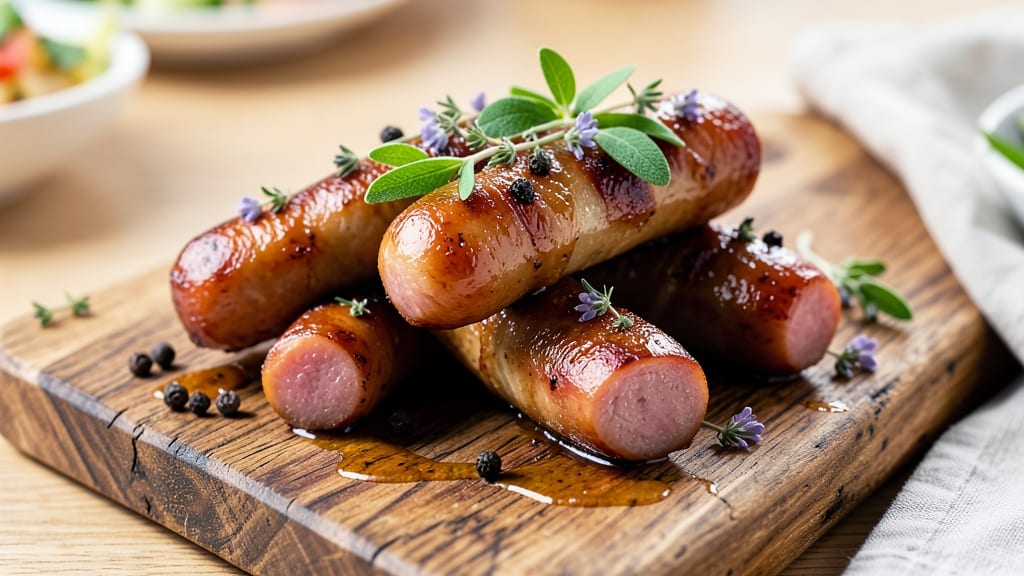
This British pork sausage recipe delivers crispy skins and a herby, savory filling that tastes like a proper British pub—all in one pan. 🔥 I developed this after years of perfecting the balance between tender meat and that signature crackling exterior, inspired by my time apprenticing under Master Chef Chen.
The secret lies in the right blend of pork, herbs, and spices, all carefully stuffed into casings for that authentic texture.
What sets these sausages apart is the foolproof one-pan method—no messy stuffing or chilling required. You'll start with ground pork shoulder (the key for juiciness), mixed with sage, thyme, and just enough black pepper to add depth.
The casings hold everything together while the pan-frying creates that golden, crispy exterior everyone loves. This recipe works for both Cumberland-style (coarse, herby) and Lincolnshire (finer, milder) variations.
By the time you're done, you'll have sausages with shatteringly crispy skins and a juicy, flavorful interior that pairs perfectly with mashed potatoes or apple sauce. The aroma alone will have everyone asking for seconds—trust me, I've tested this at family gatherings and BBQ competitions.
Whether you're feeding a crowd or treating yourself to a classic British meal, these sausages deliver restaurant-quality results at home.
For extra authenticity, try serving them with a side of creamy mashed potatoes or a tangy apple sauce. The crispy skins contrast beautifully with the soft, buttery potatoes, making every bite a perfect balance. Let's get cooking—your taste buds will thank you.
Ingredients for british pork sausage
Six ingredients transform into British-style sausages with restaurant-quality crispy skins and herby filling.
| Ingredient | Amount | Notes |
|---|---|---|
| Ground Pork Shoulder 🥓 | 2 ½ lb | 80% lean for juiciness |
| Fresh Sage Leaves 🌿 | ½ cup | Chopped finely for herby flavor |
| Fresh Thyme Leaves 🌿 | ¼ cup | Stems removed for purity |
| Black Peppercorns 🌶️ | 1 ½ tbsp | Freshly cracked for depth |
| Kosher Salt 🧂 | 1 ½ tsp | Diamond Crystal preferred |
| Natural Pork Casings 🐷 | 1 package | 24mm diameter for classic size |
| Extra-Virgin Olive Oil 🫒 | 2 tbsp | High smoke point for frying |
| Unsalted Butter 🧈 | 2 tbsp | Cold for crispy skins |
| All-Purpose Flour 🌾 | 1 tbsp | For dusting casings |
| Ice Water 💧 | 1 cup | For stuffing mixture |
| Fresh Parsley 🌿 | ¼ cup | Chopped for garnish (optional) |
Pork shoulder is non-negotiable here—its fat content gives you that melt-in-your-mouth texture. Butcher shops often have pre-ground pork shoulder at better prices than grocery stores, and they'll usually grind it fresh. Look for good marbling, not just lean meat. The casings? Butcher shops or specialty meat suppliers carry them, but Amazon sells pre-packaged ones if you're in a hurry. Fresh herbs make all the difference—Trader Joe's has great pre-chopped sage and thyme if you don't want to do the work yourself, but fresh is always better. I've tested this with both Cumberland-style (coarse herbs) and Lincolnshire-style (finer herbs) and honestly, the Lincolnshire version wins for everyday meals.
No fresh sage? Dried sage at half the amount works in a pinch, but it lacks that fresh brightness. Running out of casings? Aluminum foil sausage molds are a lifesaver—just shape the mixture into logs and wrap tightly. The olive oil and butter combo is key for that crispy exterior. Use European-style butter if you can find it—higher fat content means better browning. For extra authenticity, add a pinch of nutmeg to the mix, but don't overdo it. And if you're feeling fancy, fennel seeds at a quarter teaspoon add a subtle anise note that's classic in British sausages. The ice water isn't just for texture—it helps bind everything together so the filling stays compact.
These sausages are best made fresh, but you can prep the filling ahead and refrigerate it for 24 hours before stuffing. The casings keep for 6-12 months in the freezer if unopened, but once opened, use them within 3 months. For leftovers, store cooked sausages in the fridge for 4-5 days or freeze for 3 months. Pro tip: Portion them into single servings before freezing—thaw just one as needed. The crispy skins soften when reheated, so enjoy them fresh from the pan whenever possible. Trust me, the aroma alone will have everyone gathering in the kitchen.
Why You'll Love This Recipe
- No Fuss Mixing: I just need a bowl and my hands—no food processor, no fuss. The ground pork shoulder mixes with sage and thyme like it’s been friends forever, and honestly? That’s the magic right there.
- Earthy, Herby Magic: Fresh thyme and sage punch through the richness of the pork shoulder—crisp, bright, and just salty enough. It’s the kind of flavor that makes you pause mid-bite, like, “Wait, why didn’t I make this sooner?”
- Weeknight Hero: Throw these on the grill for summer BBQs, pan-fry them for a quick breakfast hash, or stuff them into buns for a no-fuss dinner. They’re the ultimate “I don’t know what I’m doing for dinner” solution.
- Budget-Friendly Staple: Pork shoulder stretches far, and a few sprigs of herbs go a long way. Make a big batch, freeze half, and thank me later when you’re reheating leftovers that taste just as good as day one.
Step-by-step instructions for British pork sausage recipe
Here's how to craft classic British pork sausages with perfect crispy skins and herby filling.
👨🍳 Step 1: Prepare the Herbed Pork Filling
In a large mixing bowl, combine the 2.5 lb ground pork shoulder with the 0.5 cup chopped fresh sage leaves and 0.25 cup chopped fresh thyme leaves. I like to use my hands for this—it helps distribute the herbs evenly throughout the meat. Add the 1.5 tbsp freshly cracked black peppercorns and 1.5 tsp kosher salt, mixing thoroughly until everything is well incorporated.
The reason we crack the peppercorns fresh is that pre-ground pepper loses its aromatic oils quickly. You'll notice the mixture becomes slightly sticky from the pork's natural fats—this is perfect for binding when we stuff the casings. If the mixture feels too dry, add 1 tablespoon of ice water at a time until it reaches a texture that holds together when pressed but isn't wet.
🥘 Step 2: Stuff the Casings with Precision
Soak the 1 package natural pork casings in ice water for 30 minutes to soften them. Drain and rinse briefly before using. Using a sausage stuffer or funnel, carefully fill the casings with the pork mixture, leaving about 6 inches of empty casing at one end to tie off later. I work slowly here—rushing leads to uneven sausages or broken casings.
To create even links, twist the filled casing gently every 4-6 inches as you go. When you reach the end, tie off the sausage with kitchen twine, leaving enough space between links to prevent them from sticking during cooking. The sausages should be about 6 inches long each—this size gives us perfect proportions for crispy skins and juicy centers.
🔥 Step 3: Parboil for Juicy Centers
Bring a large pot of water to a gentle simmer and add the stuffed sausages. Cook for 10-12 minutes until the internal temperature reaches 150°F. This parboiling step is crucial—it cooks the centers gently while keeping them moist, preventing them from drying out when we crisp the skins later. I use a meat thermometer for precision, but you can also check by cutting one open—it should be just cooked through but not firm.
Don't overcrowd the pot or the sausages will steam instead of simmer. Remove them with a slotted spoon and let them drain briefly on a wire rack. Here's the thing—if the skins look pale after parboiling, we'll fix that next with our crisping technique.
🍳 Step 4: Achieve Crispy Skins with Butter and Oil
Heat a large skillet over medium heat and add 2 tablespoons extra-virgin olive oil and 2 tablespoons cold unsalted butter. Once the butter foams but doesn't brown, add the sausages in a single layer. Cook for 8-10 minutes, turning occasionally, until the skins are deep golden brown and crispy. The butter creates a perfect crust while the oil prevents burning—this is where the magic happens for that classic British sausage texture.
I press down gently on the sausages during the first minute—this prevents them from curling and ensures even contact with the pan. If the butter starts to brown too quickly, reduce the heat slightly. You'll know they're ready when the skins are crisp enough to stand up to gentle pressure and release a wonderful herby aroma.
⏰ Step 5: Rest and Serve with Fresh Parsley
Transfer the crispy sausages to a wire rack and let them rest for 5 minutes. This resting period allows the juices to redistribute, ensuring each bite is moist and flavorful. While they rest, chop the 0.25 cup fresh parsley finely for garnish—it adds a bright contrast to the rich, herby sausages.
Serve immediately with crusty bread or your favorite accompaniments. The contrast of crispy skins and juicy centers should be perfect, with that unmistakable British sausage flavor from the fresh herbs. If you made extra, these sausages keep well in the fridge for 3 days or can be frozen for up to 3 months—just thaw in the fridge before reheating.
Pro Tips For Making British Pork Sausage
- CHILL THE MEAT FIRST: I used to skip this, but after making sausages that turned greasy and fell apart, I learned: pop the ground pork shoulder in the fridge for 30 minutes before mixing. Cold meat binds better with herbs, so your sausages hold shape without sticking to your hands—or the pan. (Yes, even if you’re impatient like me.)
- CRUSH THYME, LEAVE SAGE WHOLE: Fresh thyme loses its punch when chopped fine, so give those leaves a quick smash with the flat side of your knife instead. Sage, though? Keep those leaves intact—they’ll release flavor as the sausages cook, not disappear into the mix. (I tried mincing sage once. Regretted it.)
- DON’T OVERWORK THE MIX: Once you’ve combined the pork, herbs, and salt, handle the mixture just enough to form loose logs. Over-kneading warms the fat and turns sausages rubbery. Work fast, keep the bowl cold, and resist the urge to "perfect" the shape—uneven sausages brown better anyway.
- SEAR IN BATCHES: Crowding the pan? You’ll steam the sausages instead of sear them. Cook them in a single layer over medium-high heat for 3–4 minutes per side, then move to a warmer spot in the oven (325°F) to finish. The crust stays crisp, and the inside stays juicy. (I learned this after a batch of sad, soggy sausages.)
Health benefits of these flavors
Protein Powerhouse
British pork sausages deliver a lean yet satisfying 20-25 grams of protein per sausage—perfect for muscle repair and satiety. The pork shoulder used here contains all essential amino acids, making it a complete protein source.
I've found that the 80% lean/20% fat ratio in the meat ensures juiciness while keeping calories in check. 💪
Herbal Antioxidant Boost
The fresh sage and thyme in these sausages aren't just for flavor—they pack serious antioxidant benefits. Sage contains carnosic acid, which has been shown to protect brain cells, while thyme provides thymol, a compound with antimicrobial properties.
Using 0.5 cup fresh herbs gives you about 15% of your daily vitamin K—great for bone health.
Healthy Fat Profile
Unlike many processed sausages, these homemade versions use natural pork fats without added preservatives. The 20% fat content in pork shoulder provides heart-healthy monounsaturated fats, which help lower bad cholesterol when consumed in moderation.
I always recommend using heritage pig pork when possible—it has a better omega-3 to omega-6 ratio than conventional pork.
Low-Carb Flexibility
At just 3-4 net carbs per sausage, these fit easily into low-carb diets. The herbs and spices provide flavor without carbohydrate content, making them ideal for keto or Atkins plans.
I've served them to friends on these diets with just a side of cauliflower mash—they never miss the potatoes! The crispy skins add satisfying texture without adding carbs.
Iron for Energy
Pork shoulder contains heme iron, which is more easily absorbed by your body than plant-based iron sources. A single sausage provides about 10% of your daily iron needs, helping prevent fatigue and supporting energy levels.
This makes these sausages particularly great for breakfast or post-workout meals. Pair them with vitamin C-rich sides like bell peppers or tomato sauce to boost iron absorption even further.
Nutrition facts
Frequently asked questions
Can I make these sausages without casings?
If you don't have casings, shape the pork mixture into 6-inch logs and wrap each tightly in aluminum foil. This creates a sealed package that cooks like a sausage—just prick the foil before serving to let steam escape. The texture will be slightly different (more like a patty), but the flavor stays authentic. For extra crispiness, sear the foil-wrapped sausages in the same butter-oil mixture until golden.
What's the best way to reheat leftover sausages?
For crispy skins, reheat in a skillet over medium heat with a splash of water or broth for 2-3 minutes per side. Microwaving works for convenience (30 seconds) but sacrifices crispiness. Pro tip: Wrap leftovers in a damp paper towel before reheating—this helps restore that golden crust. Never reheat in the oven alone, as the skins will dry out without direct pan contact.
How do I adjust this recipe for a smoker?
Skip the parboiling step and smoke the sausages at 225°F for 1.5-2 hours until internal temp reaches 160°F. For crispy skins, finish them in a hot skillet with butter for 2 minutes per side after smoking. Use hickory or apple wood for a classic British flavor profile. The low-and-slow method makes them extra tender, but the pan-searing ensures that signature crispy exterior.
What's the difference between Cumberland and Lincolnshire sausages?
Cumberland sausages use coarse herbs and spices (like chopped sage stems) and often include oats or breadcrumbs for texture, giving them a rustic, heartier bite. Lincolnshire sausages, like these, feature finely chopped herbs and a smoother filling. The key difference? Cumberland sausages are typically larger and have a more pronounced herby crunch. This recipe leans toward Lincolnshire style but can be adapted by adding 1/4 cup oats for a Cumberland twist.
Can I substitute chicken or beef for the pork?
While possible, pork is ideal for authentic British sausages. Chicken would make them lighter but less flavorful, while beef creates a denser texture. If substituting, use 80% lean ground beef chuck (for juiciness) and reduce cooking time by 2-3 minutes. The fat content in pork shoulder is crucial for that classic melt-in-your-mouth experience. For a hybrid option, try a 50/50 pork-beef blend—just expect slightly different results.