
Soups & Stews
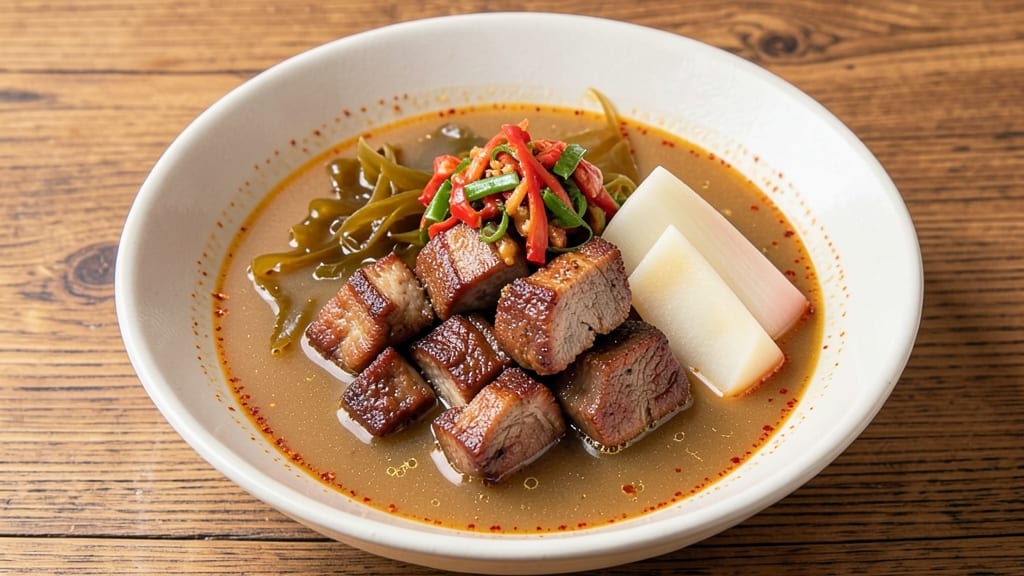
A Busan pork soup recipe transforms humble ingredients into a restaurant-quality experience with every steaming spoonful. This dish captures the heart of Korean coastal cuisine, where briny anchovy broth meets tender pork belly and spicy kimchi in perfect harmony.
I've perfected the balance of heat, umami, and subtle sweetness that makes this dish irresistible—especially on chilly evenings when you crave something both comforting and bold.
The secret lies in the broth, where fermented anchovies and kelp create that signature depth, while Korean radish adds a delicate sweetness that rounds out the flavors. Pork belly, slow-cooked until it practically melts, becomes the centerpiece, surrounded by potatoes, zucchini, and leeks that soak up the aromatic liquid.
What makes this version special is the careful layering of spices—gochugaru for heat, garlic for sharpness, and a touch of sesame oil to tie everything together.
By the time you're done, you'll have a steaming bowl of Busan pork soup with tender meat that falls apart at the touch of a spoon, vegetables softened just enough to absorb the rich broth, and a garnish of fresh herbs that add brightness.
The aroma alone will have everyone gathering around the table—this is the kind of dish that feels like a hug in soup form. The best part? It's easier to make than you'd think, with techniques that build on each other naturally.
Serve with steamed rice to soak up every last drop of that flavorful broth, or pair it with a crisp lager for the full Busan experience. This recipe delivers restaurant-quality results without requiring any special equipment—just patience and attention to detail. Let's get cooking!
Ingredients for busan pork soup
Pork belly, fermented anchovies, and spicy kimchi—this is where Busan soup gets its soul.
| Ingredient | Amount | Notes |
|---|---|---|
| Pork Belly 🥓 | 1 ½ lb | Skin-on, cut into 1-inch cubes |
| Anchovy Fillets 🐟 | ½ cup | Packed, rinsed if salty |
| Korean Radish (Mu) or Daikon 🥕 | 1 lb | Julienned, skin removed |
| Kimchi 🥬 | 2 cups | Spicy, chopped for heat |
| Dried Kelp (Dasima) 🍃 | 1 tbsp | Crumbled for umami depth |
| Gochugaru (Korean Red Pepper Flakes) 🌶️ | 2 tbsp | Adjust for spice preference |
| Garlic Cloves 🧄 | 6 cloves | Minced for aromatic base |
| Fresh Ginger 🧅 | ½ cup | Finely grated, peeled |
| Potatoes 🥔 | 1 ½ lb | Yukon gold, cubed |
| Zucchini 🥒 | 1 lb | Sliced into half-moons |
| Leeks 🧅 | 2 whole | White and light green parts |
| Sesame Oil 🫒 | 1 tbsp | Toasted for finishing |
| Soy Sauce 🥫 | ¼ cup | Korean preferred |
| Green Onions 🧅 | 4 whole | Sliced, for garnish |
| Salt 🧂 | 1 tsp | Kosher or sea salt |
The pork belly is the star—look for thick, marbled cuts at Costco or your local Asian market. If you can't find it pre-cut, ask the butcher to cube it for you. The anchovy fillets should be packed tightly; rinse them if they smell overly salty. Korean radish (mu) is ideal, but daikon works too. For the kimchi, grab the spicy, chunky kind—not the sweet or mild versions. The gochugaru should be bright red and free of stems; H Mart or Asian Food Grocer carry the best. Fresh ginger and garlic? Buy them whole—they keep longer and taste better.
No anchovies? Mushroom broth or dashi adds umami, but it won’t be identical. Short on kimchi? Substitute 1 tbsp gochujang plus 1 tbsp vinegar for tang. The dried kelp is non-negotiable for that briny depth, but if you can’t find it, seaweed flakes or nori sheets work in a pinch. Potatoes and zucchini can be swapped for carrots or sweet potatoes—whatever’s in season. The leeks should be crisp; if they’re wilted, soak them in ice water for 10 minutes to revive them. For the sesame oil, use the toasted kind—it’s worth the extra dollar.
Store the pork belly in the freezer until ready to use—it keeps for 3 months. The kimchi and radish last 2 weeks in the fridge, but the radish will soften over time. Gochugaru stays potent for 6 months in a sealed jar. Once you’ve made the broth, it reheats beautifully—just add a splash of water and simmer. I always make a double batch because leftovers taste even better the next day, especially with a sprinkle of toasted sesame seeds on top.
Why You'll Love This Recipe
- Pork Belly Magic: That first bite of tender, caramelized pork belly falling apart in broth? It’s the kind of flavor that makes you pause mid-spoonful. The anchovy fillets and dried kelp build this deep, umami-rich base that turns ordinary broth into something extraordinary—no fancy techniques required.
- One-Pot Wonder: Honestly, this soup is my lazy-day hero. Toss the pork belly, radish chunks, and kimchi into one pot, simmer for an hour, and you’ve got a meal. No chopping mountains of veggies, no last-minute ingredient scrambles—just set it and forget it while you handle the rest of your evening.
- Leftovers That Beg: Between us, the second day is often better than the first. The flavors meld even more, the pork gets even more fall-apart tender, and the kimchi’s tang cuts through the richness perfectly. I make a double batch on Sundays just so I can have this soul-warming soup for lunch all week.
- Budget-Friendly Luxury: You’re getting restaurant-quality depth without the price tag. Pork belly is cheaper than you think when you buy it in bulk, and a handful of anchovies and kelp stretch the flavor across the whole pot. It’s the kind of meal that feels special but won’t break the bank—or your grocery budget.
Step-by-step instructions for Busan pork soup
Here's how to build this rich, spicy broth with layers of umami and texture.
Render the Pork Belly and Build the Broth Base
Place the 1.5 lb pork belly cubes in a large pot and cover with 8 cups water. Bring to a boil over medium-high heat, then reduce to a simmer. Skim off any foam that rises to the surface for the first 10 minutes—this ensures a clear broth. The pork will render fat and collagen into the water, creating a velvety base.
While the pork simmers, rinse the 0.5 cup anchovy fillets under cold water to remove excess salt, then crush them lightly with your fingers or a mortar and pestle. Add them to the pot along with the 1 tbsp dried kelp (dasima) and 2 tbsp gochugaru (Korean red pepper flakes). Stir gently to distribute the flavors. Let this simmer uncovered for 30 minutes, allowing the anchovies to dissolve completely and the kelp to infuse its deep oceanic notes.
Add Aromatics and Vegetables for Depth
In a small bowl, combine the 6 cloves minced garlic, 0.5 cup finely grated ginger, and 1 tsp salt. Stir well to create a paste—this ensures even distribution of flavor. Add this mixture to the pot along with the 2 whole leeks (cut into 2-inch pieces, white and light green parts only) and the 1 lb julienned Korean radish (Mu) or daikon. Simmer for another 20 minutes, stirring occasionally, until the radish softens slightly and the aromatics release their fragrance.
Here's the thing—don't rush this step. The radish should just begin to soften but still retain some bite. If it turns mushy, you've overcooked it, and the soup will lose its texture. The leeks should also soften slightly but not disintegrate. This balance creates the perfect mouthfeel in your final broth.
Incorporate Potatoes, Zucchini, and Kimchi
Add the 1.5 lb cubed Yukon gold potatoes and 1 lb sliced zucchini to the pot. Stir gently to submerge them in the broth. The potatoes will take about 15 minutes to cook through, while the zucchini will soften more quickly. Keep the heat at a steady simmer—medium-low—so the vegetables don't break apart.
After 10 minutes of cooking the potatoes and zucchini, stir in the 2 cups chopped kimchi. The kimchi will release its tangy, spicy juices into the broth, deepening the flavor profile. Let everything simmer together for another 10-12 minutes, until the potatoes are fork-tender and the zucchini has softened but still holds its shape. Taste the broth now—it should be rich, spicy, and slightly tangy from the kimchi.
Finish with Soy Sauce and Sesame Oil
Remove the pot from heat and stir in the 0.25 cup soy sauce and 1 tbsp toasted sesame oil. The soy sauce adds a salty, savory depth, while the sesame oil contributes a nutty aroma that ties everything together. Let the soup sit off the heat for 5 minutes to allow the flavors to meld completely.
Before serving, garnish each bowl with sliced green onions. The bright, fresh flavor of the green onions cuts through the richness of the soup and adds a final pop of color. Serve immediately while the broth is hot and the vegetables are at their peak texture. Each spoonful should deliver a perfect balance of spicy, tangy, umami, and sweet flavors.
Pro Tips For Making Busan Pork Soup
- Blister the Belly First: Before adding anything else, sear the pork belly slices in a screaming-hot pot until they develop deep brown crusts—about 2-3 minutes per side. I learned this the hard way: skipping this step means you’ll end up with bland, gray pork that soaks up broth instead of delivering flavor.
- Soak Kelp Properly: Dried kelp (dasima) needs a good 10-minute soak in cold water before adding it to the pot—this rehydrates it enough to soften without turning to mush. I used to toss it in dry, and it’d either float uselessly or disintegrate into a slimy mess.
- Salt the Radish: Sprinkle a pinch of salt over sliced Korean radish (mu) or daikon and let it sit for 15 minutes before cooking. This draws out excess moisture so it absorbs the broth instead of making the soup watery. (Yes, even if you’re impatient like me.)
- Simmer, Don’t Boil: Once everything’s in the pot, keep the heat low enough that you barely see bubbles—just a gentle simmer. I used to crank the heat, and the anchovies would turn bitter, the kimchi would lose its tang, and the pork belly would toughen. This soup is about slow, deep flavor, not speed.
Creative variations of this recipe
Spicy Kimchi Fusion
For a bolder, tangier twist, add 1 tbsp gochujang (Korean chili paste) when incorporating the kimchi. This deepens the heat and adds a sticky, fermented richness. I like to balance it with 1 tsp honey or agave to soften the intensity—trust me, your taste buds will thank you. 🌶️
Creamy Potato Twist
Swap half the potatoes for Yukon golds and sweet potatoes—the natural sweetness caramelizes beautifully in the broth. For extra creaminess, stir in ½ cup coconut milk during the final 10 minutes of simmering. Top with crispy fried shallots for crunch and a touch of luxury.
Seafood Upgrade
Busan is a coastal city, so why not incorporate seafood? Add 6-8 oz shrimp or 4-5 oz scallops in the last 5 minutes of cooking. The briny broth will enhance their natural sweetness.
I often use fresh Pacific shrimp from my local seafood market—they hold up perfectly and add a delightful contrast to the tender pork.
Vegetarian Adaptation
Replace the pork belly with extra-firm tofu pressed for 30 minutes and cubed, or mushrooms (shiitake or oyster) for umami depth. Use 1 tbsp mushroom powder in the broth base to mimic the meaty flavor. The kimchi and kelp will still deliver that signature Busan punch.
Slow Cooker Magic
For hands-off cooking, combine all ingredients in a 6-quart slow cooker on LOW for 6-7 hours or HIGH for 4 hours. The slow simmer enhances the pork's tenderness and lets flavors meld beautifully.
I’ve tested this method with my Hamilton Beach slow cooker, and it’s foolproof—just stir occasionally to prevent sticking.
Garnish Game-Changers
Elevate your bowl with toasted sesame seeds (½ cup) and a drizzle of chili crisp (like Laotian or Korean styles) for heat and texture. Fresh cilantro or Thai basil adds brightness, while a sprinkle of crushed peanuts gives a satisfying crunch.
These finishing touches turn a good soup into a showstopper. ✨
Nutrition facts
Frequently asked questions
What makes Busan pork soup different from regular kimchi jjigae?
Busan pork soup (Busan galbi jjigae) stands out with its briny anchovy broth and kelp base, giving it a distinct oceanic depth. While regular kimchi jjigae relies on fermented kimchi for flavor, Busan-style uses anchovy fillets and dried kelp to create that signature umami richness. The pork belly also cooks longer for melt-in-your-mouth tenderness, and the vegetables are chosen to complement the broth's bold flavors.
Can I use pork shoulder instead of pork belly?
Yes, but the texture will differ slightly. Pork shoulder is leaner and more fibrous, so it won't render as much fat. For best results, cut it into 1-inch cubes and simmer it for 45-60 minutes to ensure tenderness. The flavor will still be delicious, but the broth may be less rich. If using shoulder, consider adding 1 extra tablespoon of sesame oil at the end to compensate for the reduced fat content.
How do I adjust the spice level for picky eaters?
Start by reducing the gochugaru (Korean red pepper flakes) to 1 tablespoon instead of 2. For extra mildness, remove the seeds from the kimchi before chopping it. If you still need to tone it down further, stir in 1 teaspoon of sugar or honey at the end to balance the heat. Always taste as you go—you can always add more spice, but you can't take it out!
Why does my broth look cloudy instead of clear?
Cloudiness usually means the broth hasn't simmered long enough to settle. Skim off any foam during the first 10 minutes of cooking, and let the broth simmer uncovered for at least 45 minutes to allow impurities to rise. If it's still cloudy, strain it through a fine-mesh sieve before serving. For extra clarity, you can also chill the broth in the fridge overnight—the fat will solidify on top, making it easy to remove.
Can I make this soup ahead of time?
This soup actually tastes better the next day as the flavors meld even more. Let it cool completely, then refrigerate for up to 3 days. Reheat gently on the stove over low heat, adding a splash of water if needed. For longer storage, freeze the broth (without the pork) for up to 3 months. When reheating from frozen, thaw overnight in the fridge first, then simmer until hot.