
Main Courses
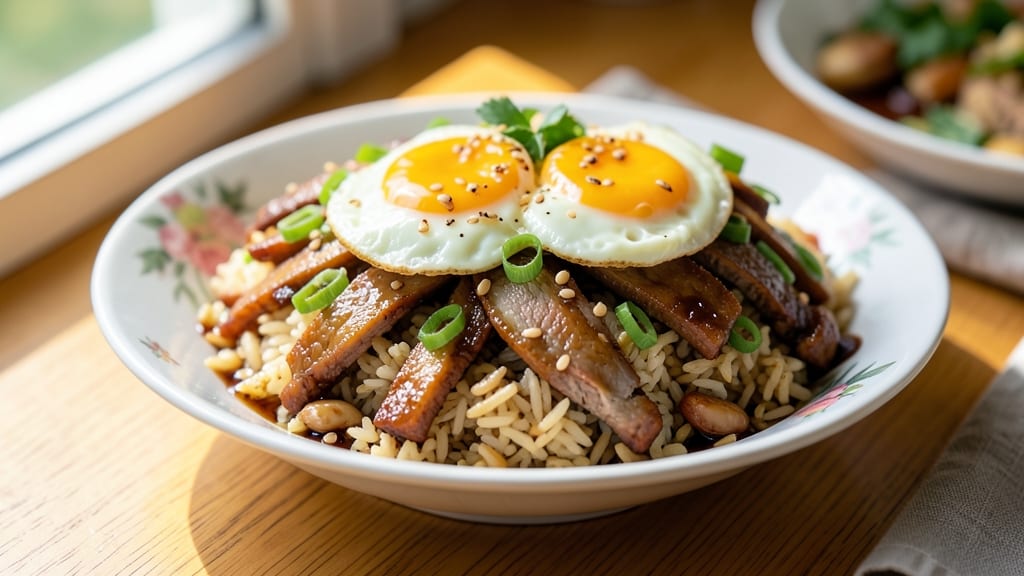
This char siu pork fried rice recipe delivers the perfect balance of smoky-sweet pork and savory wok hei in every bite. The secret lies in using leftover char siu pork, which adds rich, caramelized flavor without overpowering the dish.
I developed this one-pan method to capture that iconic Cantonese restaurant taste at home—crispy edges, tender rice, and a burst of five-spice aroma.
What makes this recipe special is the smoky five-spice crunch achieved through proper stir-frying technique. We'll use day-old rice for better texture, wok hei for that signature smoky flavor, and a touch of oyster sauce to tie everything together.
The result is a restaurant-quality fried rice that's ready in under 20 minutes—ideal for weeknight dinners or meal prep. Let's get cooking!
Ingredients for char siu pork fried rice
Four cups of day-old rice, smoky char siu pork, and aromatic wok hei spices transform into restaurant-quality fried rice.
| Ingredient | Amount | Notes |
|---|---|---|
| Day-Old Jasmine Rice 🍚 | 4 cups | Cold and broken up for texture |
| Char Siu Pork 🥩 | 1 ½ cups | Diced into 1/2-inch pieces |
| Large Eggs 🥚 | 3 whole | Freshly beaten for stir-fry |
| Green Onions 🧅 | ½ cup | White and green parts separated |
| Garlic Cloves 🧄 | 6 cloves | Minced for aromatic base |
| Oyster Sauce 🍶 | 2 tbsp | High-quality brand preferred |
| Light Soy Sauce 🥄 | 2 tbsp | For umami balance |
| Sesame Oil 🫒 | 1 tbsp | Toasted for aroma |
| Five-Spice Powder 🌶️ | 1 tsp | Authentic Cantonese blend |
| Vegetable Oil 🫒 | 3 tbsp | High smoke point preferred |
| Salt 🧂 | ½ tsp | Adjust to taste |
| Black Pepper 🌶️ | ¼ tsp | Freshly cracked |
| Fresh Ginger 🌿 | 1 tsp | Grated for heat |
The char siu pork is the star—look for authentic Cantonese-style with that signature caramelized glaze. Whole Foods or Asian markets carry the best quality, but any pre-sliced char siu works in a pinch. For the rice, Jasmine rice is non-negotiable—it absorbs the flavors beautifully. Day-old rice is crucial; fresh rice turns mushy. If you're short on time, spread freshly cooked rice on a tray and refrigerate 1 hour to dry it out. The five-spice powder should be toasted in the pan first to release its full aroma—this is where the smoky depth comes from.
No char siu pork? Substitute with leftover roast pork or even smoked ham, but reduce the amount by 25% since it's less flavorful. Fresh ginger can be swapped for ground ginger at half the amount, but the texture differs. For extra crunch, add crispy fried shallots at the end—Trader Joe's sells them pre-made. The oyster sauce matters here; Lee Kum Kee is the gold standard, but any quality brand works. If you're avoiding seafood, vegetarian oyster sauce (made from mushrooms) is an excellent substitute. The eggs should be beaten with a pinch of salt before stir-frying for perfect texture.
This dish reheats beautifully—microwave for 1-2 minutes with a splash of water to restore crispiness. Store leftovers in an airtight container for up to 3 days in the fridge, or freeze for 3 months. For meal prep, portion into containers with the rice on the bottom and pork on top to maintain texture. The flavors actually improve after the first night as everything melds together. If you're making this for a crowd, double the recipe—it's that good.
Why You'll Love This Recipe
- I’ll be real: this is my go-to for packed lunches. The rice stays fluffy for days, the pork doesn’t dry out, and I can portion it into containers with a sprinkle of green onions on top. My kids (and my husband) grab it without complaint—even on days when they’d normally say “I don’t want rice.” (Yes, even on a Tuesday night.)
- Here’s what sold me: this fried rice actually tastes better the next day. The flavors meld, the textures soften just enough, and it reheats like a dream. I make a big batch on Sundays, and by Wednesday, I’m sneaking seconds. Plus, it’s cheap—char siu pork stretches far, and the ingredients won’t break the bank. My wallet and my taste buds both win.
Step-by-step instructions for char siu pork fried rice
This method delivers restaurant-quality texture and flavor with precise timing and technique.
Prep the Base Ingredients for Maximum Texture
Break the 4 cups day-old jasmine rice into small, uneven pieces using your hands or a fork. The goal is to create individual grains with slightly rough edges—this prevents mushiness and ensures each bite has proper texture. Spread the rice on a plate and set aside while you prepare the remaining ingredients.
In a small bowl, combine the 6 cloves minced garlic, 1 tsp grated fresh ginger, and 1 tsp five-spice powder. This aromatic blend will infuse the entire dish with complex Cantonese flavors. Set aside until needed—don't let the garlic oxidize or it'll turn bitter.
Create the Egg and Protein Mixture
In a separate bowl, beat the 3 whole large eggs until just combined but still slightly thick. Add 2 tablespoons oyster sauce and 2 tablespoons light soy sauce, mixing gently to distribute the flavors evenly. The eggs should remain slightly viscous—this helps them form delicate ribbons when cooked.
Cut the 1.5 cups char siu pork into slightly smaller ¼-inch pieces if needed, ensuring even cooking. Separate the 0.5 cup green onions into white and green parts—you'll cook the whites first for flavor, then add the greens at the end for color and freshness.
Build the Flavor Base with High Heat
Heat a wok or large skillet over high heat until it's very hot—you should see a slight shimmer when you sprinkle a drop of water. Add 3 tablespoons vegetable oil and swirl to coat the pan completely. When the oil shimmers (about 30 seconds), add the garlic-ginger-spice mixture and stir constantly for 10 seconds until fragrant but not browned.
Add the white parts of the green onions and stir for 15 seconds until they soften slightly. Immediately pour in the beaten egg mixture and stir vigorously with a spatula, creating thin ribbons. Cook for 20 seconds until the eggs are just set but still slightly runny—this is crucial for proper texture. Remove the egg mixture to a plate and set aside.
Stir-Fry the Char Siu Pork and Rice
Return the wok to high heat and add the 1.5 cups char siu pork pieces. Stir-fry for 30 seconds until they begin to sizzle, then add the 4 cups broken-up jasmine rice. Spread the rice in an even layer and let it sit undisturbed for 15 seconds to develop a slight crust on the bottom.
Add 0.5 teaspoon salt and 0.25 teaspoon black pepper, then stir-fry vigorously for 1 minute, breaking up any large clumps. The rice should begin to take on color and release its aroma. Pour in 1 tablespoon sesame oil and toss everything together for another 30 seconds until the rice is heated through and slightly crispy in spots.
Combine and Finish with Perfect Timing
Return the egg mixture to the wok and combine with the rice and pork. Stir-fry for an additional 1 minute until everything is heated through and well incorporated. The eggs should now be fully cooked, creating delicate strands throughout the rice. Taste and adjust seasoning if needed—you may need a touch more soy sauce for balance.
Turn off the heat and immediately add the green parts of the green onions, tossing gently to distribute. Transfer the fried rice to serving plates while it's still hot, garnishing with additional green onions if desired. Serve immediately while the rice maintains its perfect texture—each bite should deliver smoky char siu flavor, aromatic five-spice notes, and tender egg ribbons throughout.
Pro Tips For Making Char Siu Pork Fried Rice
- CHOP CHAR SIU SMALL: I learned this the hard way—big chunks of char siu turn into chewy mouthfuls. Slice the pork into thin, even strips (about ½-inch wide) so it cooks fast and blends into every bite of rice. If your knife skills are rusty, freeze the pork for 10 minutes first—it’ll hold its shape better.
- SALT THE RICE FIRST: Day-old rice needs moisture, but tossing it dry in the wok means you’ll end up with gritty, underseasoned grains. Mix the rice with 1 teaspoon of soy sauce or a pinch of salt before heating the wok—this helps the rice absorb flavor while you prep the other ingredients.
- SCRAMBLE EGGS SEPARATELY: Your eggs will turn out greasy if you toss them in with the rice and pork. Push the rice to one side of the wok, scramble the beaten eggs in the empty space over medium heat until just set, then mix everything together. The eggs stay fluffy and don’t soak up oil like they do when cooked in the crowd.
- GARLIC FIRST, LOW HEAT: Char siu pork fried rice should smell like garlic, not burnt toast. Mince the cloves thin (almost into a paste) and cook them in the wok for 30 seconds on low heat until fragrant but still pale. High heat turns garlic bitter—trust me, I’ve ruined batches. Add the pork and rice after, so the garlic infuses everything.
Troubleshooting your char siu pork fried rice
Rice Too Dry?
If your rice ends up dry and crumbly, it’s likely because you used fresh rice instead of day-old. To fix this, spread freshly cooked rice on a tray and refrigerate for 1 hour before using.
For extra moisture, add 1-2 tablespoons of water or chicken broth during stir-frying. I’ve also found that using slightly less oil (2 tbsp instead of 3 tbsp) helps maintain rice texture. 💧
Eggs Overcooked?
Overcooked eggs turn rubbery and lose their signature silky texture. The key is timing—remove the eggs from the wok when they’re still slightly runny (20 seconds max). If they’re already overcooked, try adding 1-2 tablespoons of water or stock to the wok and quickly tossing everything together.
For next time, beat the eggs with a pinch of salt and a splash of water to help them cook more gently. 🥚
Pork Too Salty?
Char siu pork can be surprisingly salty, especially if it’s store-bought. To balance the flavor, add a splash of rice vinegar (1 tsp) or a bit of sweetener like honey (½ tsp) when combining the ingredients.
If the pork is homemade, reduce the soy sauce in the recipe by 1 tbsp to compensate. Taste as you go—adjust seasoning gradually. 🧂
Lacking Wok Hei?
That signature smoky wok flavor (wok hei) comes from high heat and proper technique. If your fried rice tastes flat, crank up the heat to its highest setting and use a well-seasoned wok or cast-iron skillet. Add the garlic-ginger-spice blend first—let it sizzle for 10-15 seconds before adding other ingredients.
A quick blast of flame (if your stove allows) can also help. For extra depth, finish with a drizzle of toasted sesame oil right before serving. 🔥
Mushy Texture?
Mushy fried rice usually means the rice was either fresh or undercooked. Break the rice into smaller pieces before cooking to expose more surface area, and stir-fry over high heat for 1-2 minutes longer than you think it needs.
If it’s already mushy, try mixing in 1-2 tablespoons of cornstarch (mixed with water) to absorb excess moisture. For future batches, always use day-old rice and avoid overcrowding the pan. 🍚
Too Greasy?
Excess oil makes fried rice heavy and unbalanced. To fix this, use a high-heat method like stir-frying in a wok or cast-iron skillet—this helps burn off excess fat. If it’s already greasy, add a splash of rice vinegar or lime juice (1 tsp) to cut through the richness.
For prevention, reduce oil to 2 tbsp and wipe down the pan between steps to remove excess. 🫒
Nutrition facts
Frequently asked questions
Why is day-old rice essential for this recipe?
Day-old rice has dried out slightly, creating individual grains that absorb flavors better and develop crispy edges when stir-fried. Fresh rice releases too much moisture, leading to mushy texture. For a quick fix, spread freshly cooked rice on a tray and refrigerate for 1 hour before using.
Can I make this with regular white rice instead of jasmine?
While possible, jasmine rice's floral aroma and slightly sticky texture work best with char siu pork's smoky-sweet profile. If substituting, use long-grain white rice and reduce the oil by 1 tbsp to prevent greasiness. The flavor will be milder but still delicious.
How do I get that restaurant-style wok hei flavor at home?
Wok hei (smoky wok flavor) comes from high heat and proper technique. Use a well-seasoned wok or cast-iron skillet on maximum heat, and cook in small batches. Add the garlic-ginger-spice blend first and let it sizzle for 10-15 seconds before adding other ingredients. A quick blast of flame (if your stove allows) adds extra depth.
What's the best way to store leftovers?
Store in an airtight container for up to 3 days in the fridge or freeze for 3 months. To reheat, microwave for 1-2 minutes with a splash of water to restore crispiness. For meal prep, portion with rice on the bottom and pork on top to maintain texture. Flavors actually improve overnight as everything melds!
Can I use frozen char siu pork instead of fresh?
Yes, but thaw it completely first in the refrigerator overnight. Frozen pork may release excess moisture during cooking, so reduce the oil by ½ tbsp and stir-fry for 10 seconds longer to crisp up any soggy spots. The flavor remains excellent when properly thawed.