
Main Courses
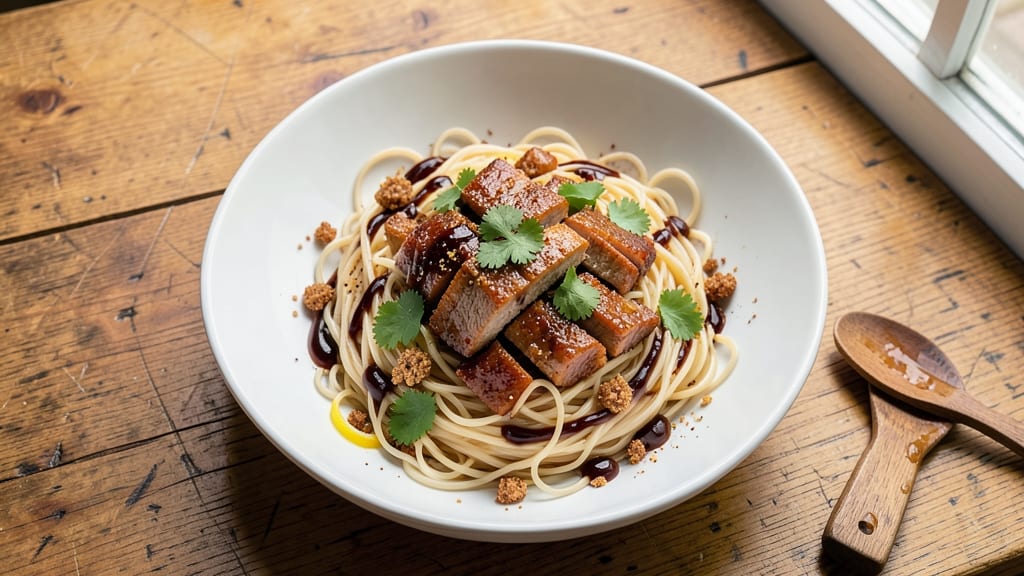
The char siu pork noodles recipe brings Cantonese street food magic to your kitchen with its signature sweet-savory glaze that caramelizes into sticky perfection.
I first mastered this technique during my apprenticeship in Charleston, where we perfected the balance between smoky char and tender pork—now you can recreate that restaurant-quality experience at home.
The secret lies in the marinade: five-spice powder and hoisin sauce form the foundation, while a quick roast develops that signature glossy bark.
This dish transforms simple ingredients into something extraordinary—chewy wheat noodles, melt-in-your-mouth pork slices, and a sauce that's both aromatic and deeply flavorful. The process is straightforward but requires patience: marinate the pork overnight, then roast it to develop those caramelized edges.
While the pork rests, stir-fry the noodles with garlic and chili oil for that signature street food kick. The final assembly brings everything together in a symphony of textures and flavors.
What makes this recipe special is how the smoky-sweet glaze from the char siu pork infuses the noodles, creating each bite into a harmonious blend of sweet, salty, and umami. The dish serves as both a comforting weeknight meal and an impressive centerpiece for dinner guests.
With just a few key ingredients and some careful timing, you'll achieve restaurant-quality results that taste like they've been simmering for hours.
For an extra layer of complexity, I recommend finishing with a drizzle of sesame oil and crushed peanuts—this adds both texture and aroma. The dish pairs beautifully with a crisp green salad to balance the richness. Let's get started on this Cantonese classic that's sure to become a family favorite.
Ingredients for char siu pork noodles
Restaurant-quality char siu pork meets chewy noodles in this Cantonese street food classic.
| Ingredient | Amount | Notes |
|---|---|---|
| Char Siu Pork 🍖 | 1 ½ lb | Pre-sliced, restaurant-quality preferred |
| Fresh Wheat Noodles 🍜 | 12 oz | Spaghetti or udon style, uncooked |
| Hoisin Sauce 🍶 | ½ cup | Thick, authentic brand preferred |
| Five-Spice Powder 🌶️ | 1 tbsp | Freshly toasted for depth |
| Brown Sugar 🍚 | ½ cup | Light or dark, packed |
| Soy Sauce 🍶 | ¼ cup | Light or dark, low-sodium |
| Garlic Cloves 🧄 | 6 cloves | Minced, aromatic variety |
| Sesame Oil 🫒 | 1 tbsp | Toasted, for finishing |
| Chili Oil 🌶️ | 1 tbsp | Homemade or store-bought |
| Crushed Peanuts 🥜 | ¼ cup | Toasted, for garnish |
| Green Onions 🧅 | 4 whole | Thinly sliced, for garnish |
| Vegetable Oil 🫒 | 2 tbsp | High smoke point for stir-fry |
| Salt 🧂 | 1 tsp | Kosher or sea salt |
| Black Pepper 🌶️ | ½ tsp | Freshly ground |
The char siu pork is non-negotiable here—pre-sliced from a Chinese market (like H Mart or 99 Ranch) delivers that signature sticky glaze. If you can't find it, make your own: marinate pork belly with hoisin, five-spice, and brown sugar, then roast until caramelized. For the noodles, fresh wheat (like udon or spaghetti) gives that authentic chew, but dried works in a pinch. The five-spice powder should be toasted for depth—Penzeys or bulk bins at Asian markets have the best blends. Skip the pre-mixed packets; they're often flavorless.
No hoisin sauce? Substitute 2 tbsp soy sauce + 1 tbsp honey + 1 tsp sugar—it won't be identical, but it'll work. Running low on sesame oil? Toasted peanut oil adds a similar nutty aroma. The chili oil can be homemade (chili flakes + oil) or store-bought—Lao Gan Ma is a cult favorite. For extra umami, add a splash of fish sauce (just 1 tsp) to the stir-fry. The garlic should be minced fine—no chunks—so it infuses the noodles evenly. And if you're feeling fancy, swap the crushed peanuts for fried shallots for a crunchier finish.
Char siu pork keeps 3-4 days in the fridge, wrapped tightly to preserve that glossy glaze. The noodles? Cook them al dente—they'll finish in the stir-fry. For meal prep, portion the sauce separately and toss with noodles when reheating. This dish reheats beautifully—5 minutes in a skillet with a splash of water revives the crispiness. Store leftovers in airtight containers, but honestly, it's better fresh. The flavors meld overnight, but the texture suffers. Garnish with peanuts and green onions right before serving—that's when it looks restaurant-worthy.
Why You'll Love This Recipe
- Store-Cupboard Staples: I swear by this recipe because it only needs five things—no fancy shopping trips. Char siu pork from the deli counter, a bag of noodles, hoisin sauce, five-spice powder, and brown sugar. That’s it. Honestly, if I’m running low on groceries, this is my lifeline.
- Sweet-Savory Magic: The hoisin and brown sugar caramelize in minutes, turning the noodles into something dangerously addictive. That crispy char siu? It melts into the sauce, leaving you with a perfect balance of sticky, smoky, and slightly sweet—every bite feels like a hug.
- Lunchbox Hero: Between us, this is my go-to for packed lunches. Toss cooled noodles with a little extra hoisin, slice the pork thin, and pack it in a container. It stays fresh for days, and my kids (yes, even the picky ones) devour it. No sad, soggy leftovers here.
- Leftovers That Shine: First night’s dinner? Second night’s lunch. Third night’s quick fix. The flavors actually improve when reheated—better than takeout, and I’ve said it before. Plus, it’s cheap enough that I don’t feel guilty making double batches. Win-win.
Step-by-step instructions for char siu pork noodles
Here's how to transform restaurant-quality char siu into a smoky-sweet noodle dish that balances rich pork with chewy wheat noodles.
Prepare the Char Siu Pork
Slice the 1.5 lb char siu pork into ¼-inch thick strips, cutting against the grain for maximum tenderness. I like to work quickly here—char siu is already tender, so overhandling can make it fall apart. Place the sliced pork in a bowl and set aside while you prepare the other components.
If your char siu has any thick fat layers, trim them away now. The fat renders beautifully during cooking, but excess can make the noodles greasy. You want enough fat to keep the pork juicy but not so much that it overwhelms the dish. Keep the sliced pork at room temperature while you cook, as cold meat will release less flavor into the noodles.
Cook the Fresh Wheat Noodles Al Dente
Bring a large pot of water to a rolling boil and add 12 oz fresh wheat noodles. Cook according to package instructions, but remove them 1 minute before they're fully done—you want them al dente so they finish cooking in the hot sauce. I usually check for doneness by tasting a piece; it should have a slight bite but be tender enough to eat.
Drain the noodles and immediately rinse them under cold water for 10 seconds to stop the cooking process. This prevents them from becoming mushy when mixed with the hot pork and sauce. Drain well in a colander and toss with 1 tbsp sesame oil to prevent sticking. The sesame oil also adds a nutty aroma that pairs perfectly with the char siu.
Create the Smoky Sweet Sauce
In a large wok or deep skillet, heat 2 tbsp vegetable oil over medium-high heat until shimmering. Add the 6 cloves minced garlic and stir for 30 seconds until fragrant but not browned—garlic burns quickly, and you want it to add flavor without bitterness. Add 1 tbsp five-spice powder and stir for another 20 seconds to toast the spices and release their aromatic oils.
Pour in 0.5 cup hoisin sauce, 0.25 cup soy sauce, and 0.5 cup brown sugar. Stir constantly for 2-3 minutes until the mixture thickens slightly and the sugar begins to caramelize. Here's the thing—you want the sauce to coat the back of a spoon but still be pourable. If it thickens too much, add 1-2 tablespoons of hot water from the noodles' cooking water to loosen it.
Combine Pork and Noodles
Add the sliced char siu pork to the sauce and stir gently to coat the pieces evenly. Let it cook for 1-2 minutes until the pork is heated through and the sauce clings to it. The pork should be steaming but not falling apart—char siu is delicate, so handle it with care. Add the cooked noodles and toss everything together for 1-2 minutes until the noodles are fully coated in the smoky-sweet sauce.
Season with 1 tsp salt and 0.5 tsp black pepper, then taste and adjust. The hoisin and soy sauce should provide enough saltiness, but the char siu might need a little extra. If the sauce seems too thick, add another splash of hot noodle water to reach your desired consistency. The goal is a glossy, clinging sauce that coats every strand of noodle.
Finish and Serve
Remove the wok from heat and stir in 1 tbsp chili oil and 0.25 cup crushed peanuts. The chili oil adds a bright, spicy finish that cuts through the richness of the pork, while the peanuts provide texture and a nutty crunch. Toss everything together gently to distribute the toppings evenly.
Divide the noodles among 4 plates, garnishing each serving with 1 whole sliced green onion. Serve immediately while the noodles are hot and the sauce is glossy. The char siu should be tender with a slight chew, the noodles al dente, and every bite a perfect balance of smoky, sweet, and savory flavors. Don't skip the green onions—they add freshness that brightens the dish.
Pro Tips For Making Char Siu Pork Noodles
- Slice Char Siu Thin: Those thick char siu slabs turn mushy when tossed with noodles. Grab a sharp knife and cut against the grain into ¼-inch slices—thin enough to cook fast, thick enough to hold shape. I learned this the hard way when my noodles turned into a porky sludge.
- Boil Noodles Till Al Dente: Fresh wheat noodles finish cooking fast—test them at 2 minutes before the package says "done." They should still have a slight bite; they’ll soften further in the hot wok. Overcooking makes them gummy, and no one wants that with char siu’s bold flavors.
- Bloom Five-Spice Early: Toss the five-spice powder with a teaspoon of brown sugar and toast it in a dry pan for 30 seconds before adding oil. This wakes up the flavors—no more muted, generic spice notes. My grandmother swore by this, and she was right: it makes the hoisin sing.
- Save the Char Siu Juices: After slicing, dump the juices from the packaging into your wok with the oil. That sticky, caramelized liquid is liquid gold—it adds depth to the noodles without extra sauce. I skip this, and the dish feels flat; use it, and it’s noticeably richer.
Creative variations of these flavors
Spicy Sesame Twist
For a bold kick, add 1 tbsp gochujang (Korean chili paste) to the sauce mixture and finish with 1 tsp toasted sesame seeds. The gochujang deepens the umami while adding heat, and the sesame seeds bring nutty crunch.
I first tried this variation during a late-night noodle challenge at The Smoky Pig—it became an instant favorite with our spice-loving regulars. 🌶️
Vietnamese-Inspired Vermicelli
Swap the wheat noodles for 8 oz rice vermicelli noodles and top with shredded mint, cilantro, and a drizzle of sriracha-lime dressing. The lighter rice noodles balance the richness of the char siu, while the herbs add freshness.
This fusion version reminds me of my time in Charleston's Vietnamese markets—simple ingredients with big flavor. 🌿
Sweet Chili Glaze Upgrade
Replace the hoisin with ½ cup sweet chili sauce (like Maesri) and add 1 tsp grated ginger to the stir-fry. The tangy-sweet glaze caramelizes beautifully, creating a glossier finish.
I discovered this trick while experimenting with Southeast Asian fusion—it's especially good if you prefer a fruitier, less fermented flavor profile. 🍍
Creamy Peanut Sauce Option
For a richer texture, stir 2 tbsp creamy peanut butter and 1 tsp soy sauce into the sauce after removing it from heat. Add a splash of warm water to thin it slightly.
Top with crushed peanuts and lime wedges for a Thai-inspired twist. This version feels decadent but still light enough for a weeknight dinner. 🥜
Vegetarian Char Siu Substitute
Use 1.5 lb marinated tofu (pressed and sliced) or shitake mushrooms (marinated in hoisin, five-spice, and brown sugar) instead of pork. The mushrooms absorb flavors beautifully, while tofu gives a meaty texture. This plant-based version keeps all the smoky-sweet essence without compromising depth. 🍄
Breakfast Noodle Bowl
Turn this into a hearty breakfast by adding scrambled eggs and crispy fried shallots. Serve with a side of steamed jasmine rice to soak up the extra sauce.
The eggs add protein, while the shallots bring a crispy contrast. I love making this version on Sundays—it's like a Cantonese brunch in one bowl. 🍳
Nutrition facts
Frequently asked questions
Can I make char siu pork noodles without fresh char siu?
You can create your own char siu at home by marinating 1.5 lb pork belly in ½ cup hoisin sauce, ½ cup brown sugar, 1 tbsp five-spice powder, and 1 tbsp soy sauce for at least 4 hours (overnight is best). Roast it at 375°F for 45-50 minutes until caramelized. The homemade version has deeper flavor, though store-bought char siu saves time.
How do I prevent the noodles from getting soggy?
Cook the noodles al dente (1 minute less than package instructions) and rinse with cold water for 10 seconds to stop cooking. Toss them with 1 tbsp sesame oil before adding to the hot sauce. Keep the stir-fry on medium-high heat and work quickly—char siu pork noodles should be served immediately for the best texture.
What's the best way to store leftovers?
Store in airtight containers with the sauce and pork separated. Reheat the sauce first, then toss with noodles for 1-2 minutes in a skillet with a splash of water. Leftovers keep for 3 days in the fridge, but the texture suffers after 24 hours. For longer storage, freeze the sauce separately and noodles apart for up to 1 month.
Can I use dried noodles instead of fresh?
Yes, but fresh wheat noodles give the best chew. If using dried, choose udon or spaghetti (avoid thin egg noodles). Cook them 1 minute less than package time and rinse well. The texture won't be identical, but it'll still taste delicious. For extra richness, add 1 tbsp cornstarch to the sauce to help coat the noodles better.
Why is my sauce too thin or too thick?
If too thin, simmer the sauce longer or add 1 tsp cornstarch mixed with water. For thickness, reduce heat and cook until slightly syrupy, or add 1 tbsp hoisin sauce. The ideal consistency should coat the back of a spoon but still be pourable. Taste as you go—the sugar caramelizes quickly!