
Main Courses
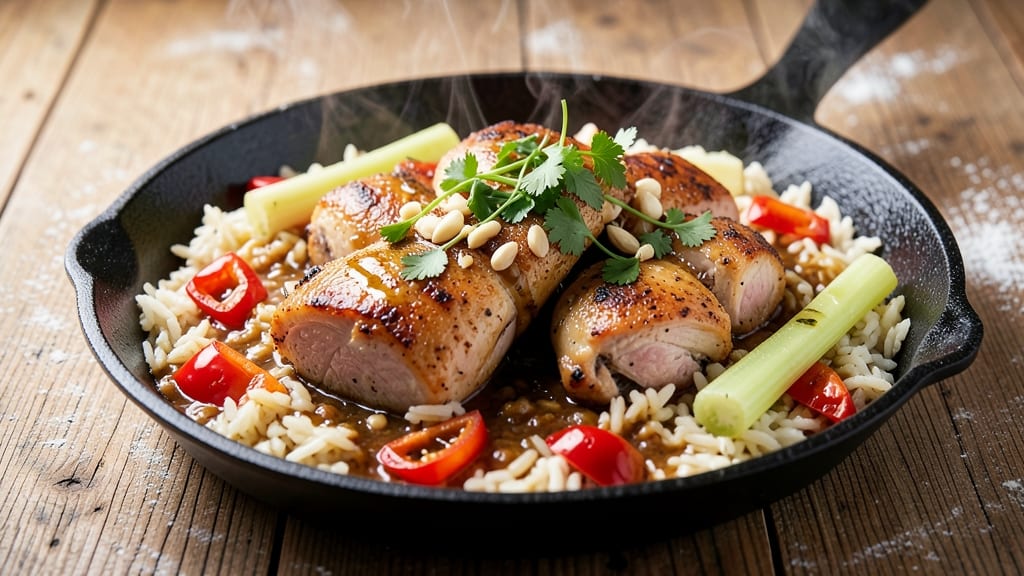
This one-pot chicken and pork jambalaya delivers bold Cajun flavors in a single aromatic dish that feeds a crowd. The secret lies in the holy trinity—onions, bell peppers, and celery—slow-cooked with smoky spices until the rice absorbs every savory note.
I've perfected this recipe to balance tender proteins, perfectly cooked rice, and vegetables that stay crisp-tender throughout.
The beauty of jambalaya is its versatility—whether you simmer it on the stovetop for rich depth or use a pressure cooker for 30 minutes of hands-off cooking. The spices develop gradually, creating layers of heat and warmth that make this dish unforgettable.
For extra authenticity, I recommend finishing with a sprinkle of fresh parsley and a dash of hot sauce—because the best jambalaya always has a little kick.
What makes this recipe stand out is the foolproof technique that ensures juicy chicken and pork, never-mushy rice, and vegetables that hold their shape. The slow cooking process transforms tougher cuts into melt-in-your-mouth tenderness while infusing the rice with smoky, spiced broth.
Serve it with crusty bread to soak up every last drop of that flavorful sauce.
This jambalaya is perfect for game day gatherings, family dinners, or whenever you crave a hearty, one-pan meal. The leftovers reheat beautifully, making it ideal for meal prep. Let's get cooking—your taste buds will thank you for this smoky, spiced feast.
Ingredients for chicken and pork jambalaya
Six servings of smoky, spiced jambalaya—just the right mix of proteins, veggies, and bold Cajun flavors in one aromatic pot.
| Ingredient | Amount | Notes |
|---|---|---|
| Boneless Chicken Thighs 🍗 | 1 ½ lb | Cut into 1-inch pieces |
| Pork Shoulder 🥓 | 1 ½ lb | Cut into 1-inch cubes |
| Long-Grain White Rice 🍚 | 2 cups | Uncooked, rinsed well |
| Yellow Onion 🧅 | 1 whole | Diced, part of holy trinity |
| Green Bell Pepper 🌶️ | 1 whole | Diced, part of holy trinity |
| Celery Stalks 🥬 | 3 whole | Diced, part of holy trinity |
| Garlic Cloves 🧄 | 4 cloves | Minced, for depth of flavor |
| Cajun Seasoning 🌶️ | 2 tbsp | Homemade or high-quality blend |
| Smoked Paprika 🌶️ | 1 tbsp | For authentic smoky flavor |
| Dried Thyme 🌿 | 1 tsp | Or 1 tbsp fresh thyme leaves |
| Bay Leaves 🍃 | 2 whole | For aromatic depth |
| Chicken Broth 💧 | 3 cups | Low-sodium preferred |
| Tomato Paste 🍅 | 2 tbsp | For richness and depth |
| Fresh Parsley 🌿 | ¼ cup | Chopped, for garnish |
| Hot Sauce 🔥 | 2 tbsp | For serving, optional |
| Olive Oil 🫒 | ¼ cup | For sautéing |
| Salt 🧂 | 1 ½ tsp | Adjust to taste |
| Black Pepper 🌶️ | ½ tsp | Freshly ground |
The holy trinity—onions, bell peppers, and celery—is non-negotiable for authentic flavor. Buy fresh, vibrant produce from the market or grocery store's produce section, not pre-chopped mixes. For the proteins, look for well-marbled pork shoulder and chicken thighs at Whole Foods or your local butcher—they'll stay juicy during the long cooking time. The rice should be long-grain white; jasmine or basmati won't hold up to the liquid. And that Cajun seasoning? Tony Chachere's or Slap Ya Mama are my go-tos, but make your own if you're feeling ambitious—just blend paprika, garlic powder, onion powder, cayenne, oregano, and thyme.
No Cajun seasoning? Mix 1 tbsp smoked paprika, 1 tsp garlic powder, 1 tsp onion powder, 1/2 tsp cayenne, 1 tsp dried oregano, and 1/2 tsp dried thyme. Fresh thyme is ideal but dried works in a pinch (use half the amount). For the holy trinity, swap bell pepper for jalapeño if you want heat. The tomato paste can be replaced with 1/2 cup crushed tomatoes, but you'll lose some of that deep, concentrated flavor. And if you're using a pressure cooker, reduce the broth by 1/2 cup—the rice will absorb less liquid under pressure.
This jambalaya tastes even better the next day as the flavors meld together. Store leftovers in an airtight container in the fridge for up to 5 days or freeze for 3 months. The rice will dry out if reheated too quickly, so add a splash of broth or water when warming. For meal prep, portion into individual containers—perfect for lunches. And trust me, always make extra. It disappears faster than you can say 'holy trinity.'
Why You'll Love This Recipe
- One-Pot Magic: I swear by this—just brown the chicken thighs and pork shoulder in one pot, then let the rice soak up all that smoky, spiced broth. No extra dishes, no stress. The onions and bell peppers soften right in, so you’re not stuck chopping everything to perfection.
- Deep, Savory Layers: That pork shoulder? It falls apart like a dream, soaking up the spices and giving every bite a rich, almost melt-in-your-mouth texture. The chicken stays juicy, and the rice? Just enough bite to keep it from turning mushy—honestly, it’s the kind of flavor that makes you want to close your eyes and savor it.
- Weeknight to Party Fix: Need a meal that works for Tuesday dinners and Sunday brunches? This does it all. Double the batch, and you’ve got leftovers for days—or serve it in a big cast-iron skillet and watch it disappear at your next gathering. (Yes, even on a Tuesday night.)
- Budget-Friendly Feast: Pork shoulder and chicken thighs stretch farther than you’d think, and long-grain rice keeps it light but filling. I’ve made this for four people for under $15—no fancy ingredients, just bold, hearty flavor that feels like a restaurant meal without the price tag.
Step-by-step instructions for smoky spiced one-pot feast
Here's how to build this flavor-packed jambalaya where every bite delivers smoky Cajun heat and tender protein.
Sear the Chicken and Pork for Deep Flavor
Heat a large Dutch oven over medium-high heat and add the 0.25 cup olive oil. Working in batches to avoid crowding, add the 1.5 lb boneless chicken thighs cut into 1-inch pieces, and sear for 4-5 minutes until golden brown on all sides. Remove and set aside.
In the same pot, add the 1.5 lb pork shoulder cut into 1-inch cubes and sear for 5-6 minutes until browned. You're building layers of flavor here—the Maillard reaction creates that rich, caramelized base. Don't rush this step; patience ensures maximum taste development. Remove the pork and set aside with the chicken.
Build the Holy Trinity and Spice Base
In the same Dutch oven, add the diced yellow onion, diced green bell pepper, and diced celery stalks (your holy trinity). Cook for 5-6 minutes until softened and slightly caramelized, stirring occasionally. This foundational step develops sweetness that balances the heat.
Add the 4 minced garlic cloves and cook for 30 seconds until fragrant. Stir in the 2 tbsp Cajun seasoning, 1 tbsp smoked paprika, 1 tsp dried thyme, and 1.5 tsp salt. Let the spices toast for 30 seconds to release their essential oils—this awakens their flavors before they mingle with everything else.
Develop the Sauce and Add Rice
Pour in the 2 tbsp tomato paste and stir to coat the vegetables, cooking for 1 minute until it darkens slightly. Add the 3 cups chicken broth and bring to a gentle boil. Stir in the 2 cups long-grain white rice (make sure it's rinsed well) and the 2 whole bay leaves.
Bring to a simmer, then reduce heat to low. Cover and cook for 20 minutes without stirring—this prevents breaking the rice grains. The rice should absorb most of the liquid while developing a firm texture. Here's the thing—if you peek too early, you'll disrupt the cooking process and end up with mushy rice.
Combine and Simmer to Perfection
Return the seared chicken and pork to the Dutch oven. Stir gently to distribute everything evenly. Increase heat to medium-low and simmer uncovered for 45-50 minutes, stirring occasionally. You're looking for the rice to be tender with just a slight bite in the center and the pork and chicken fully cooked—internal temperature should reach 165°F.
If the mixture looks dry before the rice is fully cooked, add ½ cup water at a time until the rice reaches the perfect texture. The goal is al dente rice with a flavorful sauce clinging to every grain. The smoky paprika and Cajun seasoning should infuse the entire dish, creating that signature jambalaya depth.
Finish and Serve with Fresh Garnishes
Remove the bay leaves and stir in the 0.25 cup chopped fresh parsley. Let the jambalaya rest for 5 minutes off the heat—this allows the flavors to meld completely. Taste and adjust seasoning with additional salt or 0.5 tsp black pepper if needed.
Serve immediately in individual bowls, with a side of the 2 tbsp hot sauce for those who crave extra heat. The perfect jambalaya should have tender meat that falls apart easily, perfectly cooked rice, and a sauce that coats every bite with smoky, spiced goodness. Each spoonful should deliver that classic Louisiana comfort food experience in every mouthful.
Pro Tips For Making Chicken And Pork Jambalaya
- Sear the Meat First: High heat for 3-4 minutes on each side—this isn’t just for flavor, it’s the only way to keep the pork shoulder from turning into mush later. I used to skip this, and my jambalaya always tasted like it needed more salt and depth.
- Cut Pork Shoulder Against the Grain: Slice it ¼-inch thick, then turn the knife at a 45-degree angle to follow the muscle fibers. This makes it tender in 20 minutes instead of 45, and your rice won’t turn into a gluey mess fighting chewy meat.
- Toast the Rice Dry: Spread the raw long-grain rice in a single layer on a baking sheet and toast it in a 350°F oven for 8-10 minutes until it smells nutty. This step prevents gummy rice—no, it doesn’t take long, and yes, it’s worth the extra pan.
- Add the Rice Last: Let the chicken and pork cook together in the roux until they’re nearly done, then stir in the rice and liquid. This way, the meat finishes cooking in the broth instead of drying out while the rice absorbs everything. (I learned this after serving dry chicken to a crowd—never again.)
Pro cooking tips for this recipe
Holy Trinity Mastery
Start your jambalaya with the holy trinity—diced yellow onion, green bell pepper, and celery—cooked until just softened (5-6 minutes). I swear by using a sharp chef's knife for even dices (¼-inch) and removing any tough celery strings.
The key is to cook them until they're translucent but still hold their shape—this prevents a watery dish later. 🌶️
Protein Searing Secrets
Sear your chicken thighs and pork shoulder in batches to avoid crowding the pan. A cast-iron Dutch oven is ideal for even browning, but a heavy stainless steel pot works too.
The goal is golden-brown crust—this creates the Maillard reaction that builds deep flavor. Don't skip this step; it's what makes the difference between good jambalaya and restaurant-quality. 🔥
Spice Toasting Technique
After adding your Cajun seasoning, smoked paprika, and thyme, let the spices toast for 30 seconds before adding liquid. This releases their essential oils, intensifying their flavors.
I like to give it a quick stir to distribute the spices evenly—this ensures every grain of rice gets that smoky, spicy punch. 💫
Rice Cooking Control
Once the rice is added, cover the pot immediately and reduce heat to low for the initial 20 minutes. This prevents the rice from breaking and ensures even cooking. The hardest part?
Resisting the urge to peek! Lifting the lid too early lets steam escape, which can lead to uneven cooking. Trust the process—your patience will pay off with perfectly textured rice. ⏰
Simmering Like a Pro
After adding the proteins back in, maintain a gentle simmer—not a boil. If it gets too vigorous, the rice will cook unevenly. I recommend using a meat thermometer to check the pork and chicken reach 165°F internal temperature.
The sauce should reduce slightly, coating the rice in a rich, flavorful layer. This is where jambalaya goes from good to extraordinary. 💪
Resting for Flavor Fusion
Let your jambalaya rest for 5 minutes off the heat before serving. This allows the juices to redistribute and the flavors to meld completely. I know it's tempting to dig in immediately, but those extra minutes make all the difference.
Garnish with fresh parsley and serve with hot sauce on the side for customizable heat. 🌟
Nutrition facts
Frequently asked questions
Can I substitute shrimp or sausage for the pork in this jambalaya?
For a seafood twist, swap the pork for 1 lb peeled shrimp (add them in the last 5 minutes of cooking to avoid overcooking). For sausage, use 1 lb andouille or kielbasa, sliced into rounds. Both work beautifully—the shrimp adds a delicate sweetness while sausage brings extra smoky depth. Just adjust cooking times accordingly.
How do I adjust this recipe for a pressure cooker?
For an Instant Pot, use 2 cups rice and 2.5 cups broth. Sear the proteins first, then add all ingredients except the parsley. Cook on high pressure for 8 minutes, then natural release for 10 minutes. Stir in parsley at the end. The pressure cooker cuts prep time to 30 minutes total while keeping all the rich flavors intact.
Why did my jambalaya turn out mushy?
Mushy rice usually means one of two things: either you stirred too much during cooking or didn't use the right rice-to-liquid ratio. For this recipe, long-grain white rice is essential—it absorbs liquid perfectly without getting gluey. Also, avoid lifting the lid during the initial 20 minutes of covered cooking. If it's too dry, add broth ½ cup at a time instead of water.
Can I make this jambalaya in a slow cooker?
Yes! Brown the proteins first, then combine everything in your slow cooker. Cook on low for 6-7 hours or high for 3-4 hours. The slow cooker works especially well for leftovers—just stir occasionally and add a splash of broth if needed. The flavors develop even more deeply over the longer cooking time, making it perfect for meal prep.
What's the best way to reheat jambalaya?
Reheat jambalaya gently to avoid drying out the rice. Cover with a damp paper towel and warm in the microwave for 2-3 minutes on medium power, stirring halfway. For stovetop reheating, add 2-3 tablespoons broth per cup of jambalaya and simmer on low heat for 5-7 minutes. Never reheat uncovered—this causes the rice to dry out and lose its tender texture.