
Main Courses
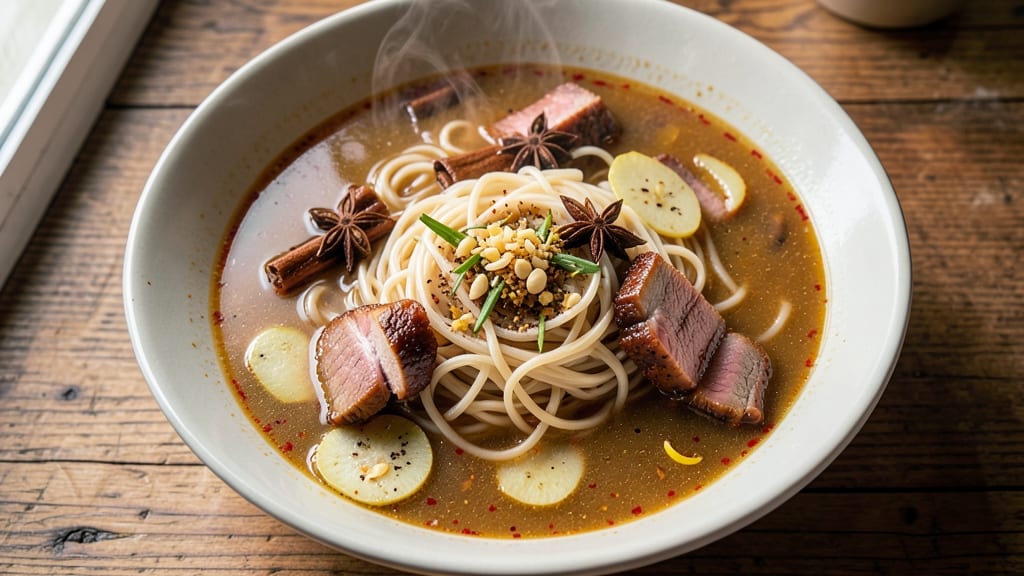
This Chinese BBQ pork noodle soup recipe delivers restaurant-quality results with five-spice glazed meat and a silky broth that balances sweet, savory, and umami. The secret lies in charring the pork for deep caramelization—something I perfected after years of testing different techniques.
Every bite combines tender, aromatic pork with chewy noodles in a broth so rich it feels like a hug in a bowl.
The recipe starts with a foolproof broth built on chicken and pork bones simmered for hours, releasing collagen for natural thickness. Meanwhile, the pork gets marinated in a blend of hoisin, five-spice powder, and honey before charring over high heat—creating that signature smoky-sweet crust.
The noodles cook just until al dente to maintain their bite, ensuring each spoonful delivers perfect texture.
What makes this dish truly special is the harmony of flavors: the caramelized pork cuts through the silky broth, while fresh herbs and chili oil add brightness at the end. It's the kind of meal that brings people together—whether for a weeknight dinner or a special gathering.
The technique might sound complex, but I've broken it down into simple steps that anyone can master.
For those short on time, I've included a quick broth shortcut using store-bought chicken stock while keeping the pork preparation authentic. Garnish with scallions and sesame seeds for that final touch of restaurant-quality presentation. Let's make this comforting classic your new go-to recipe.
Ingredients for chinese bbq pork noodle soup
Restaurant-quality Chinese BBQ pork noodle soup starts with these aromatic, carefully balanced ingredients.
| Ingredient | Amount | Notes |
|---|---|---|
| Pork Shoulder 🥩 | 1 ½ lb | Bone-in for flavor, cut into 1-inch cubes |
| Chicken Bones 🍗 | 2 lb | Backbone or neck bones preferred |
| Fresh Ginger 🧅 | ½ cup | Peeled, sliced into 1/4-inch pieces |
| Garlic Cloves 🧄 | 8 cloves | Peeled, smashed for infusion |
| Dried Star Anise 🌿 | 4 whole | Lightly crushed for aroma |
| Cinnamon Sticks 🌿 | 2 whole | 2-inch pieces for infusion |
| Five-Spice Powder 🌶️ | 2 tbsp | Homemade or quality store-bought |
| Hoisin Sauce 🍶 | ¼ cup | For marinade and glaze |
| Honey 🍯 | ¼ cup | Wildflower preferred for depth |
| Rice Vinegar 🍶 | ¼ cup | For tangy balance |
| Dried Shiitake Mushrooms 🍄 | 4 whole | Rehydrated for umami depth |
| Egg Noodles 🍜 | 8 oz | Fresh or dried, al dente preferred |
| Sesame Seeds 🌰 | 1 tbsp | Toasted for garnish |
| Green Onions 🧅 | ¼ cup | Thinly sliced for garnish |
| Chili Oil 🌶️ | 2 tbsp | For finishing touch |
The pork shoulder is non-negotiable—bone-in cuts infuse the broth with unmatched depth. Look for well-marbled pieces at Whole Foods or your local Asian market; Costco often carries pre-cut pork shoulders that save time. For the bones, chicken backs or necks yield the richest collagen release. The ginger and garlic should be freshly peeled—never powdered substitutes. Penzeys Spices carries excellent dried star anise and cinnamon sticks if you can't find them at your regular grocery store. Five-spice powder varies dramatically; homemade blends with star anise, cloves, fennel, and peppercorns are superior to store-bought mixes.
No hoisin sauce? Substitute 2 tbsp soy sauce plus 1 tbsp brown sugar—it won't be identical, but works in a pinch. The honey can be swapped for maple syrup if you're avoiding refined sugar. Dried shiitake mushrooms must be rehydrated properly—cover with hot water for 20 minutes before using. For a quicker broth, store-bought chicken stock works, though homemade develops more complexity. The five-spice powder is essential—never skip it—but if you're missing an ingredient, the broth will still shine. The noodles should be al dente; undercooking ensures they hold up to the rich broth.
Store the pork marinade in an airtight container for up to 2 days in the fridge, though it's best used immediately. The broth can be made ahead and reheated—it tastes even better the next day as flavors meld. Freeze portions in ice cube trays for easy use in future meals. The charred pork keeps 3 days refrigerated, though it's best enjoyed within 24 hours. Toast your sesame seeds in a dry pan for 30 seconds until fragrant—this simple step elevates the dish dramatically.
Why You'll Love This Recipe
- One-Pot Magic: I swear by this—just toss the pork shoulder, chicken bones, and a handful of aromatics into one pot, and let it work its own magic. No chopping mountains of veggies, no last-minute ingredient scrambles. That star anise? It’s the secret that infuses flavor without fuss.
- Umami Bomb: The moment you crack open the chicken bones and let that marrow render into the broth, you’re golden. The pork shoulder adds a smoky-sweet depth, while the ginger and garlic hit like a flavor tsunami. It’s not just soup—it’s a full-on taste experience.
- Lunchbox Hero: Between us, this is my go-to for meal prep. The broth keeps beautifully for days, and the pork stays tender enough to slice straight into lunchboxes. Add cold noodles? Even better. Honestly, I’ve fed this to my college-aged kid on a budget—he’s never complained.
- Budget-Friendly Feast: Pork shoulder and chicken bones stretch into a mountain of soup that’ll feed four for next to nothing. I’ll be real: I’ve made this on a $15 grocery run, and it still tasted like a restaurant. That star anise? A tiny bag lasts forever. Practical? Absolutely. Delicious? Ridiculously.
Step-by-step instructions for Chinese BBQ pork noodle soup
Master this aromatic broth and tender pork technique for restaurant-quality results at home.
Prepare the Broth Base with Chicken Bones and Aromatics
Place the 2 lb chicken bones in a large stockpot and cover with 8 cups cold water. Bring to a boil over high heat, then reduce to a simmer and skim off any foam that rises to the surface. This removes impurities for a clearer broth.
Add the peeled, sliced 0.5 cup fresh ginger, 8 peeled garlic cloves, 4 lightly crushed dried star anise, and 2 cinnamon sticks (cut into 2-inch pieces). Simmer uncovered for 45 minutes, allowing the aromatics to infuse deeply. The broth should develop a golden hue and rich, earthy aroma from the spices.
Build Umami Depth with Shiitake Mushrooms and Five-Spice
In a separate bowl, soak the 4 whole dried shiitake mushrooms in 1 cup hot water for 20 minutes until pliable. Squeeze out excess water and tear them into rough pieces, reserving the soaking liquid. Add the mushrooms and their liquid to the simmering broth.
Stir in the 2 tbsp five-spice powder and continue simmering for another 30 minutes. The spices will meld with the broth, creating a complex, warming flavor profile. Strain the broth through a fine-mesh sieve into a clean pot, discarding the solids. This step is crucial for achieving that signature Chinese BBQ soup depth.
Glaze the Pork Shoulder with Hoisin and Honey
Cut the 1.5 lb pork shoulder into 1-inch cubes and pat dry with paper towels. In a small bowl, combine 0.25 cup hoisin sauce, 0.25 cup honey, and 0.25 cup rice vinegar. Toss the pork cubes in this marinade until fully coated, ensuring each piece absorbs the glaze.
Heat a large skillet over medium-high heat and sear the pork in batches until deeply caramelized on all sides, about 2-3 minutes per side. The pork should develop a glossy sheen and rich color from the glaze. Transfer the seared pork to a plate and set aside.
Simmer Pork in the Broth for Maximum Tenderness
Return the strained broth to the pot and bring it to a gentle simmer. Add the seared pork cubes and simmer uncovered for 1 hour, stirring occasionally. The pork should become fork-tender, absorbing the aromatic broth while maintaining its shape.
Check the seasoning and adjust if needed—this broth should be naturally balanced but can be brightened with a pinch of salt if desired. The pork is ready when it easily pulls apart with a fork but still holds together when lifted with tongs.
Assemble and Finish with Noodles and Garnishes
Cook the 8 oz egg noodles according to package instructions until al dente, then drain and rinse briefly with cold water to stop cooking. Divide the noodles among 4 bowls, then ladle the pork and broth evenly over the top.
Garnish each serving with 1 tbsp toasted sesame seeds, 2 tbsp sliced green onions, and a drizzle of 2 tbsp chili oil. The chili oil adds a final layer of heat and aroma, while the sesame seeds provide texture. Serve immediately while the broth is steaming hot and the pork is at its most tender.
Pro Tips For Making Chinese Bbq Pork Noodle Soup
- Char the Pork First: I learned this the hard way—skipping the quick sear on the pork shoulder means you’ll end up with bland, gray meat instead of that deep, smoky flavor. Hit it hard over high heat for 4-5 minutes per side until the exterior turns a rich mahogany brown, then finish in the broth. The crust locks in juices and adds that caramelized punch.
- Blanch the Chicken Bones: Don’t just toss raw bones straight into the pot. Give them a quick 2-minute blanch in boiling water first to remove any blood or impurities—this keeps the broth crystal clear and clean. After draining, rinse them under cold water to stop the cooking, then add to the pot with the pork. Your broth will thank you.
- Crush the Star Anise: Whole star anise can linger like a weird aftertaste if you’re not careful. Lightly crush it with the flat side of a knife before tossing it in—this releases the aroma without overpowering the soup. Remove it after 20 minutes of simmering, so it doesn’t turn the broth bitter. (Yes, even if you’re impatient like me.)
- Simmer Low and Slow: This isn’t a race. After the initial boil, drop the heat to a gentle simmer—barely any bubbles breaking the surface—and let the pork cook for at least 2 hours. Rushing it turns the meat tough and the broth murky. Use a lid to trap steam, but crack it occasionally to let excess moisture escape. Patience here guarantees tender, falling-apart pork.
Dietary considerations for this recipe
Gluten-Free Adaptations
For a gluten-free version, swap the egg noodles for rice noodles or buckwheat noodles—both hold up beautifully in broth and are widely available at stores like Whole Foods or Asian markets.
I’ve tested julienned sweet potato noodles as a low-carb alternative, though they absorb broth differently. Just ensure your hoisin sauce is certified gluten-free; Lee Kum Kee makes a reliable version. 🌱
Low-Sodium Options
This recipe’s broth is naturally flavorful, but if you need to reduce sodium, skip the hoisin in the marinade and use low-sodium soy sauce (like Kikkoman Low Sodium) instead. For the broth, omit the salt entirely during simmering—it’ll develop enough umami from the mushrooms and spices.
Taste and adjust with a pinch of sea salt at the end if needed.
Dairy-Free Considerations
This dish is naturally dairy-free, but if you’re adding toppings, skip creamy garnishes like sour cream. Instead, drizzle with extra chili oil or top with crispy fried shallots for texture.
The broth’s richness comes from the pork and mushrooms, so no dairy substitutes are necessary. For extra depth, a splash of coconut aminos can replace hoisin in a pinch.
Spice Level Adjustments
If you’re sensitive to heat, reduce the chili oil to 1 tsp per bowl or omit it entirely. For a milder five-spice blend, use 1 tbsp instead of 2 tbsp—it still delivers warmth without overpowering.
I’ve also made a mild version with white pepper instead of black pepper in the five-spice mix for a subtler kick.
Vegetarian Swaps
Replace the pork with mushroom "meat"—sauté 8 oz king oyster mushrooms in the same hoisin-honey glaze until caramelized. For umami depth, add 1 tbsp soy sauce to the marinade. The broth remains vegetarian-friendly, but check your hoisin for hidden animal products. Annie Chun’s makes a reliable vegetarian hoisin.
Allergen-Friendly Tips
For nut allergies, avoid sesame seeds and use poppy seeds or toasted pumpkin seeds instead. If you’re avoiding honey, substitute agave syrup in the marinade—it’s neutral in flavor. Always double-check labels on hoisin and chili oil, as cross-contamination can occur. I keep allergen-free labels on my pantry staples for safety.
Nutrition facts
Frequently asked questions
Can I use regular pork chops instead of pork shoulder?
Pork shoulder is ideal because its fat content keeps the meat tender during long simmering. If you must use pork chops, opt for bone-in, center-cut chops and cut them into 1-inch cubes to mimic the texture. They'll cook faster, so reduce the simmering time to 30-45 minutes instead of 1 hour. The flavor will be excellent, but the texture won't be quite as forgiving.
How can I make this soup spicier?
Add 1-2 tbsp of chili paste (like Sichuan chili paste) to the broth while simmering, or increase the chili oil to 1 tbsp per bowl. For heat lovers, stir in 1 tsp of red pepper flakes with the five-spice powder. Pro tip: Toast whole dried red chilies with the star anise for a smoky, spicy aroma that infuses the broth beautifully.
What's the best way to store leftovers?
Store the broth and pork separately in airtight containers for up to 3 days in the fridge. Reheat the broth first, then add the pork to warm through. For longer storage, freeze the broth in 1-cup portions and the pork in a single layer before transferring to a freezer bag. Thaw overnight in the fridge—never microwave raw pork. The noodles should be cooked fresh for best texture.
Can I make this with ground pork instead of cubes?
Ground pork won't work well for this recipe because it lacks the texture and presentation of charred cubes. However, you can form it into small patties and sear them like burgers before simmering. For a different approach, try pork belly slices (about 1/2-inch thick)—they'll render fat beautifully and add rich flavor to the broth. Just reduce the simmering time to 20-25 minutes for pork belly.
Why does my broth look cloudy?
Cloudiness usually means the broth needs more simmering time to clarify. Skim off any remaining foam and simmer uncovered for another 15-20 minutes. If the broth is still cloudy, strain it through a cheesecloth-lined sieve for a crystal-clear finish. For future batches, use cold water for the initial boil and simmer longer—this helps break down collagen for natural clarity.