
Main Courses
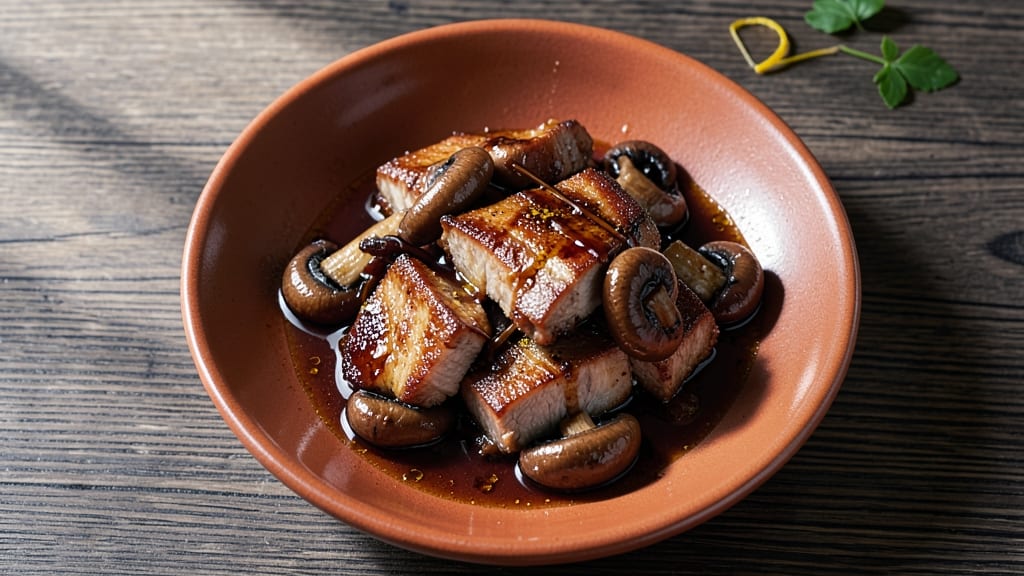
This Chinese pork and mushroom recipe delivers the bold flavors of a wok-tossed umami bomb in just 30 minutes, capturing the essence of Cantonese home cooking.
The secret lies in high-heat stir-frying that unlocks deep savory notes from shiitake mushrooms and tender pork, creating a dish that's restaurant-quality without the fuss. I've perfected this technique over years of cooking in professional kitchens, where wok hei—the smoky breath of the wok—is everything.
The magic happens with proper prep: thinly sliced pork marinated in soy sauce and Shaoxing wine, then stir-fried until just tender, followed by mushrooms that release their earthy sweetness. A splash of oyster sauce and a sprinkle of sesame oil at the end elevate the dish to something truly special.
This recipe balances umami, sweetness, and a touch of heat, making it versatile enough for weeknight dinners or special occasions.
What you'll end up with is a vibrant, aromatic dish featuring tender pork and mushrooms coated in a glossy sauce that clings perfectly to each bite. The texture is a beautiful contrast—crisp edges on the pork, tender yet slightly chewy mushrooms, all finished with a fragrant sesame aroma.
Serve it over steamed jasmine rice or with egg noodles to soak up every last drop of that flavorful sauce.
For those who love Chinese cuisine, this recipe offers a taste of home cooking that's both comforting and sophisticated. The technique is straightforward, but the results are impressive, proving that you don't need a professional kitchen to create restaurant-worthy meals. Let's get cooking!
Ingredients for chinese pork and mushroom
Thinly sliced pork and rehydrated shiitake mushrooms create the heart of this Cantonese-inspired umami bomb.
| Ingredient | Amount | Notes |
|---|---|---|
| Boneless Pork Shoulder 🥩 | 1 ½ lb | Thinly sliced against grain |
| Dried Shiitake Mushrooms 🍄 | 8 whole | Rehydrated, stems removed |
| Shaoxing Wine 🍷 | 2 tbsp | For marinade depth |
| Light Soy Sauce 🥄 | 3 tbsp | For umami foundation |
| Oyster Sauce 🦪 | 2 tbsp | High-quality for richness |
| Sesame Oil 🫒 | 1 tbsp | Toasted for aroma |
| Garlic Cloves 🧄 | 4 cloves | Minced for aromatic base |
| Fresh Ginger 🌿 | 1 tbsp | Finely grated for zing |
| Green Onions 🧅 | 3 whole | Sliced, for garnish |
| Neutral Oil 🫒 | 2 tbsp | High smoke point preferred |
| Cornstarch 🌾 | 1 tbsp | For sauce thickening |
| White Pepper 🌶️ | ¼ tsp | Freshly ground for finish |
| Salt 🧂 | ½ tsp | Kosher preferred |
The pork shoulder is critical—look for well-marbled cuts at Whole Foods or your local Asian market. Thinly slice it against the grain for tender bites. Dried shiitake mushrooms are a must; Maeshi or Sun No Hana brands offer superior texture. Rehydrate them in hot water for 20 minutes before using. Fresh ginger should be vibrant yellow inside—no green or woody cores. For Shaoxing wine, Hengshun is the gold standard, but any good-quality Chinese cooking wine works. If you can't find it, dry sherry in a pinch.
No Shaoxing wine? Dry sherry or mirin both work, though Shaoxing's deep, fermented flavor is irreplaceable. For the mushrooms, if you can't find dried shiitake, cremini mushrooms work in a pinch—just don't rehydrate them. The oyster sauce should be thick and glossy—avoid watery brands. For the sesame oil, toasted is non-negotiable; regular sesame oil lacks the nutty depth. The cornstarch can be swapped for arrowroot powder if you prefer a clearer sauce. And if you're short on garlic, garlic powder at half the amount gets you close.
Store the pork in the fridge for up to 2 days before slicing. Rehydrated mushrooms keep for 5 days in the fridge, sealed in their soaking liquid. The marinade (soy sauce, Shaoxing, garlic, ginger) stays fresh for 3 days in an airtight container. For best texture, cook the pork immediately after slicing—don't let it sit too long before stir-frying. Leftovers reheat beautifully; just add a splash of water and stir-fry over high heat to restore that wok hei aroma.
Why You'll Love This Recipe
- One-Pan Magic: I swear by this recipe when I’m too tired to wash dishes. The pork shoulder and shiitake mushrooms soften together in the same pan—no chopping boards, no extra pots—just rich, caramelized flavors with zero fuss.
- Umami Bomb: That combo of Shaoxing wine and oyster sauce? It’s like a flavor explosion in your mouth. The dried shiitake mushrooms rehydrate into chewy, meaty bites that soak up all the savory goodness—no one ever guesses it’s just a handful of pantry staples.
- Lunchbox Hero: Between us, this is my go-to for meal prep. The leftovers taste even better the next day (yes, really), and it reheats like a dream. Pack it in rice bowls, throw it over noodles, or just eat it straight—it’s that good.
- Budget Stretch: Pork shoulder is cheap, dried mushrooms last forever, and a splash of Shaoxing wine makes everything taste gourmet. I feed four people for under $15, and no one complains—because they’re too busy asking for seconds.
Step-by-step instructions for wok-tossed pork and mushroom
This method delivers restaurant-quality texture and flavor in record time.
Rehydrate and Prepare the Shiitake Mushrooms
Place the 8 whole dried shiitake mushrooms in a heatproof bowl and pour enough hot water to cover them completely. Let them soak for 15-20 minutes until they've absorbed the water and expanded significantly. This rehydration process is crucial—it transforms the dried mushrooms into tender, meaty pieces that absorb flavors beautifully.
After soaking, drain the mushrooms and carefully remove the stems using a small knife or your fingers. Discard the stems and tear the mushroom caps into ¼-inch thick pieces by hand—this creates irregular edges that will sear beautifully in the wok. Set aside the prepared mushrooms while you work on the pork.
Marinate and Slice the Pork Shoulder
Slice the 1.5 lb boneless pork shoulder thinly against the grain into ¼-inch thick strips. This is where precision matters most—the thinner the slices, the faster they'll cook and the more tender they'll remain. Arrange the slices in a single layer on a plate and season generously with 0.5 tsp salt and 0.25 tsp white pepper, pressing the spices into the meat so they adhere.
In a small bowl, combine 2 tbsp shaoxing wine, 3 tbsp light soy sauce, and 2 tbsp oyster sauce. Pour this marinade over the pork and let it sit for 10-15 minutes while you prepare the aromatics. The wine tenderizes the meat slightly while the soy and oyster sauces build that essential umami foundation. Don't skip this step—it makes all the difference in flavor development.
Build the Aromatic Base
Heat a wok or large skillet over high heat until it's smoking hot. Add 2 tbsp neutral oil and swirl to coat the surface evenly. Toss in the 4 cloves minced garlic and 1 tbsp finely grated fresh ginger, stirring constantly for 30 seconds until the garlic becomes fragrant and just begins to color—this prevents it from burning while still releasing its full aroma.
Add the marinated pork strips in a single layer and let them sear undisturbed for 1-2 minutes until they develop a deep golden crust on one side. Here's the thing—don't move the pork until it releases easily from the pan. This initial sear creates that wok-hei (breath of the wok) flavor that's characteristic of Chinese stir-fries. Once the pork releases, push it to one side of the wok and add the prepared shiitake mushrooms.
Stir-Fry to Perfection
Cook the mushrooms for 2-3 minutes until they've absorbed the pork juices and developed some color. Toss everything together, breaking up any large pieces of pork with a pair of tongs. The mushrooms should be tender but still retain some bite, and the pork should be cooked through but still juicy.
Pour in 1 tbsp toasted sesame oil and stir vigorously for 30 seconds to distribute the oil evenly. This is where the dish comes together—the sesame oil adds that nutty aroma that elevates all the flavors. Taste the mixture now and adjust seasoning if needed, adding a splash of water or more light soy sauce if the flavors seem too mild.
Thicken and Finish
In a small bowl, whisk together 1 tbsp cornstarch with 2 tablespoons water to create a slurry. Pour this into the wok while stirring constantly for 1-2 minutes until the sauce thickens to a glossy, clingy consistency. The sauce should coat the back of a spoon and cling to the pork and mushrooms.
Remove from heat and stir in 3 whole sliced green onions for a fresh finish. Serve immediately over steamed rice, garnished with additional green onions if desired. The dish should be hot, vibrant, and packed with that perfect balance of umami, saltiness, and aromatic depth that makes Chinese wok cooking so satisfying.
Pro Tips For Making Chinese Pork And Mushroom
- SOAK MUSHROOMS OVERNIGHT: I learned this the hard way—rushing the dried shiitake soak leads to tough, chewy mushrooms. Toss them in hot water for 20 minutes first to kill any bugs (yes, it happens), then cover with fresh water and let sit 8+ hours. The longer they soak, the richer the flavor and the easier they slice—no more fighting leathery bits.
- SEAR PORK IN BATCHES: Crowding the pan turns your pork into a sad, greasy mess. Cut the shoulder into 1-inch chunks and work in two batches—high heat, 3-4 minutes per side—until deep golden brown. That crust locks in juices and carries the sauce. (Yes, it takes longer, but your future self will notice.)
- DEGLAZE WITH WINE FIRST: Pour in the Shaoxing wine immediately after searing—don’t wait. The alcohol burns off faster this way, and you’ll get a glossy, aromatic base instead of a dull, winey sludge. Let it simmer 2 minutes before adding soy sauce, or you’ll end up with a flat, salty broth.
- THICKEN WITH CORNSTARCH SLURRY: Stir in 1 tablespoon cornstarch mixed with 2 tablespoons water when the sauce reduces to a thin glaze. Simmer 30 seconds until it coats the back of a spoon—this prevents that watery, sad consistency that ruins the dish. (I used to ignore this and wondered why my sauce looked like soup.)
Best sauces and condiments for this chinese pork and mushroom
Classic Oyster Sauce
This is the foundation of the dish, and I can't stress enough how important it is to use a high-quality oyster sauce. Look for brands like Lee Kum Kee or Golden Boy—they're thick, glossy, and packed with umami depth.
I use 2 tablespoons in the marinade and another 1 tablespoon in the stir-fry for that signature richness. For extra depth, simmer the sauce with a splash of water and a pinch of sugar before adding it to the wok. This caramelizes the sauce slightly, intensifying its flavor. 🦪
Sesame Oil Finishing
Toasted sesame oil is non-negotiable for that nutty aroma that wakes up all the flavors. I always use 1 tablespoon of Kadoya brand toasted sesame oil and add it in the final 30 seconds of cooking.
This is when the magic happens—the oil infuses the pork and mushrooms with its toasty, slightly bitter notes. If you're using regular sesame oil, toast it first by gently heating it in a small pan until it smells fragrant.
Never cook with it directly, as it has a low smoke point. 🫒
Shaoxing Wine Depth
Shaoxing wine isn't just there for flavor—it tenderizes the pork and adds a complex fermented depth that no other wine can match. I use 2 tablespoons of Hengshun brand Shaoxing wine in the marinade, but if you can't find it, dry sherry works in a pinch.
The key is to let the pork marinate for at least 10 minutes so the alcohol can break down the meat fibers slightly. Pro tip: If you have leftover Shaoxing wine after marinating, reduce it with a little soy sauce and use it as a glaze for other dishes. 🍷
Light Soy Sauce Balance
Light soy sauce provides the salty backbone of this dish, but don't overdo it. I use 3 tablespoons total—2 tablespoons in the marinade and 1 tablespoon during cooking.
Brands like La Choy or Diamond work well, but avoid dark soy sauce here—it's too strong and will overpower the delicate flavors. If your dish needs more salt, add it gradually, tasting as you go. Remember, you can always add more sauce, but you can't take it out. 🥄
Cornstarch Slurry Secret
The cornstarch slurry is what transforms a good stir-fry into a great one by creating that glossy, clingy sauce. I mix 1 tablespoon cornstarch with 2 tablespoons water and pour it in at the very end, stirring constantly until the sauce thickens to a perfect consistency.
For a clearer sauce, use arrowroot powder instead—it creates a glossier finish. The key is to add it when the pork and mushrooms are nearly done so they don't overcook while the sauce thickens. 🌾
Green Onion Garnish
Fresh green onions aren't just for garnish—they add a bright, fresh contrast to the rich umami flavors. I slice 3 whole green onions thinly and stir them in at the very end, just before serving. For extra impact, reserve a few slices to sprinkle on top as a final garnish.
If you want to take it further, add a pinch of white pepper with the green onions for a subtle kick. This is where the dish comes together visually and in terms of flavor balance. 🧅
Nutrition facts
Frequently asked questions
Can I substitute pork shoulder with another cut?
For this stir-fry, pork tenderloin works beautifully—it's leaner and cooks faster, so slice it ⅛-inch thick instead. You could also use pork loin or boneless pork chops, but avoid fatty cuts like pork belly as they won't sear properly in the wok. For extra tenderness, pound thicker cuts lightly before slicing.
What if I don't have dried shiitake mushrooms?
Fresh shiitake or cremini mushrooms are great substitutes, but skip the rehydration step. Slice them ¼-inch thick and cook them for 3-4 minutes until they release their moisture. For maximum umami, add ½ teaspoon mushroom powder to the marinade. Avoid button mushrooms—they're too mild and watery for this dish.
How do I achieve wok hei without a wok?
Use a carbon steel or cast iron skillet—they retain heat like a wok. Preheat it over high heat until smoking, then add the pork and mushrooms in small batches. The key is to work quickly and keep the pan moving. If your pan isn't hot enough, the food will steam instead of sear. For extra flavor, add ½ teaspoon smoked paprika to the marinade.
Can I make this recipe ahead of time?
This dish tastes best fresh, but you can prep components ahead: marinate the pork for up to 2 days, rehydrate mushrooms for 5 days, and make the sauce slurry in advance. Reheat gently in a skillet with 1 teaspoon oil over medium heat for 2-3 minutes. Avoid microwaving—it kills the wok hei aroma. For leftovers, store in an airtight container for 3 days.
What's the best way to serve this dish?
Pair it with steamed jasmine rice or egg noodles to soak up the sauce. For a complete meal, add steamed bok choy or quick-pickled cucumbers on the side. Garnish with extra green onions and a drizzle of chili oil for heat. To make it a one-bowl meal, serve over rice noodles with a fried egg on top.