
Main Courses
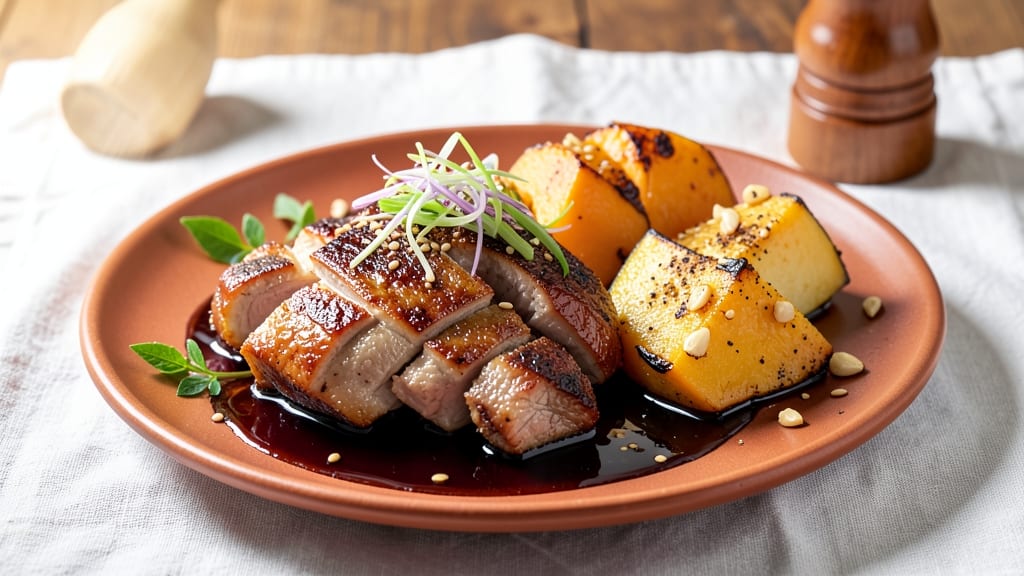
This Chinese pork and squash recipe delivers the perfect harmony of wok-seared five-spice pork and silky, caramelized squash—a dish that bridges tradition and modern technique. 🔥 After years of perfecting stir-fry timing, I've developed a method that ensures tender pork with crisp edges and squash that melts in your mouth without losing texture.
The five-spice blend adds depth that transforms simple ingredients into something extraordinary.
The secret lies in the cooking sequence: searing the pork first to lock in juices, then quickly adding the squash to capture its natural sweetness. I use winter squash for its natural richness, but butternut or kabocha would work equally well.
This dish is designed for weeknight dinners but feels special enough for company—proof that restaurant-quality meals don't require hours in the kitchen.
What you'll end up with is a plate that's visually stunning and packed with flavor—golden-brown pork pieces with aromatic five-spice crusts, alongside squash that's tender yet holds its shape. The pork stays juicy thanks to a quick marinade, while the squash develops a subtle caramelization from the wok's heat.
Serve it over steamed jasmine rice or with a side of quick-pickled vegetables to balance the richness.
This recipe scales beautifully for crowds and reheats wonderfully, making it perfect for meal prep. The five-spice marinade can be made ahead, and the squash can be prepped in advance—just sear the pork fresh for maximum flavor impact.
Whether you're cooking for family or impressing guests, this dish delivers authentic Chinese-inspired flavors with a modern twist that's sure to become a staple in your rotation.
Ingredients for chinese pork and squash
Pork, squash, and five-spice blend—simple ingredients that pack restaurant-quality flavor.
| Ingredient | Amount | Notes |
|---|---|---|
| Boneless Pork Shoulder 🥩 | 1 ½ lb | Cut into 1-inch cubes for even cooking |
| Winter Squash (Butternut or Kabocha) 🎃 | 2 cups | Cubed, 1-inch pieces for consistent cooking |
| Five-Spice Powder 🌶️ | 1 ½ tbsp | Authentic blend for authentic flavor |
| Soy Sauce 🍶 | 3 tbsp | Light or dark for balanced umami |
| Sesame Oil 🫒 | 1 tbsp | Toasted for nutty aroma |
| Garlic Cloves 🧄 | 4 cloves | Minced for aromatic depth |
| Fresh Ginger 🌿 | 1 tbsp | Grated for zesty brightness |
| Neutral Oil (Vegetable or Canola) 🫒 | 2 tbsp | High smoke point for wok searing |
| Honey 🍯 | 1 tbsp | For subtle caramelization |
| Cornstarch 🌾 | 1 tbsp | For crispy pork coating |
| Jasmine Rice 🍚 | 1 ½ cups | Uncooked, for serving |
| Green Onions 🧅 | 3 whole | Sliced for garnish |
| Sesame Seeds 🌰 | 1 tbsp | Toasted for crunchy finish |
| Salt 🧂 | 1 tsp | Kosher or sea salt |
| Black Pepper 🌶️ | ½ tsp | Freshly ground for heat |
The five-spice powder is non-negotiable here—Penzeys or Spicewalla have the best blends, but any authentic Chinese five-spice works. I grab mine from the bulk section at Whole Foods because it keeps its aroma for months. For the pork, boneless shoulder gives the best texture—it stays juicy even after searing. Cut it into 1-inch cubes so everything cooks evenly. The winter squash? Butternut or kabocha are ideal, but acorn works too. Just make sure the pieces are uniform—no giant chunks that take forever to cook.
No five-spice powder? Mix 1 tsp cinnamon, 0.5 tsp star anise, 0.5 tsp cloves, 0.5 tsp fennel, and 0.5 tsp black pepper for a DIY version. Running low on sesame oil? Avocado oil at half the amount works in a pinch, but the toasted nutty flavor is worth hunting down. The soy sauce can be swapped for coconut aminos if you're avoiding sodium. For the squash, if you're short on time, microwave it for 3 minutes first to speed up the stir-fry process. And trust me on the cornstarch—it's what gives those pork pieces that crispy crunch.
The five-spice marinade keeps for 5 days in the fridge, so make extra for next time. The pork cubes reheat beautifully—just toss them in a hot wok with a splash of water for 2-3 minutes. The squash? Best served fresh, but if you're prepping ahead, roast it first at 400°F for 20 minutes, then finish it in the wok. Store any leftovers in airtight containers for 3-4 days. Pro tip: Double the batch—this freezes like a dream for lazy weeknights.
Why You'll Love This Recipe
- One-Pan Magic: I swear by this recipe when I’m too tired to scrub pots—just toss the pork and squash on a sheet pan, sprinkle that five-spice powder, and let the oven do the work. The squash caramelizes into sweet little pockets while the pork stays juicy, and honestly? I’ve never met a cleanup I didn’t like better after this.
- Umami Bomb: That combo of soy sauce, sesame oil, and five-spice? It’s like a flavor party in your mouth. The pork gets this sticky, savory glaze that clings to every bite, and the squash soaks up just enough to make it taste like it was meant to be there—not too sweet, not too salty, just right.
- Leftover Hero: Between us, this dish tastes even better the next day. I make a double batch on Sundays, and by Wednesday, we’re eating it cold in wraps or reheated with a fried egg on top. The pork stays tender, the squash holds its shape, and my wallet stays happy because I’m not ordering takeout.
- Budget Meal, Big Impact: Pork shoulder is cheap, squash lasts forever, and a little five-spice goes a long way. I’ve fed four people for under $15 with this, and they’ve never complained. Plus, the leftovers stretch across lunches, so it’s basically a free meal for the week—just with better seasoning than anything I’d grab from a drive-thru.
Step-by-step instructions for wok-seared five-spice crunch
Here's how to balance smoky pork, sweet squash, and aromatic spices into one perfect dish.
🔥 Step 1: Prep the Pork for Maximum Crisp
Cut the 1.5 lb boneless pork shoulder into 1-inch cubes—this size ensures even cooking and crispy edges. In a bowl, toss the pork with 1 tbsp cornstarch, 1 tbsp five-spice powder, 1 tsp salt, and 0.5 tsp black pepper. Let it sit for 10 minutes while you prep the squash—this helps the coating adhere and creates that signature crunch.
Here's the thing—don't skip the cornstarch. It's what gives those pork cubes their addictive crunch while keeping the inside juicy. I like to use my hands for tossing here; it's more thorough than a spoon.
🍳 Step 2: Sear the Pork Until Golden
Heat 2 tbsp neutral oil in a large wok or skillet over high heat until it shimmers. Add the pork in a single layer—don't crowd it—and sear for 3-4 minutes until deep golden brown on all sides. You'll see those crispy edges form, and the pork will release easily from the pan.
If you're using a wok, work in batches if needed. The key is high heat—this creates the wok hei (breath of the wok) that carries all those five-spice aromas. Once browned, remove pork and set aside on a plate.
🍳 Step 3: Cook the Squash Until Silky
In the same wok, add 2 tbsp neutral oil and reduce heat to medium. Add the 2 cups cubed winter squash, 4 minced garlic cloves, and 1 tbsp grated fresh ginger. Stir-fry for 4-5 minutes until squash softens slightly but still holds shape—you want it tender but not mushy.
Here's where the magic happens: splash in 1 tbsp sesame oil and 1 tbsp honey, then toss everything together. The sesame oil adds nutty depth while the honey caramelizes just enough to balance the savory pork. Cook for another 2 minutes until squash is fork-tender.
🥘 Step 4: Combine and Glaze
Return the pork to the wok and pour in 3 tbsp soy sauce. Stir everything together and cook for 1-2 minutes until the pork absorbs the sauce and everything heats through. The pork should be juicy inside with that crispy exterior still intact.
For the finishing touch, sprinkle with 1 tbsp toasted sesame seeds and 3 sliced green onions. The sesame seeds add texture while the green onions brighten the dish. Taste and adjust seasoning—you might want to add a splash more soy sauce if needed.
⏰ Step 5: Serve Over Jasmine Rice
While the pork and squash cook, prepare the 1.5 cups jasmine rice according to package instructions—it should be fluffy and ready to serve. Plate the pork and squash mixture over the rice, drizzling any remaining sauce from the wok over the top.
This dish tastes best immediately while the pork is still crispy and the squash retains its slight bite. Garnish with extra sesame seeds if you're feeling fancy. The combination of smoky pork, sweet caramelized squash, and aromatic spices makes this a weeknight winner that feels special.
Pro Tips For Making Chinese Pork And Squash
- Sear the Pork Hard: Get that cast-iron or wok screaming hot first—you’re not just prepping, you’re building flavor. A good sear on the pork shoulder before braising locks in juices and gives you that deep, caramelized crust that makes the whole dish taste like it simmered all day. (Yes, even if you’re cutting corners elsewhere.)
- Cube the Squash Evenly: I used to eyeball it, and half the pieces ended up mushy while others stayed stubbornly undercooked. Cut the squash into 1.5-inch cubes—big enough to hold shape but small enough to absorb the five-spice and soy sauce evenly. If using kabocha, a quick par-cook in the same pot as the pork (5 minutes) guarantees tender bites without turning them to mush.
- Bloom the Five-Spice: Tossing dry five-spice powder into the pot and hoping for the best? Skip it. Heat the spices in a dry pan for 30 seconds until fragrant—this wakes up the flavors and cuts through the richness of the pork. Add it to the pot with the pork’s sear juices, and suddenly your dish tastes like it’s been simmering for hours, not 30 minutes.
- Finish with Sesame Oil Late: Drizzle that sesame oil in the last 2 minutes of cooking, right when the pork is tender and the squash is just giving. It’s not just for flavor—it’s for aroma. If you add it too early, the heat burns off the nutty goodness before it can perfume the whole dish. (And no, a splash at the end doesn’t count—you need to let it steam into the steam.)
Essential equipment for great chinese pork and squash
Wok Essentials
Your carbon steel wok is the star of this dish—it heats up faster and retains heat better than stainless steel. I swear by my Mauviel M'Cook wok, but a good Made In wok from Amazon works too.
If you're new to wok cooking, start with a 14-inch size—it's perfect for this recipe and leaves room for tossing. For high heat control, I use a dual-ring burner on my gas stove, but electric stoves work fine with a heavy-duty wok.
High-Heat Tools
You'll need a fish spatula (I use OXO Good Grips) and a tongs for flipping pork cubes. The spatula helps scrape up those delicious browned bits from the bottom of the wok—don't waste them!
A wok lid is optional but handy if you need to steam the squash later. For measuring, grab a digital kitchen scale (like Escali Primo) to nail those 1-inch cubes of pork and squash.
Marinade Station
Prep your marinade in a glass mixing bowl—it's non-reactive and easy to clean. I like to use Pyrex because it can go straight from fridge to microwave if needed.
A microplane (like BergHoff) is perfect for grating fresh ginger, and a garlic press makes mincing those 4 cloves quick. For the five-spice powder, a small measuring spoon set ensures you get the exact 1.5 tbsp you need.
Finishing Touches
Toast your sesame seeds in a dry small skillet over medium heat for 1-2 minutes—they'll pop and smell amazing. I use a fine-mesh strainer (like OXO Good Grips) to drain any excess oil from the seeds.
For garnish, slice your green onions with a sharp chef's knife—I love my Wüsthof Classic for this job. Keep a small bowl nearby to collect any extra sauce from the wok for drizzling.
Safety First
Always use heat-resistant gloves when handling hot woks or lids—Oven Mitts Pro are my go-to. Keep a fire extinguisher nearby when cooking with high heat, and never leave your wok unattended.
A timer (even your phone works) helps track those 3-4 minute searing windows. For storage, I keep my wok in a wall-mounted rack to save counter space and prevent warping.
Nutrition facts
Frequently asked questions
Can I substitute chicken or beef for the pork in this recipe?
You can absolutely swap proteins! Chicken thighs work beautifully—they stay juicy and develop great texture. For beef, use flank steak or sirloin cut into ½-inch slices (thinner than pork cubes). Marinate beef for 20-30 minutes instead of 10 to tenderize. Chicken needs 5-6 minutes per side for doneness, while beef should reach 145°F internal temp. Adjust cooking times accordingly—beef benefits from a quick sear followed by resting.
What's the best way to prep winter squash for even cooking?
Cut squash into 1-inch cubes for consistent doneness, and remove any seeds or fibrous strings. For extra even cooking, microwave the cubes for 2-3 minutes before stir-frying. This reduces cooking time by 20-30 seconds in the wok. Peel the squash if you prefer a smoother texture, but the skin adds fiber and nutrients. For butternut squash, cut lengthwise first to expose the seeds before cubing.
How do I make this dish spicier?
Add ½ tsp chili flakes or 1 tbsp sriracha to the soy sauce before combining with pork. For heat lovers, toss in 1 sliced Thai chili with the garlic and ginger. After cooking, top with chopped cilantro and lime wedges to balance the spice. Remember—Chinese cuisine often uses subtle heat, so start with small amounts and adjust to taste.
Can I make this recipe in a regular skillet instead of a wok?
Yes! Use a 12-inch cast iron skillet or heavy stainless steel pan. Reduce oil by 1 tbsp and cook in two batches if needed. The key is high heat—preheat your skillet for 3-4 minutes before adding pork. Stir-fry times will be slightly longer (5-6 minutes for squash), but you'll still get great flavor. Just keep the heat cranked to maintain that crispy texture.
What's the secret to keeping the pork juicy?
Three things: cornstarch coating (creates a moisture barrier), high heat searing (locks in juices), and not overcooking. Sear pork until golden brown (not fully cooked through), then finish with sauce. The residual heat carries through. Also, let pork rest 2-3 minutes after cooking before serving—this redistributes juices. And never cut into pork until it's on your plate!