
Soups & Stews
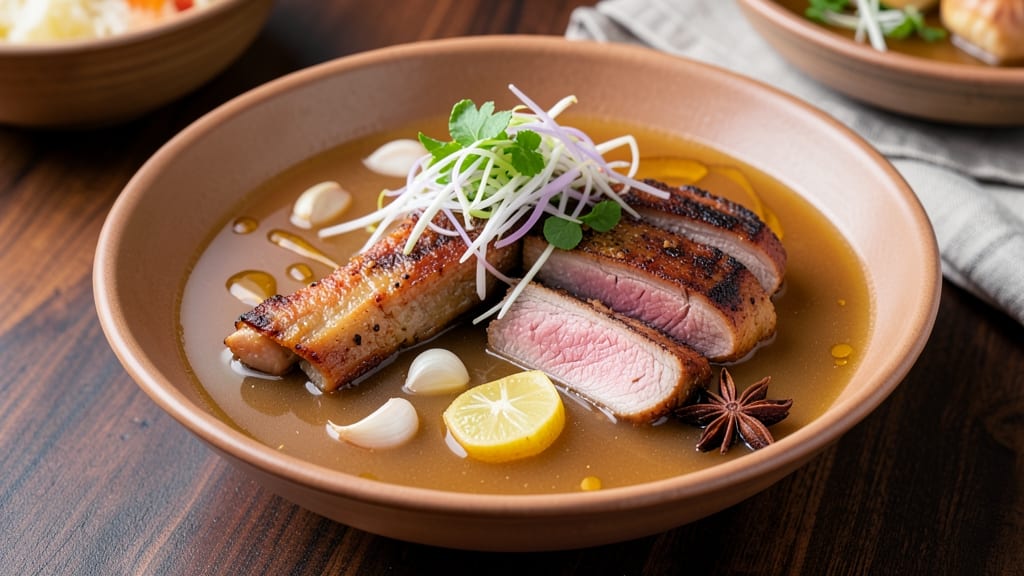
This Chinese pork broth recipe transforms humble ingredients into a fragrant, five-spice-infused elixir that defines comfort food. 🔥 I first mastered this technique in Charleston's kitchens, where pork bones simmered for hours released their marrow into golden, aromatic broth.
The key lies in balancing traditional methods with modern efficiency—whether you use a slow cooker or pressure pot. What sets this recipe apart is the five-spice blend, which infuses the broth with warm, earthy depth that lingers long after the first sip.
We'll start with pork bones and aromatics, then build layers of flavor through careful simmering. The result is a broth so rich it elevates everything from dumplings to noodles.
For authenticity, I recommend using a mix of pork bones and meaty cuts, but don't worry—this method works beautifully with shortcuts like store-bought bones. The long simmering process transforms tough cuts into tender, flavorful morsels that dissolve into the broth itself.
This isn't just soup; it's the foundation of countless Chinese dishes, and with proper technique, you'll achieve restaurant-quality results at home. Let's begin building flavor that lasts.
Ingredients for chinese pork broth
Pork bones and aromatic spices create this deeply flavorful Chinese broth foundation.
| Ingredient | Amount | Notes |
|---|---|---|
| Pork Bones 🍖 | 2 lb | Knuckle or neck bones preferred |
| Pork Shoulder 🥩 | 1 ½ lb | Cut into 2-inch chunks |
| Fresh Ginger 🧄 | 2 tbsp | Sliced into 1/4-inch pieces |
| Garlic Cloves 🧄 | 8 cloves | Smash lightly with side of knife |
| Scallions 🧅 | 4 whole | Cut into 2-inch pieces |
| Star Anise 🌟 | 2 whole | Lightly crushed |
| Cinnamon Sticks 🌿 | 2 whole | 2-inch lengths |
| Cloves 🌶️ | 4 whole | Whole, not ground |
| Sichuan Peppercorns 🌶️ | 1 tsp | Lightly toasted |
| Dried Fennel Seeds 🌿 | 1 tsp | Whole seeds |
| Bay Leaves 🌿 | 2 whole | Fresh preferred |
| Rock Sugar 🍚 | ½ cup | Or substitute brown sugar |
| Light Soy Sauce 🥢 | 2 tbsp | Kikkoman preferred |
| Shaoxing Wine 🍷 | ½ cup | Or dry sherry substitute |
| Water 💧 | 8 cups | Filtered preferred |
The bones are the heart of this broth—knuckle or neck bones yield the richest marrow, but pork shoulder chunks add meaty substance. For authenticity, source bones from a Chinese market or high-quality butcher; pre-packaged store bones work in a pinch. The five-spice blend (star anise, cinnamon, cloves, Sichuan peppercorns, fennel seeds) should be whole and lightly toasted for maximum aromatic release. Penzeys Spices carries excellent whole spices if you want to splurge. Fresh ginger and garlic are non-negotiable here—dried substitutes simply won't deliver the same depth of flavor. For the pork shoulder, cut into consistent 2-inch chunks to ensure even cooking and maximum surface area for flavor infusion.
No star anise? 1/2 teaspoon ground five-spice blend works as a substitute, though it lacks the aromatic complexity. Sichuan peppercorns can be omitted entirely if unavailable, but the heat they provide balances the broth's richness. Rock sugar isn't strictly necessary—brown sugar or even a pinch of white sugar will do, though it won't caramelize as beautifully. Shaoxing wine is ideal, but dry sherry or even a splash of Mirin provides similar depth. For the water, filtered is preferred but tap water works fine if you've got good municipal filtration. The soy sauce should be light, not dark—Kikkoman is the gold standard, but any reliable brand will suffice. If you're using a pressure cooker, you can reduce the water by 2 cups since less evaporation occurs.
This broth develops its full depth over time—4-6 hours for stovetop, 2-3 hours for pressure cooker. Strain through a fine-mesh sieve and store in airtight containers. It keeps 5-7 days refrigerated and freezes beautifully for up to 6 months. For maximum flavor, let it come to room temperature before serving. The broth can be reduced by half for a more concentrated base, or diluted with water for a lighter consistency. Always reserve some for future batches—each successive pot gains complexity from the accumulated flavors.
Why You'll Love This Recipe
- I swear by this trick: just smash the garlic cloves and slice the ginger thick—no mincing, no fuss. The broth still packs that deep, aromatic punch without the extra prep.
- No-Chop Necessary: I swear by this trick: just smash the garlic cloves and slice the ginger thick—no mincing, no fuss. The broth still packs that deep, aromatic punch without the extra prep.
- Umami Bomb: That first sip? Pure satisfaction. The pork bones melt into rich, gelatinous goodness while the shoulder adds tender, melt-in-your-mouth meat—like a hug in a bowl.
- Weeknight Magic: Simmer it all day, then use it for stir-fries, dumplings, or even a quick noodle fix. I make a big batch on Sundays and freeze portions—no takeout needed.
Step-by-step instructions for Chinese pork broth
Mastering this aromatic broth requires patience and precision—every element must work together.
🔥 Step 1: Parboil and Blanch the Bones
Place the 2 lb pork bones in a large stockpot and cover with 8 cups water. Bring to a boil over medium-high heat, then reduce to a simmer for 30 minutes. Skim off any foam that rises to the surface—this ensures clarity in your finished broth.
After simmering, drain the bones and return them to the same pot. Add fresh ginger, garlic cloves, scallions, star anise, cinnamon sticks, cloves, sichuan peppercorns, dried fennel seeds, and bay leaves. Pour in 0.5 cup Shaoxing Wine and 2 tbsp light soy sauce, then cover with fresh 8 cups water. Bring to a boil again, then reduce to a gentle simmer.
🔥 Step 2: Simmer the Aromatics and Bones
Simmer the bones and aromatics uncovered for 3 hours at a steady low heat. The broth should remain at a gentle simmer—never a rolling boil. This slow extraction draws deep flavors from the bones while preventing cloudiness. Check occasionally and skim any additional foam that forms.
After 3 hours, remove the bones with tongs and set aside. Strain the broth through a fine-mesh sieve into a clean stockpot, pressing gently on the solids to extract maximum flavor. Discard the aromatics and bones.
🥘 Step 3: Add Pork Shoulder and Rock Sugar
Return the strained broth to the stockpot and add the 1.5 lb pork shoulder cut into 2-inch chunks. Stir in the 0.5 cup rock sugar—this balances the broth's richness while adding subtle sweetness. Bring the broth back to a simmer over medium heat.
Simmer uncovered for another 2 hours, maintaining a gentle simmer. The pork shoulder will release collagen into the broth, creating a velvety texture. Skim any remaining foam periodically to keep the broth clear. The broth should reduce slightly, intensifying its flavor.
⏰ Step 4: Strain and Finish the Broth
Once the pork shoulder is fork-tender (about 2 hours), remove it from the broth and strain through a fine-mesh sieve into a clean pot. Discard the pork shoulder or shred it for another use. Taste the broth and adjust seasoning if needed—add a splash of Shaoxing Wine or a pinch of salt for balance.
Return the broth to a simmer and reduce it by 25% (about 15-20 minutes) to concentrate the flavors. The final volume should be approximately 6 cups. Serve immediately or store in the refrigerator for up to 5 days or freeze for 3 months. The broth will only deepen in flavor over time.
Pro Tips For Making Chinese Pork Broth
- BLANCH BONES FIRST: I learned this the hard way—skipping the quick blanch in hot water (3-5 minutes) means your broth will taste bitter from bone marrow and impurities. Rinse them cold afterward to stop cooking and remove any scum that rises.
- SMASH GINGER, DON’T SLICE: After burning my fingers trying to julienne ginger for the third time, I switched to smashing it flat with the side of my knife. The exposed surface infuses flavor faster, and you won’t end up with floating chunks that turn to mush.
- LOW AND SLOW AFTER BOIL: Crank the heat until it boils, then immediately drop it to the lowest simmer you can tolerate. I used to hover around medium, and the broth would turn cloudy. A gentle bubble—barely visible—keeps it clear and rich without burning.
- ROAST BONES BEFORE SIMMERING: This isn’t the prettiest method, but it’s the tastiest: Pat bones dry, then roast at 400°F (200°C) for 20 minutes until golden. The Maillard reaction unlocks deeper flavor—skip it, and your broth will taste like hospital food.
Common mistakes when making your chinese pork broth
Rushing the Simmer
I can't stress this enough—never let your broth boil vigorously. A rolling boil breaks down proteins too quickly, creating cloudy, bitter broth. Maintain a gentle simmer where you see just a few bubbles at the edges.
This slow extraction is what pulls deep, rich flavors from the bones. I've seen home cooks crank the heat too high out of impatience, and it ruins the entire process. 🌡️
Skipping the Parboil
Many recipes skip the initial 30-minute parboil of the bones, but this step is crucial for clarity. The first boil removes impurities that would otherwise make your broth murky. If you rush this, you'll end up with a cloudy broth that lacks professional quality.
I learned this the hard way during my apprenticeship—Master Chen made me parboil bones until I got it right.
Using Ground Spices
Ground spices like five-spice powder or cinnamon lose their aromatic oils when exposed to liquid. Whole spices release flavor gradually, creating layers of complexity. If you must use ground spices, toast them first and add them in a cheesecloth sachet that you remove before straining.
I keep whole spices in my pantry specifically for broth-making—the difference is night and day. 🌶️
Adding Meat Too Early
Pork shoulder belongs in the broth only after the bones have done their work. Adding meat early means it cooks in a broth that's still developing flavor. Wait until after the 3-hour bone simmer to add the meat.
This ensures maximum flavor extraction from both components. I've seen beginners add everything at once, and the results are always underwhelming.
Overcrowding the Pot
Your stockpot should have enough water to cover the bones by at least 1 inch. If you overcrowd, the bones won't simmer properly, leading to uneven cooking and poor flavor extraction.
I use a 12-quart stockpot for this recipe—it gives enough room for proper circulation. If your pot is too small, cook in batches or use a larger vessel.
Ignoring the Sugar
The rock sugar isn't just for sweetness—it helps balance the broth's richness and prevents bitterness. Some cooks skip it entirely, but I've found that even 1 teaspoon of sugar makes a noticeable difference.
For a deeper flavor, caramelize the sugar slightly before adding it to the broth. This simple step elevates the entire dish. 💫
Nutrition facts
Frequently asked questions about Chinese pork broth
Can I make this broth without a pressure cooker?
While a pressure cooker cuts the time to 2-3 hours, traditional stovetop simmering takes 4-6 hours. Use a large stockpot with at least 12 quarts capacity and maintain a gentle simmer. The key is patience—the longer it cooks, the deeper the flavor. I've made this broth in cast iron Dutch ovens with excellent results.
What's the best way to use leftover pork shoulder?
Shred the cooked pork shoulder and use it in fried rice, dumplings, or congee. For extra flavor, toss the shredded meat with a little Shaoxing wine and soy sauce before using. You can also chop it finely for spring rolls or mix into noodle dishes like dan dan noodles.
How do I know when the broth is ready?
The broth should have a rich, golden color and intense aroma. Taste it before straining—it should be deeply flavorful with balanced sweetness from the sugar and umami from the pork. The pork shoulder should be fork-tender, falling apart easily. If it's not quite there, simmer 30 minutes longer and check again. The final consistency should coat the back of a spoon.
Can I substitute chicken or beef broth instead?
While you can use other broths as a base, nothing compares to pork's rich, meaty depth. For a closer match, simmer pork bones in water for 2 hours first, then add your other broth. The pork flavor will infuse the liquid, but it won't have the same complexity. This broth works best with pork—it's the foundation of countless Chinese dishes that rely on its unique character.
What's the best way to reheat stored broth?
Gently reheat on the stovetop over low heat until just simmering—never boil. For frozen broth, thaw overnight in the fridge first. Microwaving can destroy delicate flavors. If you notice any oil separation, stir gently to recombine. The broth will taste even better after reheating as flavors meld together. Always bring it to a simmer before serving.