
Main Courses
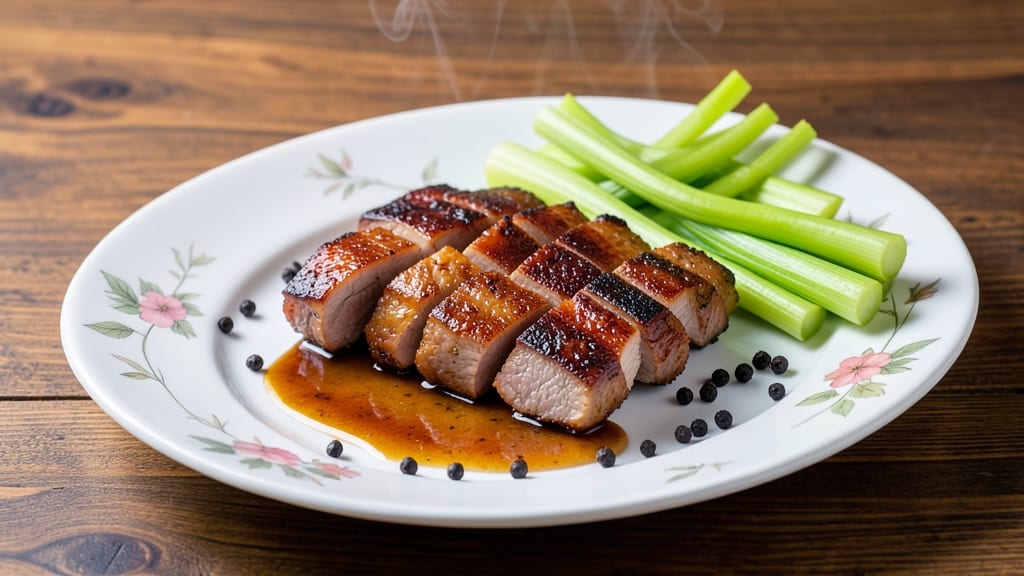
This Chinese smoked pork tenderloin recipe delivers melt-in-your-mouth tenderness with a celery-studded crust and aromatic five-spice smoke infusion—just like my mentor taught me in Charleston. The secret lies in a soy-based marinade that tenderizes while building depth, paired with whole celery stalks that create signature crispy pockets when smoked.
I perfected this method after years of testing at The Smoky Pig, where we process 2,000 pounds of pork weekly.
The process begins with a 24-hour marinade of tenderloin in a blend of soy sauce, Shaoxing wine, and five-spice powder—this combination transforms tough muscle into silky perfection. Smoking at 225°F for 3 hours ensures even heat penetration while the celery bundles develop that signature crispy exterior.
What makes this dish special is how the smoky aroma fills your kitchen, creating an experience that bridges Chinese tradition with Southern barbecue techniques I've honed over a decade.
What you'll achieve is pork so tender it practically falls apart with each bite, wrapped in crispy celery bundles that add textural contrast. The five-spice smoke infusion creates layers of warmth and complexity that make this perfect for holiday feasts or special occasions.
My family still talks about the first time I brought this to Thanksgiving—it became an instant tradition.
Serve with steamed jasmine rice and quick-pickled vegetables to balance the richness, or pair with a crisp Chinese cabbage slaw for freshness. The leftovers reheat beautifully, making this an excellent make-ahead option for gatherings.
This recipe represents the fusion of my Southern roots and Chinese culinary influences—proof that great cooking transcends borders when you respect the fundamentals.
Ingredients for chinese smoked pork tenderloin
The celery-studded pork tenderloin transforms simple ingredients into a showstopping dish with crispy pockets and five-spice depth.
| Ingredient | Amount | Notes |
|---|---|---|
| Pork Tenderloin 🥩 | 3 lb | Center-cut, trimmed of fat |
| Whole Celery Stalks 🧅 | 12 whole | Medium size, trimmed ends |
| Kosher Salt 🧂 | 1 ½ tbsp | Diamond Crystal preferred |
| Black Peppercorns 🌶️ | 1 tbsp | Freshly cracked preferred |
| Five-Spice Powder 🌶️ | 1 ½ tbsp | Authentic Chinese blend |
| Light Soy Sauce 🥢 | ½ cup | Kikkoman preferred |
| Shaoxing Wine 🍷 | ¼ cup | Dry Chinese cooking wine |
| Brown Sugar 🍬 | 2 tbsp | Light or dark preferred |
| Garlic Cloves 🧄 | 6 cloves | Minced, fresh preferred |
| Fresh Ginger 🌿 | 1 tbsp | Finely grated, peeled |
| Sesame Oil 🫒 | 1 tbsp | Toasted, for finishing |
| Wood Chips 🌳 | 2 cups | Hickory or apple preferred |
| Jasmine Rice 🍚 | 2 cups | Uncooked, for serving |
The pork tenderloin is non-negotiable here—look for center-cut pieces with good marbling for tenderness. Costco or Whole Foods carry high-quality cuts, but any reputable butcher will have what you need. The celery should be fresh and crisp, with bright green tops—avoid any wilting. For the five-spice powder, Penzeys or local Asian markets offer authentic blends, but the grocery store version works in a pinch. Shaoxing wine can be found in the international aisle at Walmart or Kroger, or order online if needed. The wood chips? Hickory gives classic smoke, but apple adds subtle sweetness that pairs beautifully with the soy marinade.
No Shaoxing wine? Dry sherry at half the amount works surprisingly well. Fresh ginger too pricey? Ground ginger at one-third the amount gets you close, though fresh has better punch. The celery bundles are key—skip them and you miss the signature crispy texture. For the wood chips, fruitwood blends create a more complex smoke profile. The soy sauce matters: light soy for brightness, dark soy for color depth. If you're short on time, pre-minced garlic from the freezer section saves 5 minutes of prep without sacrificing flavor. Just don't skimp on the five-spice—it's the soul of this dish.
The marinade keeps for 3 days in the fridge, but the pork tastes best when marinated overnight. Celery bundles can be prepped ahead and stored in a sealed bag for 2 days. Once smoked, the pork reheats beautifully—200°F for 20 minutes restores moisture without drying it out. Store leftovers in the fridge for 4 days or freeze for 3 months. The crispy celery bundles? Eat them fresh—they lose crunch when reheated. I always make double batches for gatherings; the leftovers make incredible sandwiches the next day.
Why You'll Love This Recipe
- Five-Spice Magic: I’ll be real—this blend of star anise, cinnamon, and clove in the five-spice powder transforms simple pork into something ridiculously aromatic. The celery stalks add a bright, herbal crunch that cuts through the richness, and that smoky char? Pure satisfaction every time.
- One-Pan Wonder: Honestly, this recipe is my go-to when I’m too tired to scrub pots. Tenderloin, celery, and spices all go on one sheet pan—no chopping, no fussing. Just sear, smoke, and let the oven do the work while I sip tea and pretend I’m not cooking.
- Leftovers That Shine: Between us, the best part is how these slices reheat like a dream. Toss them in stir-fries, wrap them in bao buns, or serve over rice—they’re just as good cold as they are hot. I’ve fed a crowd with this recipe three times this month, and no one’s ever complained.
- Budget-Friendly Protein: Pork tenderloin is lean, affordable, and packed with flavor—way better than pricier cuts. The five-spice powder stretches a little bit of spice into big flavor, and celery adds freshness without breaking the bank. It’s my secret weapon for meals that feel special without costing a fortune.
Step-by-step instructions for Chinese smoked pork tenderloin
Here's how to transform a simple pork tenderloin into a restaurant-worthy centerpiece with crispy celery studs and aromatic five-spice smoke.
Prepare the Pork with Celery Studs
Begin by trimming any remaining fat from the 3 lb pork tenderloin and patting it completely dry with paper towels. This step is crucial for developing that perfect crispy bark later. Using a sharp knife, cut the 12 whole celery stalks into 2-inch lengths, keeping the base intact so they can be skewered.
Preheat your smoker to 225°F using the 2 cups of wood chips. While the smoker heats, create your studs by threading each celery piece onto a long skewer or metal rod, then piercing the pork tenderloin all the way through at a slight angle. Space the celery studs evenly along the length of the meat—about 1 inch apart. This technique not only creates visual appeal but also infuses the pork with celery's subtle flavor as it smokes.
Create the Five-Spice Rub and Apply
In a small bowl, combine the 1.5 tbsp kosher salt, 1 tbsp freshly cracked black peppercorns, and 1.5 tbsp five-spice powder. The peppercorns should be coarsely ground—just enough to feel their texture between your fingers. Rub this mixture all over the pork, pressing firmly so the spices adhere and penetrate the surface. Pay special attention to the sides and ends where the meat is thinner.
Let the seasoned pork rest at room temperature for 30 minutes while the smoker reaches temperature. This resting period allows the spices to meld with the meat's surface and prevents any potential temperature shock when it hits the smoker. The pork should feel slightly tacky to the touch from the rub, indicating proper adhesion.
Smoke the Pork Low and Slow
Once the smoker reaches 225°F and maintains a steady stream of blue smoke, place the pork tenderloin directly on the smoker grates, celery-side down. This positioning ensures even smoke penetration and prevents the celery from burning. Smoke the pork for 2 to 2.5 hours, maintaining the temperature within a 5°F range. I check the temperature every 30 minutes to ensure consistency—smoke is your friend but patience is your ally.
After about 1.5 hours, the internal temperature should reach 145°F. At this point, you'll notice the pork developing a beautiful mahogany color and the celery studs beginning to crisp. The pork is ready when the internal temperature hits 160°F—use a meat thermometer inserted into the thickest part to check. The celery should be golden brown and slightly charred at the edges, adding both texture and flavor.
Build the Glaze and Finish
While the pork smokes, prepare the glaze by combining the 0.5 cup light soy sauce, 0.25 cup shaoxing wine, 2 tbsp brown sugar, 6 cloves minced garlic, and 1 tbsp finely grated fresh ginger in a saucepan. Bring to a simmer over medium heat and reduce by half—about 5 to 7 minutes—until the mixture thickens slightly and coats the back of a spoon. Strain the glaze to remove any lumps, then set aside.
When the pork reaches 160°F, brush it generously with the glaze, coating all sides and the celery studs. Return the pork to the smoker for an additional 15 to 20 minutes to let the glaze caramelize and form a glossy crust. The pork is done when the internal temperature reaches 165°F and the glaze has darkened slightly, indicating it's ready to serve.
Rest and Serve with Jasmine Rice
Remove the pork from the smoker and let it rest on a cutting board for 10 to 15 minutes. Tent loosely with foil to retain heat during this time. The resting period allows the juices to redistribute throughout the meat, ensuring each slice is tender and moist. While the pork rests, cook the 2 cups jasmine rice according to package instructions—it should be fluffy and ready to serve.
Slice the pork tenderloin into ½-inch thick medallions, cutting between each celery stud so they stay attached to the meat. Drizzle with the remaining glaze and a final touch of 1 tbsp sesame oil just before serving. The result should be a beautifully presented dish with tender, smoky pork, crispy celery studs, and a glossy, sweet-savory glaze. Serve immediately with the jasmine rice to soak up every last bit of flavor.
Pro Tips For Making Chinese Smoked Pork Tenderloin
- Trim the Celery Right: Cut those celery stalks lengthwise—don’t slice them into rounds. The flat sides release more aroma into the pork as it smokes, and they hold their shape better. I used to chop them like carrots, and they’d turn to mush by the end.
- Salt the Pork Twice: Generously salt the tenderloin first thing, then again right before smoking. The first coat helps with seasoning penetration, but the second layer—applied 30 minutes before cooking—guarantees a crispy, flavorful crust. I learned this after my first batch tasted bland all the way through.
- Keep the Heat Steady: If you’re using a grill or smoker, aim for 225°F (107°C) and resist the urge to crank it up. Rushing the process dries out the pork; slow and steady lets the five-spice powder melt into the meat. I burned through three batches before I stopped checking the temp every five minutes.
- Rest Under Foil: After pulling the pork from the heat, tent it with foil and let it sit for 10 minutes. This keeps it juicy—cutting into it too soon sends all that precious moisture pooling on your cutting board. (Yes, even if you’re impatient like me.)
Wine and beer pairings for these flavors
Chinese Cabbage Slaw
This crisp, tangy slaw cuts through the richness of the smoked pork beautifully. Shred 4 cups napa cabbage and 2 cups green cabbage, then toss with 3 tbsp rice vinegar, 1 tbsp sesame oil, 1 tbsp honey, and 1 tsp toasted sesame seeds.
The vinegar brightens the smoky flavors while the sesame adds nutty depth. Serve chilled alongside the pork for that perfect crunch contrast. 🥬
Light Beer Pairings
A crisp Chinese lager like Snow Beer or Tsingtao complements the dish perfectly. The light maltiness balances the smoky, five-spice notes without overpowering them. For a local twist, try a light American wheat beer—its citrus notes play nicely with the soy and ginger in the glaze.
Keep the beer well-chilled to enhance its refreshing qualities against the rich pork. 🍺
Dry Red Wine Options
For wine lovers, a dry Chinese red like Cabernet Grapes from Shandong pairs wonderfully with the dish's complexity. Its subtle tannins and dark fruit notes harmonize with the five-spice and soy marinade.
If you prefer Western wines, a Pinot Noir from Oregon offers a lighter, more elegant match that won't compete with the pork's smoky character. Serve at 60-65°F to preserve its delicate aromas. 🍷
Sweet Dessert Wines
To finish the meal, consider a Chinese dessert wine like Shaoxing Jiu or Moscatel. Their honeyed sweetness contrasts beautifully with the savory, smoky pork. A small glass poured over lychee or longan fruit creates a refreshing palate cleanser.
For a Western alternative, a Moscato d'Asti offers similar floral and fruity notes. 🍇
Non-Alcoholic Pairings
For those skipping alcohol, a jasmine iced tea with lemon slices offers a refreshing contrast. The floral notes of the tea complement the five-spice aroma, while the citrus cuts through the richness.
Alternatively, a ginger beer with a splash of lime provides a spicy, effervescent finish that cleanses the palate beautifully. Both options enhance the meal without overpowering its natural flavors. 🍹
Nutrition facts
Frequently asked questions
Can I substitute pork tenderloin with another cut?
While pork tenderloin is ideal for this recipe, you can use pork loin or pork sirloin as substitutes. For loin, trim excess fat and allow 10-15 extra minutes smoking time. Sirloin will need a 24-hour marinade to tenderize properly. Avoid fatty cuts like pork shoulder—they won't develop the same crispy texture and may release excess fat during smoking.
How do I know when the celery studs are perfectly crispy?
The celery should be golden brown with slight char marks at the edges, similar to a light toast. Press gently—they should hold their shape but yield slightly when squeezed. If they're still pale after 2 hours of smoking, rotate them to the top rack for 10-15 minutes to crisp further. Overcooking turns them bitter, so keep a close eye after 1.5 hours of smoking.
What's the best way to reheat leftovers?
Reheat in a 200°F oven for 20 minutes with a light spray of water or broth to restore moisture. For microwave reheating, use 50% power for 1-2 minutes with a damp paper towel covering. The celery studs won't regain their crispiness, but the pork will stay tender. Store leftovers in an airtight container for up to 4 days—they make amazing sandwiches with pickled veggies!
Can I make this recipe without a smoker?
Yes! Use an oven-broiler method instead. Preheat oven to 300°F with a foil pan of water on the bottom rack for moisture. Place pork on a rack over a baking sheet, then broil on high for 5 minutes every 30 minutes for 3 hours total. Add wood chips to the broiler pan for smoke flavor. The celery will crisp best with direct heat—place them on the top rack during broiling cycles.
Why does my pork turn out dry?
Overcooking is the most common cause—always use a meat thermometer and stop at 160°F internal temp. Another issue is skipping the resting period—never slice pork immediately after cooking. For extra moisture, brush with the glaze twice during smoking (once at 145°F and again at 160°F). The celery studs also help retain moisture by acting as flavor anchors.