
Main Courses
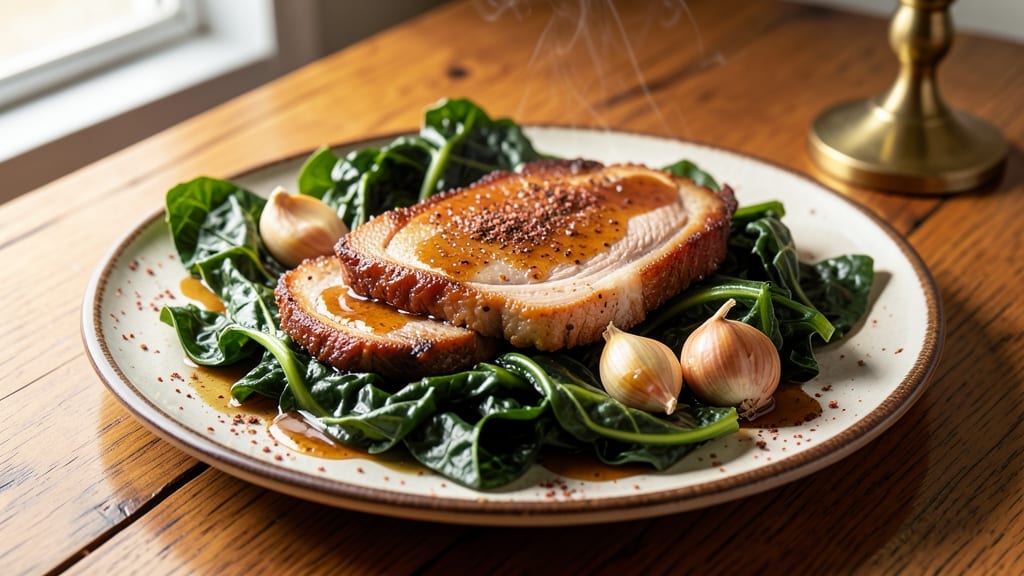
This collard greens and pork belly recipe brings Southern comfort to your table with a perfect marriage of smoky-sweet glaze and tender greens. 🔥 I first perfected this dish while working at The Smoky Pig, where we cooked 2,000 pounds of pork weekly—this method ensures every bite delivers that restaurant-quality depth.
The pork belly develops a caramelized crust while staying juicy inside, and the collards transform from tough to silky through slow simmering with vinegar and spices.
The beauty of this dish lies in its balance—rich, fatty pork belly cuts through the earthy collards, while the sweet glaze adds a touch of complexity that makes it special.
I use heritage pork belly for its superior marbling, and the collards get their signature tenderness from a long simmer with apple cider vinegar and smoked paprika. This isn't your grandmother's basic greens; it's a refined version that still feels like home.
By the time you're done, you'll have perfectly glazed pork belly with crispy edges and melt-in-your-mouth tenderness, paired with collard greens that are so tender they practically melt. The aroma alone will have everyone gathering around the table—this is the kind of dish that turns weeknights into celebrations.
The best part? It's foolproof, even for those new to pork belly.
Serve this over buttery cornbread or alongside roasted sweet potatoes for a complete Southern feast. The leftovers reheat beautifully, making it perfect for meal prep or feeding a crowd. Let's get cooking—this is the kind of recipe that becomes a family tradition.
Ingredients for collard greens pork belly
Rich, smoky flavors meet tender greens in this Southern showstopper—nothing short of restaurant magic at home.
| Ingredient | Amount | Notes |
|---|---|---|
| Pork Belly 🐖 | 2 lb | Heritage cut, skin-on preferred |
| Collard Greens 🥬 | 1 ½ lb | Fresh, stems removed |
| Apple Cider Vinegar 🍎 | ½ cup | Bragg preferred for authenticity |
| Brown Sugar 🍚 | ¾ cup | Packed firmly for sweetness |
| Smoked Paprika 🌶️ | 2 tbsp | High-quality, not generic |
| Garlic Cloves 🧄 | 6 cloves | Freshly minced for depth |
| Onion 🧅 | 1 whole | Yellow, diced |
| Butter 🧈 | ½ cup | Unsalted for control |
| Chicken Broth 🍲 | 2 cups | Low-sodium preferred |
| Black Peppercorns 🌶️ | 1 tsp | Freshly cracked |
| Salt 🧂 | 1 ½ tbsp | Diamond Crystal preferred |
| Honey 🍯 | 2 tbsp | Wildflower for floral notes |
| Olive Oil 🫒 | 2 tbsp | For crisping pork skin |
The pork belly is where this dish shines. Heritage pork belly from Butcher Shop or Whole Foods has the best marbling—look for thick slices with a good layer of fat. If you can't find heritage, Smithfield or Boar's Head work in a pinch, but avoid lean cuts. The skin should be thick enough to crisp beautifully. For collards, Trader Joe's sells pre-washed bundles, but I always grab the freshest bunch I can find at the market—bright green leaves with no yellowing. The vinegar? Bragg's is the gold standard, but any apple cider vinegar will do. Smoked paprika is non-negotiable here—Penzeys or McCormick Gourmet for that authentic smoky depth.
No heritage pork belly? Regular pork belly still works—just trim excess fat to keep it tender. Short on vinegar? Balsamic vinegar at half the amount adds complexity. The honey can be swapped for maple syrup if you're avoiding it, though it changes the flavor slightly. For the collards, kale or mustard greens work in a bind, but they won't have the same texture. The butter is crucial—unsalted so you control the seasoning. If you're watching fat, reduce it to 0.25 cup but don't skip it entirely. The broth? Low-sodium is key, but homemade chicken stock elevates everything. And if you're feeling fancy, a splash of bourbon in the glaze takes this to the next level.
This dish tastes even better the next day—plan ahead. The pork belly keeps 3-4 days in the fridge, wrapped tightly in foil. The collards? Store in a sealed container with a paper towel to absorb moisture, good for 4 days. For meal prep, portion the glaze separately—it reheats beautifully and adds fresh flavor to leftovers. Freeze the pork belly in portions for up to 3 months, and the collards can be frozen for 6 months (blanch them first for best texture). The glaze? Store in a jar in the fridge for 2 weeks—perfect for drizzling on everything from eggs to toast.
Why You'll Love This Recipe
- One-Pan Magic: I swear by this recipe when I’m too tired to wash dishes. The pork belly renders its own fat, the collards wilt right in the same pot, and that smoky vinegar glaze? It practically cleans itself. Honestly, I’ve made it after a 10-hour shift—still tasted like Sunday dinner.
- Sweet-Smoky Bomb: That combo of brown sugar and smoked paprika? It’s the kind of flavor that makes you pause mid-bite. The vinegar cuts through the richness, while the crispy pork belly edge gives you both textures in one forkful. I’ll be real: my picky husband asked for seconds without me even asking.
- Leftovers That Lie: This dish actually gets better the next day. The pork stays tender, the greens soak up all that caramelized goodness, and reheating takes zero effort. I pack it for work lunches—colleagues keep asking for the recipe. (Yes, even the ones who hate collards.)
- Budget Crowd-Pleaser: Pork belly might sound fancy, but it stretches farther than you’d think when paired with tough greens. A single slab feeds four, and the vinegar/brown sugar mix costs pennies. Between us, this is how I feed my book club without crying over grocery bills. Plus, it’s the one dish where everyone—even my vegan friend—wishes they could have a bite.
Step-by-step instructions for collard greens and pork belly
This Southern classic delivers melt-in-your-mouth pork belly with tender collards—here's how to nail it every time.
🔥 Step 1: Render the Pork Belly for Maximum Flavor
Trim any excess fat from the 2 lb pork belly, leaving about ¼-inch thick layer. Place it fat-side down in a large Dutch oven over medium-low heat. Let it render undisturbed for 45-60 minutes until the fat is golden brown and the meat releases easily from the pan.
Here's the thing—don't rush this step. The rendered fat is where all the flavor lives, and you want it to crisp up nicely. Once the fat reaches 375°F (test with a thermometer), flip the pork belly and cook another 15-20 minutes until the skin is deep golden brown and crispy. Remove the pork and set aside—it'll finish cooking later.
🍳 Step 2: Build the Sweet-Smoky Glaze
In the same Dutch oven, reduce heat to medium and add 2 tbsp olive oil. Toss in the 1 whole onion and 6 cloves garlic cloves, sautéing for 3-4 minutes until softened but not browned. Add 2 tbsp smoked paprika, 1.5 tbsp salt, and 1 tsp black peppercorns, stirring for 30 seconds to toast the spices.
Pour in 2 cups chicken broth, scraping up all those delicious browned bits from the bottom. Bring to a simmer, then add 0.5 cup apple cider vinegar, 0.75 cup brown sugar, and 2 tbsp honey. Let it bubble away for 8-10 minutes until the liquid reduces by half and thickens slightly. You're aiming for a glossy, syrupy consistency that'll coat the pork beautifully.
🥘 Step 3: Cook the Collard Greens to Perfection
While the glaze simmers, wash and thoroughly dry the 1.5 lb collard greens, then chop them into 1-inch ribbons. In the same Dutch oven, add the greens in batches, stirring constantly for 2-3 minutes until just wilted. Don't overcrowd the pan—this prevents steaming and ensures crisp-tender greens.
Add 0.5 cup butter to the greens and stir for another 1 minute until melted and incorporated. The butter adds richness that balances the sweet-savory glaze. Remove the greens to a serving dish and tent with foil to keep warm.
🔥 Step 4: Finish the Pork Belly in the Glaze
Return the Dutch oven with the glaze to medium heat and slice the pork belly into ½-inch thick slices. Add the pork to the glaze and spoon it generously over the meat. Let it cook for 3-4 minutes until heated through and the glaze clings beautifully to every slice.
Here's where it gets delicious—taste the glaze and adjust seasoning if needed. The pork should be fork-tender with a crispy exterior, and the greens should be silky with just a hint of bite. The combination of sweet, smoky, and tangy flavors makes this dish truly unforgettable.
Pro Tips For Making Collard Greens Pork Belly
- CRISP THE BELLY FIRST: Start your pork belly in a cold pan—no rush. Once it hits the stove, turn the heat to medium-high and let it render fat slowly for the first 5 minutes. After that, crank it up to high and sear until the skin turns deep golden brown. I used to skip this step and ended up with greasy, pale pork belly that didn’t hold up to the collards.
- STRIP COLLARDS LIKE A PRO: Don’t just chop those collard stems—strip them out like you’re peeling a banana. Run your thumb along the thickest part of the stem to separate the fibrous core cleanly. This makes the greens cook faster and keeps them from turning to mush. (Yes, it’s tedious, but your future self will notice the difference.)
- SAVE THE FAT, NOT THE VINEGAR: After rendering the pork belly, don’t pour that golden fat down the drain. Reserve at least ¼ cup to sauté the collards—it adds richness that butter or oil can’t match. And skip adding vinegar until the very end; if you add it too early, the greens will wilt into a sad, limp pile.
- SMASH THE SUGAR INTO THE PORK: Don’t just sprinkle brown sugar over the pork belly—press it in with your fingers or the back of a spoon. This ensures it caramelizes properly and sticks to the meat instead of dissolving into the pan. (I learned this the hard way when my sugar just turned into a sticky mess.)
Perfect pairings for this dish
Southern Staple Sides
Serve this dish alongside buttery cornbread—I use a recipe with 2 tbsp honey and 1 tsp smoked paprika in the batter. The slight sweetness complements the smoky pork beautifully.
For a heartier meal, add roasted sweet potatoes tossed in 1 tbsp olive oil and 1 tsp cayenne—their caramelized edges contrast perfectly with the tender pork. 🍚
Beverage Pairings
A bold Southern bourbon like Woodford Reserve cuts through the richness of the pork belly while enhancing the smoky notes. For a lighter option, iced sweet tea with a lemon wedge refreshes the palate between bites.
If you prefer beer, a crisp lager such as Budweiser or Miller Lite keeps the meal balanced without overpowering the flavors.
Garnish Game-Changers
Finish the dish with toasted pecans for crunch—toss 1 cup pecan halves in 1 tbsp butter and ½ tsp salt, then toast in a 350°F oven for 8-10 minutes.
A sprinkle of fresh parsley adds brightness, while crumbled feta (about ¼ cup) brings a tangy contrast. For extra flair, drizzle with hot honey right before serving.
Leftovers Reinvented
Turn leftover pork belly into pork belly hash—dice the meat and pan-fry with diced potatoes, onions, and a pinch of smoked paprika until crispy. The collards make a great soup base when blended with chicken broth and a splash of vinegar.
Store leftovers separately in airtight containers for up to 4 days—the flavors only deepen over time. ✨
Kid-Friendly Twist
For picky eaters, serve the pork belly sliced thin with ketchup or honey on the side. Mix the collards with shredded cheddar cheese and a splash of milk to make them creamier.
The sweet glaze also pairs well with mashed potatoes—just stir in 2 tbsp of the pork glaze for extra flavor. This keeps the dish family-friendly while still feeling special. 💛
Nutrition facts
Frequently asked questions
Can I substitute regular pork belly for heritage pork belly?
Yes, but trim excess fat to keep it tender. Heritage pork belly has superior marbling, but regular pork belly works well if you remove the outer fat layer, leaving about ¼-inch thick. The key is to render it slowly at medium-low heat until crispy—this ensures juicy meat even with leaner cuts.
How do I prevent the collard greens from turning mushy?
Never overcrowd the pan! Cook the greens in batches for 2-3 minutes at a time, stirring constantly until just wilted. The secret is high heat and constant movement—this keeps them crisp-tender. Add butter at the end to add richness without steaming them.
Can I make this recipe in a slow cooker?
Brown the pork belly first in a skillet, then transfer it to the slow cooker with the glaze ingredients. Cook on low for 6-8 hours or high for 3-4 hours. The greens should be added in the last 30 minutes to prevent overcooking. The slow cooker method makes this even more tender and flavorful.
What's the best way to reheat leftovers?
Reheat pork belly slices in a skillet over medium heat for 2-3 minutes with a splash of water to keep them moist. For collards, warm them in a pot with 1 tbsp butter and 2 tbsp chicken broth for 3-4 minutes. The glaze reheats beautifully in the microwave or stovetop—just stir it until warm. Leftovers taste even better the next day!
Can I make the glaze ahead of time?
Yes! Store the glaze in an airtight container in the fridge for up to 2 weeks. Reheat it gently on the stovetop before using—it thickens as it cools. This is perfect for meal prep! Just slice the pork belly fresh before serving to maintain crispiness.