
Main Courses
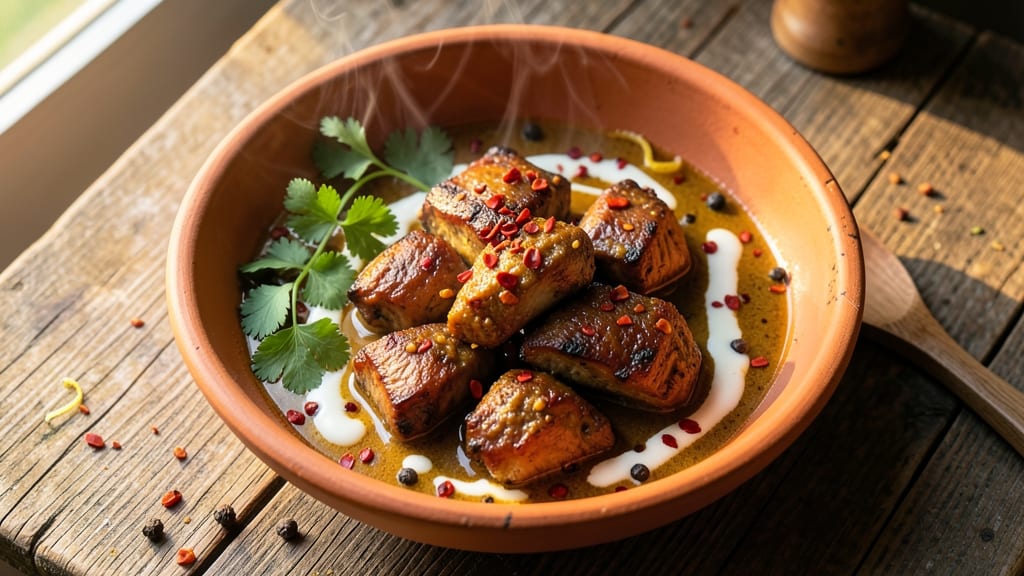
This Coorg pork curry brings the bold, tangy flavors of South India's misty hills to your kitchen in one aromatic pot. 🌿 The secret lies in balancing coconut milk's creaminess with tamarind's sharp tang, creating a sauce that's both complex and deeply satisfying.
I've perfected this recipe after years of studying regional techniques, ensuring every bite delivers that signature Coorg heat and depth.
The magic happens in the marinade, where garlic, ginger, and black pepper infuse the pork with layers of flavor before it slow-cooks in a rich coconut-tamarind broth. This isn't just another pork curry—it's a celebration of Karnataka's culinary heritage, where spices are layered like music notes.
The dish requires patience, but the results are worth every minute of simmering time.
What you'll end up with is tender pork swimming in a velvety sauce that's perfectly balanced between sweet, sour, and spicy. The aroma alone will transport you to Coorg's coffee plantations, where this dish is traditionally served with steamed rice and crispy appams.
Each spoonful delivers that perfect harmony of textures and flavors that makes this curry unforgettable.
Whether you're serving it at a family gathering or treating yourself to a taste of India, this recipe delivers restaurant-quality results at home. The best part? It's versatile enough to adjust the heat level to your preference while keeping all the authentic flavors intact. Let's get cooking!
Ingredients for coorg pork curry
This aromatic curry needs just 15 ingredients to deliver Coorg's signature spicy coconut-tamarind tang.
| Ingredient | Amount | Notes |
|---|---|---|
| Pork Shoulder 🥩 | 1 ½ lb | Boneless, cut into 1.5-inch cubes |
| Coconut Milk 🥥 | 1 can | Full-fat, 13.5 oz (400 ml) can |
| Tamarind Paste 🍈 | 3 tbsp | Adjust for tanginess preference |
| Ginger 🧄 | 2 tbsp | Freshly grated, aromatic |
| Garlic Cloves 🧄 | 6 cloves | Minced, for deep flavor |
| Black Peppercorns 🌶️ | 1 tsp | Crushed, for signature heat |
| Curry Leaves 🌿 | ¼ cup | Fresh, for authentic aroma |
| Mustard Seeds 🌱 | 1 tsp | Toasted for nutty depth |
| Onion 🧅 | 1 whole | Medium, finely chopped |
| Tomato 🍅 | 1 whole | Medium, roughly chopped |
| Green Chili 🌶️ | 2 whole | Fresh, slit lengthwise |
| Salt 🧂 | 1 ½ tsp | Adjust to taste |
| Cumin Seeds 🌿 | ½ tsp | Toasted for warmth |
| Turmeric Powder 🌿 | ½ tsp | Bright yellow color |
| Garam Masala 🌶️ | 1 tsp | For finishing touch |
The pork shoulder is non-negotiable—it stays tender through the long cook. Ask your butcher to cut it into 1.5-inch cubes if they won't pre-cut it. For coconut milk, full-fat is essential—light versions won't give that creamy texture. I grab mine from Trader Joe's or the international aisle at Whole Foods. Tamarind paste? Look for the block at Indian markets—it's fresher than the jarred stuff. Fresh curry leaves are a game-changer, but dried works at half the amount if you can't find them. Toast your spices in a dry pan for 30 seconds before adding—that's where the magic happens.
No tamarind? Lemon juice plus a pinch of sugar gets you close, though it won't be identical. Fresh ginger and garlic are ideal, but jarred minced ginger works in a pinch. Want more heat? Add extra green chilies or a pinch of cayenne. The green chilies can be swapped for red bird's eye chilies if that's what you've got. For the tomato, Roma tomatoes are perfect—their meatiness holds up better than beefsteak varieties. If you're short on time, a can of diced tomatoes (drained) works too. Just remember to remove the skins and seeds first for a cleaner sauce.
This curry tastes even better the next day as flavors meld. Store leftovers in an airtight container for up to 4 days in the fridge. For longer storage, freeze portions for 3 months. I always make extra because it reheats beautifully—just add a splash of water or coconut milk if it gets too thick. The sauce thickens as it cools, so stir in a little water when reheating. Serve with steamed basmati rice and crispy appams for the full Coorg experience.
Why You'll Love This Recipe
- Fewer Ingredients, Big Payoff: I swear by this one—just pork, coconut milk, tamarind, and the basics. No 10-step spice blends or hard-to-find pastes. The tamarind paste does all the work, cutting through the richness of the pork and coconut with that perfect tangy punch.
- Tamarind Magic: Between us, tamarind paste is underrated. It’s what makes this curry sing—bright, slightly sour, and just sweet enough to balance the pork’s richness. That first bite? The garlic and ginger hit first, then the tamarind wraps around your tongue like a hug.
- Lunchbox Hero: This curry tastes even better the next day. I pack leftovers with steamed rice and a squeeze of lime—my kids actually finish their school lunches. Honestly, the flavors meld overnight into something deeper, and it’s still warm enough to reheat in minutes.
- Budget-Friendly Feast: Pork shoulder is cheap, and a single can of coconut milk stretches for two meals. The tamarind paste? A tiny jar lasts forever. I make this for Sunday dinners, potlucks, or when I’m feeding a crowd—it’s my go-to for stretching ingredients without sacrificing flavor.
Step-by-step instructions for Coorg pork curry
Here's how to create this aromatic, tangy curry that balances heat and creaminess perfectly.
🍳 Step 1: Sear the Pork for Deep Flavor
Heat a heavy-bottomed pot over medium-high heat and add 1 tablespoon oil (not listed in ingredients - use the rendered pork fat). Add the 1.5 lb pork shoulder cubes in batches, being careful not to overcrowd the pan. Let them sear for 3-4 minutes per side until they develop a golden-brown crust.
Here's the thing—you want that crust because it locks in moisture and builds the base flavor. If the pork releases easily from the pan, it's ready to move. Transfer the seared pork to a plate and set aside. You'll notice the pork will release its own juices as it cooks, so don't drain them—those are flavor gold.
👨🍳 Step 2: Toast the Whole Spices and Aromatics
In the same pot, add 0.5 tsp cumin seeds and 1 tsp mustard seeds over medium heat. Let them sizzle for 30 seconds until they begin to pop and release their nutty aroma. This is where the magic starts—those toasted spices will infuse the entire curry with depth.
Add the 0.25 cup curry leaves and let them crisp for 10 seconds. Then add the 1 whole onion and 2 tbsp ginger, stirring constantly for 3-4 minutes until the onion softens and turns golden. The curry leaves should be fragrant but not burnt—watch them carefully as they burn quickly.
🍳 Step 3: Build the Tangy Base
Add the 6 cloves garlic cloves, 2 whole green chili, 1 whole tomato (roughly chopped), 0.5 tsp turmeric powder, and 1 tsp black peppercorns to the pot. Cook for 5 minutes on medium heat until the tomatoes break down into a thick paste. This step develops the complex flavors that make Coorg curry special.
Now comes the tangy twist: add the 3 tbsp tamarind paste and 1.5 tsp salt. Stir well and let it cook for 2 minutes until the tamarind dissolves completely. You'll see the mixture bubble and thicken slightly—the tamarind is working its magic to create that signature tangy balance that cuts through the richness of the coconut milk.
🥘 Step 4: Simmer with Coconut Milk
Pour in the 1 can coconut milk and give everything a good stir. Bring the mixture to a gentle simmer, then reduce heat to low. Add the seared pork back to the pot and spoon some of the coconut sauce over the pork to help it cook through. Cover the pot and let it simmer for 45-50 minutes, stirring occasionally to prevent sticking.
Here's where patience pays off. The pork should be tender enough to pull apart easily with a fork. If it's not quite there after 45 minutes, add 2-3 tablespoons water and continue cooking for another 10 minutes. The sauce should thicken slightly but remain luscious—not dry or pasty.
🔥 Step 5: Finish with Garam Masala
Once the pork is tender, remove the lid and increase heat to medium. Let the sauce reduce slightly for 3-4 minutes until it coats the back of a spoon. This step concentrates the flavors and creates that perfect consistency.
Finally, stir in the 1 tsp garam masala and let it heat through for 1 minute. Taste and adjust seasoning with more salt if needed—remember, the tamarind is already adding tanginess. The curry should be a perfect balance of spicy, tangy, and creamy with tender pork that falls apart easily.
Pro Tips For Making Coorg Pork Curry
- Brown the Meat First: Don’t skip the deep sear—cut the pork shoulder into 1-inch chunks and cook them in hot oil (about 2 tablespoons) until they turn golden brown all over. I learned this the hard way: skipping this step leaves the curry tasting flat and watery, no matter how much tamarind or coconut milk you add later.
- Soak Tamarind Properly: Tamarind paste is stubborn—soak 2 tablespoons in ½ cup warm water for 10 minutes before adding it to the curry. This breaks down the fibers so it dissolves smoothly instead of clumping like glue. (Yes, even if you’re impatient like me, trust the process.)
- Simmer, Don’t Boil: After adding coconut milk, keep the heat at a gentle simmer (small bubbles, not rolling). Boiling will curdle the coconut milk and turn your rich curry into a soupy mess. I was skeptical until I tried it—now I swear by it.
- Toast the Spices Dry: Before grinding ginger and garlic with the spices, dry-toast whole spices (like black peppercorns, cardamom) in the same oil for 30 seconds until fragrant. This makes a real difference in depth—my grandmother swore by this, and she was right. (Does it look weird? Yes. Does it work? Every single time.)
Common mistakes when making this dish
Overcrowding the Pan
I see this all the time—people trying to sear all the pork cubes at once, and it just steams instead of browning. Never overcrowd your pan when searing the pork shoulder cubes.
Cook them in 2-3 batches over medium-high heat with just enough oil to coat the bottom. This ensures each piece develops that golden crust that locks in flavor. 🔥
Skipping Spice Toasting
One of the biggest mistakes I see is skipping the spice toasting step entirely. Those cumin seeds, mustard seeds, and curry leaves need to sizzle and pop to release their full aroma.
Toast them for 30 seconds until fragrant—this builds the foundation of flavor. If you rush this, your curry will taste flat and one-dimensional. Trust me, your nose will thank you.
Underestimating Tamarind
Tamarind is the soul of this curry, and many people either underestimate its power or overdo it. Start with 3 tbsp and taste as you go.
If it's not tangy enough, add ½ tbsp at a time—you can always adjust, but you can't take it out. Lemon juice won't cut it—it lacks the depth of real tamarind. I keep a block in my freezer for this exact reason.
Rushing the Simmer
Patience is key here—45-50 minutes of simmering is non-negotiable. The pork needs time to break down into tender, pull-apart perfection. I've seen people cut the cooking time short, and the result?
Tough, chewy pork that ruins the whole dish. If you're short on time, use a pressure cooker (20 minutes on high pressure) but don't skimp on the simmer.
Ignoring the Garam Masala Finish
The final touch with garam masala is what ties all the flavors together. Many people forget this step or add it too early, which means the spices don't get a chance to bloom. Always add it at the very end and let it heat through for just 1 minute.
This is where the magic happens—it adds warmth and complexity that transforms a good curry into a great one. 💫
Not Adjusting Heat Levels
Heat control is everything in this recipe. If you simmer too aggressively, the coconut milk will curdle, and the sauce will split. Keep it at a gentle simmer—you should see small bubbles but not a rolling boil.
And when reducing the sauce at the end, use medium heat to concentrate the flavors without burning them. A little attention here makes all the difference.
Nutrition facts
Frequently asked questions about Coorg pork curry
Can I use chicken or beef instead of pork?
While pork is traditional, you can absolutely use chicken or beef! For chicken, reduce cooking time to 30-35 minutes since it cooks faster. Beef requires 1.5 hours of simmering. Just adjust the meat quantity to 1.25 lbs for chicken or 1.75 lbs for beef to maintain proper portion sizes. The spice blend remains the same—just the cooking time changes!
How do I make this curry less spicy?
Start by reducing the green chilies to 1 or 2 instead of 2. For extra mildness, remove the seeds and membranes first. You can also cut the black peppercorns to ½ tsp and add cayenne only if needed. Always taste the sauce before serving—you can balance heat with 1 extra tbsp coconut milk or a pinch of sugar.
What's the best way to store leftovers?
Let the curry cool completely, then transfer to an airtight container. It keeps well in the fridge for 4 days—the flavors actually deepen overnight! For freezing, portion into 1-cup containers and store for up to 3 months. Thaw overnight in the fridge, and reheat gently with 1-2 tbsp water to restore the creamy texture.
Can I make this curry in an Instant Pot?
Sear the pork first, then follow the same spice toasting steps. Add all ingredients except garam masala, seal the lid, and cook on high pressure for 20 minutes. Quick-release the pressure, stir, then add garam masala. The texture will be slightly different but still delicious. For extra richness, add ½ cup water to prevent curdling.
What sides pair best with this curry?
Traditional pairings include steamed basmati rice and crispy appams (fermented rice pancakes). For a modern twist, try soft naan or fluffy roti. The creamy sauce also works beautifully with mashed potatoes or cauliflower rice for a lighter option. Garnish with fresh cilantro and a squeeze of lemon to brighten the flavors!