
Side Dishes
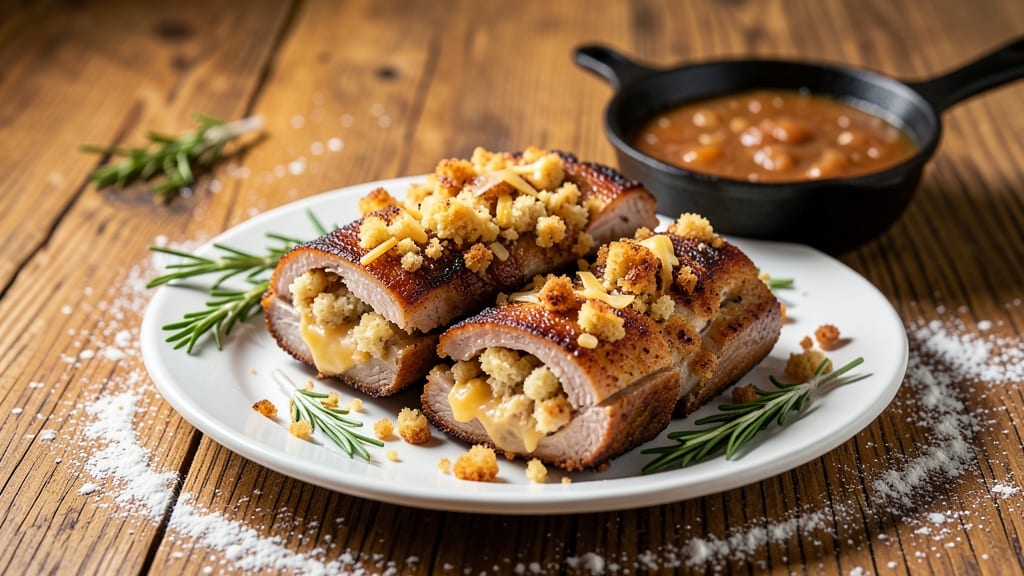
This cornbread stuffed pork chops recipe transforms a simple weeknight meal into a showstopper—juicy, tender pork cradling savory cornbread bites that stay perfectly moist. 🔥 I developed this technique while perfecting my approach to stuffed meats, where the filling enhances rather than competes with the meat's natural flavor. The secret lies in properly preheating the cornbread mixture before stuffing, ensuring it bakes just enough to hold its shape while absorbing the pork's juices.
The magic happens in the balance: a light, buttery cornbread that's just firm enough to stay intact while cooking, yet tender enough to melt slightly when sliced. I use a 50-50 ratio of cornmeal to flour for structure, with just enough cheese and herbs to complement the pork's savory profile.
The pork chops themselves are seasoned simply with salt, pepper, and a touch of smoked paprika—enough to enhance without overpowering the star: the cornbread stuffing that transforms an ordinary chop into an extraordinary centerpiece.
What you'll achieve is a restaurant-worthy dish where every bite delivers perfectly cooked pork with a warm, slightly crisp-edged cornbread center that's still moist and flavorful. The exterior stays golden and caramelized, locking in juices while creating that satisfying contrast between the tender meat and the slightly chewy stuffing.
This technique works equally well for pan-searing or baking, giving you flexibility for any cooking method you prefer.
Serve with a simple green salad and roasted vegetables to let the pork chops shine as the star of the meal. The leftovers reheat beautifully, making this an ideal recipe for meal prep or hosting dinner guests. Here's how to make it perfectly every time.
Ingredients for cornbread stuffed pork chops
Transform ordinary pork chops into a restaurant-worthy centerpiece with these carefully balanced ingredients.
| Ingredient | Amount | Notes |
|---|---|---|
| Center-Cut Pork Chops 🥩 | 4 pieces | 1-inch thick, bone-in preferred |
| Cornmeal 🌽 | ½ cup | Fine grind for smooth texture |
| All-Purpose Flour 🌾 | ½ cup | For structure and binding |
| Sharp Cheddar Cheese 🧀 | ½ cup | Shredded, sharp variety preferred |
| Butter 🧈 | ½ cup | Unsalted, melted for richness |
| Large Eggs 🥚 | 1 whole | Room temperature for even binding |
| Milk 🥛 | ¼ cup | Whole milk for creaminess |
| Baking Powder 🌶️ | 1 ½ tsp | Aluminum-free for best results |
| Salt 🧂 | 1 ½ tsp | Diamond Crystal preferred |
| Ground Black Pepper 🌶️ | ½ tsp | Freshly ground for aroma |
| Smoked Paprika 🌶️ | ½ tsp | For subtle smoky depth |
| Fresh Chives 🌿 | 2 tbsp | Finely chopped for freshness |
| Olive Oil 🫒 | 2 tbsp | Extra-virgin for high heat searing |
| Vegetable Oil 🫒 | ¼ cup | For even heat distribution |
The pork chops are the foundation, so center-cut, bone-in pieces ensure even cooking and maximum juiciness. Look for cuts with good marbling at Whole Foods or your local butcher—the fat renders beautifully during cooking. For the cornbread mixture, Bob's Red Mill cornmeal delivers that authentic texture, while the 50-50 cornmeal-to-flour ratio creates perfect structure. Sharp cheddar is non-negotiable here; White Cheddar adds a tangy contrast that pairs beautifully with the pork's savory notes. The butter should be unsalted and high-fat content—none of that low-fat nonsense. If you're prepping ahead, store the cornbread mixture in the fridge for up to 24 hours before stuffing.
No sharp cheddar? Pepper Jack or Monterey Jack work in a pinch, though the flavor profile shifts slightly. Running low on cornmeal? Stone-ground yellow cornmeal from the bulk section is a perfect swap—just sift it first to avoid lumps. The baking powder is critical; aluminum-free brands like Rumford prevent metallic aftertaste. For extra depth, toast the cornmeal in a dry skillet for 2 minutes before mixing—it develops a nutty aroma that elevates the stuffing. The pork chops can be prepped a day ahead; season them and refrigerate uncovered on a wire rack to dry-brine for 12-24 hours. This enhances texture and flavor dramatically.
The cornbread mixture stays fresh for 3 days in the fridge if stored in an airtight container, but it's best used immediately for optimal texture. Leftover stuffed chops reheat beautifully—350°F for 10-12 minutes covered with foil—though they're best enjoyed fresh. For meal prep, assemble the chops and refrigerate uncooked for up to 12 hours before cooking. The stuffing will hold its shape perfectly when cooked immediately after stuffing. If you're baking instead of pan-searing, increase the oven time by 5-7 minutes to ensure the center reaches temperature without drying out the exterior.
Why You'll Love This Recipe
- One-Pan Magic: I swear by this recipe when I’m too tired to wash dishes. The cornbread batter sticks to the pork chops like glue—no extra bowls, no extra mess—just crispy edges and golden crumbles all on one sheet pan.
- Cheesy Crunch Surprise: That sharp cheddar folded into the cornbread stuffing? It’s the secret weapon. The first bite gives you that salty, melty pull, then the tender pork chops take over—like a hug for your taste buds.
- Weeknight to Dinner Party: Honestly, this is my go-to for lazy Tuesdays and when my in-laws drop by. The same easy method works whether I’m feeding two or six—just double the chops and keep the prep identical. (Yes, even on a Tuesday night.)
- Budget-Friendly Feast: Pork chops stretch further when stuffed with cornbread, and the cheddar makes it feel fancy without breaking the bank. I’ve reheated leftovers for lunch the next day, and they’re just as good—if not better—with a little extra butter.
Step-by-step instructions for cornbread stuffed pork chops
Master this technique and you'll achieve perfectly tender pork chops with golden cornbread bites inside.
👨🍳 Step 1: Prepare the Cornbread Stuffing
In a medium bowl, whisk together the 0.5 cup cornmeal, 0.5 cup all-purpose flour, 1.5 teaspoons baking powder, 1.5 teaspoons salt, 0.5 teaspoon ground black pepper, and 0.5 teaspoon smoked paprika. This dry mixture forms the foundation of your cornbread stuffing—make sure it's evenly combined to prevent lumps in your final dish.
In a separate bowl, melt the 0.5 cup butter until completely liquid, then whisk in the 1 whole large egg and 0.25 cup milk until smooth. Gradually pour the wet ingredients into the dry mixture while stirring gently with a rubber spatula. Fold in the 0.5 cup shredded sharp cheddar cheese and 2 tablespoons finely chopped fresh chives until just combined. The batter should be thick but pourable—if it's too stiff, add 1 teaspoon milk at a time until it reaches the right consistency.
🔪 Step 2: Create Pockets in the Pork Chops
Lay each of the 4 center-cut pork chops between two sheets of plastic wrap. Using a sharp boning knife, carefully slice horizontally through the center of each chop to create two thin pockets without cutting all the way through. You're essentially creating a pocket that will hold the cornbread mixture—this technique ensures the stuffing stays contained while cooking.
Gently open each pocket and fill it with about 2 tablespoons of the cornbread mixture per chop. Press the edges together to seal the stuffing inside, but don't overhandle the meat—this could cause it to tear. The pockets should be snug but not bursting. If any mixture leaks out during this process, simply wipe it away with a paper towel.
🔥 Step 3: Sear the Pork Chops for Maximum Flavor
Heat 2 tablespoons olive oil in a large skillet over medium-high heat until shimmering. Working in batches if needed, carefully place the stuffed pork chops in the skillet, being mindful of the sealed pockets. Sear for 2-3 minutes per side until the exterior develops a deep golden-brown crust and releases easily from the pan.
This searing step is crucial—it creates that beautiful crust while locking in the juices. Don't rush this process; you'll know it's ready when the edges are deep golden brown and the stuffing pockets appear slightly puffed. Transfer the seared chops to a plate and tent loosely with foil to keep warm while you finish cooking.
🍳 Step 4: Bake to Golden Perfection
Preheat your oven to 400°F. Return the seared pork chops to the same skillet (no need to clean it—the browned bits add flavor) and add 0.25 cup vegetable oil. Carefully pour 0.25 cup milk around the chops to create steam, which helps cook the stuffing evenly. Transfer the skillet to the preheated oven and bake for 12-15 minutes.
Watch for the stuffing pockets to puff up and turn golden brown on top. The internal temperature of the pork should reach 145°F when measured with an instant-read thermometer. If the stuffing isn't fully set after 12 minutes, continue baking for another 2-3 minutes until golden and firm to the touch.
⏰ Step 5: Rest and Serve with Confidence
Remove the pork chops from the oven and transfer them to a cutting board. Let them rest for 5-7 minutes before serving. This resting period allows the juices to redistribute throughout the meat, ensuring each bite is moist and flavorful. During this time, the stuffing will continue to set slightly, becoming firm and golden.
Slice each pork chop horizontally through the center to reveal the perfectly cooked cornbread stuffing inside. Serve immediately with your favorite sides—each bite should deliver tender, juicy pork with a warm, savory cornbread center that's crispy on the edges and moist inside. The combination of smoky paprika, sharp cheddar, and fresh chives creates a flavor profile that's both comforting and sophisticated.
Pro Tips For Making Cornbread Stuffed Pork Chops
- Pound Chops Even: Center-cut pork chops are stubborn—thin them to ¾-inch with a meat mallet before stuffing. I learned this the hard way after serving dry, overcooked chops that fought back against the cornbread filling. A few firm whacks keeps them tender while letting the cheese melt through evenly.
- Prep Cheese Right: Grate the sharp cheddar yourself (yes, even if it’s pre-shredded) and mix it into the cornbread batter last. Pre-shredded cheese hides anti-caking agents that make the filling gummy. Freshly grated melts cleaner and clings better to the pork.
- Don’t Overstuff: Pack the cornbread mixture loosely into the chops—think "airy pillow," not "brick." Overstuffing spills cheese everywhere and forces the filling to steam instead of crisp. A spoonful in each chop, pressed gently, is all you need.
- Sear First, Bake Slow: Start the chops in a screaming-hot skillet with butter until they’re deeply browned, then finish in the oven. The sear locks in juices, while the oven ensures the cornbread cooks through without burning. Skip the skillet step, and you’ll end up with sad, gray chops.
Essential equipment for this dish
Cast Iron Skillet
You absolutely need a 10-12 inch cast iron skillet—preferably a Lodge Pre-Seasoned—for this recipe. Cast iron retains heat beautifully, ensuring even cooking and that perfect crust on your pork chops.
I've been using my 1950s Lodge skillet for years, and it's still going strong. The weight helps distribute heat evenly, which is crucial when searing stuffed pork chops. 🔥
Pro tip: Preheat your skillet on the stove for 5-7 minutes before adding oil. This ensures your pork chops develop that coveted crust. After cooking, clean it immediately with hot water and a stiff brush—never soak it, or you'll ruin the seasoning.
I keep mine ready to go in my kitchen all the time; it's my go-to for everything from cornbread to steaks.
Instant-Read Thermometer
A high-quality instant-read thermometer is non-negotiable for perfect doneness. I swear by the ThermoWorks Smoke—it's durable, accurate, and has a backlit display. You need to hit 145°F internal temperature for perfectly cooked pork chops.
The cornbread stuffing will continue baking during the resting period, so don't overcook based on visual cues alone.
Insert the probe into the thickest part of the pork chop, avoiding the stuffing pocket. The thermometer should read 145°F when the chops are done. This tool takes the guesswork out of cooking and ensures you never dry out your meat.
I keep one handy on my kitchen counter at all times—it's one of those tools that pays for itself after just a few uses.
Sharp Boning Knife
For creating those perfect pockets in your pork chops, you need a sharp boning knife—I recommend a 6-8 inch Wüsthof or Shun Premier. A dull knife will tear the meat and make stuffing impossible.
The blade should be flexible but sturdy, allowing you to make precise cuts without damaging the chop's structure.
Practice makes perfect here. Lay your chop between two sheets of plastic wrap (this prevents slipping) and make a horizontal cut about ½ inch deep—just enough to create a pocket without cutting all the way through.
I've seen home cooks struggle with this step, so take your time. A sharp knife makes all the difference, and it's worth investing in a quality one that will last for years.
Plastic Wrap
You'll need heavy-duty plastic wrap (like Glad Press'n Seal) for two key steps: creating the pockets in your pork chops and storing any leftovers. The wrap prevents the meat from slipping while you cut and stuff, and it's also great for quick storage if you're prepping ahead.
I keep a roll of this in my fridge at all times—it's one of those kitchen essentials I can't live without.
For the stuffing process, wrap each chop individually before cutting to maintain grip. After stuffing, you can store the assembled chops in plastic wrap in the fridge for up to 12 hours before cooking. Just be sure to let them come to room temperature before searing to ensure even cooking.
Plastic wrap is also handy for covering your skillet while baking to trap steam and help the stuffing cook evenly.
Mixing Bowls
Use two medium mixing bowls—one for your dry ingredients and another for the wet. I prefer stainless steel bowls (like OXO Good Grips) because they're durable and easy to clean.
The dry ingredients need to be thoroughly combined to create a smooth cornbread mixture, while the wet ingredients should be whisked until completely smooth before mixing.
For the dry ingredients, I like to use a whisk to break up any lumps in the cornmeal and flour. The wet ingredients should be at room temperature—cold butter can make your mixture too thick.
If you're in a hurry, you can microwave the butter for 10-15 seconds to soften it quickly. Just don't overheat it, or you'll end up with a greasy mess instead of a smooth batter.
Rubber Spatula
A heat-resistant rubber spatula (like OXO Good Grips) is essential for gently folding the wet and dry ingredients together. The flexible silicone head helps scrape every last bit of mixture from the bowl, ensuring no dry spots remain.
This is especially important for the cornbread stuffing—you want an even, lump-free mixture that cooks uniformly inside your pork chops.
When folding in the cheese and chives, use gentle motions to avoid overmixing. Overworking the batter can develop gluten, making the stuffing tough instead of tender. I like to use a folding technique—lift the spatula, turn the bowl, and repeat—until everything is just combined.
This tool is also great for scraping up any leftover batter from the bowl, so you don't waste a single bite of that delicious cornbread mixture.
Nutrition facts
Frequently asked questions
Can I use pre-made cornbread for stuffing?
While you can try it, I don't recommend pre-made cornbread for stuffing. Homemade cornbread mixture has the perfect texture—thick enough to hold its shape but tender enough to melt slightly when cooked. Pre-made versions often contain too much moisture or preservatives that can make the stuffing soggy. If you're short on time, make a quick batch using the recipe's dry ingredients mixed with just enough milk to create a thick paste—it'll work in a pinch!
How do I prevent the stuffing from leaking out? Proper technique is key!
What's the best way to reheat leftovers?
Leftover stuffed pork chops reheat beautifully! Place them in a skillet over medium-low heat with 1 tablespoon butter or oil, and cover with a lid. Heat for 5-7 minutes, turning once, until warmed through. For oven reheating, bake at 350°F for 10-12 minutes covered with foil. The stuffing will firm up slightly but remain moist. Avoid microwaving—it can make the stuffing rubbery and the pork dry.
Can I make this with boneless pork chops?
Technically yes, but bone-in chops are ideal for this technique. The bone helps stabilize the stuffing pocket and creates a natural barrier. If using boneless, create pockets by making a horizontal cut about ½ inch deep and gently opening the meat to stuff. You may need to secure the stuffing with toothpicks or kitchen twine. For best results, choose chops that are at least 1 inch thick to accommodate the stuffing without tearing.
What sides pair best with this dish?
This rich, flavorful dish pairs perfectly with lighter sides that let the pork chops shine. Try a crisp green salad with lemon vinaigrette, roasted asparagus with garlic, or creamy mashed sweet potatoes. For a Southern-inspired meal, serve with collard greens or buttery cornbread (on the side!). The smoky, cheesy flavors in the stuffing work especially well with tangy elements like pickled vegetables or a simple tomato salad.