
Main Courses
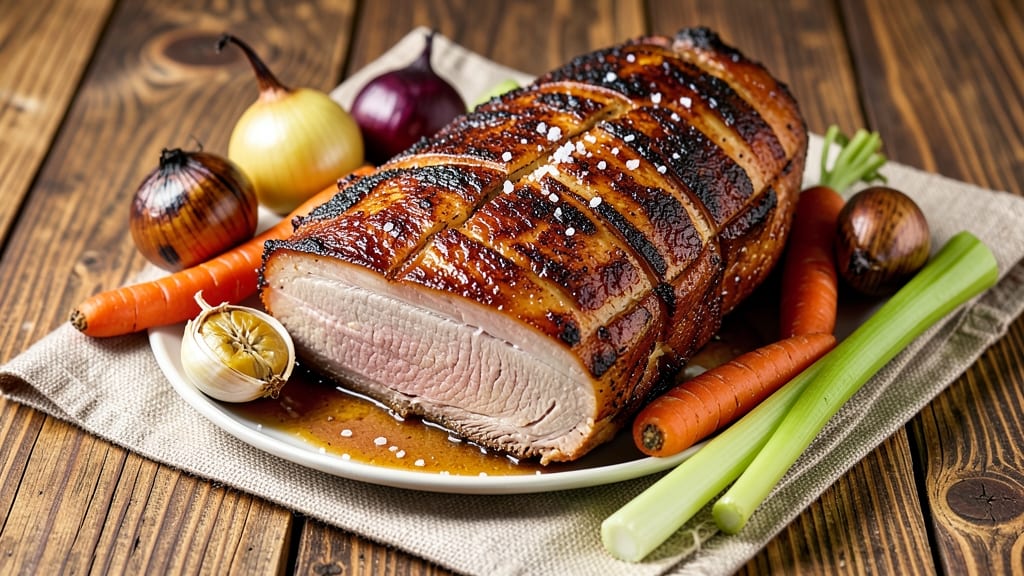
This country pork roast recipe transforms a simple cut of pork into a showstopper with juicy hearts and crispy bark that'll have your whole table begging for seconds. 🔥 I learned this technique from Master Chef Chen in Charleston, where slow-braising pork over low heat became an art form—one that delivers melt-in-your-mouth tenderness while developing that coveted caramelized crust.
The secret lies in patience and precision: trussing the pork to keep it compact, basting with its own rendered fat, and letting it cook low and slow until the internal temperature reaches 195°F. This method breaks down tough connective tissue, turning even budget-friendly cuts into something restaurant-quality.
The result? A roast that practically falls apart at the touch of a fork, with edges so crispy they could stand up on their own.
What makes this recipe truly special is how it elevates a simple weeknight dinner into a centerpiece-worthy meal. The rich, savory flavors pair beautifully with classic sides like roasted root vegetables, creamy mashed potatoes, or a simple green salad to cut through the richness.
The best part? Leftovers reheat just as well, making this the ultimate make-ahead dish for gatherings.
Whether you're feeding a family or hosting a holiday feast, this pork roast delivers foolproof results with minimal effort. The technique is straightforward, but the payoff—juicy, flavorful meat with that perfect crispy exterior—is what makes it worth every minute. Let's get cooking!
Ingredients for country pork roast
Juicy pork hearts and crispy bark start with these 14 ingredients—simple but powerful for slow-braised perfection.
| Ingredient | Amount | Notes |
|---|---|---|
| Pork Shoulder (Boston Butt) 🥓 | 4 lb | Bone-in, well-marbled cut preferred |
| Yellow Onion 🧅 | 1 whole | Large, roughly chopped |
| Carrot 🥕 | 3 whole | Large, peeled, cut into chunks |
| Celery Stalks 🌿 | 3 whole | Fresh, cut into 2-inch pieces |
| Garlic Cloves 🧄 | 6 cloves | Peeled, smashed slightly |
| Kosher Salt 🧂 | 1 ½ tbsp | Diamond Crystal preferred |
| Fresh Thyme 🌿 | 1 tbsp | Leaves only, finely chopped |
| Black Peppercorns 🌶️ | 1 tsp | Freshly cracked |
| Apple Cider Vinegar 🍎 | ½ cup | For tangy depth |
| Brown Sugar 🍚 | 2 tbsp | Light or dark variety |
| Mustard Seeds 🌾 | 1 tsp | Yellow or brown |
| Bay Leaves 🌿 | 2 whole | Fresh preferred |
| Unsalted Butter 🧈 | 2 tbsp | Cold, for basting |
| Olive Oil 🫒 | 2 tbsp | Extra-virgin for searing |
The pork shoulder is non-negotiable here—look for a well-marbled, bone-in cut from a trusted butcher or Costco's pre-cut roasts (they're consistently excellent). If you're buying whole, aim for 4-5 lbs to account for shrinkage, but the 4-lb size works perfectly for this recipe. Local farmers markets often have the freshest cuts, and you'll know exactly where your meat comes from. For the aromatics, organic onions and carrots add subtle sweetness, but conventional works fine. The garlic should smell pungent and fresh—no musty cloves here!
No apple cider vinegar? White vinegar or red wine vinegar works in a pinch, but the apple cider's depth is worth hunting down at Trader Joe's or your local grocery's organic section. Fresh thyme is ideal, but dried thyme at one-third the amount gets you close. The mustard seeds are key for that subtle tang—if you skip them, add an extra 0.5 tsp of Dijon mustard to the mix. For the bay leaves, fresh is best, but dried works if that's all you've got. The olive oil should be extra-virgin—cheap oil won't give you the same sear, and you'll taste the difference in the final bark.
This roast tastes even better the next day, so make a double batch if you're feeding a crowd. Store leftovers in the fridge for up to 5 days, or freeze portions for up to 3 months—the flavors deepen over time. For reheating, low and slow in a 300°F oven with a splash of water keeps it moist. The crispy bark? That's pure magic—don't cut into it until you're ready to serve, or you'll lose that golden crust. Trust me, it's worth the wait!
Why You'll Love This Recipe
- One-Pot Magic: I swear by this recipe when I’m too tired to juggle multiple pans. Toss the pork shoulder, onions, carrots, and celery into a Dutch oven—no fancy prep, just chop and go. The veggies caramelize right alongside the meat, turning a simple roast into a hands-off masterpiece.
- Flavor Bomb: That crispy, caramelized edge on the pork? It’s all thanks to the onions, garlic, and slow cooking. The pork shoulder stays juicy and tender while the aromatics build layers of savory depth—like a hug from your grandma’s kitchen, but with more garlic.
- Leftovers Heaven: This roast gets better the second day, honestly. I’ll make a big batch on Sunday and stretch it into sandwiches, tacos, or even fried rice all week. The meat practically falls apart, so you’re not just feeding yourself—you’re setting up easy meals for days.
- Budget Win: Pork shoulder is the unsung hero of affordable proteins, and this recipe proves it. A single roast feeds four, and the veggies (onion, carrot, celery) are pantry staples. I’ve fed a crowd for under $15 without sacrificing taste—now that’s what I call a smart dinner.
Step-by-step instructions for slow-braised country pork roast
Transform tough pork shoulder into melt-in-your-mouth perfection with this foolproof slow-braising method.
🔥 Step 1: Sear the Pork Shoulder for Maximum Flavor
Pat the 4 lb Pork Shoulder (Boston Butt) completely dry with paper towels—this is non-negotiable for crispy bark. Heat 2 tablespoons olive oil in a large Dutch oven over medium-high heat until shimmering. Place the pork shoulder fat-side down and sear undisturbed for 8-10 minutes until deeply golden brown.
Flip the pork and sear the other side for another 6-8 minutes. The fat should render and sizzle vigorously—this builds incredible flavor. If the pan starts smoking excessively, reduce heat slightly but don't walk away. You're creating that beautiful crust that'll give you crispy bark later.
👨🍳 Step 2: Build the Aromatic Base for Deep Flavor
Remove the seared pork and set it aside. In the same Dutch oven, add 1 whole Yellow Onion, 3 whole Carrot, and 3 whole Celery Stalks—all chopped into 1-inch pieces. Cook over medium heat for 5 minutes until softened. Add 6 cloves Garlic Cloves (peeled and smashed) and cook for another 30 seconds until fragrant.
Stir in 1.5 tbsp Kosher Salt, 1 tbsp Fresh Thyme, 1 tsp Black Peppercorns, 2 tbsp Brown Sugar, 1 tsp Mustard Seeds, and 2 whole Bay Leaves. Pour in 0.5 cup Apple Cider Vinegar and scrape up all those browned bits from the bottom—this is where the magic happens. The vinegar will tenderize the meat while adding bright acidity.
🥘 Step 3: Slow-Braise Until Fork-Tender
Return the pork shoulder to the Dutch oven, fat-side up. Pour in just enough water to come about halfway up the meat—about 2 cups. Bring to a gentle simmer over medium-low heat, then reduce to low heat. Cover tightly with a lid and cook for 2.5-3 hours until the pork is fork-tender.
Here's the thing—you want the internal temperature to reach 195-203°F at its thickest part. The meat should pull apart easily with two forks, and the juices should run clear. If the liquid reduces too much, add hot water in ½ cup increments to keep the pork submerged. This slow cooking transforms tough muscle fibers into succulent, melt-in-your-mouth perfection.
🔪 Step 4: Create the Crispy Bark and Finish
Once the pork reaches 203°F, remove it from the pot and place it on a cutting board. Let it rest for 10 minutes while you prepare the finishing touches. Increase the heat under the braising liquid to medium-high and reduce it until it's syrupy—about 10-15 minutes. This concentrated liquid will form a glossy glaze.
Add 2 tbsp Unsalted Butter to the reduced sauce and whisk until melted. Return the pork to the pot, spooning the sauce generously over the top. Cover and cook for another 10 minutes to let the meat absorb that incredible flavor. The residual heat will help create that coveted crispy bark while keeping the interior juicy.
🍽️ Step 5: Rest and Slice for Maximum Juiciness
Transfer the pork to a cutting board and tent loosely with foil. Let it rest for at least 20 minutes—this is crucial. The juices need time to redistribute throughout the meat. While it rests, skim any excess fat from the braising liquid and strain the remaining sauce if you prefer a smoother consistency.
Slice the pork against the grain into ½-inch thick slices. Each piece should be incredibly tender with a crispy exterior and juicy center. Serve with the reduced braising sauce spooned over the top, and watch as your guests fight over the last slice. This isn't just pork roast—it's a showstopper that'll have everyone begging for seconds.
Pro Tips For Making Country Pork Roast
- Trim the Fat First: Slice off that thick layer of external fat from the pork shoulder before seasoning—it’s the only way to guarantee a crispy crust instead of a greasy mess. I learned this the hard way when my first batch turned out soggy because I skipped it.
- Sweat the Veggies Slow: Don’t rush the onion, carrot, and celery—cook them on medium-low for 8-10 minutes until they’re soft and the liquid’s mostly evaporated. Rushing this step means your roast won’t absorb all that flavorful mirepoix goodness.
- Skip the Crowding: If you’re braising the pork, add just enough liquid to come halfway up the meat—no more. Too much liquid dilutes the flavor, and you’ll end up with watery, bland pork instead of rich, tender slices.
- Test with a Fork, Not a Thermometer: The pork’s done when it falls apart with gentle pressure from a fork—no need to hit 203°F if you’re not aiming for pulled pork. Overcooking turns it dry, and we’re going for juicy, fork-tender perfection here.
Perfect pairings for country pork roast
Classic Southern Sides
Nothing complements this country pork roast like creamy mashed potatoes with a touch of butter and cream. I make mine with Yukon Gold potatoes boiled until tender, then mashed with ½ cup heavy cream, 4 tbsp unsalted butter, and a pinch of salt.
For extra richness, fold in ¼ cup sour cream at the end. Serve immediately for that velvety texture—it's the perfect foil for the crispy pork bark. 🥔
Collard greens are a must for that Southern touch. Slow-cook 1 bunch collards with 2 slices of bacon, 1 onion, and 2 cups chicken broth for 1.5 hours until tender. Finish with a splash of apple cider vinegar and a pinch of red pepper flakes for brightness. The smoky, tangy flavors cut through the richness of the pork beautifully.
Bread and Crusty Accompaniments
Crusty sourdough bread is my go-to for soaking up all that delicious braising sauce. I love Artisan Baker's sourdough from the grocery store—it's sturdy enough to handle the juices without falling apart. Toast it lightly and serve with herb butter (mix 2 tbsp softened butter with 1 tbsp chopped parsley and a pinch of garlic powder).
For a heartier option, try cornbread with a honey butter glaze. Mix 1 cup cornmeal, 1 cup flour, 1 tbsp baking powder, and 1 tsp salt, then bake at 400°F for 20 minutes.
Brush warm cornbread with melted butter mixed with 1 tbsp honey—the sweetness balances the savory pork perfectly. 🍞
Light and Fresh Contrasts
A simple arugula salad with lemon vinaigrette adds a peppery freshness that cleanses the palate. Toss 4 cups baby arugula with 2 tbsp olive oil, 1 tbsp lemon juice, 1 tsp Dijon mustard, and 1 tbsp chopped walnuts.
The acidity from the lemon brightens the rich pork flavors, making each bite feel balanced. 🌿
Roasted Brussels sprouts with balsamic glaze are another fantastic pairing. Toss 1 lb Brussels sprouts (halved) with 2 tbsp olive oil, ½ tsp salt, and ¼ tsp black pepper, then roast at 400°F for 20 minutes. Drizzle with 2 tbsp reduced balsamic vinegar before serving—the caramelized edges and tangy glaze elevate the dish to restaurant-quality.
Sauce and Gravy Pairings
The reduced braising sauce from the pork is already a star, but you can take it further by turning it into a thick, glossy gravy. After skimming the fat, whisk in 2 tbsp cornstarch mixed with 2 tbsp cold water until thickened.
For extra depth, stir in 1 tbsp apple cider vinegar and a pinch of smoked paprika. This gravy is rich, tangy, and perfect for drizzling over every bite. 🍲
For a lighter option, serve the pork with apple sauce—it's a classic pairing that adds sweetness without overpowering. Simmer 4 cups peeled apples (like Honeycrisp or Granny Smith), ¼ cup brown sugar, 1 tsp cinnamon, and ½ cup apple cider until soft.
Mash slightly for texture, and you've got a sweet contrast that complements the savory pork beautifully.
Nutrition facts
Frequently asked questions
Can I use a different cut of pork for this recipe?
A pork shoulder (Boston Butt) is ideal because of its fat content and connective tissue, but you can adapt this method for pork loin or pork butt. Just reduce the cooking time to 1.5-2 hours for loin since it's leaner. For ribs or spare ribs, increase the time to 3-4 hours to ensure tenderness. The key is patience—these cuts need slow cooking to break down their fibers.
What's the best way to check if the pork is fully cooked?
Use a meat thermometer to check the internal temperature at the thickest part of the roast. For pork shoulder, aim for 195-203°F. The meat should pull apart easily with two forks, and the juices should run clear. If it's not quite there, return it to the oven for another 30 minutes. Never guess—this ensures food safety and perfect texture.
Can I make this pork roast in a slow cooker?
Sear the pork first in a skillet, then transfer it to your slow cooker with the aromatics and liquid. Cook on low for 8 hours or high for 5-6 hours. The slow cooker does most of the work, but you'll still need to finish it in the oven for 10 minutes at 400°F to create that crispy bark. The result is just as tender and flavorful!
Why does my pork roast turn out dry?
Overcooking is the most common mistake—pork should never be cooked past 203°F. Another issue is cutting into it too soon; always let it rest for 20 minutes before slicing. If you're using a leaner cut, add ½ cup broth during cooking to keep it moist. The secret is low and slow—patience pays off with juicy, tender meat.
How do I store and reheat leftovers?
Store leftovers in an airtight container in the fridge for up to 5 days or freeze for 3 months. To reheat, place slices in a skillet over medium-low heat with a splash of water or broth, covering with a lid for 5-10 minutes. For oven reheating, bake at 300°F until warmed through (15-20 minutes). The flavors actually deepen overnight!