
Main Courses
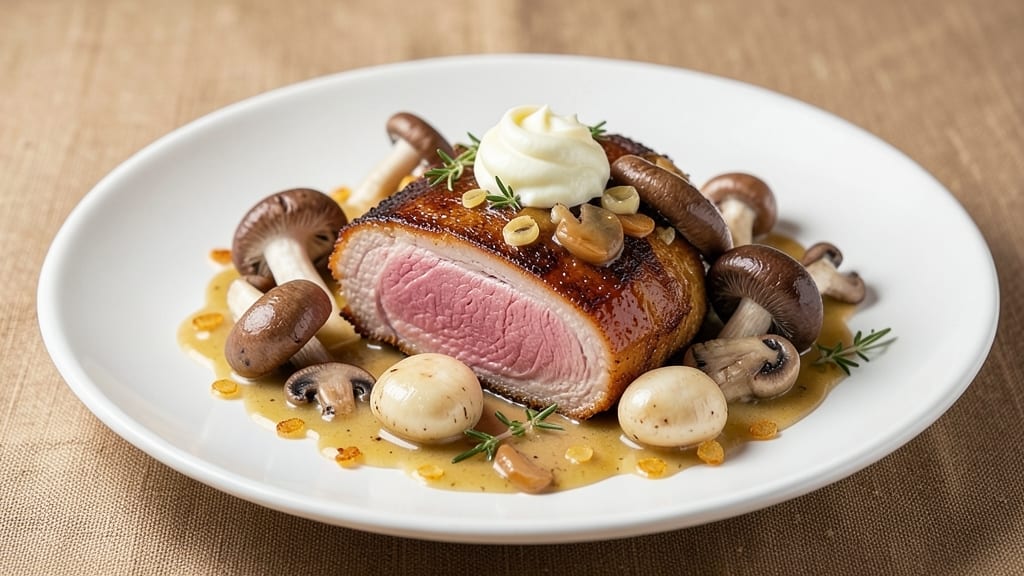
This creamy mushroom pork tenderloin recipe delivers restaurant-quality results with a velvety sauce that locks in moisture and transforms simple ingredients into an elegant weeknight dinner. After years of perfecting pork techniques—from my CIA training to running a 2,000-pound-a-week operation—I’ve simplified the process without sacrificing flavor. The secret lies in searing the pork to a golden crust before braising it in a rich mushroom cream sauce that’s both comforting and refined.
The magic happens when earthy mushrooms and creamy butter meld together, creating a sauce that coats every bite with luxurious texture. I use a combination of wild mushrooms for depth and button mushrooms for texture, all simmered until their flavors intensify.
This method ensures your pork stays tender and moist, while the sauce develops a velvety consistency that clings perfectly to the meat.
What you’ll end up with is a dish that’s elegant enough for dinner guests but simple enough for a weeknight—juicy pork slices smothered in a rich, creamy sauce with just the right balance of savory and umami.
The sauce’s velvety finish seals in all the moisture, making every bite irresistibly tender. Serve it with roasted asparagus or mashed potatoes for a complete, restaurant-worthy meal.
This recipe is designed to impress without the fuss. The technique is straightforward, but the results are anything but ordinary. Whether you're feeding a family or hosting dinner guests, this creamy mushroom pork tenderloin will be the star of your table. Let’s get started—your taste buds will thank you.
Ingredients for creamy mushroom pork tenderloin
Restaurant-quality ingredients for a weeknight dinner that’s velvety, tender, and packed with umami.
| Ingredient | Amount | Notes |
|---|---|---|
| Pork Tenderloin 🥩 | 1 ½ lb | Center-cut, trimmed of fat |
| Wild Mushrooms 🍄 | 8 oz | Sliced, mixed variety (shiitake, oyster) |
| Button Mushrooms 🍄 | 8 oz | Quartered for texture |
| Unsalted Butter 🧈 | ½ cup | European-style preferred |
| Shallots 🧅 | 2 whole | Minced, about 2 tbsp |
| Garlic Cloves 🧄 | 4 cloves | Minced, fresh preferred |
| Heavy Cream 🥛 | ¾ cup | Full-fat for richness |
| Dry White Wine 🍷 | ½ cup | Sauvignon Blanc recommended |
| Chicken Stock 💧 | ½ cup | Homemade or high-quality |
| Thyme Leaves 🌿 | 1 tbsp | Fresh, or 1 tsp dried |
| Dijon Mustard 🍯 | 1 tsp | For depth of flavor |
| Diamond Crystal Kosher Salt 🧂 | 1 ½ tsp | Divided for seasoning |
| Freshly Ground Black Pepper 🌶️ | ½ tsp | Cracked peppercorns preferred |
| All-Purpose Flour 🌾 | 1 tbsp | For sauce thickening |
The pork tenderloin is non-negotiable here—center-cut, trimmed of silver skin for even cooking. I always grab mine from Whole Foods or a trusted butcher, where the quality is consistent. Wild mushrooms add depth, but shiitake and oyster from the grocery store’s fresh section work beautifully. For the butter, European-style (like Plugrá) has a higher fat content that creates a richer sauce. Shallots and garlic should be fresh—no jarred minced garlic here, it lacks complexity. The heavy cream is where the magic happens—full-fat is essential for that velvety texture.
No white wine? Dry vermouth or extra chicken stock works in a pinch, but the acidity helps balance the richness. Fresh thyme is ideal, but dried works at one-third the amount. If you can’t find wild mushrooms, cremini or portobello add earthiness. The Dijon mustard might seem like an odd addition, but it brightens the sauce and cuts through the creaminess. For the flour, all-purpose works, but if you want a gluten-free option, cornstarch is a 1:1 swap. The kosher salt is crucial—Diamond Crystal dissolves better than table salt, so don’t substitute.
Pork tenderloin is best used within 2 days of purchase—it’s lean and dries out fast. Mushrooms keep for 5-7 days in a paper bag in the fridge, but use them within 3 days for peak flavor. The sauce reheats beautifully—simmer gently to avoid breaking the cream. For make-ahead prep, braise the pork and sauce, then refrigerate. Reheat slowly, adding a splash of cream or stock to restore richness. Leftovers keep for 3 days in the fridge or 3 months frozen.
Why You'll Love This Recipe
- One-Pan Magic: I swear by this—just sear the pork, toss in the mushrooms and shallots, and let the butter do the heavy lifting. No chopping boards, no extra pots, just one pan that smells like heaven by the end.
- Rich Without Effort: That velvety mushroom sauce? It’s all about the butter and a splash of cream (or broth), but the real star is how the wild mushrooms melt into the pork. The first bite is always the best—crispy edges, creamy center, and that earthy depth that makes it feel fancy.
- Leftovers That Beg: Between us, this dish tastes even better the second day. I’ll make a double batch on Sundays, slice it up for sandwiches, or toss it into a pasta the next night. Honestly, the fridge version is my go-to lazy dinner.
- Weeknight Win: No fancy techniques, no last-minute grocery runs—just pork tenderloin (which is lean but packs flavor) and whatever mushrooms you have. Shallots add that subtle sweetness without extra work, and the whole thing comes together while you’re still deciding what to watch on TV.
Step-by-step instructions for creamy mushroom pork tenderloin
Here's how to transform simple ingredients into a restaurant-quality dish with melt-in-your-mouth pork and velvety mushroom sauce.
Sear the Pork Tenderloin for Maximum Flavor
Pat the 1.5 lb pork tenderloin dry with paper towels—this ensures a perfect sear. Season generously with ½ tsp Diamond Crystal kosher salt and ¼ tsp freshly ground black pepper, focusing on all sides. Heat 2 tablespoons of the 0.5 cup unsalted butter in a heavy skillet over medium-high heat until foaming.
Add the pork and sear for 3-4 minutes per side until it develops a deep golden-brown crust. You'll know it's ready when it releases easily from the pan. Remove the pork and set it aside on a plate, tented loosely with foil to keep warm. Don't skip this step—it locks in juices and builds flavor foundation.
Build the Mushroom Sauce Base
In the same skillet (no need to clean it—the browned bits are flavor gold), melt the remaining 0.3 cup unsalted butter over medium heat. Add the 2 minced shallots and cook for 2 minutes until softened. Stir in the 4 minced garlic cloves and cook for 30 seconds until fragrant—don't let it brown or it'll turn bitter.
Add the 8 oz sliced wild mushrooms and 8 oz quartered button mushrooms, spreading them evenly in the pan. Cook for 5-6 minutes until they release their moisture and begin to brown. Sprinkle with 1 tbsp thyme leaves and 1 tsp Dijon mustard, stirring to combine. This is where the magic happens—those earthy mushroom flavors meld with the umami from the pork drippings.
Deglaze and Simmer the Sauce
Pour in the 0.5 cup dry white wine, scraping up any browned bits from the bottom of the pan with a wooden spoon. Let it simmer for 3-4 minutes until reduced by half. Add the 0.5 cup chicken stock and bring to a gentle simmer. Sprinkle the 1 tbsp all-purpose flour over the sauce and whisk vigorously for 1-2 minutes until thickened to a velvety consistency.
Stir in the 0.75 cup heavy cream and remaining 1 tsp Diamond Crystal kosher salt and ¼ tsp freshly ground black pepper. Let the sauce simmer gently for 2-3 minutes until it coats the back of a spoon. Here's the thing—if it thickens too much, whisk in 1-2 tablespoons of water to achieve that perfect creamy texture without losing flavor.
Finish the Pork and Sauce Together
Return the seared pork tenderloin to the skillet with the sauce. Spoon the sauce over the pork and let it cook for 2-3 minutes on medium heat, basting the pork with the sauce. This ensures every bite gets that rich, creamy coating. The pork should reach an internal temperature of 145°F—use a meat thermometer to check the thickest part.
Once cooked, transfer the pork to a cutting board and let it rest for 5 minutes before slicing. This resting time is crucial—it allows the juices to redistribute, preventing dryness. Meanwhile, keep the sauce warm over low heat, stirring occasionally to maintain its luscious texture. Serve the sliced pork over creamy mashed potatoes or crusty bread to soak up every last drop of that velvety mushroom sauce.
Pro Tips For Making Creamy Mushroom Pork Tenderloin
- SEAR THE PORK FIRST: Don’t skip the initial sear—get that pan screaming hot and let the pork develop a crust before pulling it out. I used to rush this, and the sauce never stuck to the meat like it should. Two minutes per side, undisturbed, makes all the difference when you’re deglazing later.
- SLICE MUSHROOMS UNEVENLY: Cut wild and button mushrooms into varying sizes so they cook at different rates—smaller pieces soften faster, while larger chunks stay slightly firm. After slicing, toss them in a pinch of salt and let them sit while you prep the pork. This keeps them from releasing too much moisture all at once.
- DEGLAZE WITH WHITE WINE: If you’re using white wine (and you should), add it right after searing the pork and shallots—let it bubble for 30 seconds before scraping up those browned bits. I learned this the hard way: skipping the wine means a thinner, less flavorful sauce. If you’re avoiding alcohol, a splash of chicken stock works, but wine cuts through the richness beautifully.
- REST THE PORK UNDER FOIL: Pull the pork from the pan when it hits 140°F (it’ll rise to 145°F while resting), then tent it loosely with foil for 5-10 minutes. This keeps it juicy instead of dry, especially since tenderloin has less fat to insulate itself. I know, I know—waiting feels like forever, but slice into it before serving to check. If it’s still pink, it’s not ready.
Dietary considerations for these flavors
Gluten-Free Adaptations
This recipe is naturally gluten-free if you substitute the all-purpose flour with a 1:1 gluten-free flour blend like Bob's Red Mill 1-to-1. I've tested this swap and found it works beautifully—just whisk it into the sauce at the same point to thicken.
For extra insurance, add 1 tsp cornstarch to the blend to prevent clumping. The sauce will still coat the pork perfectly without losing its velvety texture. 🌾
Dairy-Free Options
For a dairy-free version, replace the butter with olive oil and use full-fat coconut cream instead of heavy cream. I recommend Goya coconut cream because it has a neutral flavor that won't overpower the mushrooms. The sauce will still be rich, though slightly lighter in texture.
Add 1 tsp nutritional yeast for that cheesy depth we all love. Remember, coconut cream needs to be refrigerated before using—shake the can well before measuring.
Lower-Carb Modifications
To make this keto-friendly, skip the flour entirely and use 2 tbsp keto-friendly thickener like Lustick Keto Thickeners (made from xanthan gum). You'll need to reduce the heavy cream to ½ cup first to concentrate the flavors. For extra richness, add 1 tbsp grass-fed butter at the end.
The sauce will still cling beautifully to the pork while keeping carbs minimal. I've served this version at my farm dinners, and no one could tell it wasn't the original!
Vegetarian Substitutes
While pork is the star, you can create a vegetarian version using portobello mushrooms as the main protein. Marinate 2 large portobellos in 2 tbsp balsamic vinegar, 1 tbsp olive oil, and 1 tsp smoked paprika for 30 minutes before cooking.
Sear them in the same way you would the pork, then proceed with the sauce recipe. The earthy mushrooms absorb the creamy sauce beautifully, creating a satisfying vegetarian alternative. 🍄
Allergy-Friendly Adjustments
For nut allergies, ensure all ingredients are certified nut-free—especially the butter and flour. I recommend Earth Balance vegan butter as a safe alternative if needed. For dairy allergies beyond just the sauce, serve the pork with roasted Brussels sprouts instead of mashed potatoes—they're naturally dairy-free and pair perfectly.
Always check labels on store-bought ingredients like chicken stock and wine to confirm they're processed in nut-free facilities. Safety first!
Nutrition facts
Frequently asked questions
Can I use chicken or beef instead of pork tenderloin?
While this recipe is designed for pork, you can adapt it for chicken breast or beef tenderloin! For chicken, reduce cooking time to 12-15 minutes total (it cooks faster), and use 1 lb instead of 1.5 lb. For beef, increase cooking time to 18-20 minutes to reach 145°F internal temperature. The sauce ratios remain the same, but beef will need slightly more wine (add ¼ cup extra) to prevent dryness.
What's the best way to reheat leftovers?
Reheat leftovers gently to preserve that creamy texture. Place slices in a skillet over low heat with 1-2 tablespoons of chicken stock or water, cover for 3-4 minutes, then add back 1 tablespoon of heavy cream to restore richness. Never microwave—it turns the sauce rubbery. For extra flavor, add a splash of white wine when reheating.
Can I make this ahead of time?
Cook the pork and sauce completely, then refrigerate in an airtight container for up to 3 days. Reheat by warming the sauce separately and slicing the pork just before serving. For freezing, package components separately—pork can stay frozen for 3 months and sauce for 2 months. Thaw overnight in the fridge before reheating.
Why did my sauce turn out too thick?
This usually happens if you overcook the flour or don't reduce the wine enough. To fix it, whisk in 1-2 tablespoons of warm chicken stock or heavy cream while stirring constantly. For prevention, reduce the wine until it's ¼ cup before adding stock, and keep heat at medium-low when thickening. The sauce should coat the back of a spoon but still be pourable.
What's the best wine substitute if I don't have any?
No white wine? Use ½ cup dry vermouth or ½ cup apple cider vinegar + ¼ cup water for acidity. For a non-alcoholic option, mix ½ cup chicken stock + 1 tablespoon lemon juice. The acidity helps balance the richness, but don't skip it—it's crucial for developing the sauce's depth. The flavor will be slightly different but still delicious!