
Main Courses
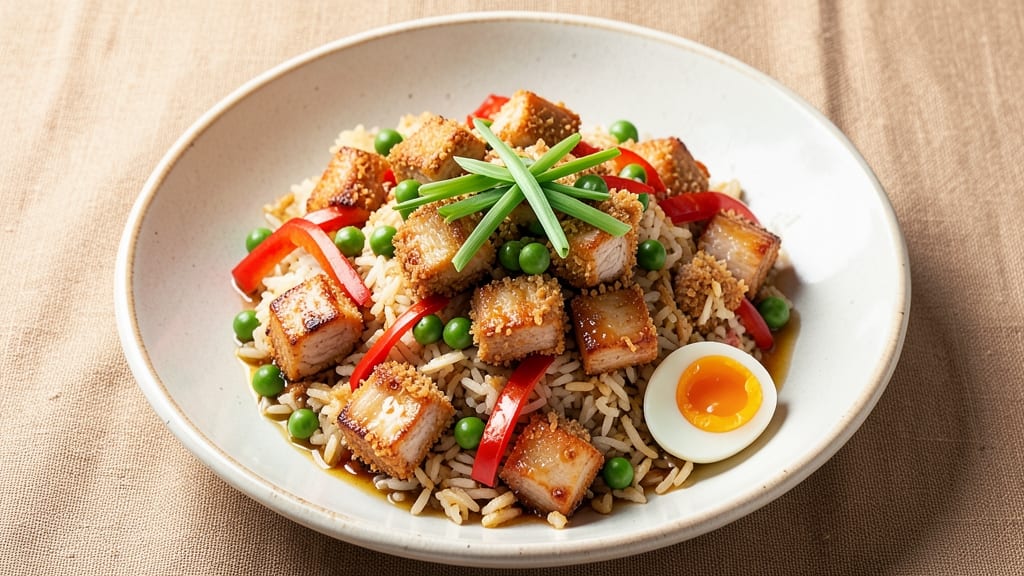
This crispy pork fried rice recipe delivers the perfect balance of crunchy pork bites and perfectly stir-fried rice with bold flavors. The secret lies in achieving that signature crispy texture through a simple breading technique before tossing everything together in the wok.
I've perfected this version to ensure every bite has that satisfying contrast between tender pork and crispy edges.
The recipe starts with thinly sliced pork that's coated in a light cornstarch and flour mixture before being pan-fried to golden perfection. This creates those addictive crispy bits that disappear in seconds.
Meanwhile, the rice gets stir-fried with garlic, ginger, and a splash of soy sauce to build a flavorful base before everything comes together in the final toss.
What you'll end up with is a plate of restaurant-quality fried rice where each forkful delivers crispy pork, fluffy rice, and a symphony of savory flavors. The dish comes together in about 30 minutes, making it perfect for weeknight dinners or meal prep.
The crispy pork stays crunchy even after being mixed with the rice, proving that home cooking can rival your favorite takeout.
For extra flavor, finish with a drizzle of sesame oil and a sprinkle of green onions. This recipe serves 4 and can be easily doubled for larger gatherings. Let's get cooking!
Ingredients for crispy pork fried rice
Thin pork slices and cold rice create the perfect crispy-savory foundation for this wok-tossed dish.
| Ingredient | Amount | Notes |
|---|---|---|
| Pork Shoulder 🥩 | 1 ½ lb | Thinly sliced, boneless |
| Day-Old Cooked White Rice 🍚 | 4 cups | Cold, preferably jasmine or long-grain |
| All-Purpose Flour 🌾 | ½ cup | For breading |
| Cornstarch 🌾 | ¼ cup | For extra crispiness |
| Large Eggs 🥚 | 2 whole | Beaten for egg wash |
| Vegetable Oil 🫒 | ½ cup | For frying pork |
| Garlic Cloves 🧄 | 6 cloves | Minced for stir-fry |
| Fresh Ginger 🌿 | 2 tsp | Grated, peeled |
| Low-Sodium Soy Sauce 🍶 | ½ cup | For seasoning |
| Sesame Oil 🫒 | 1 tbsp | For finishing |
| Green Onions 🧅 | ¼ cup | Sliced, for garnish |
| Salt 🧂 | 1 tsp | Kosher or sea salt |
| Black Pepper 🌶️ | ½ tsp | Freshly ground |
| White Pepper 🌶️ | ¼ tsp | For subtle heat |
The pork shoulder is key—look for well-marbled cuts at Whole Foods or your butcher's counter. Thinly slice it against the grain for tenderness, then freeze for 20 minutes to firm up before breading. Trader Joe's has pre-sliced pork shoulder that saves time, but slicing yourself ensures even cooking. The rice needs to be day-old and cold, so cook a batch ahead or use refrigerated rice from the store. Jasmine rice holds up best to stir-frying, but long-grain white works too.
No cornstarch? Extra flour at the same amount works, though texture won't be as crispy. Swap soy sauce for coconut aminos if gluten-free is needed. Fresh ginger can be subbed with 1 tsp ground ginger, but the flavor won't be as bright. For extra crunch, toss in fried shallots or crushed peanuts at the end. The sesame oil should be toasted—Kadoya brand is my go-to for that nutty aroma. If you're short on green onions, scallions or chives work perfectly.
Store leftover fried rice in an airtight container for 3-4 days, though it's best eaten fresh. The crispy pork loses its crunch over time, so reheat only what you'll use. Freezes well for up to 2 months—just thaw in the fridge overnight. For meal prep, cook the pork and rice separately, then combine when ready to eat to keep everything crispy. Double the batch and freeze portions for quick weeknight meals.
Why You'll Love This Recipe
- Pork Crispy in Minutes: The pork shoulder gets a double-coat of flour and cornstarch—so when it hits the pan, it’s golden and shatteringly crisp. No breading basket, no fuss. Just slice, toss, and fry until the edges curl like a perfect little cloud.
- Umami Bomb Combo: That pork shoulder? It’s got layers—salty, rich, and tender—but the real magic happens when it meets the eggs. The runny yolk pools into the rice, turning every bite into a creamy, savory hug. (Yes, even on a Tuesday night.)
- Leftover Hero: I make this on Sunday, and by Thursday, it’s still amazing. The rice stays separate, the pork stays crispy (if you reheat it right), and honestly? It’s the only fried rice I’ll feed my kids without arguments. They’ll pick out the veggies, but not the pork.
- Budget Meal Magic: Pork shoulder is cheap, day-old rice is free, and a few eggs stretch this into a full dinner for four. Between us, I’ve fed a houseful with what costs less than takeout—and no one ever guesses it’s “budget” food. The crispy bits fool them every time.
Step-by-step instructions for crispy pork fried rice
Transform simple ingredients into a restaurant-worthy dish with this precise, two-phase cooking method.
Create the Crispy Pork Breading
In a shallow bowl, combine the 0.5 cup all-purpose flour and 0.25 cup cornstarch. This blend creates a lighter, more crispy coating than flour alone. In another bowl, beat the 2 whole large eggs until just combined—no need for stiff peaks, just smooth and homogeneous.
Season the pork shoulder slices with 1 tsp salt, 0.5 tsp black pepper, and 0.25 tsp white pepper. Dip each slice first into the egg wash, letting excess drip off, then coat thoroughly in the flour mixture. Press gently to adhere. Arrange on a wire rack and let sit for 10 minutes—this resting period ensures an even, crackly crust when fried. Don't skip this step; it's what delivers that satisfying crunch.
Fry the Pork to Golden Perfection
Heat 0.5 cup vegetable oil in a large skillet over medium-high heat until shimmering but not smoking—350°F on an instant-read thermometer. Working in batches to avoid crowding, fry the breaded pork for 2-3 minutes per side until deep golden brown with crisp edges. Transfer to a paper towel-lined plate to drain excess oil.
Here's the thing—if the pork browns too quickly, your oil is too hot. Reduce heat slightly and let it cook slower for even crispiness. The internal temperature should reach 145°F when checked with a meat thermometer. Keep the fried pork warm in a 200°F oven while you prepare the fried rice base.
Stir-Fry Aromatics and Cook the Rice
In the same skillet (no need to clean it—the pork bits add flavor), heat 1 tbsp sesame oil over medium-high heat. Add the 6 cloves minced garlic and 2 tsp grated ginger, cooking for 30 seconds until fragrant but not browned. Add the 4 cups day-old cooked white rice, breaking up any clumps with a spatula. Stir-fry for 2 minutes to heat through.
This is where texture matters most. The rice should be slightly dry—day-old rice works perfectly as it absorbs less oil. If using freshly cooked rice, spread it on a tray and chill for 30 minutes first. The goal is crispy edges on each grain, not mushy rice.
Combine and Season the Fried Rice
Return the crispy pork to the skillet with the rice. Add 0.5 cup low-sodium soy sauce and toss everything together for 1-2 minutes until the pork is heated through and the sauce coats the rice evenly. The rice should be hot with just a hint of moisture—if it looks dry, add 1-2 tablespoons water to steam it slightly.
Season with an additional pinch of salt if needed, then remove from heat. The dish should have layers of flavor: the umami from soy sauce, the heat from white pepper, and the nutty depth from sesame oil. Taste as you go—this is your quality control checkpoint.
Finish and Serve with Garnish
Transfer the fried rice to serving plates and immediately drizzle with an extra ½ teaspoon sesame oil. Sprinkle with 0.25 cup sliced green onions for freshness and color contrast. The green onions should be cut into ¼-inch pieces—this size adds visual appeal without overwhelming the dish.
Serve immediately while the pork remains crispy and the rice is hot. Each bite should deliver that satisfying crunch from the pork followed by the savory, slightly sticky rice. For best results, serve with a side of steamed vegetables or a simple cucumber salad to balance the richness.
Pro Tips For Making Crispy Pork Fried Rice
- CRISP THE PORK FIRST: After slicing the pork shoulder thinly, toss it in a mix of 1 part cornstarch to 2 parts all-purpose flour (not the whole batch—save that for later). Hit a screaming-hot wok or skillet with 1/2 inch of oil and fry the pork in two batches until golden and crisp. I learned this the hard way—skipping the double-fry means soggy pork later when you mix it into the rice.
- USE COLD, DRY RICE: Spread your day-old rice on a tray and let it air-dry for 10 minutes before tossing it into the wok. Cold, slightly dry rice absorbs the pork’s crispy bits better and won’t turn mushy when you stir-fry. (Yes, even if you’re impatient like me—this isn’t the step to rush.)
- STOP STIR-FRYING WHEN IT LOOKS DONE: The moment the pork and rice are coated in that golden crust and the eggs are just set, pull the pan off the heat. Overcooking turns crispy into chewy, and the rice will keep cooking from residual heat. I was skeptical until I tried it—now I resist the urge to keep stirring.
- SAVE THE CRUST: Before adding the rice, push the fried pork to one side of the wok and scramble the eggs in the same oil. Let the egg crust form for 10 seconds, then mix it all together. That extra layer of crispy egg bits makes the dish taste like it came from a dim sum cart. (Does it look weird? Yes. Does it work? Every single time.)
Best sauces and condiments for this recipe
Classic Soy Sauce Base
Start with the 0.5 cup low-sodium soy sauce as your foundation—it provides that essential umami backbone. I recommend Kikkoman or Lee Kum Kee for authentic flavor. For extra depth, add 1 tsp oyster sauce or 1 tsp fish sauce to the soy sauce before mixing.
This creates a richer, more complex base that rivals takeout quality. 🍶
Spicy Sriracha Kick
For heat lovers, stir in 1-2 tablespoons sriracha during the final toss—just enough to add a fiery edge without overpowering. I like Huy Fong for its balanced heat and tang. If you prefer a smokier kick, swap for 1 tbsp gochujang (Korean chili paste) and ½ tsp smoked paprika.
The crispy pork handles heat exceptionally well, so don't be shy with the spice.
Sweet and Tangy Glaze
Create a quick glaze by mixing 2 tbsp hoisin sauce, 1 tbsp honey, and 1 tsp rice vinegar. Toss the fried rice with this mixture during the final step for a perfect sweet-savory balance. La Choy hoisin sauce is my go-to for its rich, slightly sweet flavor.
This works especially well with the crispy pork's savory notes, creating a restaurant-worthy finish.
Sesame-Ginger Drizzle
For an aromatic finish, combine 1 tbsp toasted sesame oil, 1 tsp grated ginger, and ½ tsp brown sugar in a small bowl. Drizzle this over the completed fried rice just before serving.
The nutty sesame oil enhances the pork's crispiness while the ginger adds fresh warmth. This is my secret weapon for that "just out of the wok" flavor. ✨
Umami Bomb: Mushroom Sauce
Sauté ½ cup sliced shiitake mushrooms in 1 tbsp oil until golden, then add 1 tbsp soy sauce and 1 tsp doubanjiang (spicy fermented bean paste).
Mix this into the fried rice for an earthy depth. Mushroom powder can substitute in a pinch—just 1 tsp mixed with 1 tbsp water. This adds a meaty texture that complements the pork beautifully.
Nutrition facts
Frequently asked questions
Why does the pork need to rest after breading?
The 10-minute rest after breading lets the coating adhere properly and prevents excess moisture from steaming the flour mixture. This ensures maximum crispiness when frying—skipping it can lead to soggy edges instead of that satisfying crunch. Think of it like letting cake batter rest before baking!
Can I use fresh rice instead of day-old?
Fresh rice works but requires extra care—spread it on a tray and chill for 30 minutes first to remove excess moisture. The goal is slightly dry rice that gets crispy edges when stir-fried, not mushy grains. For best results, stick with day-old rice that's been refrigerated overnight.
How do I keep the pork crispy when mixing with rice?
Cook the pork first and keep it warm in a 200°F oven while preparing the rice. When combining, stir-fry everything together for only 1-2 minutes—any longer and the pork will soften. The high heat from the wok helps maintain that crunch even after mixing.
What's the best rice for this recipe?
Jasmine rice is ideal for its fragrant aroma and slightly sticky texture, but long-grain white rice works too. Avoid short-grain rice like sushi rice—it becomes too sticky when stir-fried. For extra flavor, use rice cooked with a pinch of salt in the water.
Can I make this gluten-free?
Yes! Replace the flour with 0.5 cup gluten-free flour blend and the cornstarch with 0.5 cup arrowroot powder. For the egg wash, use 1 tbsp cornstarch + 2 tbsp water as a substitute. The texture will be slightly different but still delicious—just expect a slightly softer crust.