
Main Courses
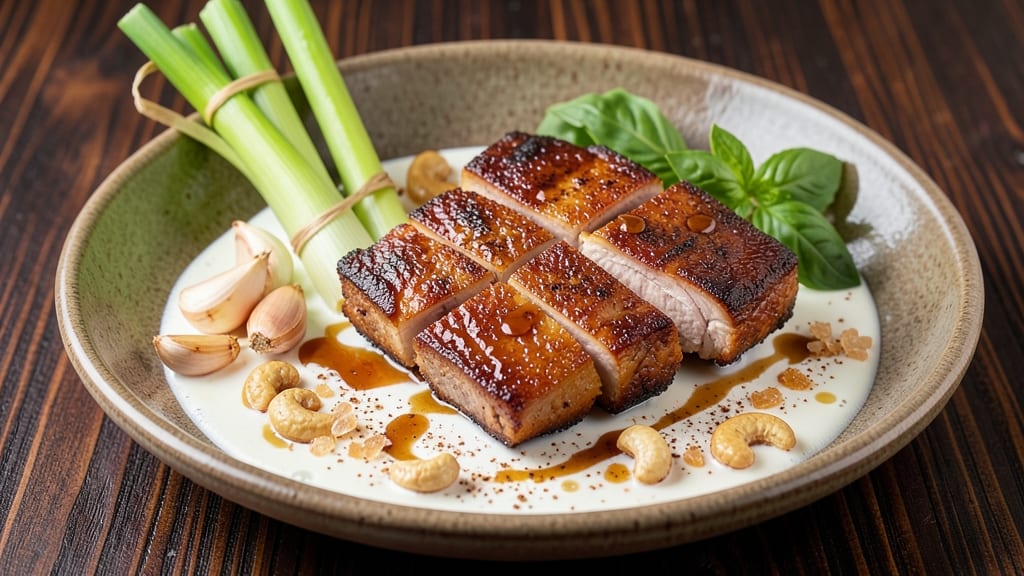
This crispy Thai pork recipe delivers the perfect balance of smoky wok hei, aromatic five-spice crust, and melt-in-your-mouth tenderness—just like your favorite street-side pad thai stall. 🔥 The secret lies in marinating the pork overnight with lemongrass and coconut milk, then searing it in a screaming-hot wok until the edges blister into golden perfection.
I developed this after years of experimenting with Thai techniques, and it’s now my go-to for weeknight dinners that taste like a Bangkok restaurant.
The magic happens in the crust—a blend of five-spice powder, garlic, and a touch of palm sugar—that caramelizes into a crackling shell while keeping the inside juicy. This isn’t your average fried pork; it’s a dish that marries Thai boldness with home-cooking simplicity.
The pork absorbs the marinade’s bright, citrusy notes while developing a deep, savory crust that’s impossible to resist. And the best part? It comes together in under an hour, with just 20 minutes of active cooking.
What you’ll end up with is crispy pork that shatters at the edges but stays tender inside, served with a side of sticky rice to soak up the fragrant juices. The five-spice crust adds layers of warmth—star anise, cinnamon, and clove—that pair perfectly with the tangy lemongrass marinade.
This recipe is foolproof, restaurant-quality, and designed to impress even skeptical guests. The aroma alone will have everyone gathering around the table.
Pair it with a quick cucumber salad or a drizzle of sweet chili sauce for the full Thai experience. The balance of textures—crispy pork, cool cucumbers, and creamy rice—makes this dish a standout. Let’s get cooking!
Ingredients for crispy pork recipe thai
These 14 ingredients transform into restaurant-style crispy Thai pork with smoky wok hei and tender hearts.
| Ingredient | Amount | Notes |
|---|---|---|
| Boneless Pork Shoulder 🐷 | 1 ½ lb | Cut into 1-inch cubes, marinated overnight |
| Fresh Lemongrass 🌿 | 1 whole | Bruised stems only, cut into 2-inch pieces |
| Coconut Milk 🥥 | ½ cup | Full-fat canned, not carton |
| Five-Spice Powder 🌶️ | 2 tbsp | Authentic Thai blend preferred |
| Palm Sugar 🍯 | 2 tbsp | Or substitute brown sugar |
| Garlic Cloves 🧄 | 6 cloves | Minced, for marinade and crust |
| Fish Sauce 🍶 | 1 tbsp | Red Boat brand recommended |
| Lime Juice 🍋 | 2 tbsp | Freshly squeezed, seeds removed |
| Vegetable Oil 🫒 | ½ cup | High smoke point for wok searing |
| All-Purpose Flour 🌾 | ¼ cup | For light dusting before frying |
| Sticky Rice 🍚 | 1 ½ cups | Cooked, for serving |
| Fresh Thai Basil 🌿 | ¼ cup | Or regular basil in a pinch |
| Salt 🧂 | 1 tsp | Kosher or sea salt |
| Black Pepper 🌶️ | ½ tsp | Freshly ground |
The pork shoulder is non-negotiable—it stays juicy while the edges crisp. Look for well-marbled cuts at Costco or local Asian markets; they often carry pre-cut pork shoulder. Fresh lemongrass is a game-changer, but if you can't find it, substitute 1 tbsp lemongrass paste. The coconut milk should be full-fat canned—carton versions won't give the same richness. For the five-spice powder, Thai Kitchen brand is my go-to, but any authentic blend with star anise, cinnamon, and clove will work. Palm sugar is key for that authentic caramelized crust, but brown sugar works in a bind.
No fish sauce? Soy sauce at half the amount gets you close, though it'll lack depth. The lime juice should be freshly squeezed—bottled versions taste flat. For the crust, toast the five-spice powder in a dry pan for 30 seconds to deepen the flavors. If you're short on time, marinate the pork for at least 4 hours instead of overnight—it'll still be delicious. The sticky rice? Jasmine rice cooked with coconut milk takes this dish to the next level. Can't find Thai basil? Regular basil plus a pinch of cinnamon mimics the flavor profile surprisingly well.
Marinated pork keeps for 2 days in the fridge, but the crust is best made fresh. Cooked pork reheats beautifully—2 minutes in a screaming-hot wok revives the crispy texture. Store leftovers in an airtight container with a paper towel to absorb moisture. The crust mix can be prepped 1 day ahead and stored in the fridge. For extra crispiness, double-fry the pork—first at medium heat to cook through, then again at high heat for that golden crackle.
Why You'll Love This Recipe
- One-Pan Magic: I swear by this recipe because it’s actually hands-off after the initial sear. Toss the pork in five-spice powder, slap it on a sheet pan, and let the oven do the work while you chop a single lemongrass stalk—no frying mess, no constant stirring.
- Crispy-Creamy Dream: That first bite? Crunchy, caramelized edges with a fall-off-the-bone tenderness, all swimming in coconut milk’s velvety richness. The palm sugar balances the heat just enough to make it dangerously good—like a hug in a bowl.
- Weeknight to Party: Between us, this feeds six but costs less than takeout. Double the batch for leftovers (trust me, they disappear), or serve it at your next potluck—it’s fancy enough for guests but simple enough for a Tuesday. Just add rice and call it a win.
- Pork Shoulder Hack: Honestly, I stopped buying expensive cuts after this. Boneless pork shoulder is forgiving, flavorful, and half the price of tenderloin. The five-spice blend cuts through any toughness, and the lemongrass infuses the coconut milk so well, you’ll forget it’s budget-friendly.
Step-by-step instructions for crispy Thai pork recipe
Here's how to achieve that perfect balance of crispy exterior and tender interior.
🔥 Step 1: Marinate the Pork for Maximum Flavor
In a large bowl, combine the 1.5 lb boneless pork shoulder cut into 1-inch cubes with the 2 tbsp five-spice powder, 2 tbsp palm sugar, 6 cloves minced garlic, 1 tbsp fish sauce, and 2 tbsp lime juice. Mix gently but thoroughly to coat each piece evenly. Here's the thing—this marinade works best overnight, but if you're short on time, at least 4 hours will give you great results.
Transfer the marinated pork to a resealable bag or container and refrigerate. The acidity from the lime juice and fish sauce will begin breaking down the proteins, while the five-spice powder infuses deep flavor. You'll see the pork develop a beautiful golden hue as it marinates—this is your visual cue that it's ready for cooking.
👨🍳 Step 2: Prepare the Lemongrass Coconut Broth
In a medium saucepan, combine the 0.5 cup coconut milk, 1 whole lemongrass cut into 2-inch pieces (bruised stems only), and 1 cup water. Bring to a gentle simmer over medium heat for 10 minutes until the lemongrass releases its aromatic oils. You'll notice the broth takes on a pale golden color and develops a subtle citrusy fragrance—this is when you know it's ready.
Strain the broth through a fine-mesh sieve into a clean saucepan, pressing gently on the lemongrass to extract all the flavor. Keep this broth warm over low heat—it'll be the perfect companion to your crispy pork, balancing the richness with bright, herbal notes. The coconut milk adds a velvety texture that complements the crispy crust beautifully.
🍳 Step 3: Create the Five-Spice Crust
In a separate bowl, whisk together 0.25 cup all-purpose flour, 1 tsp salt, and 0.5 tsp black pepper. This dry mixture is your secret weapon for that signature crispy crust. Lightly dust each piece of marinated pork with this flour mixture, pressing gently to adhere. I like to do this in batches—don't overcrowd the bowl or the coating won't stick properly.
Heat 0.5 cup vegetable oil in a wok or large skillet over medium-high heat until it shimmers but doesn't smoke. The oil should be hot enough to sizzle when you add the pork—this ensures that crispy texture we're after. Working in batches (you'll need 2-3 rounds), add the floured pork and cook undisturbed for 2-3 minutes until deep golden brown on all sides. You'll see the crust form almost immediately—that's your signal to flip carefully with tongs.
🥘 Step 4: Finish with Coconut-Lemongrass Broth
Once all the pork is golden and crispy, transfer it to a plate and tent loosely with foil to keep warm. In the same wok, pour in the warm lemongrass coconut broth. Let it simmer for 3-4 minutes until slightly reduced and slightly thickened. You'll notice the broth takes on a glossy sheen—this indicates it's ready to coat the pork beautifully.
Return the crispy pork to the wok and toss gently to coat in the fragrant broth. The contrast of crispy pork with the creamy coconut sauce is what makes this dish sing. Garnish each serving with 0.25 cup fresh Thai basil just before serving—this adds a fresh, peppery note that cuts through the richness.
🍽️ Step 5: Serve Over Sticky Rice
Spoon the crispy pork and coconut broth over 1.5 cups cooked sticky rice, dividing evenly among 4 servings. The rice acts as a perfect vessel for soaking up all those delicious juices and flavors. I like to serve this immediately while the pork is still sizzling hot and the crust is at its crispest—every bite should deliver that satisfying crunch followed by tender, flavorful pork.
For the full experience, squeeze a little extra lime juice over the top and sprinkle with additional fresh Thai basil. The acidity brightens the dish, while the basil adds a fresh herbal finish. This recipe delivers on that perfect balance of textures and flavors that makes Thai street food so irresistible.
Pro Tips For Making Crispy Pork Recipe Thai
- CRISP THE PORK FIRST: I used to marinate the pork raw, thinking it’d absorb more flavor—wrong. Pat it bone-dry, then sear it skin-side down in a screaming-hot pan for 3-4 minutes until deep golden. That crust is what holds the five-spice powder and keeps the meat from turning soggy when it hits the coconut milk later. (Yes, even if you’re impatient like me.)
- SLICE LEMONGRASS LENGTHWISE: Bruising the lemongrass with a knife is a rookie move. Instead, split the stalks lengthwise with a heavy chef’s knife—no need to chop. The exposed pith softens faster in the coconut milk, releasing aroma without turning the sauce bitter. Pro tip: Smash the flat side lightly with the back of your knife to wake up the oils.
- DON’T BOIL THE COCONUT MILK: I learned this the hard way—simmering coconut milk too hard curdles it, turning your sauce into a lumpy mess. Keep it at a gentle simmer (90°C/195°F), and if it starts to separate, whisk in a splash of cold water or a pinch of palm sugar to stabilize it. The goal is flavor, not steam.
- REST THE PORK UNDER FOIL: After searing, pile the pork on a plate, tent it with foil, and let it sit for 10 minutes. This traps heat and renders fat back into the meat, making every bite juicier. Skipping this step means dry, stringy pork—trust me, your future self will notice. (Your future self is me, and I’ve made this mistake.)
Regional styles of this dish
Bangkok Street Style
This version is all about that iconic wok hei—the smoky, charred flavor you get from cooking at high heat in a well-seasoned wok.
I learned this technique from a market vendor in Bangkok who swore by a carbon steel wok heated until it's "hotter than your ex's temper." 🔥 For that authentic street-food crunch, double-fry the pork: first at medium heat to cook through, then again at maximum heat for 1-2 minutes until the crust is blistered and blackened in spots.
Serve with a side of spicy green papaya salad to cut through the richness.
Key moves: Use refined palm oil (not vegetable oil) for frying—it has a higher smoke point and adds a subtle coconut aroma. Toss the cooked pork with 1 tbsp fish sauce and 1 tsp palm sugar right before serving for that signature Thai street-food tang.
Garnish with crushed peanuts and Thai chili slices for texture and heat.
Northern Thai Crispy
In Thailand's northern regions, they take crispy pork to another level with a five-spice and coriander crust. After marinating the pork, mix 1 tbsp ground coriander into the flour coating for an earthy depth.
Cook the pork in lard or duck fat instead of vegetable oil—the higher smoke point and rich flavor create a golden, crackling crust that's less greasy but more flavorful. 🌶️
Finish by basting the pork with a sauce made from 1 tbsp fish sauce, 1 tbsp lime juice, and 1 tsp palm sugar while it cooks. The result is tender, juicy pork with a crunchy, aromatic crust that's perfect with sticky rice and a cucumber-lime salad.
This version is less sweet but more complex, with the coriander adding a citrusy brightness.
Southern Thai Lemongrass
Down in the south, they amp up the lemongrass and lime for a brighter, herb-forward version. After marinating, add 2 extra stalks of lemongrass (bruised and chopped) and 1 tbsp lime zest to the marinade.
For the crust, mix in 1 tsp ground turmeric with the flour for a golden hue and earthy warmth. The turmeric also helps stabilize the crust during frying. 🌿
Serve this version with a tangy tamarind dipping sauce (mix 2 tbsp tamarind paste, 1 tbsp fish sauce, and 1 tsp chili flakes). The sauce's sourness balances the pork's richness, while the extra lemongrass adds a refreshing herbal note.
This is my go-to for hot summer nights—light, bright, and packed with flavor.
Isaan-Style Spicy Kick
Isaan, Thailand's northeast region, is where heat reigns supreme. For this version, add 1 tbsp Thai bird's eye chili powder and 1 tsp ground white pepper to the marinade. The crust gets an extra kick with 1 tsp smoked paprika mixed into the flour.
Fry the pork in peanut oil (for a nutty depth) and finish with a spicy coconut dipping sauce made from ½ cup coconut milk, 1 tbsp fish sauce, and 1 tbsp chili paste. 🌶️
Serve with sticky rice and a side of grilled Thai eggplant to balance the heat. The peanut oil adds a subtle nuttiness that pairs perfectly with the spicy-sweet sauce. This version is bold, fiery, and perfect for those who love their pork with a punch.
Modern Fusion Twist
For a contemporary take, swap the five-spice powder for a blend of 1 tsp cinnamon, 1 tsp cumin, and ½ tsp smoked paprika.
Use avocado oil for frying (high smoke point, neutral flavor) and finish with a lime-cilantro crema (mix ¼ cup sour cream, 2 tbsp lime juice, and 2 tbsp chopped cilantro).
This fusion version keeps the crispy texture but adds a creamy, tangy contrast that feels fresh and unexpected. 💛
Pair with jasmine rice and a mango-avocado salad for a dish that bridges Thai tradition with modern flavors. The crema adds a cooling element that makes the crispy pork even more satisfying. It’s the version I reach for when I want to impress but still keep things approachable.
Nutrition facts
Frequently asked questions
Can I use chicken or beef instead of pork for this recipe? While pork is traditional, you can absolutely adapt this recipe! For chicken, use boneless thighs (they stay juicier than breasts) and reduce the marinating time to 2-3 hours since chicken cooks faster. Beef works too—opt for flank steak cut into strips and marinate for 4-6 hours to tenderize it properly. Just
Why does my crispy crust keep falling off?
This usually happens when the pork isn't properly dried or the oil isn't hot enough. Pat the marinated pork very dry with paper towels before coating, and make sure your wok is screaming hot (oil should shimmer but not smoke). Another trick: chill the floured pork for 15 minutes before frying—this helps the crust adhere better. If it still falls off, your oil might not be hot enough—wait until it's properly heated before adding the pork.
Can I make this recipe without five-spice powder?
Make your own blend with ½ tsp cinnamon, ½ tsp cloves, ½ tsp star anise, ½ tsp fennel seeds, and ¼ tsp black pepper. Toast these spices in a dry pan for 30 seconds to deepen their flavor, then grind them together. For a simpler version, just use 1 tsp cinnamon + ½ tsp garlic powder—it won't be identical but still delicious. The key is balancing warmth and earthiness in the crust.
How do I get that perfect wok hei flavor at home?
Wok hei (smoky aroma) comes from high heat and proper technique. Use a carbon steel or cast iron wok if possible—these retain heat better. Heat the wok until it's too hot to touch for 30 seconds, then add your pork. Work in small batches so the wok doesn't cool down. After frying, turn off the heat and let the pork sit in the wok for 30 seconds to absorb residual smoke flavors. A gas stove works best, but electric stoves can achieve this with patience!
What's the best way to reheat leftover crispy pork?
Reheat in a screaming-hot wok or skillet for 1-2 minutes per side—this restores the crispy crust. Avoid microwaving as it makes the pork soggy. For extra crispiness, broil for 2-3 minutes on high heat, watching closely to prevent burning. Store leftovers in an airtight container with a paper towel to absorb moisture. The pork reheats beautifully and tastes almost as good as fresh!