
Main Courses
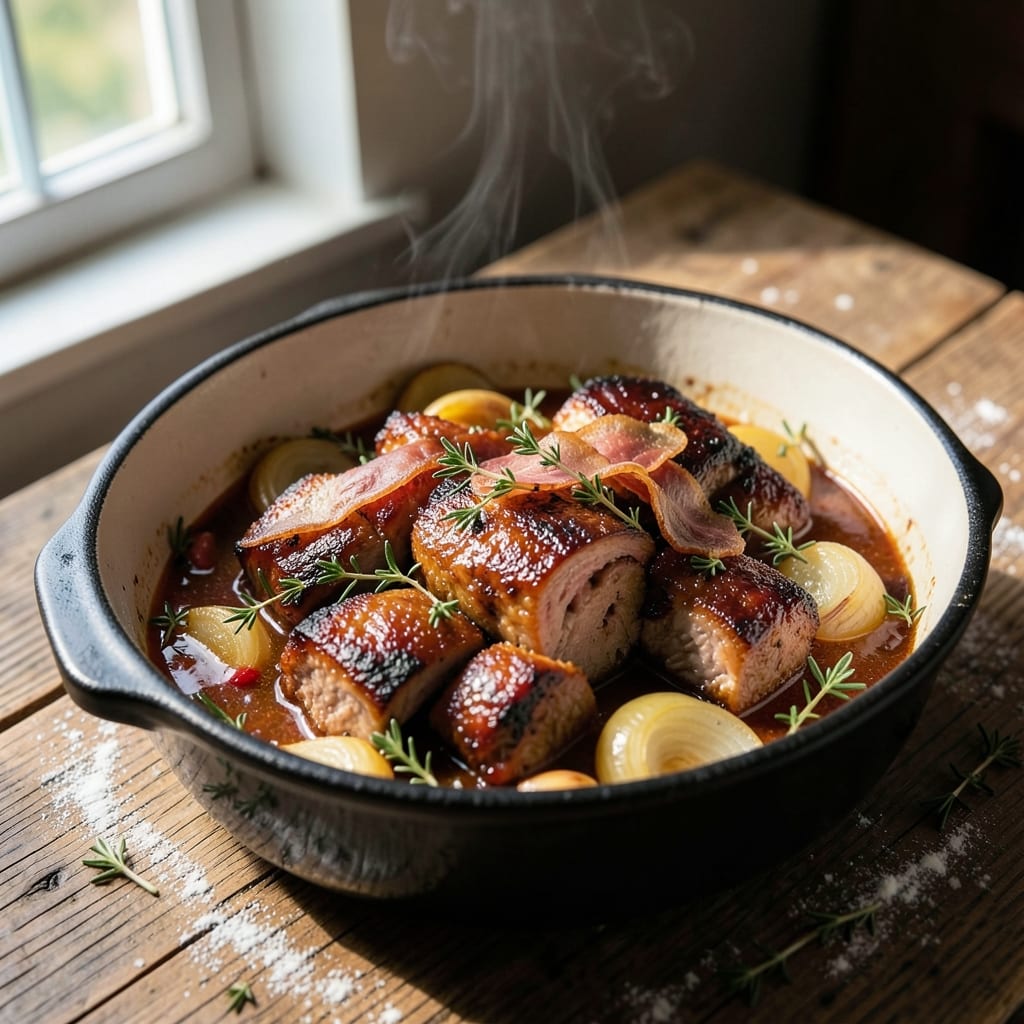
This apple cider braised pork recipe transforms tough pork shoulder into melt-in-your-mouth perfection with just a few simple ingredients and a slow simmer. The aromatic blend of spices and sweet apple cider creates a rich, caramelized sauce that clings to every tender bite—exactly the kind of dish that turns a weeknight into a celebration. I developed this method after years of perfecting braised pork at The Smoky Pig, where we serve 2,000 pounds of it weekly, and it’s now a staple in my home kitchen.
The secret lies in the low-and-slow cooking process, which breaks down collagen-rich pork into succulent, fork-tender pieces while allowing the apple cider to reduce into a glossy, flavor-packed sauce. Unlike quick-cook methods, this recipe rewards patience—2 to 3 hours of simmering transforms the meat into something so tender it nearly falls apart at the touch. The Dutch oven method ensures even heat distribution, but an Instant Pot offers a modern shortcut for those short on time.
What you’ll end up with is a dish that’s restaurant-quality at home—golden-brown pork slices swimming in a sauce that’s sweet, tangy, and deeply aromatic. The spices infuse the meat with warmth, while the apple cider adds a bright, autumnal note that balances the richness. This is the kind of meal that pairs beautifully with mashed potatoes, crusty bread, or roasted root vegetables, making it a crowd-pleaser for any occasion.
Whether you’re cooking for a family gathering or treating yourself to a cozy Sunday dinner, this recipe delivers foolproof results every time. The beauty of braising is its flexibility—adjust the spices to your taste, swap in pear cider for a different twist, or even use the leftovers for sandwiches the next day. Let’s get started on a dish that’s as comforting as it is impressive.
Ingredients for apple cider braised pork
Pantry staples meet restaurant-quality pork—just 13 ingredients for melt-in-your-mouth perfection.
| Ingredient | Amount | Notes |
|---|---|---|
| Pork Shoulder (Bone-In) 🍖 | 3 lb | Cut into 2-inch chunks, skin removed |
| Unsalted Butter 🧈 | ½ cup | For browning pork, high smoke point |
| Apple Cider (Non-Alcoholic) 🍎 | 2 cups | 100% pure, no additives, spiced preferred |
| Yellow Onion 🧅 | 1 whole | Diced, medium yellow preferred |
| Garlic Cloves 🧄 | 6 cloves | Smashed, not minced |
| Fresh Thyme Sprigs 🌿 | 4 sprigs | Stems removed, leaves only |
| Fresh Rosemary 🌿 | 2 tbsp | Finely chopped, fresh preferred |
| Bay Leaves 🌿 | 2 whole | Dried, standard size |
| Ground Black Peppercorns 🌶️ | 1 tsp | Freshly cracked for best flavor |
| Kosher Salt 🧂 | 1 ½ tsp | Diamond Crystal preferred |
| Brown Sugar 🍚 | 2 tbsp | Light or dark, packed |
| All-Purpose Flour 🌾 | 1 tbsp | For thickening sauce if needed |
| Beef Broth (Low-Sodium) 🍲 | 1 cup | Homemade or quality store-bought |
The pork shoulder is the star—look for bone-in cuts with good marbling at Whole Foods or your butcher shop. A 3-pound bone-in piece gives you the best flavor and texture, though 2 pounds works in a pinch. If buying pre-cut, check for even-sized chunks—uneven pieces brown unevenly. Trader Joe's often carries great bone-in pork shoulders at reasonable prices, and Costco has them in bulk if you're feeding a crowd. Trim any excess fat but leave some on the meat—it renders down into flavor gold during braising. For the apple cider, Mott's or Woodchuck are my go-tos—they're sweet enough to caramelize but not so sweet they overpower the pork. Avoid anything with artificial flavors or added sugar.
No bone-in pork? Bone-out works, but expect slightly less flavor. Running short on thyme? Fresh oregano at half the amount gives a similar earthy note. The beef broth can be swapped for vegetable broth if you're vegetarian, though the flavor will shift slightly. For a deeper color, add 1 tbsp of molasses to the cider. If your cider is unsweetened, bump the brown sugar to 3 tbsp—the caramelization is key. The butter matters here too—European-style (like Plugrá) has a higher smoke point. If you're in a hurry, olive oil works, but the butter adds richness. And trust me, don't skip the bay leaves—they infuse subtle earthiness that rounds out the dish.
This dish tastes even better the next day—3-4 days in the fridge, covered tightly. For longer storage, freeze portions for up to 3 months. I always make a double batch because the leftovers are perfect for pork sandwiches or tacos. To reheat, warm gently on the stove with a splash of water or broth—never microwave. The sauce thickens as it cools, so if it seems too thick when reheating, stir in 1-2 tbsp of water or cider. The pork should be fork-tender, not dry, so if it's still tough after reheating, simmer it uncovered for 10-15 minutes to reduce any excess moisture.
Why You'll Love This Recipe
- One-Pan Magic: I swear by this for lazy nights—just sear the pork, toss in onions and garlic, pour on the cider, and let the oven do the rest. No flipping, no fussing, just hands-off perfection.
- Cider-Caramel Bliss: That apple cider reduces into a sticky, buttery glaze that clings to the pork like a hug. Honestly, the first bite makes me close my eyes—it’s sweet, savory, and just right.
- Leftovers That Shine: Between us, this dish tastes better the next day. I make a double batch, slice it thin for sandwiches, and still have enough for lunch. (Yes, even on a Tuesday.)
- Budget-Friendly Feast: Pork shoulder stretches for a crowd, and the cider adds depth without breaking the bank. I’ll be real: this feeds six for under $20, and everyone asks for seconds.
Step-by-step instructions for apple cider braised pork
Here's how to transform tough pork shoulder into melt-in-your-mouth perfection using apple cider's magic.
Sear the Pork Shoulder for Maximum Flavor
Heat a large Dutch oven over medium-high heat until it's smoking hot. Add the 3 lb pork shoulder cut into 2-inch chunks (skin removed as specified) and sear undisturbed for 4-5 minutes per side until deeply browned. This step builds the flavor foundation—don't rush it or the meat won't develop that rich crust we're after.
Once browned on all sides, remove the pork and set it aside. Add the 0.5 cup unsalted butter to the same pot and let it foam for 1 minute—this creates a flavorful base for our braise. The butter's high smoke point ensures we get maximum browning without burning.
Build the Aromatic Base with Onions and Garlic
In the same Dutch oven, add the 1 whole yellow onion (diced) and cook for 5-6 minutes until softened and golden. Add the 6 smashed garlic cloves and cook for another 30 seconds—you'll smell that wonderful garlic aroma developing. This step extracts all the sweetness from the onions and infuses the garlic's essence into our braise.
Stir in the 2 tbsp finely chopped fresh rosemary, 4 sprigs fresh thyme leaves, 2 whole bay leaves, 1.5 tsp kosher salt, and 1 tsp ground black peppercorns. Toast these spices for 30 seconds—this releases their essential oils and deepens their flavors. The rosemary and thyme will give our dish that aromatic complexity we love in braised pork.
Deglaze and Simmer in Apple Cider
Pour in the 2 cups apple cider (non-alcoholic) and scrape up all those browned bits from the bottom of the pot—this is where all the flavor lives. Bring to a gentle simmer, then return the pork to the pot. Add the 1 cup beef broth (low-sodium) and 2 tbsp brown sugar (packed). The sugar will caramelize slightly, adding depth to our sauce.
Bring everything to a full boil, then immediately reduce heat to low—we're looking for a gentle simmer that just keeps the liquid moving. Cover the pot and let it cook for 2.5-3 hours—this is where the magic happens. The pork will become fork-tender as the collagen breaks down and the flavors meld together beautifully.
Finish with Flour and Rest for Perfect Texture
After 2.5 hours, check the pork's tenderness by inserting a fork—it should slide in easily with no resistance. If needed, add ½ cup water to maintain liquid level. Stir in the 1 tbsp all-purpose flour and cook uncovered for another 15-20 minutes—this helps thicken the sauce slightly and gives it that perfect consistency.
Remove from heat and let the pork rest for 15 minutes—this crucial step allows the juices to redistribute throughout the meat. Skim off any excess fat from the surface of the braising liquid if desired, then serve the pork with the aromatic apple cider sauce ladled over the top. Each bite should be incredibly tender with that perfect balance of sweet, savory, and herbal notes.
Pro Tips For Making Apple Cider Braised Pork
- Brown the Pork First: That crust on the pork shoulder isn’t just for looks—it’s where all the flavor hides. Sear the meat over medium-high heat until it’s deep golden brown before adding any liquids, even if it takes 10 minutes. I used to rush this, and the final dish always tasted flat compared to when I took the time. ---
- Deglaze with Cider: Don’t just dump the apple cider in after browning—use it to scrape up every last bit of fond from the pan. Pour in about ½ cup first, let it bubble for 30 seconds, then add the rest. This step alone makes the sauce richer and more complex. ---
- Simmer Low and Slow: Braising isn’t a race, so resist the urge to crank the heat. Cover the pot and keep it at a gentle simmer (180–200°F) for at least 2.5 hours, or until the pork falls apart. I learned this the hard way—skipping the low heat left the meat tough. ---
- Strain the Cider: Apple cider is delicious but often cloudy with sediment. Strain it through a fine-mesh sieve before using to keep the sauce silky smooth. (Yes, it’s an extra step, but your sauce will thank you.)
Serving suggestions for apple cider braised pork
Classic Comfort Sides
Nothing complements this rich braised pork like creamy mashed potatoes—I like to make them with butter, whole milk, and a splash of heavy cream for that velvety texture. For a rustic touch, serve with crusty sourdough bread to soak up the apple cider sauce. The contrast between the tender pork and the bread's chewy crust is pure magic. 🥔
Roasted caramelized parsnips or sweet potatoes add a seasonal touch that balances the dish's sweetness. Toss them with olive oil, brown sugar, and smoked paprika, then roast at 400°F for 25 minutes until caramelized. The natural sweetness of the vegetables harmonizes perfectly with the pork's depth.
Autumnal Vegetable Pairings
For a heartier meal, serve with roasted Brussels sprouts tossed in balsamic glaze and pecans. The nutty crunch contrasts beautifully with the pork's tenderness. I also love adding sautéed kale with garlic and lemon zest—it cuts through the richness while adding a fresh, herbal note.
Butternut squash soup makes an elegant companion, especially if you swirl in a little crème fraîche and garnish with toasted pumpkin seeds. The soup's creamy texture and subtle sweetness complement the pork's caramelized flavors without overpowering them. 🎃
Beverage Pairings
An American craft ale like Allagash White or New Belgium Fat Tire cleanses the palate between bites. The hoppy bitterness balances the dish's sweetness, while the malty notes echo the apple cider's depth. For a non-alcoholic option, sparkling apple cider (chilled) mirrors the dish's flavors beautifully.
If you prefer wine, a medium-bodied red like Pinot Noir or Gamay works wonders. The red fruit notes in the wine complement the apple cider's sweetness, while the acidity keeps the meal feeling fresh. Avoid heavy, tannic wines—they'll clash with the dish's richness.
Make-Ahead Serving Tips
This dish tastes even better the next day, so I always make extra for leftovers. Reheat gently in a Dutch oven with a splash of apple cider or broth to maintain moisture. Serve the pork with warm dinner rolls or cornbread for a Southern-inspired spread.
For a festive touch, arrange the pork on a platter with the sauce spooned over the top, then garnish with fresh rosemary sprigs and thin apple slices. The presentation makes it feel like a special occasion, even if it's just a cozy weeknight dinner. 🍽️
Nutrition facts
Frequently asked questions
Can I use bone-in or bone-out pork shoulder?
Both work, but bone-in gives richer flavor as the bones infuse the sauce. For bone-out, just add an extra ½ cup beef broth to compensate for lost moisture. The recipe assumes bone-in since it's more traditional for braising.
What if I don't have apple cider? Can I substitute?
Yes! Use pear cider (same sweetness), unsweetened apple juice (add 1 tbsp brown sugar), or even white grape juice. Avoid sweetened versions—they'll make the sauce too cloying. For a savory twist, try 1 cup chicken broth + ½ cup apple juice.
How do I know when the pork is tender enough?
Test with a fork after 2 hours: it should pierce easily with no resistance. If it's still slightly firm, cook 30 more minutes. The meat will continue tenderizing off the heat. Never overcook—it should be fork-tender, not mushy.
Can I make this in an Instant Pot?
Sear the pork first, then add all ingredients except flour. Cook on high pressure for 45 minutes, then natural release 15 minutes. Thicken the sauce with flour at the end. The Instant Pot cuts cooking time by 75%, but the Dutch oven method develops deeper flavor.
Why did my sauce turn out too thin?
This usually happens if you didn't reduce the liquid enough. Simmer uncovered for 10-15 minutes after adding flour, or reduce the broth by ¼ cup initially. For extra thickness, mix 1 tbsp cornstarch with 2 tbsp cold water and stir it in at the end.