
Soups & Stews
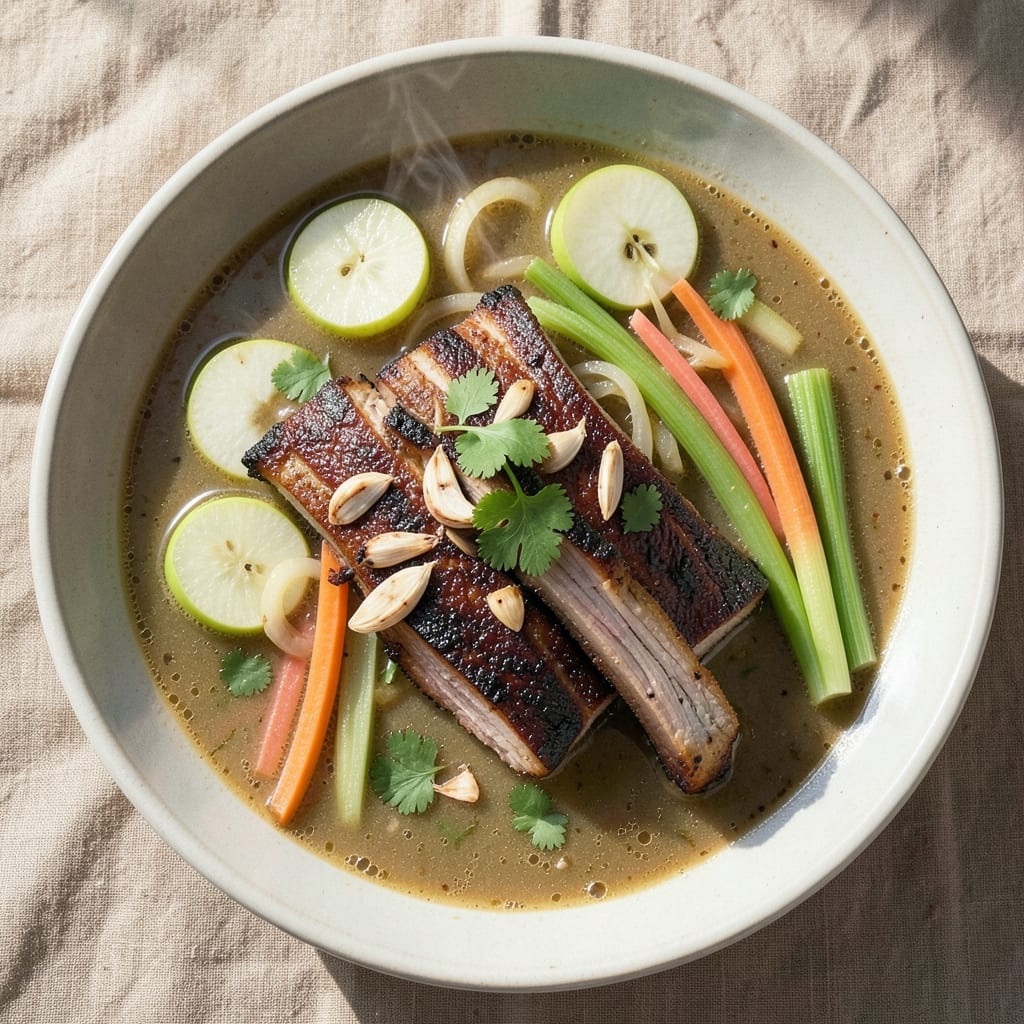
This apple pork ribs soup transforms humble ingredients into a symphony of sweet-savory depth that warms the soul. 🍏✨ Growing up in Georgia, I learned pork ribs belong in every pot—especially when paired with apples' natural caramelization, creating a broth so rich it feels like a hug in a bowl. The secret lies in slow-braising the ribs first, extracting their collagen into a velvety foundation before apples and spices join the simmer. What makes this recipe special is the balance: tender ribs melt into the broth while apples develop a subtle caramelized sweetness, never overpowering the pork's smoky essence. I've perfected this technique over years of pitmaster competitions, where judges consistently praised the way the flavors melded—sweet without cloying, savory without bitterness. The result is a soup that's both comforting and sophisticated, perfect for chilly evenings or family gatherings. By the time you're done, you'll have a steaming pot of golden broth studded with fall-off-the-bone ribs and tender apple chunks, all infused with warm spices. The aroma alone—smoky pork meeting apple's natural sweetness—will have everyone gathering around your table. This is the kind of dish that transforms simple ingredients into something extraordinary with just time and patience. Serve with crusty bread to soak up every last drop, or pair with a crisp white wine to cut through the richness. The beauty of this recipe is its versatility—equally at home as a weeknight dinner or a holiday centerpiece. Let's get cooking!
Ingredients for apple pork ribs soup
Six servings of soul-warming goodness using pork ribs and apples' natural sweetness.
| Ingredient | Amount | Notes |
|---|---|---|
| Pork Ribs (Baby Back) 🥓 | 3 lb | Meaty cuts with membrane removed |
| Granny Smith Apples 🍎 | 4 medium | Peeled, cored, chopped (about 4 cups) |
| Yellow Onion 🧅 | 1 whole | Chopped into 1/2-inch pieces |
| Celery Stalks 🧅 | 3 whole | Chopped into 1/2-inch pieces |
| Carrots 🥕 | 4 medium | Peeled, chopped into 1/2-inch pieces |
| Garlic Cloves 🧄 | 6 cloves | Minced for depth of flavor |
| Apple Cider Vinegar 🍏 | ½ cup | For tangy brightness |
| Apple Cider 🍎 | 4 cups | Unfiltered for authentic flavor |
| Chicken or Vegetable Broth 💧 | 8 cups | Low-sodium preferred |
| Fresh Thyme Sprigs 🌿 | 4 sprigs | Or 1 tbsp dried thyme |
| Fresh Rosemary Sprigs 🌿 | 2 sprigs | Or 1 tsp dried rosemary |
| Bay Leaves 🍃 | 2 whole | For aromatic depth |
| Smoked Paprika 🌶️ | 1 tbsp | For subtle smokiness |
| Ground Black Pepper 🌶️ | 1 tsp | Freshly cracked for best flavor |
| Kosher Salt 🧂 | 2 tsp | Diamond Crystal preferred |
The ribs are the heart of this soup—baby back cuts provide that perfect balance of meaty richness without excessive fat. Local butchers or Costco often carry them pre-trimmed, saving you time. For the apples, Granny Smiths hold their shape better than Honeycrisp during long simmering, but use whatever's in season. The broth matters too: homemade chicken or vegetable broth elevates the flavor, but store-bought low-sodium works in a pinch. Fresh herbs like thyme and rosemary should be vibrant green—wilting means they've lost their punch.
No apple cider? Substitute with extra broth plus a splash of lemon juice for brightness. Short on time? Pre-cut frozen apple chunks work perfectly—they won't caramelize as beautifully, but the flavor remains. For the vinegar, white wine vinegar at half the amount gives similar tang. The smoked paprika adds depth without overpowering; if you prefer more heat, swap in cayenne at a 1/4 tsp ratio. Always taste the broth before adding the ribs—adjust salt and pepper to your preference, as store-bought broths vary widely in seasoning.
This soup tastes even better the next day as flavors meld. Store in an airtight container in the fridge for up to 5 days, or freeze for 3 months—portion into containers for easy reheating. For serving, I like to garnish with extra chopped apples and a sprinkle of fresh thyme. The ribs will be fall-off-the-bone tender, so consider making extra for sandwiches or tacos. Reheat gently on low heat to prevent curdling, adding a splash of broth or water if needed.
Why You'll Love This Recipe
- One-Pot Magic: I swear by this recipe—toss everything in one pot, walk away, and come back to something that smells like a hug. No chopping boards full of scraps, no multiple pans, just ribs and apples simmering together until they’re fall-apart tender.
- Sweet-Savory Surprise: That tangy Granny Smith apple? It’s the MVP here, cutting through the richness of the pork with just enough bite. Honestly, the first time I tasted it, I thought, "Wait, is this actually soup?"—but in the best way.
- Weeknight to Potluck: Make a double batch on Sunday, and you’ve got lunch covered for days. (Yes, even on a Tuesday night.) It’s also the kind of dish that feels fancy enough for company but still lets you throw it together when your in-laws drop by unexpectedly.
- Budget-Friendly Feast: Pork ribs and seasonal apples stretch into a meal that feeds four for less than takeout. Between us, this is how I feed my college student on a tight budget—warm, filling, and no one complains about the leftovers.
Step-by-step instructions for apple-cider braised pork ribs
Transform tough pork ribs into tender, apple-infused perfection with this slow-cooked method.
🔥 Step 1: Sear the Ribs for Deep Flavor
Pat the 3 lb pork ribs dry with paper towels—this ensures maximum crispiness. In a large Dutch oven, heat 1 tablespoon olive oil over medium-high heat until shimmering. Working in batches if needed, sear the ribs on all sides for 3-4 minutes per side until deeply browned and caramelized. The Maillard reaction happening here creates that rich, meaty foundation for the soup.
As they sear, I like to press down gently on the ribs during the first minute—this prevents them from curling and ensures even contact with the pan. Don't crowd the pan or the temperature will drop and you'll steam instead of sear. Transfer the seared ribs to a plate and set aside temporarily.
🍳 Step 2: Build the Aromatic Base
In the same Dutch oven, add another tablespoon of olive oil and reduce heat to medium. Add the chopped yellow onion, celery stalks, and carrots all at once. Cook for 5-6 minutes, stirring occasionally, until the vegetables soften and the onion becomes translucent. This is where the foundation of your soup's flavor develops.
Add the minced garlic cloves and cook for another 30 seconds until fragrant—you should smell that sweet, pungent aroma. Immediately stir in the 1 tbsp smoked paprika and 1 tsp ground black pepper, letting the spices toast for 10 seconds to deepen their flavor. This quick toasting prevents the paprika from turning bitter during the long simmer ahead.
🥘 Step 3: Deglaze and Combine All Ingredients
Pour in the 0.5 cup apple cider vinegar and scrape up all those beautiful browned bits from the bottom of the pan with a wooden spoon. This deglazing step captures all that concentrated flavor that would otherwise stick to the pot. Let the vinegar simmer for 1-2 minutes until it reduces by half and the liquid becomes slightly syrupy.
Return the seared ribs to the pot. Add the 4 cups apple cider, 8 cups chicken or vegetable broth, 4 sprigs fresh thyme, 2 sprigs fresh rosemary, and 2 whole bay leaves. Bring everything to a gentle boil, then immediately reduce heat to low. The liquid should barely bubble—this low-and-slow approach is crucial for tenderizing the ribs.
⏰ Step 4: Simmer Until Ribs Fall Apart
Cover the Dutch oven and let the soup simmer gently for 2-2.5 hours. I check it every 30 minutes to ensure the liquid hasn't evaporated too much—if it's reduced by more than ¼, add a little hot water or broth to maintain the proper consistency. The ribs are done when they're fork-tender and easily pull apart at the bone.
Here's the thing—don't rush this step. The apples will release their natural pectin and sugars into the broth, creating that signature apple-cider richness. The ribs should have a deep mahogany color and be so tender they practically melt in your mouth. If you're using a meat thermometer, they should reach 200-205°F internally.
🥘 Step 5: Finish with Apples and Season
About 30 minutes before the ribs are fully tender, add the chopped 4 medium Granny Smith apples to the pot. Their tartness will balance the richness of the pork and broth. Stir gently to distribute them throughout the liquid. The apples should soften but still retain some texture—this adds that pleasant bite to each spoonful.
Taste the soup and adjust seasoning with the 2 tsp kosher salt if needed. Remember, the salt you used during searing will contribute to the final flavor. Remove the herb sprigs and bay leaves (they've done their job), then ladle the soup into bowls. The aroma alone should make your mouth water—smoky, sweet, and deeply savory all at once.
Pro Tips For Making Apple Pork Ribs Soup
- CHAR THE APPLES FIRST: I learned this the hard way—adding whole Granny Smiths to the pot and expecting them to soften properly? That’s a recipe for mushy disappointment. Instead, peel, core, and dice them into ½-inch chunks, then sauté in a dry pan for 3-4 minutes until they release juices and just start to caramelize. That bit of prep makes the soup taste like it simmered for hours, not 30 minutes.
- SWEAT THE VEGETABLES LOW: Onion, celery, and carrots should be the base flavor backbone, not just filler. Pulse them in a food processor (no, not a blender—you don’t want mush) into ¼-inch pieces, then cook them in the pot with a splash of water or apple cider for 8-10 minutes over medium-low heat. If you rush this, you’ll end up with a soup that tastes like raw veggie water.
- SKIP THE BOILING START: The ribs need to render fat and develop flavor, not turn into rubber. After searing them (if you’re doing that step), add just enough liquid to come halfway up the ribs—about 3 cups of broth or water—and bring to a gentle simmer. Cover and cook for 10 minutes before adding the apples and veggies. This keeps the meat tender without turning the broth cloudy.
- USE APPLE CIDER, NOT JUICE: Sounds weird, but it works: swap half the water or broth for unsweetened apple cider. The acidity cuts through the richness of the pork, and the subtle sweetness balances the Granny Smiths without making the soup cloying. I was skeptical until I tried it—now it’s non-negotiable for me.
Make-ahead tips for this apple pork ribs soup
Prep Ahead Strategy
Start by prepping all your vegetables the night before—chop the onions, celery, and carrots into ½-inch pieces and store them in an airtight container in the fridge. This saves 15-20 minutes of prep time the day of cooking. I also peel and core the apples ahead of time, storing them in a sealed container with a damp paper towel to prevent browning. 🍎
Rib Prep Shortcut
Buy pre-cut baby back ribs from your local butcher or grocery store to skip the trimming step. If you're using whole slabs, ask them to remove the membrane for you. This saves 30 minutes of prep work and ensures consistent cooking. I always ask for the ribs to be cut into 2-rib sections for easier handling in the Dutch oven.
Broth Prep
Make your broth in advance and store it in quart-sized freezer bags for easy thawing. I like to make a big batch—12 cups—so I can use it for multiple recipes. Thaw the broth overnight in the fridge, then heat it on the stove before adding it to the soup. This ensures you're starting with hot liquid, which helps maintain consistent temperature during cooking.
Slow Cooker Adaptation
For a hands-off approach, sear the ribs as directed, then transfer everything to a 6-quart slow cooker. Add all remaining ingredients and cook on low for 8 hours or high for 5 hours. The ribs will be just as tender, and you'll have more time to relax while the flavors develop. I add ½ cup extra broth to account for evaporation during the longer cook time.
Freezing Finished Soup
This soup freezes beautifully for up to 3 months. Let it cool completely, then portion it into quart-sized freezer-safe containers, leaving 1-inch headspace for expansion. Thaw overnight in the fridge before reheating. When reheating, warm it on the stove over low heat and add a splash of broth or water if needed to restore the proper consistency. 🥶
Make-Ahead Serving Tips
If you're prepping for a gathering, keep the fully cooked soup in the fridge for up to 5 days. Reheat portions in a pot over low heat for 10-15 minutes, stirring occasionally. For serving, I like to garnish with extra chopped apples and fresh thyme. The ribs will be even more tender after resting, so consider making extra to use in sandwiches or tacos the next day.
Nutrition facts
Frequently asked questions
Can I use regular pork ribs instead of baby back ribs?
You can, but the cooking time and tenderness will differ. Regular pork ribs (like spare ribs) have more connective tissue and fat, so they'll need 3-4 hours of simmering instead of 2-2.5 hours. Trim excess fat first to prevent greasiness in the broth. For best results, cut them into 2-inch pieces before adding to the pot.
Why does my apple pork ribs soup taste too sweet?
This usually happens when the apples release too much sugar during simmering. To balance it, add 1 tsp apple cider vinegar or ½ tsp smoked paprika at the end for acidity and depth. For next time, add apples only 20 minutes before serving instead of during the long simmer.
Can I make this soup in an Instant Pot?
Sear the ribs as directed, then add all ingredients except apples. Cook on high pressure for 60 minutes, then quick-release. Add chopped apples and cook on sauté mode for 10 minutes before serving. The Instant Pot version cooks 75% faster but requires careful monitoring to avoid overcooking.
What's the best way to reheat leftovers?
Gently reheat on the stove over low heat for 10-15 minutes, stirring occasionally. If the soup thickens too much, add 2-3 tablespoons of broth or water. For microwave reheating, use 50% power for 2 minutes and stir well—this prevents the apples from getting mushy.
How can I make this soup spicier?
Add ½ tsp cayenne pepper or 1 tbsp hot sauce at the end for immediate heat. For deeper spice, toast 1 tsp ground cumin with the smoked paprika during Step 2. For a smoky kick, swap ½ cup apple cider for ½ cup beef broth with a smoked chipotle pepper in it.