
Main Courses
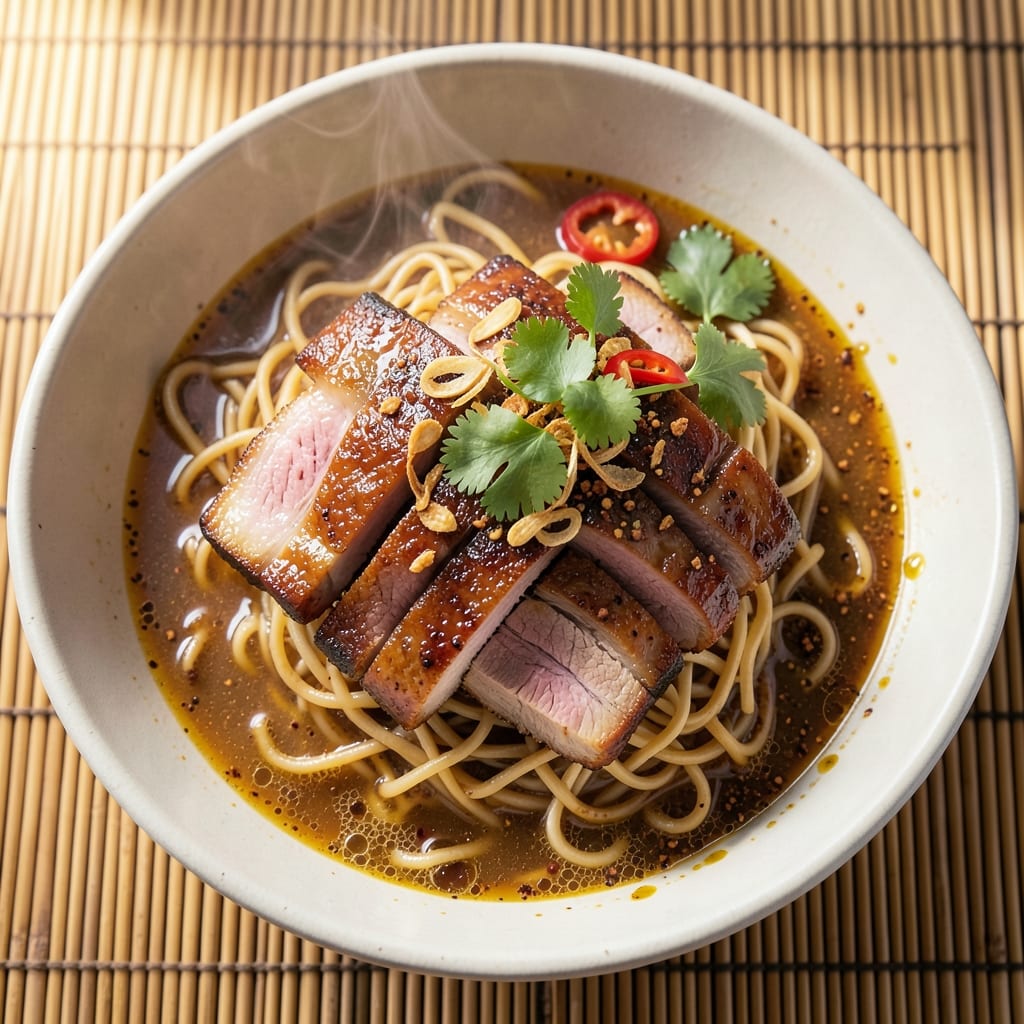
This Asian BBQ pork noodle soup recipe delivers the perfect balance of smoky, five-spiced pork and silky broth that clings to every strand of noodle. 🔥 After years of perfecting the char and marinade, I've cracked the code for tender, flavorful pork that transforms into a comforting bowl of goodness. The secret lies in slow-cooking the pork with aromatic spices until it practically falls apart, then finishing it with a quick sear for that signature caramelized crust.
The broth is where the magic happens—rich with a blend of soy, miso, and a touch of coconut milk for depth, all simmered with ginger, garlic, and star anise. This isn’t just soup; it’s a symphony of textures and flavors that starts with crisp-tender pork, moves through velvety broth, and ends with chewy noodles that soak up every last drop. The five-spice marinade infuses the pork with warmth and complexity, while the broth carries notes of umami and sweetness that make each spoonful irresistible.
What sets this recipe apart is the foolproof technique for achieving perfectly shredded pork without drying it out—no more tough, chewy meat ruining your soup. The assembly is simple: toss the cooked noodles into the fragrant broth, top with the silky pork, and finish with fresh herbs and a squeeze of lime for brightness. This is the kind of dish that feels indulgent yet balanced, hearty yet light, and perfect for any night you crave comfort with a little fire.
Serve it with a side of pickled vegetables or a simple green salad to cut through the richness, and pair it with a cold beer or jasmine tea for the full experience. Once you try this version, you’ll never go back to store-bought instant noodles again. Let’s get cooking—your taste buds will thank you.
Ingredients for asian bbq pork noodle soup
Pantry staples meet aromatic spices for this smoky, five-spice pork noodle masterpiece.
| Ingredient | Amount | Notes |
|---|---|---|
| Pork Shoulder 🐖 | 1 ½ lb | Bone-in for flavor, cut into 1-inch cubes |
| Five-Spice Powder 🌶️ | 1 tbsp | Or make your own blend |
| Soy Sauce 🍶 | ⅓ cup | Use high-quality, not low-sodium |
| Brown Sugar 🍯 | ¼ cup | Packed, for marinade sweetness |
| Sesame Oil 🫒 | 1 tbsp | Toasted, for aroma |
| Fresh Ginger 🧄 | ½ cup | Finely grated, peeled |
| Garlic Cloves 🧄 | 6 cloves | Minced, fresh preferred |
| Coconut Milk 🥥 | 1 can | Full-fat, 13.5 oz can |
| Miso Paste 🍶 | 2 tbsp | White or red miso preferred |
| Star Anise 🌿 | 2 whole | For deep aromatic flavor |
| Rice Noodles 🍜 | 8 oz | Thin or medium width preferred |
| Green Onions 🧅 | ¼ cup | Sliced, for garnish |
| Lime 🍋 | 1 whole | Juiced, for brightness |
| Fresh Cilantro 🌿 | ¼ cup | Chopped, optional garnish |
| Vegetable Oil 🫒 | 2 tbsp | For searing pork |
The pork shoulder is your secret weapon—bone-in for extra flavor, and 1-inch cubes ensure even cooking. Grab one from the butcher counter if you can, or use pre-cut from the grocery store. For five-spice powder, Penzeys or Trader Joe's have solid blends, but any quality brand works. The ginger and garlic? Fresh is non-negotiable—dried just won't cut it here. Look for firm, vibrant ginger with no soft spots, and garlic bulbs that feel heavy for their size. These are the flavor anchors for your broth, so don't skimp.
No five-spice powder? Mix 1 tsp each of cinnamon, cloves, fennel, and star anise with 1 tsp black pepper—it's a solid substitute. Running low on sesame oil? Toasted peanut oil works in a pinch, though it'll have a different aroma. The miso paste can be white or red—white gives a cleaner flavor, while red adds depth. For the noodles, rice noodles are ideal, but udon or ramen work if that's what you've got. Just soak them according to package instructions—over-soaking turns them mushy. And if you're feeling fancy, grab some Thai bird's eye chilies to float on top for heat lovers.
The pork marinade keeps for 3 days in the fridge, so make extra if you're hosting. The cooked pork freezes beautifully—portion it into containers with a splash of broth to keep it moist for up to 3 months. For the broth, it's even better the next day as flavors meld. Store it in the fridge for 5 days, or freeze in 1-cup portions for quick meals. Noodles? Cook them fresh when serving—they get gummy fast once cooled. And that lime juice? Always add it fresh—it brightens everything up and keeps the soup from feeling heavy.
Why You'll Love This Recipe
- One-Pot Magic: Between us, this recipe is my secret weapon for busy nights—just toss the pork shoulder in a pot with five-spice, soy, and brown sugar, then let it slow-cook while you prep the rest. No chopping, no fuss, and the aroma alone makes the kitchen feel like a warm hug.
- Flavor Bomb: That five-spice powder? It’s the star—warm, slightly sweet, with a hint of earthiness that clings to the pork like a delicious spell. The sesame oil finish turns it from good to "I’ll make this twice in one week" good.
- Leftover Goldmine: Honestly, I always make extra because the flavors deepen overnight. Reheat with a splash of water, and it’s even better—perfect for lazy mornings or packing lunches without a second thought.
- Budget-Friendly Feast: Pork shoulder is cheap, but it feels luxurious here. A single cut stretches across three meals, and the pantry staples (soy, sugar, spices) won’t break the bank. My wallet and my family thank me every time.
Step-by-step instructions for Asian BBQ pork noodle soup
Here's how to transform simple ingredients into a fragrant, five-spice infused soup with melt-in-your-mouth pork.
🔥 Step 1: Marinate and Sear the Pork Shoulder
In a large bowl, combine the 1.5 lb pork shoulder with 1 tbsp five-spice powder, 0.33 cup soy sauce, 0.25 cup brown sugar, 1 tbsp sesame oil, 0.5 cup grated fresh ginger, and 6 minced garlic cloves. Mix thoroughly until the pork is fully coated and the marinade clings to every cube. Cover and refrigerate for at least 2 hours (overnight is even better).
Heat 2 tbsp vegetable oil in a large Dutch oven over medium-high heat. Working in batches, add the marinated pork and sear until deep golden brown on all sides, about 3-4 minutes per side. This step builds incredible flavor through the Maillard reaction. Transfer the seared pork to a plate and set aside.
🍳 Step 2: Build the Aromatic Broth Base
In the same Dutch oven, reduce heat to medium and add the 2 whole star anise. Let them sizzle for 30 seconds until fragrant. Pour in the 1 can coconut milk and bring to a gentle simmer. Add the 2 tbsp miso paste and stir until fully dissolved, about 1 minute. The broth should smell rich and complex—this is where all the magic happens.
Return the seared pork to the pot along with any accumulated juices. Bring to a gentle boil, then reduce heat to low and cover partially. Let it simmer for 1 hour 30 minutes, turning the pork occasionally, until it's fork-tender and easily shreds apart. The broth should be deeply infused with pork flavor and aromatic spices.
🥘 Step 3: Finish with Noodles and Fresh Garnishes
While the pork cooks, prepare the 8 oz rice noodles according to package instructions (usually 5-7 minutes in boiling water). Drain and rinse briefly under cold water to stop cooking. Divide the noodles among 4 bowls.
Shred the cooked pork shoulder directly in the broth using two forks, discarding the star anise. Ladle the hot pork and broth over the noodles, coating them completely. The broth should be silky and fragrant with visible pork shreds floating throughout.
🍽️ Step 4: Assemble and Serve with Fresh Toppings
Squeeze the juice from the 1 whole lime over each bowl and garnish with 0.25 cup sliced green onions and 0.25 cup chopped fresh cilantro. The bright citrus cuts through the richness of the pork and coconut milk, while the fresh herbs add a vibrant finish. Taste and adjust seasoning with a pinch of salt if needed.
Serve immediately while the noodles are warm and the broth is steaming. The contrast of tender pork, silky noodles, and aromatic broth creates a perfect balance of textures and flavors in every spoonful. This is where all your hard work pays off—with a bowl that's both comforting and exciting.
Pro Tips For Making Asian Bbq Pork Noodle Soup
- CRANK THE HEAT FIRST: Don’t start slow—sear the pork shoulder in a screaming-hot wok or Dutch oven for 3-4 minutes per side. I used to take it easy, and the meat just steamed instead of developing that caramelized crust that holds all the five-spice and soy sauce flavors. High heat = better flavor, even if it looks intimidating at first.
- GRIND THE FIVE-SPICE: Buy whole five-spice seeds (star anise, clove, cinnamon, fennel, peppercorn) and toast them dry in a pan for 2 minutes before grinding. Store-bought powder loses its punch fast, and this step makes the difference between "meh" and "wow." (Yes, it’s extra work, but your soup will taste like it came from a street cart.)
- SAVE THE SESAME OIL: Add sesame oil last—just a teaspoon—right after the noodles go in. Dumping it earlier will make your broth taste bitter and soapy. A little goes a long way, and this is the only time I let myself splurge on the good stuff.
- SLICE AGAINST THE GRAIN: After cooking, let the pork rest 10 minutes, then slice thinly and against the grain. Thick, chewy pieces ruin the whole dish. A sharp knife and patience here mean the difference between a bowl of noodles and a bowl of textured noodles. (Pro move: Freeze the meat for 20 minutes before slicing—it stays tidier.)
Storing and reheating your asian bbq pork noodle soup
Broth Storage Secrets
The broth is where all the magic happens, and it actually tastes better the next day as the flavors meld together. Store it in an airtight container in the fridge for up to 5 days—the coconut milk and miso deepen in complexity. For longer storage, freeze in 1-cup portions in silicone ice cube trays, then transfer to a freezer bag. When reheating, bring it to a gentle simmer (never boil) to preserve the silky texture. 🥣
Pork Prep Ahead
Marinated pork keeps for 3 days in the fridge, so make extra if you're feeding a crowd. For maximum flavor, freeze the cooked pork in single-serving portions with a splash of broth—this prevents drying out and keeps it moist for up to 3 months. Thaw overnight in the fridge before reheating in a skillet with a splash of water to restore moisture. 🐖
Noodle Freshness
Cook noodles fresh when serving—they turn gummy fast once cooled. Store uncooked rice noodles in an airtight container with a slice of apple or lemon to prevent drying. For quick meals, pre-cook and rinse noodles, then store in the fridge for 2 days submerged in cold water. Drain and reheat with a splash of broth before assembling. ✨
Reheating Perfection
For leftovers, reheat broth and pork together in a pot over low heat (never microwave) until steaming. Add 1-2 tbsp water if the broth seems too thick. Toss in fresh noodles during the final 2 minutes of reheating so they absorb the flavors. Garnish with lime juice and fresh herbs to revive the dish's brightness. Every spoonful will taste like you just made it! 💫
Nutrition facts
Frequently asked questions
Can I substitute pork shoulder with another cut?
For tender results, use pork butt or pork loin instead. Cut into 1-inch cubes and follow the same marinating and cooking times. If using leaner cuts like pork tenderloin, reduce cooking time by 15-20 minutes to avoid drying out.
How do I make this soup spicier?
Add 1-2 tbsp chili garlic sauce or 1 tbsp gochujang to the marinade, or stir in 1 tsp sriracha with the miso paste. For heat lovers, float sliced Thai chilies on top before serving. Start with less and adjust to taste.
What if I don't have star anise?
Replace it with 1 tsp ground cinnamon plus ½ tsp ground cloves for similar warmth. Skip it entirely if you're avoiding spices, but the broth will lose some depth. The coconut milk and ginger will still provide great flavor.
Can I make this soup in an Instant Pot?
Yes! Sear the pork as directed, then add all broth ingredients to the Instant Pot. Cook on high pressure for 45 minutes, then release pressure naturally. Shred the pork and finish with noodles and garnishes. The broth will be slightly thicker but still delicious.
Why did my pork turn out dry?
Overcooking or using lean cuts is usually the culprit. Keep the heat low during simmering and avoid boiling. For extra moisture, add ¼ cup water when reheating. Always shred the pork in the broth to lock in juices.