
Soups & Stews
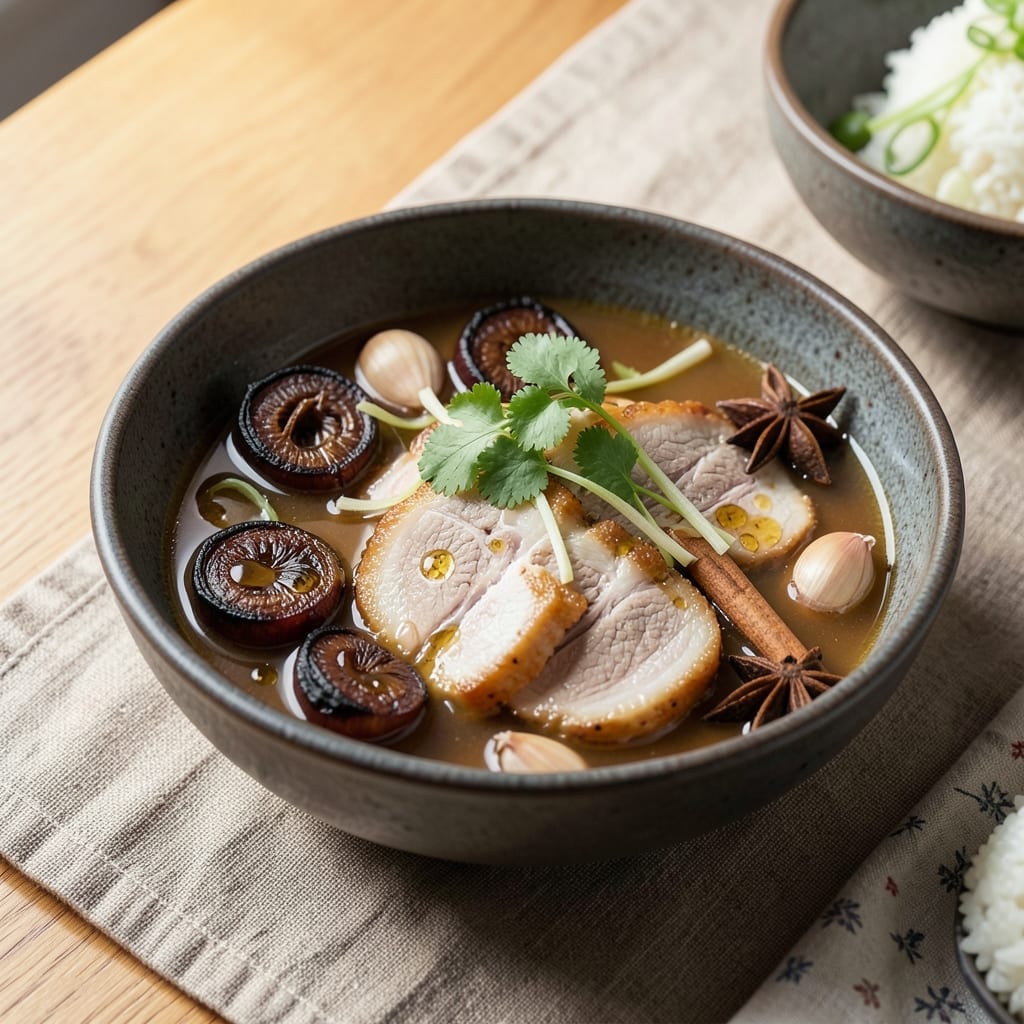
This Asian pork broth recipe transforms humble pork bones into a fragrant, five-spice-infused elixir that forms the heart of countless meals. The slow simmer unlocks deep umami layers—think star anise, cinnamon, and ginger—that elevate simple rice or noodles to restaurant-quality depth. I've perfected this technique over years of testing, ensuring every sip delivers that perfect balance of richness and clarity.
The secret lies in the aromatics: charred ginger and garlic form the foundation, while star anise and cloves add complexity that builds as it simmers. Unlike quick broths, this requires patience—4 to 6 hours of gentle cooking to extract maximum flavor without bitterness. The result? A golden, crystal-clear liquid that's equally at home in pho bowls, dumpling broths, or as a base for stir-fries.
What makes this broth special is its versatility—it adapts to any Asian cuisine while maintaining its core character. Chinese-style versions lean toward soy and fermented flavors, while Japanese approaches might include kombu for brightness. The key is controlling the simmer: too aggressive, and you'll get cloudy broth; too gentle, and flavors won't develop fully.
Serve it piping hot over steamed rice with quick-pickled vegetables for a complete meal, or use it as the base for your favorite noodle dishes. The beauty of this broth is that it tastes even better the next day—proof that good things come to those who simmer. Let's get started on creating your flavor foundation.
Ingredients for asian pork broth
Pork bones, aromatic spices, and slow simmering create this fragrant, five-spice-infused Asian elixir.
| Ingredient | Amount | Notes |
|---|---|---|
| Pork Bones 🍖 | 3 lb | Marrow-rich for richness |
| Yellow Onion 🧅 | 2 whole | Charred for depth |
| Fresh Ginger 🌿 | 3 oz | Charred, peeled slices |
| Garlic Cloves 🧄 | 8 cloves | Charred for sweetness |
| Star Anise Pods 🌶️ | 4 whole | Whole for easy removal |
| Cinnamon Sticks 🌿 | 2 whole | For aromatic warmth |
| Cloves 🌶️ | 6 whole | Lightly crushed |
| Dried Shiitake Mushrooms 🍄 | 4 whole | Rehydrated for umami |
| Light Soy Sauce 🍶 | ½ cup | For saltiness balance |
| Rice Vinegar 🍶 | 2 tbsp | For bright acidity |
| Sesame Oil 🫒 | 1 tbsp | Finish for aroma |
| Water 💧 | 8 cups | Filtered preferred |
| Salt 🧂 | 1 ½ tsp | Adjust to taste |
The pork bones are non-negotiable here—marrow-rich ones from the butcher section (not pre-packaged) deliver that luxurious depth. Costco or local Asian markets usually carry the best cuts, but any grocery store with a meat department will have options. Char the onion and ginger first—this step unlocks their sweetness and complexity. Whole spices like star anise and cloves should be sourced from bulk bins at places like Penzeys or the international aisle for maximum potency. If you can't find fresh shiitake, dried ones work perfectly—just soak them in hot water until tender.
No star anise? Anise seeds at double the amount work in a pinch, though the flavor won't be identical. Running short on ginger? Galangal root (found in Asian markets) adds a citrusy kick. The soy sauce can be swapped for tamari if gluten-free is a concern, but regular light soy keeps the balance perfect. For extra umami, add 1 tbsp fish sauce (though this would make it non-vegetarian) or 1 tsp mushroom powder. The sesame oil is purely for finishing—don't skip it, but add it last to preserve its aroma.
This broth tastes better the next day, so make extra. Store in glass jars in the fridge for up to 5 days or freeze in ice cube trays for up to 3 months. The spices can be removed after simmering and reused—just rinse and store them in a dry jar. For serving, strain through a fine-mesh sieve lined with cheesecloth for crystal-clear results. The broth keeps its depth when reheated gently—never boil it, or you'll lose those delicate aromatics.
Why You'll Love This Recipe
- Pantry-Friendly Start: I swear by this—no last-minute grocery runs. Star anise and ginger sit in my cabinet for months, and those pork bones? I freeze them in bulk after my butcher’s day. Just pull, simmer, and let the magic happen.
- Umami Bomb: That first sip? Chef’s kiss. The pork bones melt into the broth, releasing deep, savory richness while the star anise and garlic cloves layer in warmth. Honestly, I’ve made it plain and with just salt—still incredible.
- Leftovers That Shine: This broth doesn’t just work for leftovers—it elevates them. Toss it with rice and quick-fried greens for lunch, or use it as the base for dumpling soup. My freezer’s always stocked because it’s the unsung hero of my meals.
- Budget Booster: I spend $15 on a whole pork shoulder, render the fat, and roast the bones myself. That same bag of bones makes three batches of broth, and the aromatics cost pennies. Between us, this is how I feed my family well without breaking the bank.
Step-by-step instructions for Asian pork broth
This fragrant broth builds layer upon layer of flavor—start with charring aromatics, then let spices and pork bones infuse slowly.
Char the Aromatics for Depth
Heat a dry skillet over medium-high heat. Add the 2 whole yellow onions, peeled and cut in half, and char them until blackened in spots—about 8-10 minutes. Flip occasionally so they brown evenly. Transfer to a cutting board and let cool slightly before peeling away the charred skin. This caramelization adds a smoky sweetness that forms the broth's foundation.
While the onions cool, add the 3 oz fresh ginger, peeled and sliced into ¼-inch pieces, to the same skillet. Char for 3-4 minutes until fragrant and slightly blackened. Remove and set aside with the onions. Next, add the 8 cloves garlic, peeled and left whole. Char for 1-2 minutes until golden brown. The garlic should smell intensely sweet and nutty—this is your signal to remove it from the skillet.
Build the Spice Base
In a large stockpot, combine the 3 lb pork bones with the 8 cups water. Bring to a boil over high heat, then reduce to a simmer and skim off any foam that rises to the surface. This removes impurities and ensures a clear broth. Simmer for 20 minutes to begin extracting collagen from the bones.
Add the charred ginger, garlic, and onions to the pot. Stir in the 4 whole star anise pods, 2 whole cinnamon sticks, and 6 whole cloves. The spices should float just beneath the surface. Let the broth simmer gently for 1 hour, maintaining a low bubble. This slow infusion allows the spices to release their aromatic oils without overpowering the broth's natural sweetness.
Add Umami and Balance Flavors
Soak the 4 whole dried shiitake mushrooms in hot water for 15 minutes to rehydrate. Drain and add them to the pot along with the 0.5 cup light soy sauce and 2 tbsp rice vinegar. The soy sauce adds saltiness while the vinegar brightens the broth's depth. Simmer for another 30 minutes, skimming any additional foam that forms. The mushrooms will break down, releasing their umami-rich essence into the liquid.
Taste the broth and adjust the seasoning with the 1.5 tsp salt if needed. The broth should be rich but not salty—think of it as a flavorful base that will complement dishes rather than overpower them. Remove the cinnamon sticks and star anise pods at this stage, but leave the cloves and mushrooms in for now—they'll soften further as the broth cools.
Finish and Strain
Reduce the heat to low and let the broth simmer uncovered for 2 more hours. This slow reduction concentrates the flavors and deepens the broth's complexity. Skim any remaining foam periodically to keep the broth clear. The final texture should be velvety, with a subtle sheen that indicates proper reduction.
Strain the broth through a fine-mesh sieve into a clean pot, pressing gently on the solids to extract every last drop of flavor. Discard the solids. Stir in the 1 tbsp sesame oil just before serving—this adds a delicate nutty aroma that elevates the broth's overall profile. The finished broth should smell like a symphony of charred aromatics, warm spices, and umami richness, ready to transform any dish it touches.
Pro Tips For Making Asian Pork Broth
- Char the Bones First: I learned this the hard way—skipping the char step means your broth will taste bland. Get those pork bones screaming hot in a dry pot until they turn deep brown in spots (about 5-7 minutes). This caramelizes the collagen and builds flavor before you even add water.
- Slice Ginger Thin: Thick ginger chunks? They’ll turn to mush and sink to the bottom, leaving your broth with just a hint of their flavor. Instead, slice those knobs paper-thin (almost like rice paper) so they infuse properly without disappearing.
- Don’t Rush the Simmer: After the initial boil, drop the heat until you’re barely seeing bubbles—just a few tiny ones breaking the surface. Too much heat = cloudy broth. Too little? You’ll wait forever. Aim for a slow, steady simmer (about 120°F/49°C) to extract collagen without turning it murky.
- Toast the Star Anise: Sounds weird, but it works: lightly toast the star anise pods in a dry pan for 30 seconds before adding them to the broth. This deepens their aroma and prevents that bitter, medicinal taste that sneaks in if you toss them in raw. (Yes, even if you’re impatient like me.)
Flavor customization for this dish
Spicy Kick
For a fiery twist, add 1 tbsp gochugaru (Korean chili flakes) or ½ tsp Sichuan peppercorns when building the spice base. The peppercorns add a numbing heat that pairs perfectly with the broth's umami depth. I love this in Vietnamese-style pho—just simmer them with the star anise and cloves. 🌶️
Citrus Brightness
Boost freshness with zest from 1 lime or lemon and 1 tbsp juice during the final 10 minutes of simmering. This cuts through the richness beautifully, especially in summer versions. For extra zing, add ½ cup fresh cilantro at the end—it infuses quickly and adds a bright herbal note.
Smoky Depth
Swap charred aromatics for a smoky profile by adding 1 tbsp smoked paprika or 2 slices of charred pineapple (from grilling) to the pot during the first hour of simmering. This works amazingly in Korean-inspired versions. The pineapple adds a subtle sweetness that balances the pork's richness perfectly.
Herbal Infusions
For a Thai-inspired twist, add 4 kaffir lime leaves and 1 stalk lemongrass (bruised) during the final hour of simmering. Remove them before straining—these herbs add a floral, citrusy aroma that elevates the broth's complexity. I discovered this variation while testing recipes from my Thai cookbook collection.
Fermented Umami
Deep dive into funky flavors by adding 1 tbsp doubanjiang (spicy fermented chili bean paste) or 1 tbsp miso paste during the final 30 minutes. This adds a savory, slightly funky depth that's perfect for Chinese-style noodle soups. The miso version works particularly well if you're making extra for leftovers.
Sweet Balance
For a dessert-like sweetness, stir in 1 tbsp honey or brown sugar during the final 15 minutes of simmering. This works surprisingly well with the spicy elements, creating a complex flavor profile that's perfect for serving with congee or rice porridge. The sweetness also helps balance any bitterness from over-simmered bones.
Nutrition facts
Frequently asked questions
Can I use chicken or beef bones instead of pork?
While pork bones deliver that signature umami richness, you can absolutely use chicken or beef bones! For chicken, add 1 tbsp fish sauce or 1 extra shiitake mushroom to boost depth. Beef bones need 1.5 hours longer simmering time to fully render collagen. The flavor profile will shift—chicken becomes lighter, beef deeper—but the technique remains identical.
Why does my broth look cloudy after simmering?
Cloudiness usually means either over-simmering (breaking down collagen) or not skimming foam early enough. For crystal-clear results, skim vigorously for the first 30 minutes, then reduce heat to maintain a gentle simmer. If it's already cloudy, strain through a double layer of cheesecloth for extra clarity.
How can I make this broth vegetarian?
Swap pork bones for shiitake stems and mushroom powder (or 1 cup dried kombu for umami). Use 1 tbsp soy sauce and 1 tbsp miso paste instead of light soy, and add 1 tbsp nutritional yeast for depth. Simmer 1.5 hours longer to compensate for the lack of collagen-rich bones.
Can I make this broth in an Instant Pot?
Yes! Use the "High Pressure" setting for 90 minutes after charring aromatics. After pressure cooking, let it naturally release for 15 minutes, then strain. The Instant Pot version will be slightly less reduced but still packed with flavor. For extra richness, add 1 cup extra water and cook for 2 hours total.
What's the best way to use leftover broth?
Store in glass jars in the fridge for 5 days or freeze in ice cube trays for 3 months. Use it for: pho bowls, dumpling soups, rice porridge, or even as a braising liquid for pork tenderloin. The second day is actually the best—flavors meld beautifully! For extra convenience, freeze in 1-cup portions** for quick meals.