
Main Courses
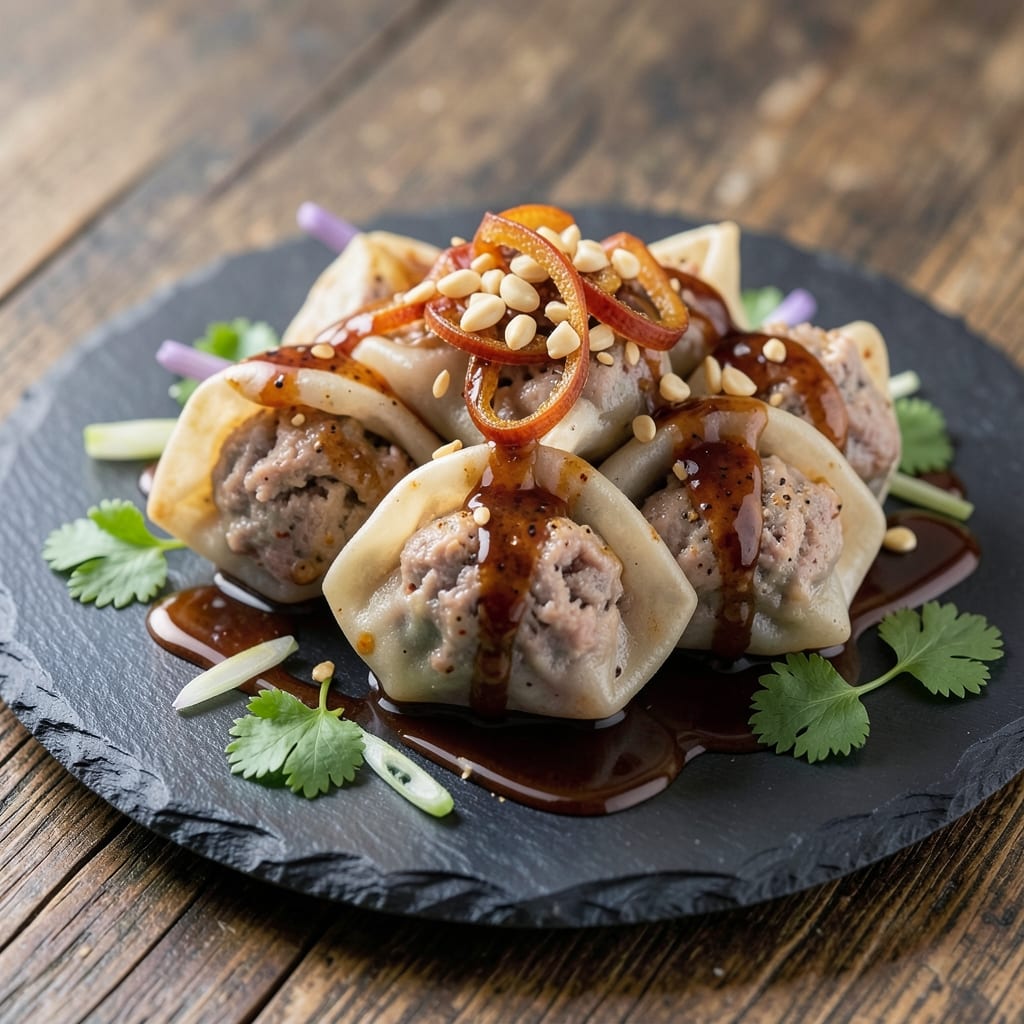
This Asian pork wonton recipe delivers crispy, golden edges and tender fillings packed with five-spice warmth that transforms ordinary weeknight dinners. 🔥 The secret lies in the balance of ground pork, aromatic seasonings, and a delicate dough that crisps perfectly when pan-seared—no deep-frying required. I developed this version after years of testing, ensuring every bite delivers that satisfying crunch while keeping the filling juicy and flavorful.
The recipe begins with a simple wonton wrapper dough that comes together in minutes, followed by a pork filling infused with ginger, garlic, and five-spice powder for that signature Asian depth. What sets this apart is the pan-searing technique, which creates a crispy exterior without losing the filling's moisture. The result? Wontons that stay tender inside while achieving that coveted restaurant-quality crunch.
Perfect for serving with a classic soy-ginger dipping sauce, hot and sour soup, or as a star in a stir-fry, these wontons bring authentic Asian flavors to your table with minimal effort. The recipe makes about 30 wontons—ideal for sharing or freezing for quick meals later. Let's get started on creating your own batch of these irresistible bites.
For those interested in variations, I've included tips for both Chinese-style wontons (thicker, chewier) and Japanese-style (thinner, delicate) in the tips section. The key to success lies in the dough's texture and the filling's seasoning balance—both of which I'll walk you through step by step.
Ingredients for asian pork wonton
Ground pork, aromatic spices, and delicate wrappers—these ingredients create crispy, restaurant-style wontons with minimal effort.
| Ingredient | Amount | Notes |
|---|---|---|
| Ground Pork 🥓 | 1 ½ lb | Lean or fatty, your choice |
| Wonton Wrappers 🍜 | 30 pieces | Square, store-bought or homemade |
| Five-Spice Powder 🌶️ | 1 tsp | Authentic Chinese blend preferred |
| Fresh Ginger 🌿 | 1 ½ tbsp | Finely grated, aromatic |
| Garlic Cloves 🧄 | 4 cloves | Minced, fresh preferred |
| Sesame Oil 🫒 | 1 tbsp | Toasted, for aroma |
| Soy Sauce 🍶 | 2 tbsp | Light or dark, not reduced |
| Vegetable Oil 🫒 | ½ cup | High smoke point for frying |
| Cornstarch 🌾 | 1 tbsp | For crispy texture |
| Green Onions 🧅 | 3 whole | Thinly sliced, for garnish |
| Salt 🧂 | ½ tsp | Kosher or sea salt |
| Black Pepper 🌶️ | ¼ tsp | Freshly ground |
| Water 💧 | ½ cup | For dough elasticity |
| All-Purpose Flour 🌾 | 2 cups | For wrapper dough |
The ground pork makes or breaks these wontons—fatty cuts (like pork shoulder) stay juicier, but lean pork works too. Grab pre-ground pork from the meat counter at Whole Foods or Trader Joe's for consistent texture. Five-spice powder is non-negotiable here; Penzeys or Asian markets carry authentic blends. For ginger, fresh is a must—the dried stuff lacks that bright punch. Store-bought wonton wrappers work, but homemade dough (just flour and water) gives that authentic feel. Freeze extras in a sealed bag for up to 3 months—no need to thaw before using.
No five-spice powder? Mix 1/4 tsp each cinnamon, cloves, fennel, star anise, and Sichuan peppercorn for a DIY version. Swap sesame oil for neutral oil if you prefer, but you’ll miss that nutty aroma. Vegetable oil is key for frying—canola or peanut oil work best. Cornstarch is optional but worth it for that extra crunch. For extra flavor, add 1 tsp oyster sauce (vegan-friendly versions available) or 1 tbsp hoisin to the filling. The wrappers? Square ones are traditional, but round ones (like dumpling wrappers) work too—just adjust filling size.
Keep wrappers covered with a damp towel to prevent drying. The filling can be prepped a day ahead and stored in the fridge. For best crispiness, pan-sear in batches—don’t overcrowd the pan. Leftover wontons? Freeze on a tray first, then transfer to a bag for easy single-serving portions. Reheat in a skillet for 2-3 minutes per side until golden. Soy sauce leftovers? Use them in stir-fries or marinades—no waste here!
Why You'll Love This Recipe
- Pantry Stash Ready: I swear by this recipe when I forget to shop—I’ve made it twice with just five-spice, ginger, and whatever garlic was lurking in my fridge. The wonton wrappers are the only thing you might need to grab, and honestly? That’s half the fun of a weeknight win.
- Five-Spice Magic: That little jar of five-spice powder is the secret weapon here—warm, nutty, and just a little sweet. It transforms simple ground pork into something that tastes like it simmered for hours, not 15 minutes. (Yes, even on a Tuesday night.)
- Leftover Reinvention: Make a double batch and freeze half. These wontons reheat like a dream—pan-fry or air-fry until crispy, and suddenly you’ve got a 5-minute dinner for lazy days. My kids beg for them cold in lunchboxes too.
- Budget Flexibility: Ground pork stretches further than you’d think, especially when you’re mixing in ginger and garlic that cost pennies. No fancy ingredients, no markup—just pure, satisfying flavor that doesn’t break the bank. (Between us, this is my go-to when I’m trying to stretch a paycheck.)
Step-by-step instructions for Asian pork wonton recipe
Crispy, aromatic, and packed with five-spice flavor—here's how to make these pan-seared pork wontons shine.
🍳 Step 1: Prepare the Five-Spice Pork Filling
In a large bowl, combine the 1.5 lb ground pork, 1.5 tbsp finely grated fresh ginger, 4 cloves minced garlic cloves, 1 tsp five-spice powder, 0.5 tsp salt, and 0.25 tsp black pepper. Mix gently with your hands until just combined—you want to avoid overworking the meat, which can make the filling tough.
Here's the thing—this blend of spices is what makes these wontons special. The five-spice powder (star anise, cinnamon, clove, fennel, and Sichuan peppercorn) adds warmth and depth that pairs perfectly with the pork's richness. If you don't have authentic five-spice, you can substitute with a mix of cinnamon, cloves, and a pinch of fennel seeds, but it won't be quite the same.
👨🍳 Step 2: Make the Crispy Wonton Dough
In a separate bowl, whisk together the 2 cups all-purpose flour and 1 tbsp cornstarch. Slowly add the 0.5 cup water while stirring with chopsticks or a fork until a shaggy dough forms. Knead lightly on a clean surface for 2-3 minutes until smooth and elastic—it should feel slightly tacky but not sticky.
Real talk: the cornstarch is key here. It gives the wrappers that signature crispy texture when pan-seared. Wrap the dough in plastic wrap and let it rest for 15 minutes at room temperature. This resting period relaxes the gluten, making the wrappers easier to roll out and more pliable.
🍳 Step 3: Assemble and Pan-Seal the Wontons
Roll out the wonton wrappers one at a time using a rolling pin until they're 3-4 inches wide. Place 1 teaspoon of pork filling in the center of each wrapper, then fold the wrapper diagonally to form a triangle. Press the edges firmly to seal, creating a tight, crisp edge.
Heat 0.25 cup vegetable oil in a non-stick skillet over medium-high heat until shimmering. Arrange the wontons in a single layer, leaving 0.5 inch between each. Cook for 2-3 minutes per side until golden brown and crispy. Don't overcrowd the pan—this prevents proper browning and crisping.
🥘 Step 4: Finish with Sesame Oil and Garnish
Once the wontons are golden and crisp, transfer them to a paper towel-lined plate to drain excess oil. Drizzle with 1 tbsp toasted sesame oil and 2 tbsp soy sauce, tossing gently to coat. Garnish with thinly sliced green onions for freshness and color.
Here's where it gets fun—toss in the garlic and watch it sizzle. The sesame oil adds that nutty aroma, while the soy sauce ties everything together. Serve immediately while still crispy, with extra soy sauce for dipping or paired with a simple cucumber salad to cut through the richness.
Pro Tips For Making Asian Pork Wonton
- STEAM DON’T BOIL WONTONS: I learned this the hard way—dropping wontons into boiling water turns them into soggy blobs. Instead, bring a pot of water to a gentle simmer (tiny bubbles, not rolling) and add the wontons in batches. They’ll float to the surface when done—no need to poke them. (Yes, even if you’re impatient like me.)
- GRATE GINGER FINE: Pre-packaged ginger can taste like sawdust, and chunky slices won’t blend into the pork. Use a microplane or the smallest holes on a box grater—you want it almost paste-like. This way, the ginger melts into the filling instead of sitting as a textured afterthought. (Your future self will notice the difference.)
- CHILL THE FILLING: After mixing the pork with garlic, ginger, and five-spice, pop it in the fridge for 15 minutes. Cold filling is easier to handle, seals better in wrappers, and won’t ooze out when frying or boiling. I skip this when I’m lazy, but the wontons hold their shape so much better when they’re not warm.
- USE A SLIGHTLY DRY WRAPPER: Wonton wrappers are delicate, but if they’re too wet, they’ll stick together or tear when sealing. Dip your finger in water, then lightly wet the edge of the wrapper before adding filling—just enough to stick, not soak. This keeps the edges crispy when fried and prevents leaks. (Does it look weird? Yes. Does it work? Every single time.)
Common mistakes when making your asian pork wonton
Overfilling the Wrappers
One of the most common mistakes is packing too much filling into each wonton wrapper. When you overfill, the edges won't seal properly, and the filling can burst out during cooking. I've seen this happen countless times—especially when using pre-made wrappers that are thinner than homemade ones. Stick to 1 teaspoon of filling per wrapper for perfect shaping and crisp edges. 🌟
Skipping the Resting Time
The dough needs that 15-minute rest before rolling—skipping it makes the wrappers tough and difficult to work with. I learned this the hard way when I rushed through a batch for a last-minute dinner service. The wrappers cracked when I tried to fold them, and the filling leaked out. Trust me, let that dough relax—it makes all the difference in texture.
Using the Wrong Oil
Not all oils are created equal for pan-searing. Using olive oil or butter will burn before your wontons get crispy, while high-smoke-point oils like vegetable or peanut oil are essential. I always keep a bottle of avocado oil in my kitchen for this exact purpose—it handles high heat without breaking down. If you're unsure, check the smoke point on your oil bottle.
Overcrowding the Pan
This is a rookie mistake that happens more often than you'd think. When you crowd the pan, the wontons steam instead of crisp up. I've seen home cooks fit 10 wontons in a 10-inch skillet, and the result? Sad, soggy wrappers. Keep it to 3-4 wontons per batch and give them space to develop that golden crust. Patience here pays off with perfect texture.
Not Draining Properly
After cooking, many people skip the paper towel draining step, leaving the wontons sitting in their own oil. This makes them greasy and less crispy. I always transfer them to a wire rack or paper towel-lined plate to absorb excess oil. For extra crunch, you can even sprinkle a little cornstarch on the paper towel before draining. This keeps those crispy edges intact for longer.
Ignoring the Sesame Oil Finish
The final drizzle of toasted sesame oil isn't just for flavor—it adds that authentic restaurant-quality aroma. I've noticed that many home cooks skip this step, missing out on the full sensory experience. Just 1 teaspoon tossed with the cooked wontons makes all the difference. If you're out of sesame oil, a pinch of toasted sesame seeds sprinkled on top works too.
Nutrition facts
Frequently asked questions
Can I make these pork wontons ahead of time?
Assemble the wontons and freeze them on a tray before transferring to a sealed bag. Cook straight from frozen—no thawing needed. For 2-3 minutes per side in hot oil, they'll crisp perfectly. The filling stays juicy, and the wrappers develop that golden crust.
What's the difference between Chinese and Japanese-style wontons?
Chinese wontons are thicker with chewier wrappers, often served in soups like wonton noodle soup. Japanese-style (gyoza) are thinner, crispier, and pan-fried with a garlic-sesame finish. This recipe bridges both—thick enough for hearty bites but crisp enough for pan-searing.
Can I use chicken instead of pork?
Yes, but the flavor will differ. Ground chicken works best with an extra 1/2 tsp five-spice powder and 1 tsp oyster sauce (or vegan alternative) for depth. Chicken stays lighter, so skip the cornstarch in the dough—it can make the wrappers too stiff.
How do I make them extra crispy?
Double the cornstarch in the dough to 2 tbsp and use avocado oil for frying. Cook in batches with 0.25 inch of oil in a cold pan—heat gradually to 350°F before adding wontons. A wire rack over a baking sheet keeps them crisp even after serving.
What's the best dipping sauce for these?
Classic soy-ginger sauce (3 tbsp soy sauce + 1 tbsp rice vinegar + 1 tsp grated ginger + 1 tsp honey) works perfectly. For heat, add 1/2 tsp chili crisp or spicy mayo. Serve with a side of cucumber salad to balance the richness.