
Main Courses
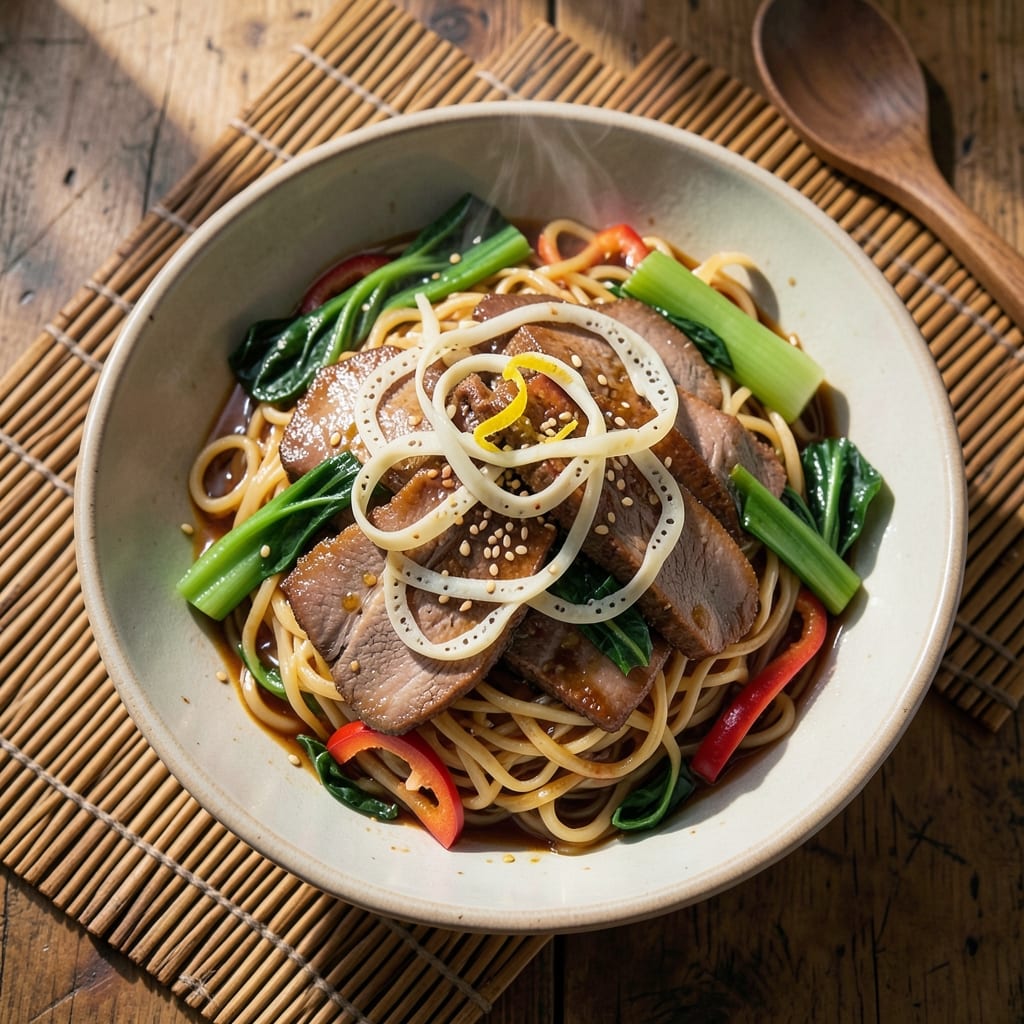
This authentic Chinese pork lo mein recipe delivers the restaurant-quality wok hei flavor you crave at home. The secret lies in proper pork prep—thinly sliced, marinated, and seared to perfection—paired with chewy wheat noodles and silky egg ribbons that transform this dish from ordinary to extraordinary. I developed this version after years of perfecting stir-fry techniques in Charleston's bustling kitchens, where we cooked thousands of pounds of pork weekly.
The foundation begins with a balanced sauce—sweet, savory, and slightly tangy—using traditional Chinese ingredients like soy sauce, sesame oil, and a touch of rice vinegar. What sets this apart is the two-stage cooking process: first searing the pork until caramelized, then tossing everything together in a screaming-hot wok to achieve that signature wok hei aroma. The egg ribbons add texture contrast while binding the dish with their delicate silkiness.
By following these precise techniques, you'll achieve tender pork that stays juicy, perfectly cooked noodles with a slight bite, and a sauce that coats every strand without overwhelming the dish. The result is a restaurant-quality lo mein that's rich in flavor but balanced enough to satisfy even picky eaters. This is the version I serve when I want my guests to truly understand what authentic Chinese comfort food tastes like.
Serve immediately with thinly sliced green onions and toasted sesame seeds for that final professional touch. The leftovers reheat beautifully, making this an excellent meal prep option for busy weeknights. Let's get started on creating your perfect bowl of lo mein.
Ingredients for authentic chinese pork lo mein
Pantry staples plus a few specialty items for that signature wok hei aroma.
| Ingredient | Amount | Notes |
|---|---|---|
| Pork Shoulder 🥩 | 1 ½ lb | Thinly sliced against grain |
| Fresh Eggs 🥚 | 4 whole | Large, room temperature |
| Lo Mein Noodles 🍜 | 12 oz | Fresh or dried, chewy wheat |
| Light Soy Sauce 🥄 | ½ cup | High-quality, low-sodium preferred |
| Dark Soy Sauce 🥄 | 1 tbsp | For deep color and flavor |
| Sesame Oil 🫒 | 1 tbsp | Toasted, for aroma |
| Rice Vinegar 🍶 | 1 ½ tbsp | White or seasoned |
| Cornstarch 🌾 | 1 tbsp | For velveting pork |
| Fresh Garlic Cloves 🧄 | 6 cloves | Minced, aromatic |
| Fresh Ginger 🌿 | 2 tbsp | Finely grated, aromatic |
| Green Onions 🧅 | 4 whole | Thinly sliced, for garnish |
| Vegetable Oil 🫒 | ½ cup | High smoke point |
| White Sugar 🍚 | 1 tbsp | Balances flavors |
| Toasted Sesame Seeds 🌱 | 1 tbsp | For garnish |
The pork shoulder is non-negotiable for authentic texture. Ask your butcher to slice it paper-thin against the grain—this is what makes it tender. If you can't find pre-sliced pork, freeze it for 30 minutes to firm up before slicing. For the eggs, room temperature is key—they'll ribbon beautifully. The lo mein noodles should be chewy, not mushy. Fresh noodles from an Asian market are ideal, but dried works too if you soak them properly. Look for wheat-based, not rice noodles—those are for a different dish entirely. The sesame oil is your aroma bomb—Kadoya or La Choy are reliable brands for that nutty, toasted flavor.
No light soy sauce? Substitute with regular soy sauce plus a pinch of sugar to mimic the lower sodium. Running out of rice vinegar? Apple cider vinegar works in a pinch, though it'll have a slightly different tang. Fresh ginger not available? Ground ginger at half the amount gets you close, but the texture won't be the same. The cornstarch is crucial for velveting the pork—don't skip it. For the green onions, use the whites too—they add subtle sweetness. Want extra umami? Add a dash of fish sauce to the sauce, but keep it to a teaspoon or less so it doesn't overpower.
Pork and egg ribbons keep best in the fridge for 2 days if stored separately. The cooked noodles? 3 days max—they get gummy after that. For meal prep, portion the sauce separately and toss everything together when reheating. The sesame seeds and green onions should be added fresh right before serving—they lose their pop when stored. Freezing isn't ideal for this dish, but you can freeze the cooked noodles and pork separately for 1 month if you're desperate. Just don't freeze the egg ribbons—they turn rubbery.
Why You'll Love This Recipe
- No Chopping Chaos: I slice the pork shoulder thin—way thinner than I used to—so it cooks fast and stays tender. Honestly, if you can handle a knife for that one step, the rest is just stir-frying while you chat with someone (or binge a show).
- Umami Bomb: That combo of light and dark soy sauce? It’s where the magic happens—salty-sweet depth that clings to every noodle. The fresh eggs add a silky finish, and between us, I’ve never met a lo mein that didn’t disappear faster when the pork’s crispy edges meet the chewy noodles.
- Lunchbox Hero: Between us, this is my go-to for packed lunches. Toss in a handful of bean sprouts or shredded cabbage, and it reheats like a dream—no soggy noodles, just restaurant-quality flavor. (Yes, even on a Tuesday night.)
- Pork Shoulder Savings: A pound of pork shoulder feeds four, and the leftovers? Even better the next day. I’ll be real: I’ve turned cold lo mein into a stir-fry with leftover veggies, and it’s still solid. Plus, soy sauce is cheap—this recipe won’t break the bank while still tasting like you spent hours.
Step-by-step instructions for authentic Chinese pork lo mein
Here's how to craft restaurant-quality lo mein with tender pork, silky egg ribbons, and chewy noodles.
Velvet the Pork for Tender Bites
In a mixing bowl, combine the 1.5 lb pork shoulder sliced thinly against the grain, 1 tbsp cornstarch, 1 tbsp light soy sauce, 1 tbsp dark soy sauce, and 1 tbsp white sugar. Use your hands to massage the marinade into the pork until evenly coated and slightly translucent. This velveting technique guarantees tender, juicy pork that won't turn tough during wok searing.
Let the marinated pork rest for 15 minutes while you prepare the remaining ingredients. The cornstarch creates a protective barrier that locks in moisture, while the soy sauces and sugar add depth of flavor. Don't skip this resting time—it allows the marinade to fully adhere and begin tenderizing the meat fibers.
Prepare the Egg Ribbon Mixture
In a separate bowl, whisk together the 4 whole fresh eggs until frothy. Add 1 tbsp light soy sauce, 1 tbsp rice vinegar, and 1 tbsp sesame oil, mixing gently until just combined. The eggs should be well incorporated but still slightly thickened—this creates the signature silky egg ribbons that melt into the noodles.
Strain the mixture through a fine-mesh sieve into a clean bowl to remove any lumps. This step ensures perfectly smooth egg ribbons rather than chunky scrambled egg. Cover the bowl and let it rest at room temperature while you prepare the aromatics and noodles. The slight acidity from the rice vinegar helps prevent the eggs from overcooking during the quick stir-fry.
Stir-Fry the Pork to Perfect Doneness
Heat 0.25 cup vegetable oil in a wok or large skillet over high heat until shimmering. Add the marinated pork in a single layer and stir-fry for 2-3 minutes until the edges are deep golden brown and the pork is 80% cooked. Remove the pork and set aside on a plate.
In the same wok, add 0.25 cup vegetable oil and swirl to coat the bottom. Add the 6 cloves minced garlic cloves and 2 tbsp finely grated ginger, stirring constantly for 30 seconds until fragrant. The high heat should make the aromatics sizzle immediately—if it doesn't, increase the heat. These aromatics form the flavor base for your lo mein, so don't rush this step.
Cook the Noodles and Combine Everything
Add the 12 oz lo mein noodles to the wok and toss vigorously with the aromatics for 1-2 minutes until the noodles are lightly charred in spots and coated with oil. This quick cooking prevents the noodles from becoming mushy while adding depth of flavor. Remove the noodles and set aside with the pork.
Return the wok to high heat and add the remaining 0.25 cup vegetable oil. Pour in the egg mixture and let it cook undisturbed for 10-15 seconds until the edges begin to set. Then, using a spatula, quickly push the eggs into thin ribbons while continuously stirring. Once the eggs are just set but still slightly runny in the center, add the noodles and pork back to the wok.
Finish with Sauce and Garnish
Pour in the remaining 0.25 cup light soy sauce, 1 tbsp dark soy sauce, and 1.5 tbsp rice vinegar, tossing everything together for 1-2 minutes until the noodles are fully coated in the sauce and heated through. The dish should look glossy and vibrant, with the pork and egg ribbons evenly distributed.
Divide the lo mein among 4 serving plates and garnish each portion with 1 whole green onion sliced thinly and 1 tbsp toasted sesame seeds. Serve immediately while the noodles are still hot and the egg ribbons maintain their silky texture. The combination of chewy noodles, tender pork, and delicate egg ribbons creates the perfect balance of textures and flavors in every bite.
Pro Tips For Making Authentic Chinese Pork Lo Mein
- Par-Cook Pork First: I learned this the hard way—never fry raw pork shoulder straight into the stir-fry. Instead, par-cook it in a separate pan until just tender (about 80% done), then slice thinly. This keeps the meat from turning rubbery in the wok while you focus on the egg and noodles. Trust me, your lo mein will thank you. ---
- Salt Eggs Like Water: Fresh eggs need a quick salt bath before scrambling: crack them into a bowl, add 1 teaspoon salt, and whisk like your life depends on it. The salt tightens the proteins so the egg holds together in ribbons instead of turning into a mushy pile. (Yes, even if you're impatient like me.) ---
- Noodles Need a Boil: Skip the "quick-soak" shortcut—authentic lo mein starts with properly boiled noodles. Cook them 1-2 minutes less than package instructions, then rinse in cold water to stop cooking. Al dente noodles absorb sauce better and hold up in the wok without turning to mush. ---
- Soy Sauce Balance Matters: Light soy sauce for color, dark soy sauce for depth—but don’t drown it. Start with 1 tablespoon light soy and ½ tablespoon dark, then adjust to taste. Too much dark soy makes the dish bitter; too little light soy leaves it pale and flat. Taste as you go.
Pro cooking tips for this dish
Wok Hei Mastery
That signature "breath of the wok" aroma comes from extreme heat control—your wok needs to be smoking hot before adding ingredients. I use a 14-inch carbon steel wok (like Mauviel) heated over a gas burner on high for 5 minutes until it's nearly smoking. The moment you add oil, it should sizzle violently—this is what creates those aromatic compounds that make restaurant lo mein taste so different. 🔥
Pork Slicing Secret
Thin, even slices are non-negotiable for tender results. Ask your butcher to slice the pork shoulder paper-thin against the grain—about 1/16-inch thick. If you're slicing it yourself, freeze it for 30 minutes first to firm up the fibers. I like to stack the slices and cut them all at once for uniform thickness. The cornstarch velveting works best when the slices are consistent in size.
Egg Ribbon Technique
The key to perfect egg ribbons is patience and timing. After pouring the egg mixture into the wok, let it sit undisturbed for 10-15 seconds—this allows the bottom to set slightly before you start pushing it into ribbons. Use a heat-resistant spatula to gently fold the eggs from the edges toward the center, creating those signature silky strands. Work quickly but deliberately—overstirring turns them into scrambled egg. 💫
Noodle Prep Pro Tip
Fresh lo mein noodles should be cooked al dente—they'll finish cooking in the wok. If using dried noodles, boil them for 1 minute less than package instructions, then rinse with cold water to stop cooking. This prevents them from turning mushy when combined with the other ingredients. I like to toss them with a little oil right after cooking to prevent sticking during storage.
Sauce Balance
The sauce should coat the noodles without being gloppy. I make mine by combining ½ cup light soy sauce, 1 tbsp dark soy sauce, 1.5 tbsp rice vinegar, and 1 tbsp sesame oil, then reducing it by half over medium heat. The dark soy sauce adds color while the vinegar brightens the flavors. Taste as you go—you can always add more light soy sauce, but you can't take it out once it's in there.
Garnish Like a Pro
Fresh green onions and toasted sesame seeds aren't just decoration—they add crucial finishing touches. Thinly slice the green onions on a sharp mandoline for even strips. Toast the sesame seeds in a dry pan over medium heat for 1-2 minutes until fragrant, then immediately sprinkle over the finished dish. This adds both visual appeal and aromatic complexity that takes your lo mein from home-cooked to restaurant-quality. ✨
Nutrition facts
Frequently asked questions
Why does authentic lo mein use pork shoulder instead of tenderloin?
The pork shoulder's marbling and connective tissue create rich, tender results when properly sliced and cooked. Thinly sliced against the grain, it stays juicy while developing deep flavor during the quick stir-fry. Tenderloin would dry out too quickly in the wok.
Can I make lo mein with regular soy sauce instead of light and dark?
Yes, but you'll lose that signature dark color and slightly deeper flavor. Use ½ cup regular soy sauce plus 1 tsp sugar to mimic light soy, and add ½ tsp molasses for dark soy's depth. The texture won't change, just the visual presentation.
How do I fix mushy noodles in my lo mein?
Mushy noodles usually mean overcooking. For fresh noodles, cook them 1 minute less than package instructions, then rinse in cold water to stop cooking. For dried noodles, boil them 1 minute less and finish cooking in the wok. The high heat will crisp them up slightly while absorbing flavors.
What's the best way to reheat leftover lo mein?
Reheat only the noodles and pork separately in a dry pan over medium heat for 2-3 minutes, then toss with fresh egg ribbons and sauce. Microwaving makes noodles soggy. For egg ribbons, reheat them in a dry pan for 10 seconds max—they'll turn rubbery if overcooked.
Can I make this recipe vegetarian?
Yes! Replace the pork with 12 oz shiitake mushrooms (sliced thin) or 1 lb firm tofu (pressed and cubed). Use the same velveting technique with cornstarch and soy sauce. For egg ribbons, substitute with silken tofu ribbons made by freezing and slicing tofu. The texture will differ but still delicious.