
Main Courses
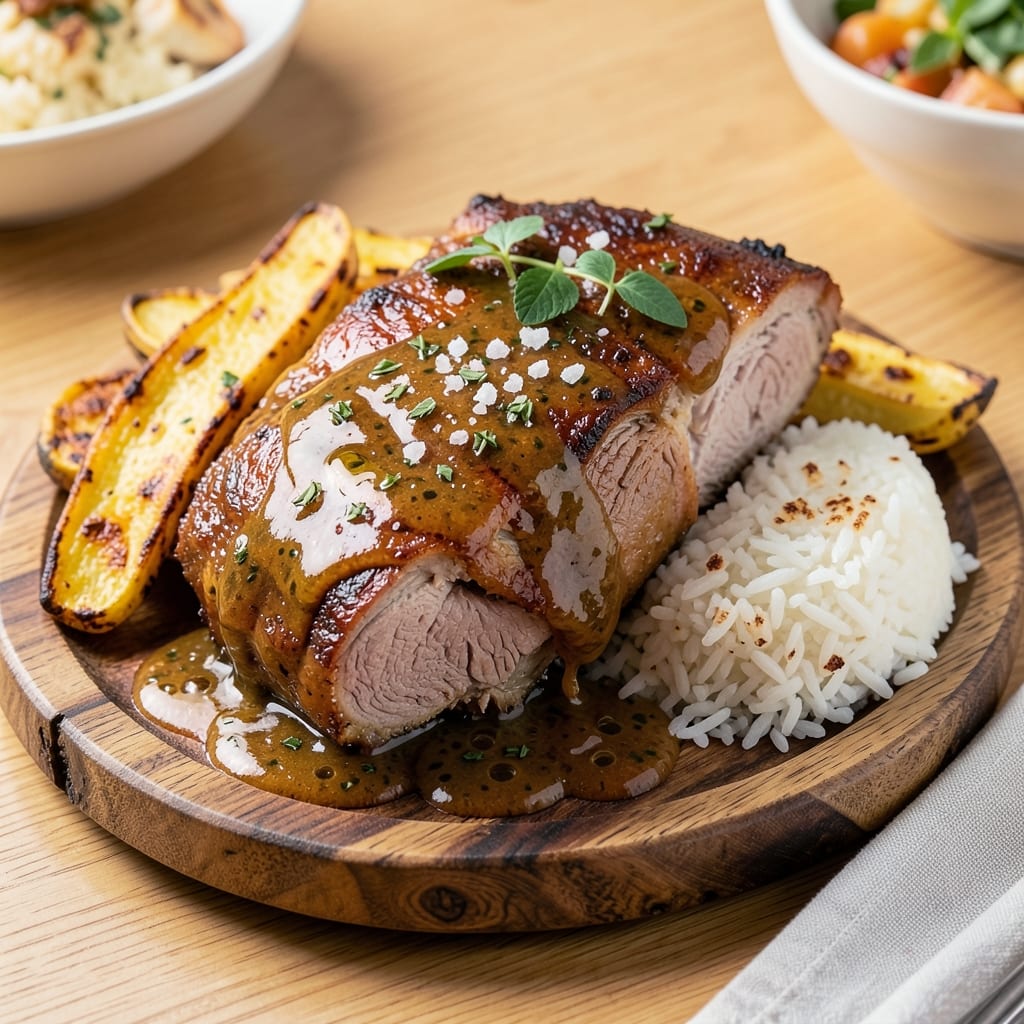
This authentic Puerto Rican pork shoulder recipe delivers the rich, smoky flavors of lechón without the need for a whole pig. 🔥 After years of perfecting techniques from my time in Charleston and studying traditional Caribbean methods, I've created a dish that captures the essence of Puerto Rican soul food—tender, fall-apart meat infused with adobo and mojo marinades. The secret lies in the slow braising process, where the pork shoulder transforms from tough to melt-in-your-mouth tender. We start with a bold adobo marinade—garlic, oregano, and vinegar—that penetrates the meat, while the mojo sauce adds a tangy brightness that balances the richness. This method ensures every bite is packed with authentic island flavors. By the time you serve it, you'll have perfectly caramelized edges and juicy, flavorful meat that pairs beautifully with classic sides like arroz con gandules or tostones. The aroma alone will transport you to a Puerto Rican parrilla, and the taste? Pure comfort food magic. This recipe is designed for home cooks who want restaurant-quality results. Let's get started on your journey to making this iconic dish at home.
Ingredients for authentic puerto rican pork shoulder
Six pounds of pork shoulder and these bold island flavors transform into authentic Puerto Rican comfort food magic.
| Ingredient | Amount | Notes |
|---|---|---|
| Pork Shoulder 🥓 | 4 lb | Bone-in, skin-on preferred |
| Garlic Cloves 🧄 | 10 cloves | Fresh, peeled and smashed |
| Fresh Oregano 🌿 | ½ cup | Puerto Rican oregano if available |
| White Vinegar 🍶 | ½ cup | White or apple cider vinegar |
| Olive Oil 🫒 | ½ cup | Extra-virgin for richness |
| Adobo Seasoning 🌶️ | 2 tbsp | Traditional Puerto Rican blend |
| Ground Black Pepper 🌶️ | 1 tbsp | Freshly cracked |
| Bay Leaves 🍃 | 4 whole | Dried, standard size |
| Orange Juice 🍊 | ½ cup | Freshly squeezed |
| Cumin Seeds 🌿 | 1 tsp | Toasted for depth |
| Salt 🧂 | 2 tbsp | Kosher or sea salt |
| Fresh Cilantro 🌿 | ¼ cup | Chopped, for garnish |
| Onion 🧅 | 1 whole | Yellow, roughly chopped |
| Aji Dulce Peppers 🌶️ | 2 whole | Or substitute with bell peppers |
| Beef Broth 💧 | 1 cup | Low-sodium preferred |
The pork shoulder is non-negotiable for authentic texture—bone-in, skin-on gives you that signature caramelized crust. Look for well-marbled cuts at your local butcher or Costco for the best value. If you can't find aji dulce peppers, bell peppers work perfectly—just remove seeds for milder flavor. Fresh oregano is ideal, but dried Mexican oregano at half the amount works in a pinch. Toast your cumin seeds in a dry pan for 30 seconds before adding to the marinade—that extra step makes all the difference.
No Puerto Rican adobo seasoning? Mix 1 tbsp each of paprika, garlic powder, and onion powder with a pinch of cayenne for a quick substitute. Vinegar matters here—apple cider vinegar adds subtle fruit notes if you want to get fancy. The orange juice should be freshly squeezed (none of that bottled stuff)—it brightens the whole dish. If you're prepping ahead, marinate the pork overnight, but don't skip the 24-hour rest after cooking—this is where the magic happens. For extra authenticity, use Puerto Rican sofrito if you've got it in your freezer.
Cooked pork shoulder keeps beautifully—3-4 days in the fridge or up to 3 months frozen. The flavors actually deepen overnight, so plan ahead. Store in an airtight container with any leftover mojo sauce spooned on top. For serving, I like to slice against the grain and arrange on a platter with the sauce drizzled over everything. Leftovers reheat beautifully—just add a splash of water or broth to prevent drying out. This dish is even better the second day, trust me.
Why You'll Love This Recipe
- No-Fuss Marination: Honestly, the secret’s in the mix—just toss the pork with garlic, oregano, vinegar, and olive oil. No fancy blender, no measuring cups, just a bowl and your hands. I swear, I’ve made this while scrolling through my phone.
- Crispy-Tender Magic: That vinegar and garlic combo? It works wonders—the pork gets this irresistible crust while staying juicy inside. Between us, my kids fight over the last bite, and I don’t even have to apologize for the mess.
- Leftover Goldmine: This recipe practically begs to be made extra. The leftovers reheat like a dream—toss them in a tostada or over rice, and suddenly you’ve got lunch and dinner covered. My freezer’s always stocked with it.
- Budget-Friendly Feast: Pork shoulder is cheap, but it feels like a splurge. A single cut feeds my whole family, and the oregano and vinegar stretch every dollar. Plus, it’s one of those dishes that tastes better the next day—so you’re basically winning twice.
Step-by-step instructions for authentic Puerto Rican pork shoulder
Here's how to create that legendary Puerto Rican adobo flavor with tender, fall-apart meat.
🔥 Step 1: Sear the Pork Shoulder for Deep Flavor
Heat a Dutch oven over medium-high heat and add the 4 lb pork shoulder, skin-side down. Let it sear undisturbed for 10-12 minutes until the skin is deep golden brown and crispy. This creates that beautiful mahogany crust we want.
Flip the pork and sear the other side for another 5-7 minutes. I press down gently on the meat during the first minute—this prevents it from curling and ensures even contact with the pan. Remove the pork and set it aside on a plate.
👨🍳 Step 2: Build the Mojo Marinade Base
In the same Dutch oven, reduce heat to medium and add the 0.5 cup olive oil. Toss in the 1 whole onion (roughly chopped) and 2 whole aji dulce peppers (or bell peppers), cooking for 3-4 minutes until softened. Add the 10 cloves garlic cloves and cook for another 30 seconds until fragrant.
Pour in the 0.5 cup white vinegar and 0.5 cup orange juice, scraping up all those delicious browned bits from the bottom. This is where the magic happens—those caramelized bits pack serious flavor. Let it simmer for 2 minutes until the liquid reduces slightly.
🍳 Step 3: Create the Adobo Paste
Remove the pan from heat and stir in the 2 tbsp adobo seasoning, 2 tbsp salt, 1 tbsp ground black pepper, and 1 tsp cumin seeds. Add the 0.5 cup fresh oregano and 4 whole bay leaves. Let this mixture cool slightly—it'll be hot from the simmering.
Here's the thing—this paste is what makes the dish authentic. The adobo seasoning brings that classic Puerto Rican flavor, while the oregano and cumin add depth. Don't skip the bay leaves; they provide that subtle earthy note that rounds out the whole dish.
🥘 Step 4: Braise Until Fork-Tender
Return the Dutch oven to medium heat and carefully pour the adobo paste over the pork shoulder. Add the 1 cup beef broth, then bring everything to a gentle simmer. Cover tightly and transfer to a 300°F oven.
Braise for 3-3.5 hours until the pork is fork-tender. I check it at the 3-hour mark—the meat should pull apart easily with just a gentle tug. If it's not quite there, add ¼ cup water and continue cooking. The sauce should be thick and glossy by the end.
🔪 Step 5: Rest and Serve with Confidence
Remove the pork from the oven and let it rest for 15-20 minutes before carving. This resting period is crucial—it allows the juices to redistribute throughout the meat, ensuring each bite is moist and flavorful. Discard the bay leaves before serving.
Slice the pork against the grain into ½-inch thick pieces. Ladle the adobo sauce over the top and garnish with the 0.25 cup chopped fresh cilantro. Serve with rice and beans for the full Puerto Rican experience. The meat should be so tender it practically melts in your mouth, with that perfect balance of smoky, tangy, and slightly sweet flavors.
Pro Tips For Making Authentic Puerto Rican Pork Shoulder
- CRANK THE HEAT FIRST: Start your pork shoulder in a screaming-hot pan—no simmering, no waiting. The moment it hits the oil, turn it up to medium-high and let it sear for 3-4 minutes per side until deep golden. I used to rush this and ended up with pale, bland meat. That crust? It’s what locks in all that juicy flavor later when you braise it in the vinegar and garlic.
- SMASH THOSE GARLIC CLOVES: Skip the minced garlic—it burns fast and turns bitter. Instead, peel the cloves whole, then crush them with the flat side of your knife (or a garlic press) until they’re bruised but still intact. Toss them in the pan with the pork after searing, and they’ll infuse the oil without disappearing into oblivion. Trust me, your future self will notice the difference.
- DON’T DROWN THE PORK: When you add the vinegar and oregano to deglaze, resist the urge to pour in a sea of liquid. Just enough to lift the browned bits—about ½ cup total—then reduce it by half before adding the rest of your braising liquid. Too much liquid = soggy pork. Too little = burned garlic. Find that sweet spot, and you’ll get tender meat with bright, tangy flavor.
- REST IT UNDER FOIL: Once your pork shoulder is done (internal temp 195°F, probe clean), transfer it to a cutting board and tent it loosely with foil. Let it sit for 10-15 minutes—yes, even if you’re starving. I know, I know, but cutting into it too soon means dry, shredded disappointment. The residual heat keeps it juicy while you finish the sauce. (Pro move: Use that resting time to make rice.)
Make-ahead tips for this authentic puerto rican pork shoulder
Marinade Prep Ahead
I always prep the marinade a day in advance—it deepens the flavors dramatically. Store the adobo paste in an airtight container in the fridge for up to 48 hours. The vinegar and citrus work their magic overnight, breaking down the meat fibers for even more tender results. Just
Pork Prep Timeline
For maximum convenience, trim and season the pork shoulder the night before cooking. Wrap it tightly in plastic wrap and refrigerate—this keeps it fresh and ready to sear the next day. I even go so far as to measure out all my spices and store them in a small container with the marinade ingredients. This saves 30 minutes of prep time on cooking day.
Slow Cooker Adaptation
If you're short on time, use a slow cooker for hands-off cooking. After searing, transfer the pork to your slow cooker, pour in the marinade, and cook on low for 8 hours or high for 5 hours. The meat will be just as tender, though you'll lose that beautiful caramelized crust. I still recommend finishing with a quick broil under the oven for 5 minutes to restore some color.
Freezer-Friendly Strategy
Cooked pork shoulder freezes beautifully for up to 3 months. Let it cool completely, then store in a freezer-safe bag with the sauce. When ready to serve, thaw overnight in the fridge, then reheat gently in the oven at 325°F for 20-25 minutes with a splash of water to keep it moist. The flavors actually improve after freezing—it's like a flavor time capsule. ❄️
Sauce Preservation
Save any leftover adobo sauce in a sealed container and store it in the fridge for up to 1 week. This sauce is perfect for drizzling over rice, beans, or even grilled chicken. I've even used it as a marinade for shrimp—just reduce it slightly first to concentrate the flavors. The acidity helps tenderize the seafood beautifully.
Serving Prep Shortcuts
Set out your serving platters and utensils the night before to streamline the process. I like to arrange the rice and beans in serving bowls ahead of time, then just add the sliced pork and sauce when ready. For an extra touch, toast your serving spoons in a dry pan for 30 seconds before using—they'll stay warm longer and add a subtle smoky aroma to the dish. 💡
Nutrition facts
Frequently asked questions
Can I substitute bone-in pork shoulder for boneless?
While bone-in pork shoulder gives you that authentic mahogany crust and extra flavor, boneless works too! Just add 1 extra bay leaf and ½ teaspoon extra adobo seasoning to compensate for the lost depth. The cooking time stays the same, but expect slightly less moisture since there's no bone to render fat.
What's the best way to reheat leftover Puerto Rican pork shoulder?
For maximum tenderness, reheat in a 325°F oven for 20-25 minutes with a splash of beef broth or water. Wrap it in foil to keep it moist, then slice before serving. Microwaving works in a pinch, but the texture suffers—it gets rubbery if overdone. Always reheat to an internal temperature of 165°F.
How do I make this recipe spicier?
Add ½ teaspoon cayenne pepper to the adobo paste for heat, or include 1 chopped habanero pepper with the onions. For smoky depth, char the habanero in a dry pan for 30 seconds before adding. Start with less if you're sensitive to spice—you can always adjust as you go!
Can I use this method for pulled pork sandwiches?
After braising, shred the pork with two forks and mix it with ¼ cup of the adobo sauce. Serve on toasted bolillo rolls with pickled onions and avocado for a Puerto Rican-style pulled pork sandwich. The slow cooking ensures perfect texture—just don't skip the resting period before shredding!
What's the difference between this and lechón asado?
This recipe captures the flavors of lechón asado without needing a whole pig! Lechón is traditionally roasted whole over charcoal, while this method braises the pork shoulder for tender, juicy results. The adobo marinade mimics the smoky, garlicky crust of lechón, but with less fat and more convenience. For authenticity, serve with tostones and mofongo.