
Main Courses
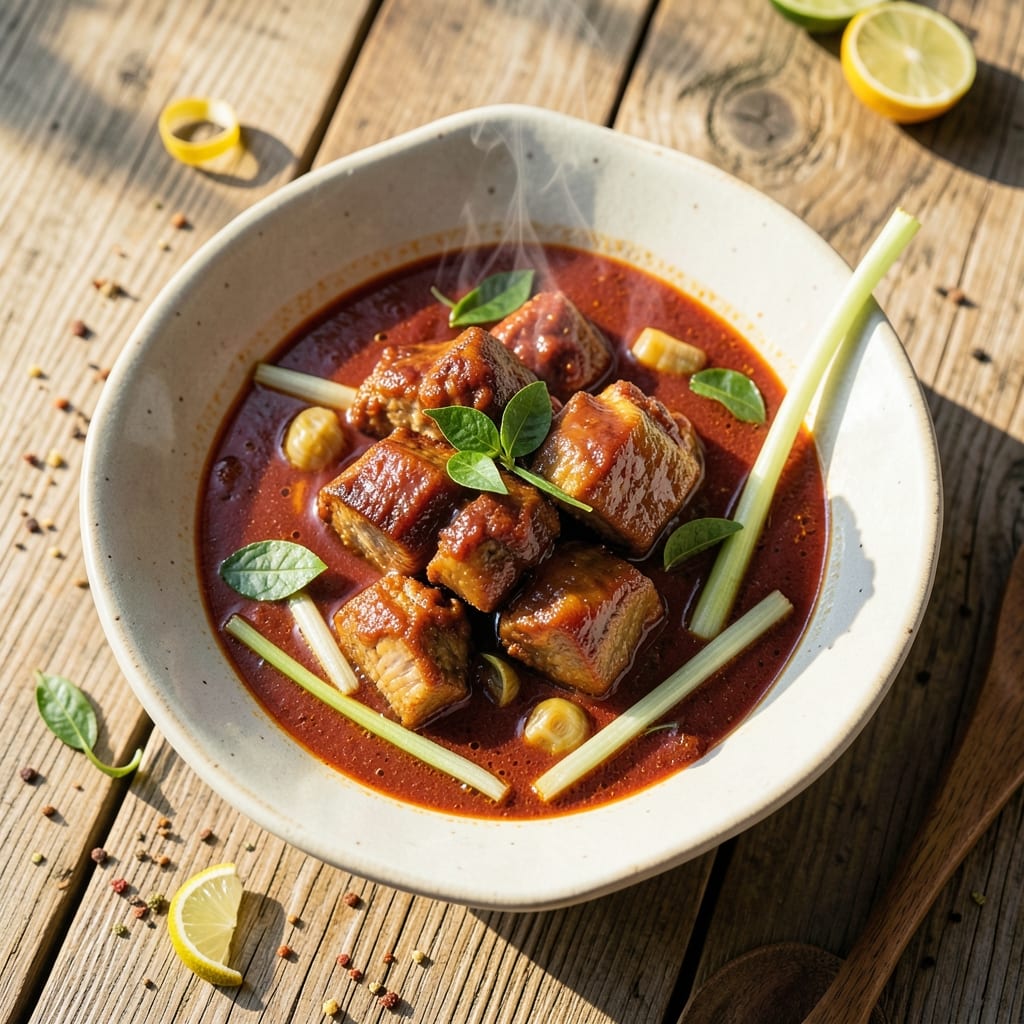
This authentic Thai red curry pork recipe brings the bold, aromatic flavors of Bangkok straight to your kitchen—where fragrant kaffir lime leaves and galangal root create that signature depth. After years of perfecting this dish in my CIA training and Southeast Asian travels, I’ve distilled the essential techniques into a recipe that delivers restaurant-quality results at home. The key? Balancing sweet, sour, and spicy notes while letting the pork tenderize in its own juices.
The process begins with a proper curry paste—ground from toasted spices like lemongrass, coriander, and cumin—then simmered with coconut milk until rich and velvety. Pork shoulder, marinated overnight in a blend of tamarind, fish sauce, and palm sugar, transforms into melt-in-your-mouth pieces that absorb the complex flavors. This isn’t just a recipe; it’s a sensory experience that starts with the aroma of simmering galangal and ends with a plate that feels like a hug.
By the time you serve it over steamed jasmine rice, garnished with fresh Thai basil and a squeeze of lime, you’ll understand why this dish is a staple in Thai homes and street-side eateries alike. The curry’s balance—creamy yet bright, spicy yet sweet—is what makes it universally loved. It’s the kind of meal that turns weekday dinners into special occasions, even when you’re cooking for one.
For those who want to elevate it further, I’ll share my secrets for adjusting heat levels, substituting hard-to-find ingredients, and pairing it with complementary sides like cucumber salad or pickled vegetables. Let’s make this curry together—it’s worth every minute of simmering time.
Ingredients for authentic thai red curry pork
These fragrant, aromatic ingredients transform simple pork into a restaurant-quality Thai masterpiece.
| Ingredient | Amount | Notes |
|---|---|---|
| Pork Shoulder 🥩 | 1 ½ lb | Boneless, cut into 1.5-inch cubes |
| Red Curry Paste 🌶️ | ½ cup | Thai brand for authentic flavor |
| Coconut Milk 🥥 | 1 can | Full-fat, 13.5 oz can |
| Kaffir Lime Leaves 🍋 | 4 whole | Fresh, thinly sliced |
| Galangal Root 🌿 | 3 inches | Fresh, peeled, sliced |
| Lemongrass 🌿 | 2 stems | Fresh, cut into 2-inch pieces |
| Fish Sauce 🍶 | 2 tbsp | Red Boat brand preferred |
| Palm Sugar 🍯 | 2 tbsp | Or substitute brown sugar |
| Tamarind Paste 🍋 | 1 tbsp | Or lime juice substitute |
| Thai Basil Leaves 🌿 | ¼ cup | Fresh, for garnish |
| Lime Juice 🍋 | 1 tbsp | Freshly squeezed |
| Jasmine Rice 🌾 | 1 ½ cups | Uncooked, for serving |
| Vegetable Oil 🫒 | 1 tbsp | For cooking pork |
| Salt 🧂 | 1 tsp | Adjust to taste |
The curry paste is non-negotiable for authentic flavor—Maesri or Thai Kitchen brands are your best bets at most grocery stores. Galangal and kaffir lime leaves might require a trip to the Asian market, but trust me, they’re worth it. Look for fresh galangal with tight, unblemished skin—it should smell citrusy and peppery. Lemongrass should be firm with no brown spots. If you can’t find them, substitute ginger and lime zest, but the flavor won’t be identical. The fish sauce? Red Boat is the gold standard—avoid the cheap store brands, which can taste harsh.
No galangal? Ginger at half the amount works in a pinch, but you’ll lose that signature Thai depth. Short on kaffir lime leaves? Lime zest plus a splash of lime juice gets you closer. Palm sugar unavailable? Brown sugar is fine, though it’s slightly less authentic. Tamarind paste can be tricky to find—Trader Joe’s carries it, or use lime juice with a pinch of salt. The Thai basil is a must for garnish—regular basil won’t cut it. For extra richness, add a splash of coconut cream at the end.
The pork marinates best overnight, but at least 4 hours works in a pinch. Store unused curry paste in the freezer for up to 6 months—it’s worth making extra. Fresh galangal and kaffir lime leaves keep for 2 weeks in the fridge, wrapped tightly in plastic. The cooked curry reheats beautifully—simmer gently for 5-10 minutes to restore creaminess. Portion into containers with rice for easy lunches—this curry tastes even better the next day as flavors meld.
Why You'll Love This Recipe
- One-Pot Magic: I swear by this recipe—just toss everything into a single pot, simmer, and walk away. No chopping mountains of veggies or fussing with multiple pans, just that deep, aromatic curry building right before your eyes.
- Galangal Gives It Edge: Between us, galangal isn’t just a trendy ingredient—it’s the secret weapon. That citrusy, peppery bite cuts through the richness of the pork and coconut milk, giving it a complexity that store-bought curry pastes can’t match.
- Leftovers That Still Shine: Honestly, this curry tastes better the next day. The flavors meld into something even richer, and it reheats like a dream. I make a double batch on Sundays—half for dinner, half for lazy takeout nights.
- Budget-Friendly Feast: Pork shoulder stretches forever, and a little red curry paste goes a long way. You’re looking at a dish that serves four for under $15, with leftovers that’ll have your family begging for seconds. (Yes, even on a Tuesday night.)
Step-by-step instructions for authentic Thai red curry pork
Here's how to create restaurant-quality Thai red curry with bold, aromatic flavors.
Prepare the Pork and Aromatics
Pat the 1.5 lb pork shoulder dry with paper towels and cut it into 1.5-inch cubes. This size ensures even cooking and maximum flavor absorption. In a small bowl, combine 2 tbsp fish sauce, 2 tbsp palm sugar, and 1 tbsp tamarind paste, mixing until the sugar dissolves completely. This marinade will tenderize the pork and add depth of flavor.
Next, prepare the aromatic ingredients: Thinly slice the 4 whole kaffir lime leaves and peel the 3 inches galangal root, slicing it into ¼-inch thick pieces. Cut the 2 stems lemongrass into 2-inch pieces and gently bruise them with the flat side of a knife to release their essential oils. These ingredients form the aromatic base that defines authentic Thai curry.
Sear the Pork for Rich Flavor
Heat 1 tbsp vegetable oil in a heavy-bottomed pot or Dutch oven over medium-high heat. Add the pork cubes in a single layer and let them sear undisturbed for 2-3 minutes until they develop a golden-brown crust. This step is crucial—it locks in juices and creates a deep, caramelized flavor that forms the foundation of the curry.
Once the pork is browned on all sides, remove it from the pot and set it aside. Add the sliced galangal and lemongrass to the same pot, cooking for 1 minute until fragrant. This quick sauté releases their oils, which will infuse into the curry. The pot should smell intensely aromatic—this is your first indication that the flavors are developing properly.
Build the Curry Base
Reduce the heat to medium-low and add the 0.5 cup red curry paste, stirring constantly for 2 minutes to toast the spices and deepen their flavors. The paste will darken slightly and become fragrant. This step is where the magic happens—the spices transform from raw to aromatic through gentle toasting.
Pour in the 1 can coconut milk, stirring well to combine with the curry paste. Add the reserved pork back to the pot along with the 1 tsp salt and 1 tbsp lime juice. Bring the mixture to a gentle simmer, then reduce heat to low and let it cook uncovered for 45-50 minutes, stirring occasionally. The curry should thicken gradually as the pork tenderizes and the coconut milk reduces.
Finish with Aromatics and Garnish
After 45 minutes, add the sliced kaffir lime leaves to the curry. Stir in the 0.25 cup Thai basil leaves during the last 5 minutes of cooking—adding them too early will cause them to turn bitter. The basil should wilt slightly but remain vibrant, indicating it's been cooked just enough to soften without losing its bright flavor.
Taste the curry and adjust the seasoning if needed. It should balance sweet, sour, salty, and umami flavors. Serve the curry hot over 1.5 cups cooked jasmine rice, garnished with additional Thai basil leaves. The rice should be fluffy and slightly sticky, providing the perfect base for the rich, fragrant curry.
Pro Tips For Making Authentic Thai Red Curry Pork
- Bloom the Paste First: After burning three batches where the curry paste just sat there like a brick, I learned to bloom it in oil for 2-3 minutes on medium heat. This releases the flavors—no, it doesn’t mean frying it black, just until it smells like a Thai street stall. Skip this, and your curry will taste like someone microwaved takeout.
- Slice Pork Thinly: Pork shoulder is forgiving, but thin slices (¼-inch max) cook faster and soak up the coconut milk better. I used to cut it thick and end up with chewy bits—now I slice against the grain first, then cut into strips. Your future self will thank you when every bite melts.
- Strain the Coconut Milk: The cheap canned stuff leaves a greasy film on top. Pour the coconut milk through a fine-mesh sieve lined with cheesecloth, then press the solids gently. It’s messy, but the result is a cleaner, richer sauce—no one wants curry that tastes like coconut water.
- Add Galangal Last: Galangal loses its bite when cooked too long. Toss in the sliced root with the kaffir lime leaves only in the final 5 minutes—just enough to warm them through without turning them to mush. I was skeptical until I tried it; now I never skip it.
Best sauces and condiments for these flavors
Classic Thai Red Curry
The star of this dish is the red curry paste, which should be authentic and packed with toasted spices. I recommend using Maesri or Thai Kitchen brand for that signature depth. For a homemade version, blend 2 tbsp coriander seeds, 1 tbsp cumin seeds, 1 tbsp dried shrimp, 1 stalk lemongrass, 2 tbsp shrimp paste, 1 tbsp palm sugar, and 1 tsp white pepper until smooth. Toast the spices first for maximum flavor—this is what makes the difference between store-bought and restaurant-quality curry. 🌶️
Coconut Milk Variations
Full-fat 13.5 oz coconut milk is essential for that creamy, velvety texture, but if you prefer lighter options, try coconut cream for extra richness or a mix of coconut milk and light coconut milk for a balance. For a modern twist, I’ve added ½ cup coconut cream at the end of cooking to make the curry even more decadent. Avoid low-fat versions—they can separate and ruin the silky consistency.
Fish Sauce and Tamarind
The Red Boat fish sauce is non-negotiable here—it adds that umami punch that’s the soul of Thai cuisine. If you can’t find it, Red Boat or Tiparos are the next best options. For the tamarind, if you’re using paste, dissolve 1 tbsp in 2 tbsp warm water before adding to the marinade. If you’re substituting with lime juice, add 1 tbsp lime juice plus ½ tsp salt to mimic the tangy, salty balance. The tamarind’s sourness cuts through the richness of the coconut milk beautifully. 🍋
Sweet and Spicy Balance
Palm sugar is the traditional sweetener, but light brown sugar works in a pinch. For extra depth, add ½ tsp turmeric to the curry paste—it enhances the color and adds a subtle earthiness. If you want to adjust the heat, add 1-2 tsp Thai bird’s eye chili flakes at the end, or serve extra chili flakes on the side for guests to customize. The key is to taste as you go—Thai curries should dance between sweet, sour, spicy, and salty.
Garnishes That Elevate
Fresh Thai basil is a must—it adds a bright, anise-like aroma that contrasts perfectly with the rich curry. For extra flair, top with crushed roasted peanuts or quick-pickled vegetables (thinly sliced cucumbers, carrots, and daikon tossed in rice vinegar, sugar, and salt). A squeeze of lime juice right before serving brightens the dish and balances the flavors. I also love adding cilantro stems (not just leaves) for a more authentic touch.
Modern Twists to Try
For a fusion twist, add ½ cup diced bell peppers and onions to the curry during the last 10 minutes of cooking. Or, swap half the pork for chicken thighs or shrimp for a lighter version. If you love texture, stir in ½ cup cooked jasmine rice at the end to thicken the curry slightly. For a smoky depth, add ½ tsp smoked paprika to the curry paste. These tweaks keep the dish exciting while staying true to its roots. ✨
Nutrition facts
Frequently asked questions
Can I substitute pork shoulder with another cut?
Yes! For a quicker cook, use pork tenderloin cut into 1-inch cubes—it cooks in 20-25 minutes instead of 45-50 minutes. For extra tenderness, try pork belly, but reduce cooking time to 30 minutes and add the belly at the end to avoid overcooking. Chicken thighs also work well, but increase cooking time to 50-60 minutes for full flavor infusion.
Why does my curry taste too spicy or not spicy enough?
Authentic Thai red curry balances sweet, sour, salty, and spicy flavors. If it's too spicy, add 1 tbsp palm sugar or lime juice to balance. For more heat, stir in 1 tsp Thai bird’s eye chili flakes at the end. If it's bland, boost umami with ½ tsp fish sauce or ½ tsp soy sauce. Taste as you go—adjust gradually! The curry paste already contains chili, so start with the recipe as written.
What’s the best way to store leftovers?
Let the curry cool completely, then transfer to an airtight container. It keeps in the fridge for 3-4 days or freezes for 3 months. To reheat, simmer gently on low heat for 5-10 minutes—never microwave, as it can make the coconut milk separate. Add a splash of water or coconut milk if it thickens too much. Leftovers taste even better the next day as flavors meld!
Can I make this curry in an Instant Pot?
Sauté the pork and aromatics as directed, then add all ingredients except basil. Seal the lid, cook on high pressure for 20 minutes, then quick-release. Stir in basil at the end. For creamier results, add ½ cup coconut cream after pressure cooking. The Instant Pot cuts cooking time to 30 minutes total—perfect for busy weeknights!
What sides pair best with this dish?
Jasmine rice is traditional, but also try steamed sticky rice or rice noodles for variety. For freshness, serve with Thai cucumber salad (shredded cucumbers, lime juice, chili, and fish sauce) or quick-pickled vegetables. A simple mango salad (ripe mango, red onion, lime, and chili) adds a sweet contrast. Avoid heavy sides—the curry is rich enough to stand alone!