
Main Courses
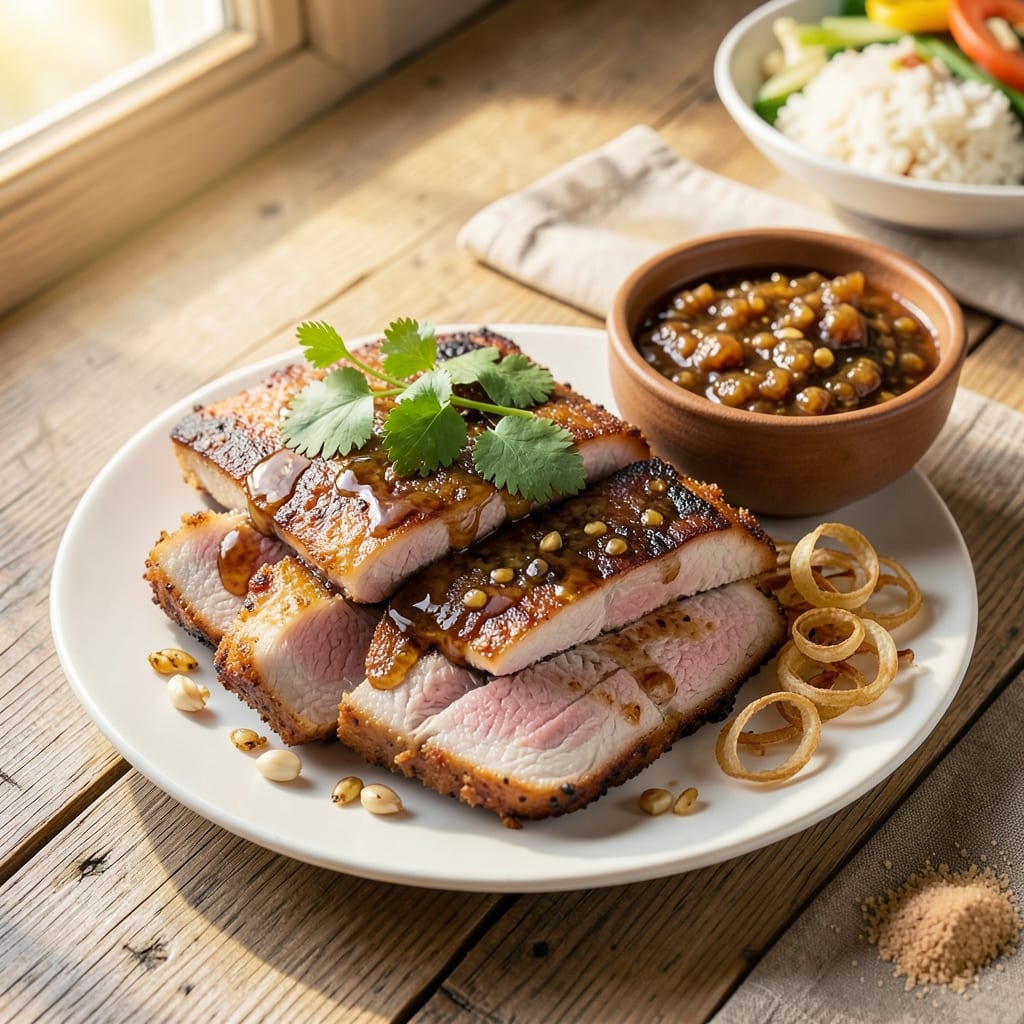
This bagoong pork recipe transforms humble pork into a symphony of salty-sweet fermented shrimp flavor that defines Filipino comfort food. 🔥 Growing up in Georgia, I first tasted it during a family visit to the Philippines, and now it’s my go-to when craving that bold, umami-rich taste. The secret lies in the bagoong—a fermented shrimp paste that adds depth without overpowering the tender pork.
What makes this dish special is its simplicity: just a few ingredients, but each plays a crucial role. The pork gets marinated in a blend of soy sauce, vinegar, and garlic, while the bagoong is simmered into the sauce for that signature tangy kick. Whether stir-fried, braised, or grilled, the result is always juicy, caramelized pork with a sauce that clings perfectly to every bite.
By the time you’re done, you’ll have a dish that’s rich, savory, and impossible to resist—ideal for serving with steamed rice or pairing with a light sinigang broth. The aroma alone will have everyone at the table asking for seconds. This recipe brings a taste of the Philippines to your kitchen, proving that bold flavors don’t require complicated techniques.
Ready to master this Filipino classic? Let’s get started with the full step-by-step process—from marinating to plating—that guarantees restaurant-quality results at home.
Ingredients for bagoong pork
Pork shoulder, fermented shrimp paste, and bold Filipino flavors—this dish needs just a handful of ingredients.
| Ingredient | Amount | Notes |
|---|---|---|
| Pork Shoulder 🥩 | 1 ½ lb | Cut into 1-inch cubes, boneless |
| Bagoong Alamang 🦐 | ½ cup | Fermented shrimp paste, unsalted |
| Soy Sauce 🍶 | ½ cup | Dark soy preferred for color |
| Cane Vinegar 🍶 | ¼ cup | White or apple cider vinegar |
| Garlic Cloves 🧄 | 6 cloves | Minced, fresh preferred |
| Brown Sugar 🍯 | ¼ cup | Packed, light brown preferred |
| Green Onions 🧅 | ¼ cup | Sliced, white and green parts |
| Vegetable Oil 🫒 | 2 tbsp | High smoke point for frying |
| Salt 🧂 | 1 tsp | Kosher or sea salt |
| Black Peppercorns 🌶️ | ½ tsp | Freshly cracked |
| Lime Juice 🍋 | 2 tbsp | Freshly squeezed |
| Fresh Chili Peppers 🌶️ | 1 whole | Siling labuyo or jalapeño, sliced |
The bagoong is non-negotiable here—Filipino markets or Asian grocery stores carry the real stuff, usually in small jars or blocks. Bagoong alamang is the classic choice, but bagoong isda (anchovy-based) works too. If you can't find it, substitute with 1/4 cup fish sauce plus 1 tbsp shrimp paste, though it won't be identical. The pork shoulder? Ask your butcher to cut it into 1-inch cubes—this ensures even cooking. For extra flavor, marinate the pork in half the soy sauce and vinegar overnight, but even 30 minutes makes a difference. The garlic should be fresh, not jarred—minced, not powdered, for real depth.
No cane vinegar? Apple cider vinegar or white vinegar works in a pinch, though cane vinegar's subtle sweetness is ideal. Running low on brown sugar? White sugar plus a pinch of molasses mimics the caramel notes. The green onions are optional but add brightness—use scallions if that's what you've got. For heat, siling labuyo is the authentic choice, but jalapeños or even a dash of cayenne will work. The chili peppers should be sliced thinly—seeds in for heat, out for mildness. And yes, the lime juice is key—freshly squeezed cuts through the richness better than bottled.
This dish tastes even better the next day as the flavors meld. Store leftovers in the fridge for 4-5 days, or freeze portions for 3 months. I like to portion it into containers with a little extra sauce—reheat gently in a skillet for the best texture. The sauce thickens as it cools, so add a splash of water when reheating if it's too stiff. Serve with steamed rice and a side of sinigang broth if you're feeling extra Filipino tonight.
Why You'll Love This Recipe
- Here’s what sold me: I can throw this together while watching TV. Brown the pork, toss in the sauce, let it simmer. Done. No chopping vegetables, no plating like a restaurant. Just reliable, crave-worthy comfort food when I’m too tired to care.
- No-Fuss Ingredients: I swear by this recipe because it uses what’s already in my pantry. Pork shoulder stays cheap and forgiving, bagoong alamang adds that funky depth without hunting for obscure spices, and a handful of garlic cloves? That’s it. No fancy prep, no stress.
- Umami Bomb: That fermented bagoong paste—honestly, it’s the star. The salty, briny punch cuts through the pork’s richness, while the vinegar brightens everything up. The first bite? Crispy edges, tender meat, and a sauce that sticks to your ribs. Dangerously addictive.
- Leftovers for Days: Between us, this dish actually improves the next day. The pork gets even more caramelized, the flavors meld, and reheating it in a skillet? Takes two minutes. I make a double batch on Sundays and eat it all week—no takeout, no excuses.
Step-by-step instructions for bagoong pork recipe
Here's how to transform humble pork into a rich, umami-packed dish with that signature bagoong depth.
🔥 Step 1: Sear the Pork for Maximum Flavor
Heat the 2 tbsp vegetable oil in a large, heavy-bottomed skillet over medium-high heat until shimmering. Add the 1.5 lb pork shoulder cut into 1-inch cubes, working in batches if needed to avoid crowding. Let each piece sear undisturbed for 3-4 minutes until deeply golden brown on all sides.
This initial sear creates the Maillard reaction that builds deep flavor. You'll know it's ready when the pork releases easily from the pan and develops a rich caramelization. Transfer the seared pork to a plate and set aside—we'll return to it later.
🍳 Step 2: Build the Bagoong Sauce Base
In the same skillet (no need to clean it—those browned bits are flavor gold), reduce heat to medium and add the 6 cloves minced garlic cloves. Sauté for 30 seconds until fragrant but not browned—garlic burns faster than you think.
Next, add the 0.5 cup bagoong alamang and stir vigorously to combine with the garlic. You'll notice the paste releases its intense aroma and begins to sizzle. Let it cook for 1-2 minutes until the raw shrimp paste smell transforms into something more complex and savory.
🥘 Step 3: Combine All Ingredients for Perfect Balance
Return the seared pork to the skillet. Add the 0.5 cup soy sauce, 0.25 cup cane vinegar, 0.25 cup packed brown sugar, 1 tsp salt, and 0.5 tsp freshly cracked black peppercorns. Stir everything together and bring to a gentle simmer over medium heat. Let it cook uncovered for 10-12 minutes, stirring occasionally, until the liquid reduces by about half.
Here's where the magic happens—the pork absorbs the bagoong's fermented depth while the vinegar tenderizes the meat. You'll see the sauce thicken slightly and develop a glossy sheen. Taste and adjust seasoning if needed—this is your chance to balance the salty-sweet profile.
⏰ Step 4: Finish with Aromatics and Lime
Stir in the 0.25 cup sliced green onions (both white and green parts) and 1 whole sliced fresh chili peppers. Cook for an additional 2-3 minutes until the onions soften slightly but retain their vibrant color. Finally, add the 2 tbsp freshly squeezed lime juice and toss everything together.
The lime juice brightens the dish and cuts through the richness of the bagoong. You'll notice the pork is now fork-tender with a glossy, sticky sauce clinging to each piece. The chili peppers add a subtle heat that complements the umami without overpowering.
🍽️ Step 5: Rest and Serve with Confidence
Transfer the bagoong pork to a serving platter and let it rest for 5 minutes. This brief resting period allows the juices to redistribute, ensuring each bite is moist and flavorful. Garnish with additional sliced green onions if desired.
Serve immediately with steamed rice to soak up that delicious sauce. The pork should be tender enough to pull apart easily with a fork, with each bite delivering a perfect balance of salty bagoong, sweet brown sugar, tangy vinegar, and fresh lime. The aroma alone will have everyone at the table eager for their first bite!
Pro Tips For Making Bagoong Pork
- CRACK THE PORK FIRST: Pork shoulder is stubborn—hit it with a meat mallet or roll it tightly with your hands before cooking. This keeps it from curling into a tough, uneven mess, especially when you’re searing it later. (I learned this the hard way after cutting into a rock-hard center.)
- TOAST YOUR GARLIC: Crisp your minced garlic in oil until it’s golden, not just fragrant. Burnt garlic ruins the dish, but properly toasted garlic adds a deep, nutty backbone that cuts through the funk of bagoong. Do this first—it’s the foundation.
- DON’T DROWN THE BAGOONG: Stir in bagoong alamang last, just before serving. If you cook it too long, the shrimp paste turns bitter and loses its salty, umami punch. Toss it in at the end and let the residual heat melt it into the pork—no simmering needed.
- USE VINEGAR LIKE A BOSS: Add cane vinegar in two stages: a splash early to tenderize the pork, then another right before serving to brighten the flavors. Too much upfront makes the dish sour; too little later leaves it flat. (Balance is everything—taste as you go.)
Pro cooking tips for this recipe
Pork Cut Matters
The pork shoulder is my top choice for this dish—its fat content keeps the meat juicy while cooking, and the connective tissue breaks down beautifully during the simmer. If you can't find pork shoulder, pork belly works too, but trim the excess fat first to avoid greasiness. For a leaner option, pork tenderloin cuts down on fat but requires shorter cooking times—6-8 minutes total instead of the full 10-12 minutes we simmer here. 🥩
Bagoong Substitutes
If you're struggling to find bagoong alamang, I've got you covered. For a quick substitute, mix ¼ cup fish sauce with 1 tbsp shrimp paste—it won't be identical, but it'll deliver that umami punch. Another option is to blend ½ cup anchovy fillets with 1 tbsp soy sauce until smooth. Just remember, these substitutes won't have the same fermented complexity, but they'll still work in a pinch. The key is balancing the saltiness with the other ingredients.
Vinegar Swaps
Cane vinegar is ideal, but don't stress if you can't find it. Apple cider vinegar or even white vinegar will work—just use the same ¼ cup measurement. For a sweeter profile, add ½ tsp honey or ¼ tsp sugar to compensate for the lack of cane vinegar's natural sweetness. The vinegar's job is to tenderize the pork and balance the bagoong's saltiness, so any vinegar will get the job done. 🍶
Heat Control Secrets
When searing the pork, medium-high heat is critical—too low, and you'll steam the meat instead of creating that beautiful caramelized crust. I use a heavy-bottomed cast iron skillet (my vintage Lodge from 1962) because it distributes heat evenly. If your pan isn't heavy enough, the pork will stick or cook unevenly. For the simmering phase, medium heat prevents the sauce from boiling too vigorously, which could make it splatter or evaporate too quickly. 🔥
Sauce Thickening
If your sauce reduces too much and becomes too thick, don't panic. Simply add 1-2 tbsp water or pork cooking liquid to loosen it up. The sauce should coat the back of a spoon but still be pourable. For extra richness, I sometimes stir in 1 tbsp butter at the end, which adds a velvety texture. The goal is a sauce that clings to the pork without being gluey—this balance makes all the difference in the final dish.
Lime Timing
Adding the lime juice at the very end is crucial—it brightens the dish and cuts through the richness of the bagoong. If you add it too early, the acidity can break down the pork and make the sauce watery. I like to add it just before serving so the flavor remains vibrant. For an extra zing, you can even serve lime wedges on the side so everyone can adjust to their taste. The lime's acidity also helps balance any overly salty flavors from the bagoong. 🍋
Nutrition facts
Frequently asked questions about bagoong pork
What makes bagoong pork different from regular pork dishes?
The star of this dish is the bagoong—a fermented shrimp paste that adds a deep, salty-umami flavor unlike anything else. Unlike typical pork recipes that rely on soy sauce or teriyaki, bagoong brings that authentic Filipino tang and complexity. It's what transforms simple pork into something truly special.
Can I make this recipe without bagoong?
You can try, but you'll miss the signature flavor! For a substitute, blend ½ cup anchovy fillets with 1 tbsp soy sauce until smooth, or mix ¼ cup fish sauce with 1 tbsp shrimp paste. These won't replicate the fermented depth, but they'll add umami. The dish will still be delicious—just different!
How do I know when the pork is fully cooked?
The pork should be fork-tender with no pink remaining in the center. For 1-inch cubes, this takes about 10-12 minutes of simmering after searing. Cut into a piece—if it pulls apart easily with minimal resistance, it's ready. The sauce should also coat the back of a spoon but remain pourable.
What's the best way to store leftovers?
Let the pork cool completely, then store in an airtight container in the fridge for 4-5 days or freeze for 3 months. Reheat gently in a skillet with a splash of water to restore moisture. The flavors actually improve overnight as the bagoong's taste develops further!
Can I use this recipe for other meats?
While pork shoulder is ideal, you can adapt this for chicken thighs (reduce cooking time to 8-10 minutes) or shrimp (simmer just 3-4 minutes). The bagoong sauce works beautifully with these proteins too. Just adjust the cooking time to avoid overcooking—you want tender meat, not rubbery!