
Main Courses
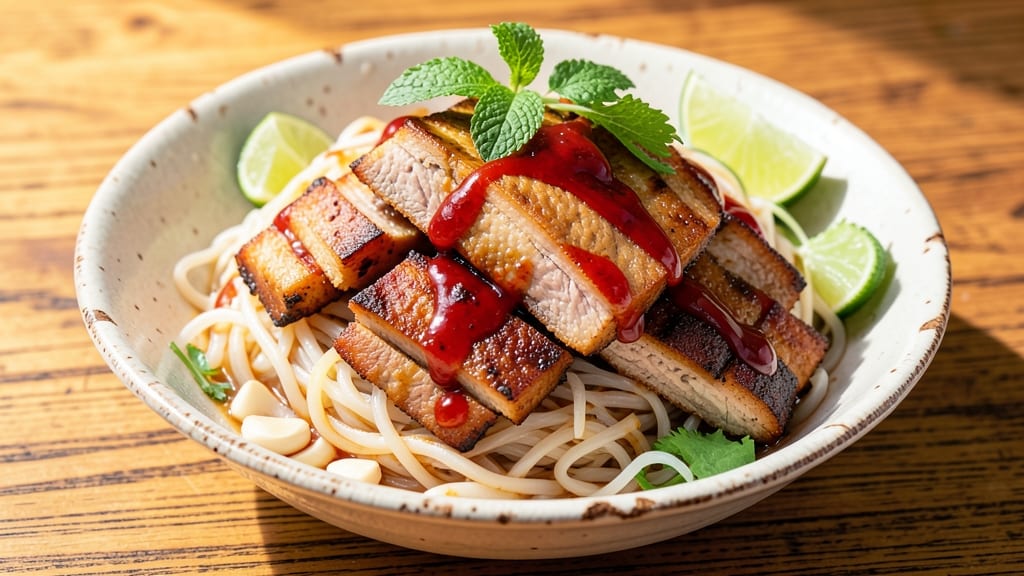
This Bun Cha pork belly recipe brings the vibrant flavors of Hanoi to your home with tender, shaved meat, fragrant herbs, and a savory broth. 🌟 After perfecting this dish through years of Vietnamese cooking classes, I've simplified the process while keeping the authentic experience intact.
The secret lies in marinating the pork belly overnight, then grilling it over charcoal for that signature smoky flavor.
What makes this recipe special is the balance of textures and flavors—crispy edges on the pork, silky noodles, and fresh herbs that add a refreshing crunch. The dipping sauce, made with fish sauce, garlic, and lime, ties everything together with its tangy, umami-rich profile.
This isn't just a meal; it's a full sensory experience that transports you to a bustling Vietnamese street food stall.
By the time you're done, you'll have a dish that's rich yet refreshing, with layers of flavor in every bite. The pork belly shaves effortlessly, the noodles soak up the aromatic broth, and the fresh herbs add brightness that cuts through the richness.
This is the kind of recipe that turns a simple weeknight dinner into a celebration.
Best served immediately with a side of pickled vegetables and extra herbs on the table. Here's how to bring this iconic Vietnamese dish to life in your kitchen—no pressure cooker or fancy equipment required.
Ingredients for bun cha recipe pork belly
Pork belly, fragrant herbs, and smoky charcoal bring Hanoi street flavors to your table.
| Ingredient | Amount | Notes |
|---|---|---|
| Pork Belly 🥓 | 2 lb | Skin-on, fatty cuts preferred |
| Fish Sauce 🍶 | ½ cup | Red Boat preferred for authenticity |
| Garlic Cloves 🧄 | 10 cloves | Minced, for marinade and sauce |
| Lime Juice 🍋 | ¼ cup | Freshly squeezed, for marinade |
| Sugar 🍚 | ¼ cup | White or brown sugar |
| Rice Noodles 🍜 | 12 oz | Sticky rice noodles, dried |
| Fresh Mint Leaves 🌿 | 1 cup | Loosely packed, stems removed |
| Fresh Cilantro 🌿 | ½ cup | Chopped, stems removed |
| Fresh Thai Basil Leaves 🌿 | ½ cup | Loosely packed, stems removed |
| Green Onions 🧅 | 6 whole | Thinly sliced, white and green parts |
| Charcoal Briquettes 🔥 | 2 lbs | For authentic smoky flavor |
| Vegetable Oil 🫒 | ¼ cup | For grilling pork belly |
| Salt 🧂 | 1 tbsp | Kosher or sea salt |
| Black Pepper 🌶️ | ½ tsp | Freshly ground preferred |
| Sesame Oil 🫒 | 1 tbsp | For finishing sauce |
The pork belly is the star—skin-on, fatty cuts give that signature crispy texture. Grab a 2-pound slab from an Asian market for the best quality, but the regular supermarket variety works too if you score it well. Look for good marbling—that white fat is what makes it tender. The fish sauce? Red Boat is the gold standard, but any good-quality brand works. If you can't find it, Thai Kitchen fish sauce is a solid backup. The garlic should be fresh—no pre-minced jars here, trust me on that.
No charcoal grill? Cast iron skillet over high heat works in a pinch—just keep the pork moving to get those crispy edges. Fresh herbs are non-negotiable—skip the dried stuff for that bright, fresh crunch. The Thai basil is the secret weapon (find it at Asian grocery stores), but regular basil in a bind. For the noodles, banh pho or rice vermicelli are ideal—look for the flat, wide ones. If you can't find them, egg noodles work too. The lime juice should be freshly squeezed—bottled lime juice ruins the marinade. And yes, you can substitute brown sugar for white if you've got it.
Marinate the pork belly overnight for best results—it's worth the wait. The herbs keep for 3-4 days in the fridge, wrapped in damp paper towels. Noodles? Store in an airtight container and soak in warm water for 10-15 minutes before using. The marinade leftovers? Freeze for up to 3 months—perfect for quick dipping sauce boosts later. This dish is all about freshness, so serve immediately with extra herbs on the table for that authentic street food vibe.
Why You'll Love This Recipe
- No-Fuss Weeknight Win: I swear by this for nights when I’m too tired to think—just slice the pork belly thin, toss it in a hot pan with garlic and fish sauce, and let it caramelize. The sugar in the marinade does half the work while you’re chopping herbs or setting the table.
- Salty-Sweet Magic: That first bite? Crispy edges, tender inside, with a punch of garlic and fish sauce that’s ridiculously addictive. The lime juice at the end cuts through the richness—like a little zingy hug for your taste buds.
- Leftovers That Don’t Suck: Between us, pork belly leftovers are usually sad. Not this. The flavors deepen overnight, so I reheat slices in a sizzling pan or toss them into rice paper rolls the next day. (Yes, even on a Tuesday.)
- Budget-Friendly Luxury: Pork belly feels fancy, but this recipe treats it like a weeknight staple. A little goes a long way—stretch it with rice, herbs, and pickled veggies, and suddenly you’ve got a meal that feels special without breaking the bank.
Step-by-step instructions for Vietnamese-style pork belly
Here's how to transform fatty pork belly into tender, smoky shaved meat with perfect texture.
🔥 Step 1: Marinate and Sear the Pork Belly
In a large bowl, combine the 2 lb pork belly with the 0.5 cup fish sauce, 10 cloves minced garlic, 0.25 cup lime juice, 0.25 cup sugar, 1 tbsp salt, and 0.5 tsp black pepper. Massage the marinade into the meat, coating it completely. Cover and refrigerate for at least 4 hours (overnight is best) to tenderize the fat and infuse flavor.
After marinating, pat the pork belly dry with paper towels. Heat a grill or large skillet over medium-high heat and add 0.25 cup vegetable oil. Once hot, add the pork belly skin-side down and cook for 10-12 minutes until the skin is blistered and golden brown. Flip and cook the fatty side for another 8-10 minutes until the meat reaches 145°F internally. The fat should render beautifully, creating a crispy exterior.
🔥 Step 2: Smoke the Pork Belly for Depth
Set up a charcoal grill using 2 lbs charcoal briquettes to create indirect heat. Maintain a temperature of 250-275°F—this low-and-slow method ensures the pork belly cooks evenly without drying out. Place the seared pork belly fat-side up on the grill and smoke for 2-3 hours until the internal temperature reaches 195-203°F and the meat becomes fork-tender.
Here's the thing—don't rush this step. The smoke will penetrate the meat, adding that authentic Vietnamese flavor. You'll know it's ready when the meat pulls apart easily with a fork and the fat is perfectly rendered. Let it rest for 15 minutes before shaving to keep the juices locked in.
👨🍳 Step 3: Shave the Pork Belly Thinly
Using a sharp knife or meat slicer, shave the pork belly against the grain into paper-thin slices. I like to work in batches, keeping the sliced pork in a warm bowl to maintain temperature. The slices should be delicate enough to roll up but still hold their shape—this is the key to perfect bun cha texture.
If the slices are too thick, they'll be chewy. If they're too thin, they'll fall apart. Aim for that happy medium where each bite delivers tender meat with a crispy edge. You should end up with about 4 cups of shaved pork—enough for generous portions over noodles.
🍳 Step 4: Prepare the Fresh Herb Sauce
In a large bowl, combine the 1 cup fresh mint leaves, 0.5 cup chopped cilantro, 0.5 cup Thai basil leaves, and 6 thinly sliced green onions. Add 1 tbsp sesame oil and gently toss to coat. Set aside—this vibrant mix is what makes bun cha so refreshing.
For the sauce, mix 0.25 cup fish sauce (reserve some for drizzling), 0.25 cup lime juice, and a splash of water to thin it slightly. Taste and adjust with more fish sauce for saltiness or lime for brightness. The sauce should be tangy, umami-rich, and perfectly balanced—this is the soul of the dish.
🥘 Step 5: Assemble the Bun Cha
Soak the 12 oz rice noodles in warm water for 10-15 minutes until pliable but still firm. Drain and divide among bowls. Top with shaved pork belly, the fresh herb mixture, and a generous drizzle of the fish sauce-lime dressing. Garnish with extra green onions and Thai basil for that restaurant-quality presentation.
Serve immediately with extra sauce on the side. The contrast of warm, smoky pork over cool, chewy noodles with bright herbs is what makes bun cha so irresistible. Each bite should deliver layers of flavor—salty, tangy, fresh, and smoky—all in perfect harmony.
Pro Tips For Making Bun Cha Recipe Pork Belly
- CRISP THE BELLY FIRST: Skip the raw pork belly straight into the pan—it’ll steam instead of sear. Pat it bone-dry with paper towels, then hit it with a pinch of salt and let it sit 10 minutes. This isn’t just about flavor; it’s what gets you that golden, crackling crust bun cha needs. (Yes, even if you’re impatient like me.)
- GARLIC: MINCE, DON’T CHOP: I used to crush garlic with the flat side of my knife, but minced garlic in bun cha sauce makes all the difference—it dissolves smoothly without bitterness. Use a sharp knife and go fine, almost paste-like, so it blends into the fish sauce and sugar without fighting for space. Trust me, your nose will thank you mid-cook.
- DON’T BOIL THE SAUCE: The moment your fish sauce, sugar, and lime juice hit the pan, keep the heat medium-low. Let it simmer gently—hard boiling turns the sauce cloying and kills the bright acidity from the lime. If it smells sharp and fresh, you’re golden. If it smells like a candy factory, you’ve gone too far.
- REST THE MEAT UNDER FOIL: The second you pull the pork belly from the pan, tent it loosely with foil and let it rest 5–10 minutes. This isn’t just about juiciness—it’s about letting the fat redistribute so every slice stays tender, not greasy. I learned this the hard way when I sliced into a pile of sad, stringy pork. (Your future self will thank you.)
Regional styles of bun cha recipe pork belly
Hanoi Street Style
This is the classic version you'll find at Hanoi street stalls, where the pork belly is marinated overnight in a balance of fish sauce, garlic, and lime juice—no shortcuts here.
The key is using charcoal briquettes for that signature smoky flavor, which gives the pork its signature depth. I remember my first time eating this in Hanoi—the meat was so tender it practically melted in your mouth, and the herbs added this incredible freshness. 🌟
For the noodles, rice vermicelli is essential—it should be soaked just until pliable, not mushy. The secret is dividing them into bowls first, then adding the pork and herbs on top so everyone can customize their portion.
In Hanoi, they serve it with pickled vegetables on the side, which adds that tangy crunch to cut through the richness.
Saigon Twist
In Saigon, they often add a touch of chili oil or sriracha to the dipping sauce for a spicy kick. I like to start with 1 teaspoon of chili oil mixed into the fish sauce-lime dressing and adjust to taste.
The heat balances the smoky pork beautifully. You'll also find Thai basil used more prominently in Saigon-style bun cha, giving it a slightly sweeter, more aromatic profile than the Hanoi version.
Another Saigon touch is serving the pork with crispy shallots on top—just fry 4-5 thinly sliced shallots in 1 tablespoon of oil until golden and sprinkle them over the dish.
The crunch adds another layer of texture that's pure magic. This version is a little more adventurous but still keeps that perfect balance of flavors.
Northern Mountain Version
Up in the mountainous regions, they often use less fatty pork belly and more herbs to keep it lighter. The marinade might include a touch of rice wine (like mirin or sake) to brighten the flavors.
I've found that adding 1 tablespoon of rice wine to the marinade enhances the aroma without overpowering the other ingredients. The herbs are also more varied—expect to see lemongrass, mint, and even watercress in the mix.
This version is often served with a clear broth on the side, made by simmering pork bones, ginger, and star anise. It's lighter but still deeply flavorful, perfect for balancing the rich pork.
If you're feeling adventurous, try making a small batch of this broth to drizzle over your bun cha for an extra layer of complexity.
Southern Coastal Adaptation
Near the coast, you'll find seafood-infused versions where the pork marinade includes a splash of shrimp paste or oyster sauce for a briny twist. I like to add 1 tablespoon of oyster sauce to the marinade for a richer, more complex flavor.
The herbs might also include sea beans (mung bean sprouts) for a unique texture. This version is heartier and pairs well with grilled shrimp on the side.
The dipping sauce here gets a citrusy boost—sometimes with yuzu juice if you can find it, or extra lime juice for a zesty kick. The coastal adaptation is all about balancing the richness of the pork with bright, fresh flavors that remind you of the sea breeze.
It's a fantastic option if you love seafood and want to give your bun cha a coastal flair.
Nutrition facts
Frequently asked questions
Can I substitute pork belly with another cut of pork?
While pork belly is traditional, you can use pork shoulder or pork tenderloin in a pinch. For pork shoulder, increase marinating time to 24 hours since it's less fatty, and grill until it reaches 203°F for tender results. Pork tenderloin should be marinated for 6-8 hours and cooked to 145°F—it'll be leaner but still delicious. The texture will differ slightly, but the flavors remain authentic.
What's the best way to store leftover shaved pork?
Store leftover shaved pork in an airtight container in the fridge for up to 3 days or freeze for 3 months. Reheat gently in a skillet over low heat with a splash of water or broth to prevent drying. For best texture, avoid microwaving—it makes the pork rubbery. I like to reheat portions just before serving for that fresh restaurant quality.
How do I make the noodles extra chewy like street food?
Soak the rice noodles in warm (not hot) water for 12-15 minutes until they're pliable but still hold their shape. Drain and immediately rinse with cold water, then pat dry with a kitchen towel. This removes excess starch and gives that perfect chewy texture. Pro tip: Divide the noodles into bowls first, then add the pork and herbs on top—this keeps them from getting soggy while you're serving.
Can I make bun cha without a charcoal grill?
Use a cast iron skillet over medium heat for the smoking step. Place a metal bowl filled with water in the center of the skillet to create steam, then cover with a lid. The pork belly will cook slowly and develop smoky flavors from the hot skillet. For extra depth, add 1-2 drops of liquid smoke to the marinade or drizzle it over the pork before serving.
Why did my pork belly turn out dry?
Overcooking or skipping the rest time are the most common causes. Pork belly should reach 195-203°F internally—use a meat thermometer to avoid guesswork. Always let it rest for 15 minutes before shaving to redistribute juices. If it's still dry, try marinating longer next time (24 hours instead of 4) and cook at a slightly lower temperature (225°F instead of 250°F).