
Main Courses
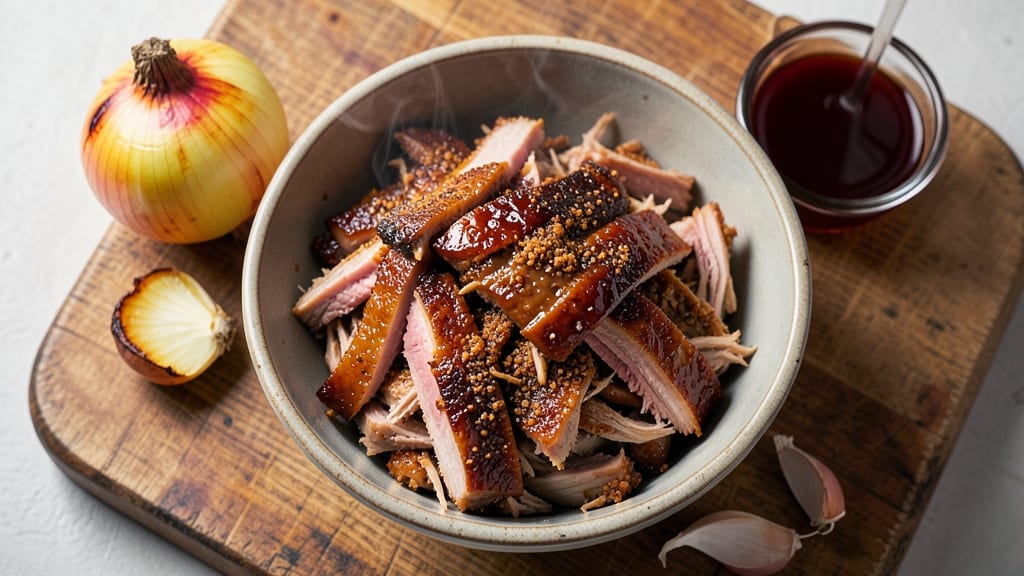
This Camp Chef pulled pork recipe transforms tough pork shoulder into fall-off-the-bone tenderness with just your smoker and a little patience. The key lies in low-and-slow cooking—where the Camp Chef's precise temperature control becomes your secret weapon.
I've been perfecting this technique since my days apprenticing in Charleston, and it never fails to impress.
The process starts with a simple brine that keeps the meat juicy, followed by hours of smoking with hickory wood chips—creating that signature smoky bark that makes every bite irresistible.
What makes this recipe special is how the Camp Chef's even heat distribution ensures perfect doneness without drying out the meat, even in challenging weather conditions.
By the time you're done, you'll have pulled pork so tender it shreds with a fork, with a deep, smoky flavor that pairs perfectly with classic barbecue sides. The best part?
This method works whether you're cooking for a crowd or just treating yourself to a Sunday feast. Let's get started on creating your showstopping pulled pork.
Once you master this technique, you'll understand why pulled pork is a staple at every Southern gathering. The Camp Chef makes it easier than ever to achieve restaurant-quality results in your own backyard. Here's everything you need to know to make it perfect every time.
Ingredients for camp chef pulled pork
Eight essential ingredients transform tough pork into smoky, tender perfection on your Camp Chef.
| Ingredient | Amount | Notes |
|---|---|---|
| Boneless Pork Shoulder 🐖 | 6 lb | Well-marbled for juiciness |
| Yellow Onion 🧅 | 1 whole | Cut into large chunks |
| Garlic Cloves 🧄 | 8 cloves | Crushed for deep flavor |
| Apple Cider Vinegar 🍎 | ½ cup | For tangy brining |
| Brown Sugar 🍚 | ½ cup | Packed for sweetness |
| Kosher Salt 🧂 | ¼ cup | Diamond Crystal preferred |
| Black Peppercorns 🌶️ | 1 tbsp | Freshly cracked |
| Hickory Wood Chips 🌳 | 2 bags | Unsoaked for smoker |
| Apple Juice 🍏 | 1 cup | For moisture during smoking |
| Yellow Mustard 🟡 | 2 tbsp | Dijon preferred for depth |
| Smoked Paprika 🌶️ | 2 tbsp | For extra smoky flavor |
| Barbecue Sauce 🍅 | 1 cup | For serving or finishing |
| Fresh Cilantro 🌿 | ¼ cup | Chopped for garnish |
The pork shoulder is the star—look for well-marbled cuts at Costco or local butchers for the best texture. Hormel or Oscar Mayer pre-cut pork shoulders work too, but nothing beats a fresh cut from the deli counter. The apple cider vinegar and brown sugar in the brine are non-negotiable; they keep the meat juicy and add that perfect balance of sweet and tangy. Trader Joe's has great organic apple cider vinegar if you want to splurge. For the wood chips, stick with hickory—it's the classic choice for pulled pork, though Camp Chef's own wood chips are a great shortcut if you're in a hurry.
No apple cider vinegar? White vinegar or lemon juice works in a pinch, though the flavor won't be quite the same. Running short on brown sugar? White sugar plus a pinch of cinnamon mimics the depth. The yellow mustard adds a subtle kick—Dijon is ideal, but regular yellow mustard works if that's what you've got. For the barbecue sauce, Sweet Baby Ray's is a crowd-pleaser, but any good-quality sauce will do. Fresh cilantro is optional but adds a bright finish—dried cilantro at half the amount is a decent swap if you're in a bind. And if you're feeling adventurous, swap the hickory chips for a mix of hickory and cherry for a fruity twist.
This recipe is all about patience—plan for 12-16 hours of smoking time, depending on your Camp Chef's settings. Once done, the pork will keep in the fridge for up to 5 days, though it tastes even better the next day as the flavors meld. For easy serving, portion the pulled pork into airtight containers with a little of its juices—it reheats beautifully in the oven or microwave. The brined pork shoulder can be prepped a day ahead and refrigerated, saving you time on cooking day. And if you're making this for a crowd, double the recipe—the leftovers make amazing sandwiches or tacos the next day.
Why You'll Love This Recipe
- Hands-Off Cooking: I swear by this recipe because the Camp Chef smoker does all the work—just season the pork shoulder, set it to 225°F, and walk away. The onions and garlic caramelize into sweet, sticky bits while you sip coffee or watch a movie. Honestly, I’ve burned toast more times than I’ve messed this up.
- Sweet-Savory Magic: That apple cider vinegar and brown sugar combo? It’s the secret weapon—tangy enough to cut through the richness, sweet enough to make your taste buds sing. The pork falls apart like butter, and the crust? Crispy enough to satisfy anyone who thinks pulled pork needs bark.
- Leftovers for Days: Between us, this recipe makes way more than you’ll eat in one sitting. Shred the extra into tacos, sandwiches, or even breakfast hash—it’s that versatile. My freezer is always stocked because reheating it barely changes the texture, and nobody complains about seconds.
- Budget-Friendly Feast: A pork shoulder feeds a crowd for less than $10, and the rest of the ingredients cost pennies. I’ll be real: this is my go-to for game days, potlucks, or lazy Sundays when I don’t want to spend hours in the kitchen. Plus, the leftovers stretch my grocery budget without sacrificing flavor.
Step-by-step instructions for Camp Chef's pulled pork
Here's how to transform that pork shoulder into melt-in-your-mouth perfection with a smoky crust that'll make your tailgate crew jealous.
Prepare the Dry Rub and Brine the Pork
In a bowl, combine the 0.5 cup brown sugar, 0.25 cup kosher salt, 1 tbsp black peppercorns (cracked), 2 tbsp smoked paprika, and 2 tbsp yellow mustard. Mix until evenly distributed—this creates a perfect balance of sweet, smoky, and tangy flavors that'll penetrate the meat. Pat the 6 lb boneless pork shoulder completely dry with paper towels, then generously coat all sides with the rub, pressing it into the crevices.
Place the rubbed pork in a large resealable bag and add 0.5 cup apple cider vinegar and 1 cup apple juice. Seal the bag and massage the liquid into the meat, ensuring it's fully coated. Let it sit at room temperature for 30 minutes, then refrigerate for 12-24 hours. This step is non-negotiable—it tenderizes the meat and builds that incredible bark we're after.
Set Up Your Camp Chef Smoker
Fill the smoker's wood chip tray with the 2 bags hickory wood chips—this classic choice gives that authentic barbecue flavor we all love. Preheat your Camp Chef smoker to 225°F using the wood chips. Here's the thing—you want to see thin, blue smoke (not thick white steam) before adding the pork. This ensures you're getting that clean, flavorful smoke penetration without watering down the meat.
Once the smoker reaches temperature, place the pork shoulder fat-side up on the smoker grates. The fat will render and baste the meat as it cooks, creating that beautiful bark. Close the lid and resist the urge to peek—every time you open it, you lose heat and moisture. Set a timer for 2 hours first, then we'll adjust as needed.
Smoke Low and Slow Until Probe-Tender
Smoke the pork for 6-8 hours until the internal temperature reaches 165-170°F. You'll notice the temperature stall around 160°F—this is normal and happens when moisture evaporates. Don't panic; just keep smoking. The key is patience here. You want the pork to reach probe-tender status where the meat practically falls apart when you insert a meat thermometer.
At this point, the pork should have a dark mahogany bark on the outside and a smoke ring just beneath the surface. If the bark isn't as dark as you'd like, you can increase the heat to 250°F for the last 30-45 minutes to crisp it up. But be careful—too much heat too fast can dry out the meat.
Wrap and Finish for Maximum Tenderness
Once the pork hits 165-170°F, remove it from the smoker and wrap it tightly in heavy-duty aluminum foil. Add 1 cup apple juice to the foil before sealing it completely—this creates steam that breaks down the collagen in the meat, making it even more tender. Return the wrapped pork to the smoker and cook until the internal temperature reaches 203°F, which should take another 2-3 hours.
This final stage is where the magic happens. The steam softens the connective tissues, transforming the pork into something so tender it practically melts in your mouth. The foil also helps retain moisture, ensuring every bite is juicy. Let the wrapped pork rest for 30 minutes before unwrapping—this resting period allows the juices to redistribute throughout the meat.
Shred and Serve with Smoky Flair
Unwrap the pork and transfer it to a cutting board. Using two forks, shred the meat against the grain into 2-inch chunks. Discard any large fat deposits or connective tissues. Taste the pork and adjust the seasoning if needed—you might want to add a splash of barbecue sauce or a pinch of kosher salt to enhance the flavor.
Serve the pulled pork immediately on toasted buns with a generous drizzle of 1 cup barbecue sauce and a sprinkle of 0.25 cup chopped fresh cilantro. The contrast of the cool, fresh cilantro against the smoky, tender pork is what makes this dish truly special. Leftovers? Store them in the refrigerator for up to 4 days or freeze for up to 3 months—they'll only get better as the flavors meld together.
Pro Tips For Making Camp Chef Pulled Pork
- USE A MEAT THERMOMETER: The Camp Chef’s digital probe isn’t just for show—stick it in the thickest part of the shoulder when it’s resting. Pull the pork at 195–203°F (not 165°F, that’s for burgers). I learned this the hard way after shredding a dry, overcooked shoulder because I eyeballed it.
- CHOP ONIONS SMALLER THAN YOU THINK: Those big chunks in the sauce? They’re not going to disappear. Dice the yellow onion into ¼-inch pieces or smaller so they break down fully and sweeten the sauce instead of sitting like sad, chewy surprises. Trust me, your pulled pork will taste more cohesive—and less like a side dish.
- DON’T RUSH THE VINEGAR: Apple cider vinegar is the flavor bomb here, but dumping it all at once can make the sauce taste harsh. Start with half the amount, let it simmer for 10 minutes, then add the rest. This lets the acid mellow out and marry with the brown sugar instead of fighting it.
- SWEAT THE GARLIC LOW AND SLOW: Sizzling garlic in oil burns faster than you can blink, and that bitter hit ruins the whole dish. Cook the minced garlic in the same pot as the onions over medium-low heat until it’s just fragrant—about 2 minutes. No browning, no drama, just flavor. (Yes, even if you’re impatient like me.)
Essential equipment for camp chef pulled pork
Smoker Temperature Control
Your Camp Chef smoker is the heart of this recipe, and its ability to maintain precise temperature between 225-250°F is what transforms tough pork into tender perfection. I swear by the Camp Chef SmokePro 24 with its built-in thermometer—it keeps temps steady even on windy days.
For best results, invest in a dual-probe thermometer like the ThermoWorks Smoke to monitor both the smoker air temp and internal pork temp simultaneously. 🌡️
Pro tip: Preheat your smoker for at least 30 minutes before adding the pork. This ensures stable temperatures right from the start. If you're using hickory wood chips, add them gradually—about half a bag every 2 hours—to maintain that steady, thin blue smoke without overpowering the meat.
Essential Accessories
Beyond the smoker itself, you'll need a few key accessories to pull this off perfectly. A meat probe thermometer (I use Thermoworks' Smoke) is non-negotiable—it lets you monitor internal temperature without opening the smoker lid and losing precious heat.
For wrapping the pork, grab heavy-duty aluminum foil (like Reynolds Wrap) and a butcher's twine to secure the foil tightly. 💫
Don't overlook a good pair of tongs—I recommend Weber Originals—for handling the hot pork without tearing the bark. And if you're cooking outdoors, a portable propane tank with a long hose gives you flexibility to move your setup if needed.
For serving, disposable aluminum pans work great for keeping pulled pork warm during parties.
Wood Chip Management
The right wood makes all the difference, and for pulled pork, hickory is your best friend. I stock up on Camp Chef's own hickory chips because they're pre-soaked and ready to use—just dump them in the smoker's chip tray.
For extra depth, I sometimes mix in cherry or pecan wood chips (about 10% of the total) for a subtle fruity note. Never use pine or cedar—they can make the meat taste bitter. 🌳
Keep a small spray bottle with apple juice (or water in a pinch) nearby to spritz the wood chips if they start burning. This maintains clean smoke and prevents that acrid, over-smoked flavor.
I also like to have a second bag of wood chips on hand in case the first batch runs out mid-cook.
Resting and Shredding Tools
Once your pork reaches 203°F, it needs to rest before shredding. I use a large cutting board (preferably plastic-coated for easy cleanup) and two sturdy forks—I grab OXO Good Grips because they're comfortable and durable.
For shredding, I always cut against the grain to break down the muscle fibers properly. 🔪
To keep things organized, I line my cutting board with parchment paper to catch any juices or fat. For serving, slow cooker liners make cleanup a breeze—just toss them after the party.
And if you're making this for a crowd, grab extra large serving spoons (like Lodge's 12-inch cast iron spoons) for easy portioning.
Backup Equipment
No matter how prepared you are, things can go wrong. Keep a small portable grill (like Camp Chef's Flash) as a backup if your smoker malfunctions.
I also always have a large slow cooker (like Hamilton Beach's 7-quart) on hand for emergencies—you can finish the pork in there if needed, though it won't have the same bark. 🔥
For power outages, a manual meat thermometer (like ThermometerWorks' Pocket Probe) that doesn't need batteries is a lifesaver. And don't forget extra aluminum foil—you never know when you'll need to wrap something in a hurry.
I keep a roll in my smoker bag at all times during cooking sessions.
Nutrition facts
Frequently asked questions about Camp Chef pulled pork
Can I use a different cut of pork instead of a boneless shoulder? A pork butt (also called Boston butt) works perfectly—it's essentially the same cut as a shoulder but with more marbling. For a 3-4 lb pork butt, reduce cooking time by 1-2 hours. A whole pork shoulder (with bone) will take longer but adds incredible flavor. Just
How do I know when the pork is fully cooked without a meat thermometer?
Insert a long skewer or knife into the thickest part—if juices run clear (not pink) and the meat is probe-tender (falls apart easily), it's done. A 203°F internal temp is ideal, but if you don't have a thermometer, look for a dark mahogany bark and check that the meat shreds easily. For extra safety, cook to 170°F first, then wrap and finish.
What if my Camp Chef smoker temperature keeps fluctuating?
Fluctuations happen when wind or drafts interfere. Place your smoker in a sheltered spot (like under a carport) and preheat for 30+ minutes to stabilize temps. If using propane, ensure the tank is full and the hose connections are tight. For electric models, check that the heating element isn't overworked. A small fan (like a box fan) blowing gently across the smoker can help maintain even heat.
Can I make this pulled pork in a slow cooker instead of a smoker?
Yes! Use the same brine and rub, then cook on low for 8-10 hours or high for 5-6 hours with 1 cup apple juice in the bottom. For smoky flavor, add 1-2 soaked hickory wood chips or a smoked paprika packet (like Trader Joe's) to the slow cooker. The texture won't be identical, but it'll still be tender and delicious—just without the bark.
How can I reheat leftover pulled pork without drying it out?
Reheat in a skillet with 1-2 tbsp apple juice or barbecue sauce over low heat for 5-7 minutes, stirring frequently. For large batches, use a slow cooker on warm or microwave in 30-second bursts, stirring between each. Avoid high heat—it turns pulled pork into pulled dry pork. Store leftovers in airtight containers with some juices to keep them moist.