
Main Courses
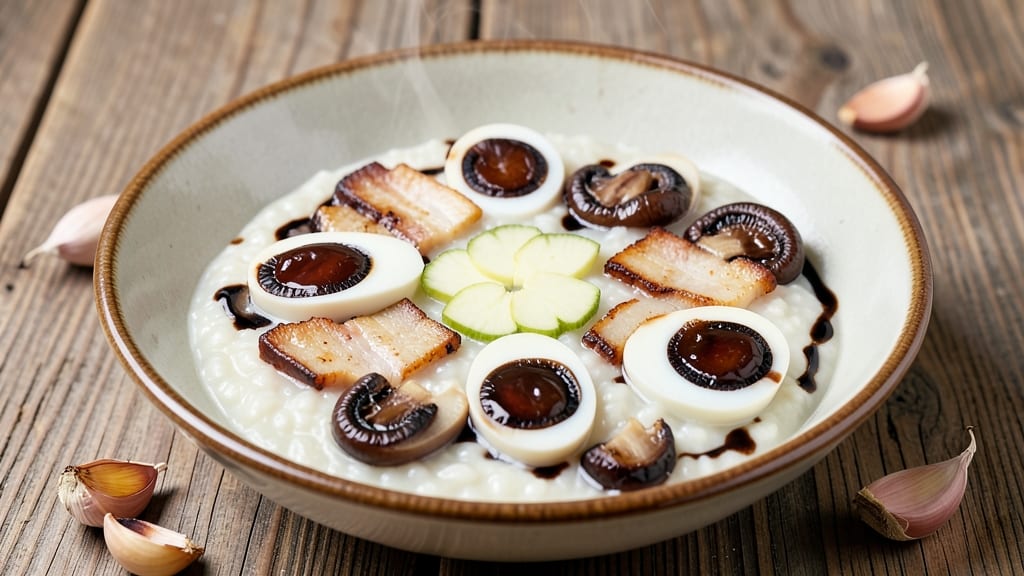
This century egg and pork congee recipe delivers the ultimate comfort food experience—silky, savory porridge with that signature deep umami bite from perfectly prepared century eggs. 💛 I first encountered this dish during my apprenticeship in Charleston, where it became a staple for late-night meals after long shifts in the kitchen.
The contrast between tender pork, delicate rice, and the distinctive flavor of century eggs creates a harmony that's both comforting and sophisticated.
The foundation of great congee lies in the broth—rich, aromatic, and perfectly balanced. We'll start with pork bones and aromatics to build flavor, then incorporate jasmine rice for that signature silky texture.
Meanwhile, the century eggs require special handling: soaking, peeling, and slicing them just right transforms them from an acquired taste into a star ingredient. This method ensures you get that perfect balance of creamy, tender pork and the bold, briny essence of century eggs.
What you'll end up with is a bowl of congee that's restaurant-quality at home—each spoonful offering a perfect blend of textures and flavors. The silky rice absorbs the pork broth beautifully, while the century eggs add a rich, almost funky depth that elevates the entire dish.
Garnished with fresh scallions and cilantro, it's both visually appealing and packed with layers of taste that will keep you coming back for more.
This recipe is perfect for those chilly evenings when you crave something warm and nourishing, yet still feels special enough for company. The process might seem intimidating at first, but I've broken it down into clear, manageable steps that ensure success every time.
Let's get started on creating this comforting masterpiece that's sure to become a family favorite.
Ingredients for century egg and pork congee
Silky rice, tender pork, and century eggs' bold umami create this comforting masterpiece.
| Ingredient | Amount | Notes |
|---|---|---|
| Pork Bones 🍖 | 2 lb | Marrow-rich for deep flavor |
| Jasmine Rice 🍚 | 1 cup | Uncooked, long-grain preferred |
| Century Eggs 🥚 | 4 whole | Soaked 2 hours, peeled |
| Fresh Ginger | ½ inch | Fixed: 0.5 inch piece, sliced thin |
| Garlic Cloves 🧄 | 6 cloves | Minced for aromatic base |
| Dried Shiitake Mushrooms 🍄 | 4 whole | Rehydrated in hot water |
| Pork Shoulder 🥩 | 1 lb | Boneless, cut into chunks |
| Fresh Scallions 🧅 | ¼ cup | Thinly sliced for garnish |
| Fresh Cilantro 🌿 | ¼ cup | Chopped for fresh finish |
| Soy Sauce 🍶 | 2 tbsp | Light or dark preferred |
| Sesame Oil 🫒 | 1 tbsp | Toasted for aroma |
| Salt 🧂 | 1 tsp | Kosher or sea salt |
| White Pepper 🌶️ | ¼ tsp | Freshly ground preferred |
| Chicken Stock 💧 | 4 cups | Homemade or quality store-bought |
The century eggs are the star—look for plump, dark-skinned ones with that signature black exterior. Asian markets usually carry them, but if you can't find them, substitute preserved duck eggs (soaked 12 hours). Pork bones should have good marrow—ask your butcher for marrow-rich cuts. The ginger? Fresh is non-negotiable—dried won't give that same bright punch. For the pork shoulder, cut into 1-inch chunks for even cooking. Shiitake mushrooms add earthy depth, but any dried mushroom works if that's what you've got.
No century eggs? Try fermented black beans or miso paste for umami depth—about 1 tbsp miso or 2 tbsp black beans per serving. Short on pork bones? Pork shoulder plus 2 cups extra chicken stock keeps it rich. The soy sauce can be swapped for coconut aminos if you're avoiding soy. Fresh herbs? Dried works at half the amount, but honestly, nothing beats the fresh cilantro and scallions for that bright finish. For the rice, jasmine is ideal, but long-grain white works in a pinch—just expect slightly less aroma.
This congee tastes even better the next day—make a double batch and store in the fridge. Portion into containers with a thin layer of oil on top to keep it silky. Keeps for 4-5 days refrigerated. Freezing isn't recommended—the texture changes. For reheating, add a splash of water and simmer gently. Garnish with extra scallions and cilantro right before serving—that freshness makes all the difference. Leftovers? Perfect for quick lunches—just heat and enjoy.
Why You'll Love This Recipe
- No-Chop Night: The pork bones and ginger do all the heavy lifting—just slice the century eggs and mince garlic, then let the broth work its magic. Honestly, I’ve made this on days when I forgot to grocery shop; the bones alone give you that deep, savory base.
- Umami Bomb: That first spoonful? The century eggs add a briny, creamy richness while the pork bone broth delivers a slow-simmered depth. Between us, it’s the kind of flavor that makes you pause mid-bite—like a hug in a bowl.
- Leftover Luxury: This congee actually tastes better the next day. I swear, the rice softens perfectly, and the century eggs hold their texture. Pack it for lunch or reheat with a fried egg on top—no one will guess it’s yesterday’s dinner.
- Budget Comfort: Pork bones and rice stretch into multiple meals without breaking the bank. I’ll be real: my grocery bill dropped when I started using this as my go-to, and the leftovers feed my family for days. Plus, century eggs last forever in the fridge.
Step-by-step instructions for century egg and pork congee
This rich, velvety congee delivers an unforgettable umami punch—here's how to make it shine.
🔥 Step 1: Roast the Pork Bones and Shoulder for Deep Flavor
Preheat your oven to 400°F. Arrange the 2 lb pork bones and 1 lb pork shoulder on a rimmed baking sheet, skin-side up. Roast for 30 minutes until the bones turn golden brown and the pork shoulder develops a caramelized crust. This step builds the foundation for your congee's rich, meaty depth.
While roasting, I like to flip the bones halfway through for even browning. The aroma alone will make your kitchen smell amazing—this is where all the magic begins. Once roasted, transfer the bones and pork to a large pot. The caramelized exterior will release flavor as it simmers, creating that signature umami richness we're after.
🍳 Step 2: Char the Aromatics and Build the Broth Base
In the same pot (no need to clean it—the browned bits are flavor gold), add 6 cloves minced garlic and 0.5 inch sliced fresh ginger. Cook over medium-high heat for 2-3 minutes until fragrant and just beginning to color. Here's the thing—don't walk away. Garlic burns faster than you think, and we want it to caramelize slightly for maximum flavor.
Add the 4 whole dried shiitake mushrooms (rehydrated in hot water if needed) and cook for another 1 minute to release their earthy aroma. Pour in the 4 cups chicken stock and bring to a rolling boil. Once boiling, reduce heat to low and let it simmer gently for 2 hours—this slow cook transforms tough bones into silky broth.
👨🍳 Step 3: Simmer the Congee to Perfect Texture
After the initial 2-hour simmer, add the 1 cup jasmine rice and 2 tbsp soy sauce. Stir gently to combine, then increase heat to medium-low. The congee will take 45-60 minutes more to reach that signature silky consistency—you'll know it's ready when it's thick enough to coat a spoon but still moves like liquid velvet.
I like to stir occasionally, breaking up any rice clumps with a wooden spoon. If the congee gets too thick, add hot water ¼ cup at a time until it reaches the perfect pouring consistency. The key is patience—rushing this step results in grainy congee instead of that luxurious, smooth texture we want.
🥘 Step 4: Finish with Century Eggs and Garnishes
Just before serving, gently fold in the 4 peeled century eggs (halved lengthwise) and 1 tbsp sesame oil. The century eggs should be warm but not cooked further—we want them to maintain their signature creamy yolk and firm white. Season with 1 tsp salt and 0.25 tsp white pepper, adjusting to taste.
Ladle the congee into bowls and garnish with 0.25 cup fresh scallions and 0.25 cup fresh cilantro. The contrast of the creamy century eggs against the silky congee creates an incredible texture experience. Serve immediately while hot—this dish is best enjoyed fresh from the pot when all the flavors are at their peak.
⏰ Step 5: Rest and Serve for Maximum Comfort
Let the congee sit for 5 minutes before serving—this allows the flavors to meld completely. The aroma alone will have your guests anticipating that first spoonful. Each bite should deliver that perfect balance of creamy congee, rich pork broth, and the distinctive umami bite of century eggs.
Real talk: this congee tastes even better the next day, so make extra if you can. The flavors deepen as it rests, and the texture becomes even more luxurious. Pair it with a side of pickled vegetables or a simple green salad to balance the richness—you'll want to make this at least once a week.
Pro Tips For Making Century Egg And Pork Congee
- BLANCH BONES FIRST: Skip the raw bone soak—drop pork bones in boiling water for 3 minutes to remove impurities before simmering. I used to skip this and ended up with cloudy broth; now my congee starts crystal clear.
- SLICE CENTURY EGGS THIN: Cut century eggs paper-thin—no thicker than 3mm—so they melt into the congee instead of sitting as chewy chunks. Use a sharp knife and rock it gently; force won’t help here.
- LOW-HEAT GINGER-GARLIC: Sauté garlic and ginger at lowest possible heat until just fragrant—no color, no browning. Burnt aromatics turn bitter, and this dish relies on their bright, clean flavor to cut through the richness.
- STIR ONCE, THEN LET IT BE: After adding rice, give the pot one gentle stir to distribute it, then walk away. Constant stirring turns congee gluey; let the rice absorb broth naturally—patience pays off with a silky texture.
Dietary considerations for this century egg and pork congee
Gluten-Free Adaptations
Congee is naturally gluten-free, but watch your broth and soy sauce. Use gluten-free tamari instead of regular soy sauce—about 2 tbsp—to maintain umami without gluten. For the pork broth, ensure your chicken stock is certified gluten-free. I always check labels on store-bought stock since cross-contamination can happen. 🌱
Vegetarian Options
Skip the pork entirely and build flavor with shiitake mushrooms and fermented tofu. Use 4 cups vegetable broth instead of chicken stock, and add 1 cup firm tofu (cubed) along with the rice.
For umami depth, stir in 1 tbsp miso paste when adding the rice. The texture stays creamy, and the flavor remains rich—just without meat.
Low-Sodium Considerations
Century eggs and soy sauce already pack sodium, so reduce the soy sauce to 1 tbsp and use low-sodium chicken stock. Boost flavor with extra fresh ginger (0.75 inch) and garlic (8 cloves).
The century eggs' natural saltiness will still shine, but your dish will be gentler on blood pressure. Always taste as you go—adjust seasoning gradually.
Allergen Awareness
This recipe contains pork, eggs, and sesame oil. For egg-free versions, omit century eggs and add extra mushrooms or fermented black beans (2 tbsp) for umami.
If sesame is an issue, replace sesame oil with toasted peanut oil (1 tbsp). Always double-check century egg packaging for shellfish processing warnings if shellfish allergies are a concern.
Protein Alternatives
Swap pork for chicken thighs (1 lb) or duck breast (8 oz) for richer flavor. If using duck, reduce cooking time to 30 minutes after adding rice. For seafood lovers, try shrimp (½ lb) added in the last 5 minutes of cooking.
The broth remains the star, but these proteins bring exciting new textures and tastes to your congee bowl.
Nutrition facts
Frequently asked questions
How do I properly prepare century eggs for this recipe?
Soak the century eggs in water for 2 hours to remove excess salt, then gently tap the shell to crack it open. Slide the egg out, peel off the skin, and rinse briefly. The yolk should be creamy and the white firm but tender. Pro tip: Use gloves when handling them—they can stain!
Can I make this congee in a slow cooker?
After roasting the pork, transfer everything to your slow cooker and cook on low for 6-8 hours. The long cook time helps tenderize the pork and develop deep flavors. Just stir occasionally and add water as needed to maintain the right consistency.
What if my congee turns out too thick?
Don't panic! Simply add hot water ¼ cup at a time while stirring gently. The goal is a silky texture that coats a spoon but still moves like liquid. If it's too thin, simmer uncovered for 5-10 minutes to reduce. Patience is key—rushing this step ruins the creamy texture.
How do I store leftovers?
Let the congee cool completely, then store in an airtight container with a thin layer of oil on top. It keeps for 4-5 days in the fridge. For reheating, add a splash of water and simmer gently—never microwave, as it makes the texture grainy. Garnish with fresh herbs before serving!
What's the best way to serve this dish?
This congee is perfect for chilly evenings or as a light lunch. Serve in deep bowls with extra century egg slices on top, and pair with pickled vegetables or a simple steamed greens salad to balance the richness. The contrast of textures and temperatures makes it even more satisfying!