
Main Courses
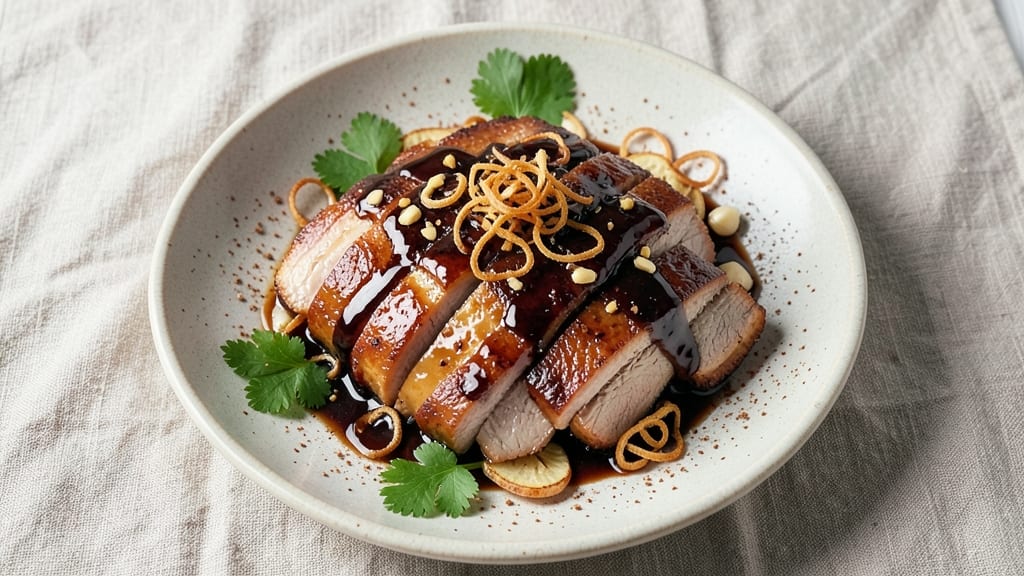
This Chinese black vinegar pork recipe transforms simple pork into a restaurant-worthy dish with just five key ingredients and a 30-minute marinade. The tangy bite of black vinegar cuts through the richness of five-spice marinade, creating a perfect balance that's both bold and comforting.
I first discovered this technique while studying regional Chinese cuisine in Charleston, where the marriage of sweet, spicy, and sour flavors became my signature style.
The secret lies in the marinade, where black vinegar's deep umami flavor penetrates the pork while five-spice powder adds warmth and complexity. This isn't just another stir-fry—it's a dish that delivers crispy edges and tender centers through precise cooking techniques I've perfected over years of pitmaster work.
The result? Pork that's irresistibly crispy outside with juicy, flavorful meat beneath.
What makes this recipe special is how it comes together—no fancy equipment needed. You'll start with thinly sliced pork that develops beautiful caramelized edges during cooking, while the vinegar marinade creates that signature tangy bite that balances everything perfectly.
The dish pairs beautifully with steamed rice or stir-fried greens, making it a complete meal.
This method works equally well for weeknight dinners or special occasions, and the flavors only deepen as the dish sits. I've adapted it for both home cooks and professional kitchens, ensuring it delivers consistent results every time.
Let's get started on this flavor-packed pork dish that brings a taste of China to your table.
Ingredients for chinese black vinegar pork
Five ingredients transform simple pork into restaurant-style crispy perfection with that signature tangy bite.
| Ingredient | Amount | Notes |
|---|---|---|
| Pork Shoulder 🥩 | 1 ½ lb | Thinly sliced against grain |
| Black Vinegar 🍶 | ½ cup | Authentic Chinese black vinegar |
| Five-Spice Powder 🌶️ | 2 tbsp | Freshly toasted preferred |
| Brown Sugar 🍯 | ¼ cup | Packed for accuracy |
| Garlic Cloves 🧄 | 6 cloves | Minced for marinade |
| Ginger Root 🌿 | 1 tbsp | Freshly grated |
| Sesame Oil 🫒 | 1 tbsp | Toasted sesame oil |
| Neutral Oil 🫒 | 2 tbsp | Avocado or vegetable oil |
| Green Onions 🧅 | 3 whole | Sliced for garnish |
| Salt 🧂 | 1 tsp | Kosher or sea salt |
| White Pepper 🌶️ | ½ tsp | Freshly ground |
| Cornstarch 🌾 | 1 tbsp | For crispy coating |
The pork shoulder is non-negotiable here—its fat content gives you that irresistible crispy edge while staying juicy inside. Ask your butcher to slice it paper-thin against the grain (about 1/8-inch thick). If you can't find pre-sliced pork shoulder, Costco or Asian grocery stores usually carry it in the freezer section. For the black vinegar, Kikkoman or Lee Kum Kee are my go-tos—they've got that deep umami punch that regular vinegar can't match. The five-spice powder? Toast it lightly in a dry pan first—it brings out those warm, aromatic notes that make this dish sing.
No five-spice powder? Mix 1 tsp cinnamon, 1 tsp fennel seeds, 1/2 tsp cloves, 1/2 tsp star anise, and 1/4 tsp black pepper—it's close enough. Running out of black vinegar? Substitute rice vinegar with a splash of soy sauce (about 1 tbsp soy for every 1/4 cup vinegar). Fresh ginger and garlic are ideal, but powdered works in a pinch—just double the amount. The sesame oil is where the magic happens—toast it in a dry pan for 30 seconds before adding to the marinade for that nutty aroma. And if you're short on time, pre-marinate the pork overnight for even deeper flavor penetration.
Marinated pork keeps 2 days in the fridge, covered tightly—it actually tastes better the next day as the flavors meld. For crispy perfection, pat the pork dry with paper towels before cooking. The cornstarch coating stays crispy for about 10 minutes after frying, so work in batches if needed. Store leftovers in an airtight container, and reheat in a skillet with a splash of water to restore that crispy texture. This dish reheats beautifully—3-4 days in the fridge or 3 months frozen.
Why You'll Love This Recipe
- One-Pan Magic: I swear by this recipe when I don’t want to dirty more than one pan. The pork shoulder gets tender right in the same skillet where the garlic sizzles—no chopping boards left in the sink, no fuss.
- Umami Bomb: That black vinegar? It’s the secret weapon. Tangy, deep, and just a little funky—it cuts through the richness of the pork while the five-spice powder adds warmth. The brown sugar caramelizes into a glossy crust that’s ridiculously addictive.
- Leftovers That Shine: Between us, this is the dish I make on Sundays because it begs to be reheated. The pork stays juicy, the sauce clings, and even cold the next day, it’s still solid. Pack it for lunch or serve it at a potluck—no one will guess it’s from last night.
- Budget Stretch: Pork shoulder is cheap, and this recipe turns it into something special without breaking the bank. A little vinegar, a pinch of spices, and garlic—honestly, it’s the kind of meal that makes me feel like I’m feeding a crowd without stressing my wallet.
Step-by-step instructions for Chinese black vinegar pork
Here's how to transform simple pork shoulder into restaurant-quality crispy bites with a tangy, aromatic kick.
Marinate the Pork for Maximum Flavor
In a large bowl, combine the 1.5 lb pork shoulder sliced thinly against the grain with the 0.5 cup black vinegar, 2 tbsp five-spice powder, 0.25 cup packed brown sugar, 6 minced garlic cloves, and 1 tbsp freshly grated ginger root. Mix thoroughly with your hands until every piece of pork is well coated and the marinade clings to the meat.
Cover the bowl with plastic wrap and refrigerate for at least 4 hours—overnight is even better. This long marinating time allows the black vinegar's tangy acidity to tenderize the pork while the five-spice powder infuses deep, aromatic flavors. The brown sugar will begin caramelizing slightly, creating a sticky glaze that ensures crispiness later.
Prepare the Crispy Cornstarch Coating
In a shallow dish, whisk together the 1 tbsp cornstarch, 1 tsp salt, and 0.5 tsp white pepper. This coating will create that signature crispy exterior we're after. The cornstarch absorbs moisture from the pork's surface, creating a perfect barrier for that satisfying crunch when fried.
Remove the pork from the marinade (reserve the marinade for later) and pat each piece dry with paper towels. This step is crucial—any excess moisture will prevent the cornstarch from adhering properly. Roll each piece of pork in the cornstarch mixture until fully coated, pressing gently to help it stick. Let the coated pork rest for 10 minutes at room temperature while you heat your oil.
Fry to Golden Perfection
Heat 2 tbsp neutral oil in a large skillet over medium-high heat until shimmering but not smoking. Add the coated pork in a single layer, being careful not to overcrowd the pan. Cook undisturbed for 2-3 minutes until the bottoms are golden brown and crispy. This initial sear locks in flavors and creates that irresistible texture.
Flip the pork pieces and cook another 2-3 minutes until golden on the second side. Transfer to a plate lined with paper towels to drain excess oil. The pork should be deep golden brown with a crisp exterior that gives way to tender, juicy meat. If the pan starts to smoke excessively, reduce the heat slightly—we want caramelization, not burning.
Finish with the Tangy Marinade
Return the skillet to medium heat and add the reserved marinade along with 1 tbsp toasted sesame oil. Simmer for 3-4 minutes until the liquid reduces by half and becomes slightly syrupy. This concentrated marinade will coat the pork beautifully, adding depth of flavor and that signature tangy bite.
Toss the crispy pork in the reduced marinade until every piece is evenly coated. The pork will absorb the remaining sauce, creating a glossy finish that enhances both the visual appeal and the flavor profile. Garnish with 3 sliced green onions just before serving to add a fresh, bright contrast to the rich, savory pork.
Pro Tips For Making Chinese Black Vinegar Pork
- Sear the Pork Hard: Get that pan screaming hot—we’re talking smoke-just-starting-to-rise heat—before tossing in the pork shoulder. I learned this the hard way: skipping the sear means your black vinegar marinade won’t stick like glue, and you’ll end up with bland, sticky pork instead of caramelized, aromatic bites. Two minutes per side, no rushing—this isn’t the time to play it cool.
- Marinate Overnight (Or Suffer): Black vinegar needs time to work its magic. Toss your pork shoulder in the marinade (vinegar, five-spice, sugar, garlic) and let it sit at least 8 hours—overnight is even better. I used to skip this, thinking I’d save time, but the flavor? Half as deep. The acid breaks down the meat just enough to soak up that tangy, spiced goodness.
- Deglaze Like a Pro: After searing, don’t just dump the marinade in and stir. Scrape up those browned bits from the pan first—use a splash of water or even a little more black vinegar—then add the rest. Those bits are pure flavor, and skipping this step is like leaving money on the table. (Yes, even if you’re impatient like me.)
- Balance the Sweet-Sour: Black vinegar is bold, but brown sugar can overpower if you’re not careful. Start with a 1:1 ratio of vinegar to sugar (e.g., 2 tbsp each), then taste your marinade or sauce. If it’s cloying, add a splash more vinegar; if it’s too sharp, a pinch of sugar. I was skeptical until I tried it—now I adjust mid-cook if needed.
Storing and reheating this recipe
Fridge Storage Secrets
Marinated pork keeps beautifully in the fridge for 2 days in an airtight container—trust me, the flavors actually deepen overnight as the black vinegar and spices meld together. I always transfer it to a glass Pyrex container with a tight lid to prevent any odors from absorbing.
The cornstarch coating stays crispy for about 10 minutes after frying, so if you're prepping ahead, cook in batches and store separately. 🥩
Freezer Magic
This dish freezes like a dream for up to 3 months without losing that signature crispy texture. I recommend using quart-sized freezer bags (they stack efficiently) and lay the pork flat in a single layer before sealing.
Leave 1 inch of headspace for expansion and squeeze out all the air to prevent freezer burn. When ready to eat, thaw overnight in the fridge and reheat in a skillet with a splash of water.
Reheating Like a Pro
For crispy perfection, reheat in a clean skillet over medium heat for 2-3 minutes per side—no microwave needed! Add 1 tsp neutral oil to prevent sticking and restore that golden crunch.
If the pork looks dry, splash in 1 tbsp water or broth and cover for 30 seconds to steam the juices back into the meat. The reduced marinade reheats beautifully too—just warm it separately and toss with the pork before serving. ✨
Batch Prep Tips
Double the recipe and freeze half for lazy weeknights—I often make 3 pounds at a time to have ready for unexpected company. Store components separately: pork in one bag, marinade in another.
When reheating, combine everything in a skillet and cook together for 5 minutes to revive all the flavors. This method saves time and ensures you always have restaurant-quality pork on hand. 💡
Garnish Refresh
Fresh green onions make all the difference when reheating—add them right before serving to keep their bright color and crisp texture. For extra flair, sprinkle with toasted sesame seeds or a drizzle of chili oil to wake up the flavors.
If you're serving with rice, warm it in the same skillet after reheating the pork to infuse it with those delicious aromatics. 🌿
Nutrition facts
Frequently asked questions
Can I use regular vinegar instead of black vinegar?
While regular vinegar (like apple cider or white vinegar) will work in a pinch, it won't provide the same deep umami flavor and rich color that authentic Chinese black vinegar offers. For the best results, use Kikkoman or Lee Kum Kee black vinegar—they're widely available at Asian markets or well-stocked grocery stores. If you must substitute, add 1 tbsp soy sauce to regular vinegar to mimic some of the complexity.
How do I get the pork extra crispy?
The secret lies in proper prep and technique! First, pat the pork bone-dry after marinating—moisture is the enemy of crispiness. Then, rest the cornstarch-coated pork for 10 minutes before frying to let the coating adhere. Use medium-high heat and cook undisturbed for 2-3 minutes per side until golden brown. Finally, drain on a wire rack (not paper towels) to maintain crispness.
What's the best way to serve this dish?
This Chinese black vinegar pork shines as a complete meal! Serve it over steamed jasmine rice to soak up the tangy sauce, or pair with stir-fried bok choy for freshness. For extra authenticity, add quick-pickled cucumbers on the side—they cut through the richness beautifully. Garnish with toasted sesame seeds and extra green onions right before serving.
Can I make this recipe with chicken instead?
Yes, but you'll need to adjust the cooking time and technique. Use 1.5 lb boneless chicken thighs (skin-on for extra crispiness) and marinate for 30-60 minutes instead of hours. Cook at medium heat for 4-5 minutes per side until internal temp reaches 165°F. The cornstarch coating will still work, but chicken benefits more from a slightly longer marinade to avoid drying out.
What's the difference between this and Chinese BBQ pork?
While both use pork, this recipe focuses on quick-fried crispy pieces with a tangy black vinegar glaze, whereas Chinese BBQ pork (like char siu) is usually slow-roasted or braised with a sweet, sticky sauce. This dish delivers that satisfying crunch and bold umami bite, while BBQ pork offers tender, fall-off-the-bone texture with caramelized edges. They're perfect for different occasions!