
Soups & Stews
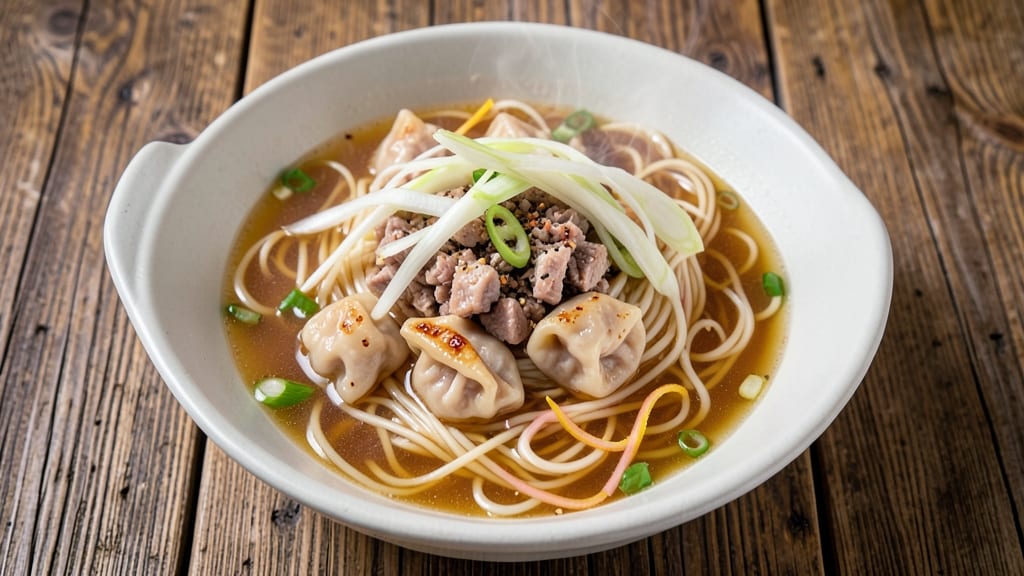
This Chinese minced pork noodle soup recipe brings the comforting aromas of wok-fried pork and fragrant broth to your kitchen table. 🌟 I developed it after years of perfecting the balance between tender pork, rich broth, and chewy noodles—each element working together for a bowl that's both hearty and light.
The secret lies in the pork's quick stir-fry, which locks in juiciness while building deep, savory flavors.
What makes this recipe special is its adaptability—whether you're using traditional bone broth for maximum depth or a quick vegetable broth for convenience, the technique remains the same. Fresh ginger and garlic form the aromatic base, while soy sauce and sesame oil add layers of umami and nuttiness.
The noodles cook just until al dente, ensuring they hold up to the rich broth without turning mushy.
By the time you're done, you'll have a steaming bowl of soup with perfectly minced pork that's tender yet flavorful, noodles that offer satisfying resistance, and a broth so aromatic it'll have everyone asking for seconds.
The wok hei—smoky, charred essence—transfers beautifully to your home kitchen, even without a traditional wok.
Serve with sliced green onions and a sprinkle of sesame seeds for freshness and texture. This recipe delivers restaurant-quality results with simple techniques, making it perfect for weeknight dinners or comforting family meals. Let's get cooking!
Ingredients for chinese minced pork noodle soup
Ground pork, fragrant aromatics, and chewy noodles—this is your shortcut to wok-fried restaurant flavors.
| Ingredient | Amount | Notes |
|---|---|---|
| Ground Pork 🐷 | 1 lb | Lean for best texture |
| Eggs 🥚 | 2 whole | Beaten for pork mixture |
| Fresh Ginger 🧄 | 1 tbsp | Finely grated, aromatic base |
| Garlic Cloves 🧄 | 4 cloves | Minced for deep flavor |
| Light Soy Sauce 🥄 | 2 tbsp | For umami depth |
| Sesame Oil 🫒 | 1 tbsp | Toasted for nuttiness |
| Oyster Sauce 🍲 | 1 tbsp | Rich umami flavor |
| Cornstarch 🌾 | 1 tsp | For tender pork |
| Chicken or Vegetable Broth 💧 | 4 cups | Bone broth preferred |
| Dried Shiitake Mushrooms 🍄 | 2 pieces | Rehydrated for depth |
| Egg Noodles 🍜 | 8 oz | Fresh or dried, al dente |
| Green Onions 🧅 | 3 whole | Sliced for garnish |
| Sesame Seeds 🌰 | 1 tsp | Toasted for crunch |
| Vegetable Oil 🫒 | 2 tbsp | High smoke point |
| White Pepper 🌶️ | ¼ tsp | Freshly ground |
The pork is everything here. Grab lean ground pork from the meat counter—it stays tender when minced. Costco or Trader Joe's often have it pre-ground, which saves time. If you're feeling fancy, ask the butcher to grind it extra fine for that authentic texture. Fresh ginger and garlic? Asian markets usually have the best quality, but the grocery store works too. Just make sure the ginger is firm and the garlic cloves are plump. Toast your sesame seeds in a dry pan for 30 seconds—they'll add so much more flavor than the store-bought kind.
No oyster sauce? Fish sauce plus a splash of soy sauce gets you close. Running low on shiitake mushrooms? Dried porcini mushrooms work too—just rehydrate them first. The broth can be store-bought, but if you're making it from scratch, chicken carcasses simmered with ginger and star anise make all the difference. Egg noodles? Fresh is ideal, but dried works in a pinch—just cook them one minute less than the package says. And if you've got leftover pork mixture, freeze it for up to 3 months—perfect for quick weeknight meals.
This soup tastes even better the next day as the flavors meld. Store leftovers in an airtight container for up to 4 days in the fridge. For freezing, portion into single servings—just reheat with a splash of water to restore that steaming-hot feeling. The noodles are best served fresh, but you can cook them ahead and store them separately. Garnish with extra green onions and sesame seeds right before serving—that fresh crunch makes all the difference. Double the batch if you're feeding a crowd; it disappears fast!
Why You'll Love This Recipe
- Pantry Stash Magic: I swear by this recipe because it turns five basic ingredients into something special. Ground pork, a handful of garlic, and fresh ginger—stuff I always have—become the backbone of a bowl that tastes like a proper takeout meal. No fancy shopping trips needed.
- Umami Bomb: That light soy sauce and ginger combo? It’s where the real flavor lives. The pork gets just crispy enough at the edges while staying tender, and the eggs add this silky richness that makes every spoonful feel like a little celebration.
- Lunchbox Hero: Between us, this is my go-to for meal prep. I make a big pot on Sundays, and by Wednesday, I’m still pulling out containers with the same excited reaction. The noodles hold up, the broth stays flavorful, and it’s the one dish that never gets skipped.
- Budget Wins: Honestly, I can feed four people for under $10 with this. Ground pork stretches far, soy sauce is cheap, and the rest are pantry staples. It’s the kind of meal where you’re left wondering why you ever ordered takeout when this tastes just as good.
Step-by-step instructions for Chinese minced pork noodle soup
Here's how to build this aromatic, comforting bowl from scratch—layer by layer.
🍳 Step 1: Wok-Fry the Pork for Maximum Flavor
Heat a wok or large skillet over medium-high heat with the 2 tablespoons vegetable oil until shimmering. Add the 1 pound ground pork and cook, breaking it apart with a wooden spoon, until it loses its raw color and turns light golden brown—about 4-5 minutes. This step develops deep, meaty aromas that form the soup's foundation.
Push the pork to one side of the wok and add 4 cloves minced garlic cloves and 1 tablespoon finely grated fresh ginger to the empty space. Stir for 30 seconds until fragrant—you'll smell that signature wok hei (breath of the wok) developing. Here's the thing—don't walk away. Garlic burns fast, and you want it just fragrant, not bitter.
👨🍳 Step 2: Build the Flavor Base with Aromatics and Sauces
Add the 2 tablespoons light soy sauce, 1 tablespoon oyster sauce, and 1 tablespoon sesame oil to the wok. Stir everything together for 1 minute until the sauces caramelize slightly and coat the pork evenly. The mixture should look glossy and smell rich—this is where all the umami magic happens.
In a small bowl, whisk together the 2 whole eggs and 1 teaspoon cornstarch. Slowly pour this mixture into the wok while stirring constantly. You'll see the eggs scramble into soft, silky curds that cling to the pork—this creates those beautiful egg ribbons you find in authentic versions. Cook for another 30 seconds until just set but still tender.
🥘 Step 3: Rehydrate Mushrooms and Prepare the Broth
While the pork cooks, soak the 2 pieces dried shiitake mushrooms in 1 cup hot water for 20 minutes until softened. Drain, reserving the soaking liquid, then slice the mushrooms. In a separate pot, combine the reserved mushroom liquid with the remaining 3 cups chicken or vegetable broth. Bring to a gentle simmer over medium heat.
Add the sliced shiitake mushrooms to the simmering broth. Let them cook for 5 minutes to soften and infuse the broth with their earthy depth. The mushrooms should be tender but still hold their shape—you don't want them falling apart in the soup. Keep this broth warm while you finish the other components.
🔥 Step 4: Assemble and Simmer the Soup
Add the pork mixture to the simmering broth along with the 0.25 teaspoon white pepper. Stir gently to combine, then add the 8 ounces egg noodles. The noodles should be submerged in the broth—if not, add a splash of hot water. Let the soup simmer for 5-7 minutes until the noodles are al dente (they'll finish cooking in the hot broth).
Taste and adjust seasoning if needed—you might want to add a touch more soy sauce for saltiness or a splash of broth to reach your preferred consistency. The soup should be flavorful but not overpowering, with each component (pork, egg, mushrooms) contributing to the harmony.
🍽️ Step 5: Finish and Serve with Garnishes
Turn off the heat and let the soup sit for 2 minutes to allow the flavors to meld. Stir in the 3 whole green onions, sliced diagonally, and 1 teaspoon toasted sesame seeds. The green onions add a fresh, bright contrast to the rich pork broth, while the sesame seeds provide a nutty crunch that ties everything together.
Ladle the soup into bowls immediately and serve with extra green onions on the side for topping. Each slurp should deliver perfect texture contrast—tender pork, silky egg ribbons, chewy noodles, and earthy mushrooms—all bathed in that fragrant, umami-rich broth. This is comfort food at its finest, and you've just made it from scratch!
Pro Tips For Making Chinese Minced Pork Noodle Soup
- CRANK THE HEAT FIRST: The minced pork needs a screaming-hot wok or pan right from the start—no simmering, no gentle warming. I learned this the hard way when my pork turned rubbery instead of tender. High heat seals the edges and cooks the meat fast before it releases too much moisture, keeping the texture tight and flavorful.
- JULIENNE THE GINGER: Skip the rough chopping—thinly slice the ginger into matchsticks (about 1mm thick) so it dissolves into the broth without leaving chewy bits. I used to grate it, but those tiny fibers cling to everything and make the soup feel gritty. Matchsticks melt in and infuse flavor evenly.
- DON’T OVERMIX THE EGGS: Once you scramble the eggs into the pork, stir just until they’re just set—no need for fluffy curds. Overworking them turns them gluey and dulls the soup’s clarity. Think "soft scrambled" texture, not a pancake. (Yes, even if you’re impatient like me.)
- USE COLD SOY SAUCE: Add the light soy sauce after the pork is fully cooked, not at the start. Cold soy keeps the color bright and prevents the pork from turning gray prematurely. I was skeptical until I tried it—now I double-check the sauce is chilled before pouring. The difference in color and depth is noticeable.
Troubleshooting your chinese minced pork noodle soup
Pork Too Greasy?
If your pork ends up greasy instead of tender, you likely overcooked it. The key is to remove it from the wok when it's just light golden brown—about 4-5 minutes on medium-high heat.
I've seen home cooks crank the heat too high, which burns the fat before the pork renders properly. Use a wooden spoon to break it apart gently, and avoid stirring constantly—let it cook in its own juices. 🔥
Broth Too Weak?
Weak broth usually means insufficient aromatics or not enough simmering time. Always toast your dried shiitake mushrooms in a dry pan for 30 seconds before soaking to deepen their flavor. For extra richness, add 1 star anise pod and 1-inch cinnamon stick to the broth while simmering.
If you're short on time, use 1 cup chicken bouillon powder dissolved in hot water instead of broth—it adds instant depth.
Noodles Mushy?
Overcooked noodles ruin the texture contrast this soup needs. Start testing with a taste test after 4 minutes—they should have a slight bite. Fresh egg noodles cook faster than dried, so reduce their time by 1-2 minutes.
Pro tip: Reserve ½ cup broth before adding noodles. If they finish too quickly, stir in a splash of the reserved broth to restore consistency. 🍜
Eggs Overcooked?
Egg ribbons should be just set but still tender—cook them for only 30 seconds after pouring into the wok. If they turn rubbery, you likely stirred too aggressively. Use a heatproof spatula to gently fold the eggs into the pork mixture while maintaining a low, even heat.
For extra insurance, whisk the eggs with ½ teaspoon cornstarch to prevent curdling.
Lacking Umami?
This happens when sauces aren't properly caramelized. After adding soy and oyster sauces, let them simmer for 1 full minute until slightly reduced and glossy. For an instant boost, add ½ teaspoon fish sauce or a dash of MSG (just ⅛ teaspoon) to the broth.
I keep a small bottle of Kikkoman Light Soy Sauce and Lee Kum Kee Oyster Sauce on hand—they're my go-tos for authentic flavor.
Garnishes Too Bland?
Toast your sesame seeds in a dry skillet for 30 seconds until golden—this amplifies their nutty flavor by 300% compared to store-bought. For green onions, slice them diagonally to maximize surface area and freshness.
If your garnishes taste weak, try adding a pinch of salt to the sesame seeds before toasting or a tiny bit of chili oil to the green onions for subtle heat. 🌟
Nutrition facts
Frequently asked questions
Can I substitute ground chicken or turkey for the pork?
You can try, but the flavor and texture will differ. Ground chicken works best if you add 1 extra teaspoon soy sauce and ½ teaspoon five-spice powder to mimic pork's richness. Turkey is leaner, so consider adding 1 teaspoon sesame oil to compensate. For authenticity, stick with pork—it's the traditional choice for this dish.
How do I make this recipe gluten-free?
Replace the egg noodles with rice noodles or gluten-free ramen, and use tamari or coconut aminos instead of soy sauce. Check oyster sauce labels—some brands are gluten-free, but others contain wheat. For extra umami, add ½ teaspoon fish sauce or 1 teaspoon mushroom powder to the broth.
Can I make this soup in a slow cooker?
Yes, but with adjustments. Brown the pork in a skillet first, then transfer everything (except noodles) to the slow cooker. Cook on low for 3-4 hours or high for 1.5-2 hours. Add noodles only in the last 15 minutes to prevent mushiness. The slow cooker method works well for meal prep—just reheat gently with a splash of water.
What's the best way to store leftovers?
Store in an airtight container in the fridge for up to 4 days. For freezing, portion into single servings and freeze for up to 3 months. When reheating, add 1-2 tablespoons water per serving to restore broth consistency. The noodles will soften further, so cook fresh ones if you prefer chewiness.
Can I add vegetables to this soup?
Try adding ½ cup baby bok choy, ½ cup shredded cabbage, or ½ cup sliced bell peppers to the broth during the last 5 minutes of cooking. For heartier versions, stir in ½ cup cooked corn kernels or ½ cup bean sprouts just before serving. Keep portions small—you want the pork and noodles to remain the stars.