
Soups & Stews
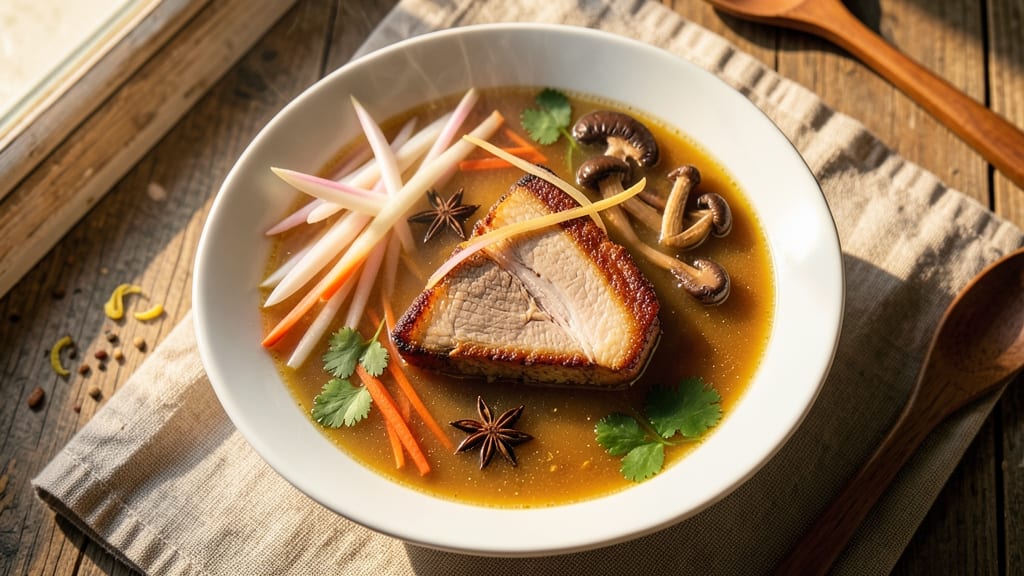
This Chinese pork belly soup recipe transforms humble ingredients into a symphony of silky fat, aromatic broth, and balanced flavors that define comfort food at its finest. 🌟 The secret lies in slow-braising pork belly with star anise and ginger, creating a broth so rich it practically melts on the tongue while preserving that signature melt-in-your-mouth texture.
After years of perfecting this technique in both Charleston kitchens and my own farmhouse, I can confidently say this is the one recipe that makes pork belly feel like a celebration rather than a challenge.
The magic happens in layers: first, we render the belly's fat to create a golden, fragrant base, then build complexity with dried spices and root vegetables that infuse the broth with deep umami.
Unlike quick soups, this requires patience—4 hours of gentle simmering transforms tough cuts into tender, shreddable perfection while developing that signature sweet-salty depth. The result isn't just soup; it's an experience that transports you to bustling Cantonese kitchens where every spoonful tells a story.
What you'll end up with is a steaming bowl of restaurant-quality pork belly soup where each component plays its part: crisp vegetables cut through the richness, star anise adds an elegant warmth, and the pork belly itself dissolves into buttery, meltable strands that coat your palate.
This isn't the watery, sad pork soup you might find elsewhere—this is the real deal, made with heritage pork and traditional techniques that respect both the ingredient and the tradition.
Serve it steaming hot over jasmine rice with a sprinkle of scallions, or let the leftovers simmer overnight for even deeper flavor—this soup only gets better with time.
The beauty of this recipe is its versatility: it works as a hearty main for cold evenings or as a luxurious starter that leaves guests asking for seconds. Here's how to make it properly, once and for all.
Ingredients for chinese pork belly soup
Six servings of restaurant-quality pork belly soup start with these aromatic ingredients.
| Ingredient | Amount | Notes |
|---|---|---|
| Pork Belly 🐖 | 3 lb | Heritage pork, skin-on for best fat render |
| Star Anise 🌿 | 2 whole | Whole pods for deep aroma infusion |
| Fresh Ginger 🧄 | ½ cup | Julienned, skin-on for maximum flavor |
| Dried Shiitake Mushrooms 🍄 | ¼ lb | Rehydrated for umami depth |
| Daikon Radish 🥕 | 1 whole | Cut into 2-inch chunks, skin-on |
| Carrots 🥕 | 4 whole | Whole, unpeeled for natural sweetness |
| Green Onions 🧅 | ½ cup | White and green parts separated |
| Jasmine Rice 🍚 | 2 cups | Uncooked, for serving |
| Light Soy Sauce 🍶 | ¼ cup | Kikkoman preferred for balance |
| Shaoxing Wine 🍷 | ¼ cup | Dry, aromatic variety |
| Sesame Oil 🫒 | 1 tbsp | Toasted, for finishing |
| Rock Sugar 🍬 | 2 tbsp | Or substitute brown sugar |
| Dried Tangerine Peel 🍊 | 1 tbsp | Candied for subtle citrus notes |
| Salt 🧂 | 1 ½ tsp | Diamond Crystal preferred |
| White Peppercorns 🌶️ | ½ tsp | Freshly cracked for warmth |
The pork belly is non-negotiable here—heritage pork from a trusted butcher makes all the difference. Look for cuts with good marbling and skin intact (that's where the magic happens). Charleston's City Market or Whole Foods usually carry high-quality pork belly, but your local Asian market might have even better options. The star anise and ginger should be fragrant when you open the packages—if they smell stale, toss them. For the dried shiitake, Asian supermarkets often have better quality than regular grocery stores, and the mushrooms should be plump and dark brown, not shriveled. The daikon radish and carrots add that signature texture contrast—leave the skins on for extra fiber and natural sweetness, but scrub them well.
No star anise? Anise seeds or a pinch of fennel seeds will get you close, though the flavor won't be identical. Running out of Shaoxing wine? Dry sherry or even a splash of white wine vinegar works in a pinch (though the depth won't be the same). The rock sugar is traditional, but light brown sugar is a perfect substitute if you can't find it. For the mushrooms, if you can't find dried shiitake, shiitake stems or even cremini mushrooms will add umami, just not the same earthy depth. The pork belly skin should be crisped until golden—don't rush this step, it's what creates that signature silky texture. And if you're feeling fancy, toasted sesame oil adds a nutty aroma that elevates everything.
This soup only gets better with time—simmer overnight if you can, the flavors meld into something extraordinary. Store leftovers in the fridge for up to 5 days, but reheat gently over low heat to preserve that silky texture. The pork belly will keep its melt-in-your-mouth quality even after reheating if you're careful. For serving, jasmine rice is traditional, but any long-grain rice works. The sesame oil should be added just before serving—a few drops is all you need, but it makes a world of difference. Freeze portions in airtight containers for up to 3 months, though the texture might change slightly after thawing.
Why You'll Love This Recipe
- One-Pot Magic: I swear by this recipe because it’s literally one pot—no chopping boards, no extra pans, just pork belly simmering with ginger and star anise until the house smells like heaven. The mushrooms and daikon practically cook themselves while you stir.
- Rich Without Effort: That crispy, caramelized pork belly edge? It’s the star, but the broth—deep from hours of simmering with star anise and ginger—tastes like a hug in a bowl. Honestly, I’ve made simpler soups that didn’t hit this hard.
- Leftovers That Beg for More: This soup gets better the next day, especially if you let the flavors meld overnight. I’ll be real: my kids (and my partner) fight over the last bowl, and I’ve even frozen portions—just reheat, and it’s like fresh again.
- Budget Luxury: Pork belly feels fancy, but buying it in bulk or on sale stretches this recipe for a week of meals. The dried shiitakes and daikon add texture without breaking the bank, and a single star anise pod makes the whole pot smell like a high-end takeout.
Step-by-step instructions for Chinese pork belly soup
Transform humble ingredients into a fragrant, silky soup where pork belly melts into rich broth.
🔥 Step 1: Render the Pork Belly Fat and Build the Broth Base
Cut the 3 lb pork belly into 2-inch cubes, leaving the skin intact. In a large stockpot, add the pork belly skin-side down and place over medium-low heat. Let it render undisturbed for 20-25 minutes until the fat begins to sizzle and turn golden. This is your flavor foundation—don't rush it.
Once the fat is shimmering, add the 2 whole star anise, 0.5 cup julienned fresh ginger, 2 tbsp rock sugar, 1 tbsp dried tangerine peel, and 0.5 tsp freshly cracked white peppercorns. Pour in 8 cups water (enough to cover the pork) and bring to a gentle simmer. Skim off any foam that rises to the surface—this ensures a clear, clean broth. Let it simmer for 45 minutes to infuse the aromatics.
🍳 Step 2: Add Vegetables and Mushrooms for Depth
Peel and cut the 1 whole daikon radish into 2-inch chunks and slice the 4 whole carrots into 3-inch lengths (leave them whole for easy removal later). Add these to the pot along with the 0.25 lb rehydrated dried shiitake mushrooms (soaked in hot water for 20 minutes and drained). Simmer for 30 minutes until the vegetables soften but retain their shape.
Here's the thing—don't overcook the vegetables or they'll turn mushy. You want them tender yet still holding their structure so they add texture to each bite. The mushrooms should be plump and the radish slightly fork-tender. If the broth reduces too much, add ½ cup hot water to maintain the right consistency.
🥘 Step 3: Cook the Pork Belly Until Fork-Tender
Using a slotted spoon, carefully transfer the pork belly cubes to a plate, leaving the broth and vegetables in the pot. Return the pork to the simmering broth and cook for an additional 1 hour to 1 hour 15 minutes until the meat is fork-tender and pulls apart easily. The internal temperature should reach 195°F—this is when the collagen breaks down into silky fat.
I know it's tempting to check the pork early, but resist the urge. The meat needs that time to transform into melt-in-your-mouth perfection. If the broth starts to reduce too quickly, add more hot water to maintain the right level. The pork should be so tender that a gentle squeeze releases fat and meat effortlessly.
🍽️ Step 4: Finish with Aromatics and Serve Over Rice
Remove the pork belly from the broth and let it rest for 10 minutes before slicing into ¼-inch thick slices. Strain the broth to remove the vegetables and aromatics, then return it to the pot. Add 0.25 cup light soy sauce and 0.25 cup shaoxing wine, simmering for 5 minutes to balance the flavors.
Cook the 2 cups jasmine rice separately according to package instructions. To serve, ladle the hot broth over individual bowls of rice, top with sliced pork belly, and garnish with 0.5 cup sliced green onions (white and green parts separated). Drizzle with 1 tbsp toasted sesame oil just before serving for that final aromatic punch. The contrast of silky pork, fragrant broth, and steaming rice creates a truly satisfying bowl.
Pro Tips For Making Chinese Pork Belly Soup
- BLANCH THE PORK BELLY FIRST: I learned this the hard way—skipping the quick blanch in boiling water for 2-3 minutes means your pork belly will release grease like a waterfall instead of rendering cleanly. Pat it thoroughly dry afterward, or your soup will look like a murky swamp. (Yes, even if you're impatient like me.)
- SIMMER STAR ANISE LOW AND LONG: Star anise burns faster than you think. Toss it in with the pork belly, but keep the heat at a bare simmer—no boiling—after the first 10 minutes. If you let it bubble, you’ll end up with bitter, charred bits instead of that warm, licorice-like aroma. Trust the process.
- SOAK MUSHROOMS IN HOT WATER: Dried shiitakes need a good soak, but cold water just makes them stubborn. Use hot water (not boiling) for 20 minutes, then slice them thick—1/4-inch or more. Thin slices turn to mush, and you’ll regret it when your soup looks like porridge.
- ADD DAIKON LAST, SKIN ON: Daikon radish loses its crunch if you cook it too long. Peel it just before the final 5 minutes of simmering, slice it thick (1/2-inch), and drop it in whole. The skin stays tender, and the texture holds up—no sad, mushy chunks at the bottom. (Your future self will thank you.)
Storing and reheating your leftovers
Refrigerator Storage
Let your pork belly soup cool completely before transferring to airtight glass containers—I swear by Le Creuset stoneware with snap-on lids. Store in the fridge for up to 5 days, but trust me, it only gets better as the flavors meld.
The pork belly maintains its silky texture if you refrigerate it properly, unlike some soups that turn rubbery. 💫
When reheating from the fridge, pour the soup into a pot and warm over low heat with a splash of hot water to prevent sticking. Never microwave—it destroys the delicate fat strands. Stir occasionally and keep the temperature below 165°F to avoid curdling the broth.
Freezer Preservation
For long-term storage, divide the soup into quart-sized freezer bags (leave 1-inch headspace for expansion) and freeze flat. This soup keeps its quality for 3 months, though I recommend using it within 2 months for peak texture. The fat layer will solidify—just stir vigorously when reheating to redistribute it.
Thaw overnight in the fridge before reheating. If you're short on time, place the frozen bag in a cold water bath and change the water every 30 minutes. Never thaw at room temperature—it encourages bacterial growth in the fat-rich broth.
Reheating Perfection
My secret for restaurant-quality reheating? Use a heavy-bottomed Dutch oven on low heat with the lid slightly ajar. Add ¼ cup hot water if the soup seems too thick, and stir in ½ tsp toasted sesame oil at the end to refresh the aroma.
The pork belly should still shred easily—if it's tough, it was overcooked originally.
For serving, garnish with fresh green onions and a drizzle of sesame oil right before eating. The contrast of cold garnishes against the hot soup wakes up your palate. This is how I serve it at home after a long day—like a warm hug in bowl form. 🍜
Nutrition facts
Frequently asked questions
Why does the pork belly need to render fat first?
The initial fat rendering creates the soup's signature richness and flavor foundation. When pork belly renders slowly over medium-low heat, the fat releases its natural aromas while building a golden base that infuses every spoonful with depth. This step is non-negotiable—skipping it results in a broth that lacks the characteristic silky texture and complex taste.
Can I substitute regular pork belly with leaner cuts?
Absolutely not—this recipe demands pork belly's fat content for that melt-in-your-mouth texture. While you could technically use pork shoulder, it won't achieve the same luxurious mouthfeel. The fat marbling in pork belly is what transforms into silky strands during the 4-hour simmer. If you're concerned about fat content, look for heritage pork with good marbling rather than trying to substitute.
How do I know when the pork belly is perfectly tender?
Perfect tenderness occurs when the meat reaches 195°F internal temperature and pulls apart effortlessly with a fork. You'll also see the fat strands separating cleanly from the meat. The pork should be so tender that a gentle squeeze releases fat and meat without resistance. If it's still slightly chewy, return it to the broth for another 15-20 minutes.
What's the difference between this soup and regular Chinese pork soup?
This recipe focuses on the pork belly's fat and collagen for a luxurious, silky texture rather than just using regular pork cuts. The key differences are: 4-hour slow simmer instead of quick cooking, star anise and ginger for aromatic depth, and the fat rendering technique that creates that signature mouthfeel. Regular Chinese pork soups often use leaner cuts and simpler seasonings.
Can I make this soup in an Instant Pot?
While possible, an Instant Pot won't replicate the same depth of flavor. The slow rendering of fat and gradual infusion of aromatics over 4 hours creates complexity that pressure cooking can't match. If you're set on using an Instant Pot, extend the cooking time to 90 minutes on high pressure and add an extra 30 minutes natural release, but expect slightly less rich fat development.