
Main Courses
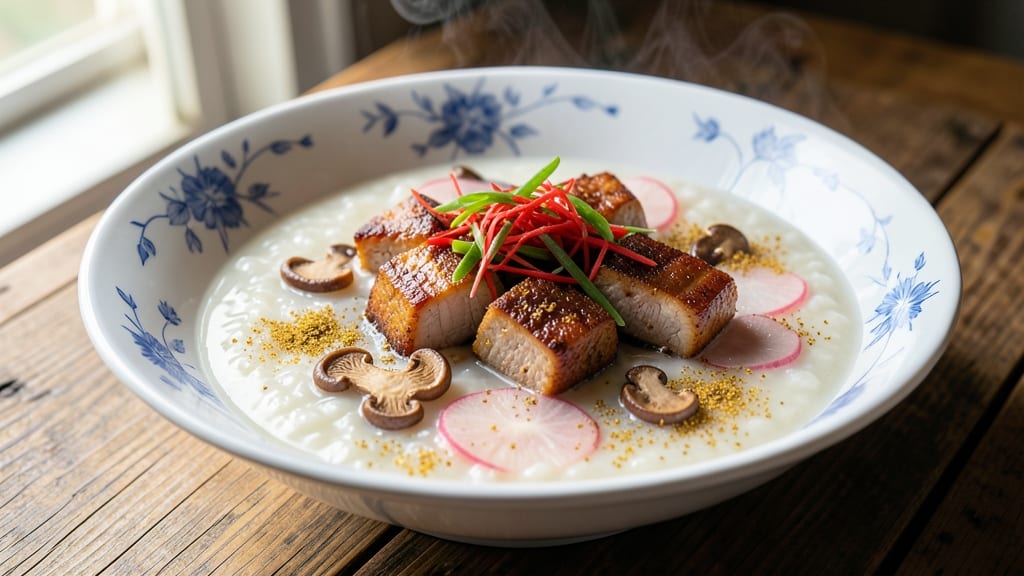
This Cantonese pork congee recipe brings the soul-warming comfort of Hong Kong breakfast tables to your kitchen, where fragrant five-spice rice porridge meets melt-in-your-mouth pork.
I first tasted it in a dim sum house in Kowloon, where the steam rising from the bowl carried me back to my grandmother's kitchen—simple ingredients transformed into something deeply satisfying.
The secret lies in slow-cooking jasmine rice until it dissolves into a velvety broth, while tender pork shoulder simmers until it practically falls apart at the touch.
The magic happens in layers: five-spice powder infuses the broth with warm, aromatic depth, while the pork absorbs the flavors during its long simmer. This isn't just porridge—it's a complete meal that balances rich textures and bold spices without being overpowering.
The key is patience; rushing the process will leave you with gritty rice or tough pork. But when done right, each spoonful delivers that perfect harmony of creamy rice, tender meat, and fragrant broth that makes this dish a Cantonese breakfast staple.
What makes this recipe special is its versatility—serve it as a comforting breakfast, a light lunch after a heavy meal, or even as a restorative remedy when you're under the weather.
The traditional toppings like pickled vegetables, century eggs, and scallions add bright contrasts to cut through the richness, while a drizzle of soy sauce and sesame oil elevates every bite. It's the kind of dish that feels both nostalgic and deeply modern, proving that some traditions are worth perfecting.
Ready to transform simple ingredients into a restaurant-quality bowl? The process is straightforward once you understand the fundamentals—slow cooking, proper seasoning, and the right balance of textures. Let's get started on creating your own bowl of Cantonese comfort that'll have everyone asking for seconds.
Ingredients for cantonese pork congee
Simple ingredients that transform into Cantonese comfort in one pot.
| Ingredient | Amount | Notes |
|---|---|---|
| Pork Shoulder 🥩 | 1 ½ lb | Bone-in for better flavor |
| Jasmine Rice 🌾 | 1 cup | Uncooked, long-grain preferred |
| Five-Spice Powder 🌶️ | 2 tsp | Authentic Chinese blend |
| Dried Shiitake Mushrooms 🍄 | 4 whole | Rehydrated for umami depth |
| Fresh Ginger 🧅 | 1 ½ oz | Peeled, sliced thin |
| Green Onions 🧅 | 6 whole | White and green parts separated |
| Light Soy Sauce 🍶 | ½ cup | For seasoning and finishing |
| Sesame Oil 🫒 | 1 tbsp | Toasted, for aroma |
| Water 💧 | 6 cups | Filtered preferred |
| Salt 🧂 | 1 tsp | Adjust to taste |
| White Peppercorns 🌶️ | ½ tsp | Freshly ground |
| Century Eggs 🥚 | 2 whole | Optional topping |
| Pickled Vegetables 🥬 | ½ cup | For contrast |
The pork shoulder is non-negotiable here—bone-in for that deep, slow-cooked flavor. Ask your butcher for a well-marbled cut if you're buying whole, or grab pre-cut from the deli section at Whole Foods or H Mart for authentic quality. Five-spice powder should be the real deal: Penzeys or King's Supermarket carry the best blends. Fresh ginger needs to be aromatic—run your thumb over it before buying; it should smell sharp and bright. The jasmine rice is your secret weapon: Thai Kitchen brand is reliable, but if you've got a local Asian market, their bulk bins are unbeatable.
No five-spice powder? Mix 1 tsp cinnamon, 1 tsp fennel seeds, 0.5 tsp cloves, 0.5 tsp star anise, and 0.5 tsp Sichuan peppercorns—toast the whole spices first for depth. Subbing pork shoulder? Pork butt works too, but avoid lean cuts—they won't stay tender. Pickled vegetables? Quick-pickle daikon and carrot in rice vinegar if you can't find Asian versions. The shiitake mushrooms must be hydrated first—soak in hot water for 20 minutes, then reserve that liquid for extra umami. And if you're short on time, instant pot jasmine rice cuts prep by half (just add 1 extra cup water).
This congee tastes even better the next day—store leftovers in the fridge for up to 4 days, reheating gently over low heat. For freezing, portion into 2-cup containers with a layer of oil on top to prevent skin. The pork will keep its tenderness if reheated slowly. Toppings like century eggs and pickled veggies can be added fresh after reheating—keep them separate until serving so they stay crisp. The broth reduces as it cools, so add a splash of water when reheating if it's too thick.
Why You'll Love This Recipe
- One-Pot Wonder: I swear by this for lazy Sundays—just toss pork shoulder, jasmine rice, and ginger into a pot, simmer, and let it do its magic. No chopping, no fuss, and the house smells like heaven by the time it’s done.
- Five-Spice Magic: That little jar of five-spice powder transforms everything—warm, earthy, and just a hint of cinnamon. The pork gets tender, the mushrooms soak up the flavor, and suddenly, your congee tastes like a Cantonese restaurant secret.
- Leftovers That Shine: Between us, this is my go-to for meal prep. The congee thickens perfectly, reheats in minutes, and the pork stays juicy. I’ll make a big batch on Sunday and eat it all week—no sad, dry leftovers here.
- Budget Breakfast Fix: Pork shoulder is cheap, rice is cheap, and dried shiitake? Even cheaper. For under $10, I feed my whole family a filling, flavorful meal that feels like a treat. Honestly, it’s my secret weapon for stretching groceries.
Step-by-step instructions for Cantonese pork congee
Here's how to create this comforting, fragrant rice porridge with tender pork and aromatic spices.
Prepare the Pork and Aromatics
Cut the 1.5 lb pork shoulder into 1-inch cubes—bone-in pieces add incredible flavor as they cook. In a large pot, combine the pork with the 1.5 oz fresh ginger (sliced), 4 whole dried shiitake mushrooms (rehydrated in hot water for 20 minutes), and 6 cups water. Bring to a boil over medium-high heat, then reduce to a gentle simmer for 45 minutes. You want the pork to become fork-tender while developing deep flavor in the broth.
While the pork simmers, separate the 6 whole green onions into white and green parts. The white sections will cook in the congee, while the greens will be used as a garnish. Also, finely chop the 0.5 cup pickled vegetables—they'll add a bright contrast to the rich porridge.
Build the Five-Spice Infused Broth
After the pork has simmered for 45 minutes, skim off any foam that rises to the surface. Add the 1 cup jasmine rice, 2 tsp five-spice powder, 1 tsp salt, and 0.5 tsp white peppercorns to the pot. Stir gently to distribute the spices evenly. The five-spice powder will infuse the broth with warm, aromatic notes that define Cantonese congee.
Return the heat to low and let the mixture simmer uncovered for 45-60 minutes. You're aiming for a silky, creamy texture—not a thick porridge, but something that coats the spoon. Stir occasionally to prevent sticking, and if the mixture looks too dry, add ½ cup hot water at a time. The rice should be fully broken down and the pork should pull apart easily.
Finish with Soy and Sesame
Once the congee reaches the perfect consistency, remove it from heat. Stir in the 0.5 cup light soy sauce and 1 tbsp sesame oil. The soy sauce balances the richness, while the sesame oil adds a nutty aroma. Taste and adjust seasoning—you might need a touch more salt or soy sauce to suit your preference. Let the congee rest for 5 minutes to allow the flavors to meld.
Here's the thing—this is where the magic happens. The congee should be smooth, velvety, and fragrant, with a subtle sweetness from the pork and a hint of spice from the five-spice powder. If it's too thick, thin it with a little hot water; if it's too thin, simmer it uncovered for another 10 minutes to thicken slightly.
Serve with Toppings
Ladle the congee into bowls, dividing it evenly among the 4 servings. Top each portion with ½ century egg (sliced if desired) and the reserved green onion greens. The century eggs add a creamy, slightly briny contrast to the rich porridge, while the green onions provide a fresh finish. Serve immediately while the congee is still warm and silky.
Don't skip the pickled vegetables—scatter them over the top for a tangy bite that cuts through the richness. The combination of textures and flavors—creamy congee, tender pork, briny century eggs, and crisp pickled veggies—makes this dish truly special. Enjoy it as a comforting meal or a light lunch, but either way, it's a labor of love worth every minute.
Pro Tips For Making Cantonese Pork Congee
- Blister the Pork First: I used to simmer the pork shoulder straight into the congee, but that’s how you end up with bland, stringy meat. Instead, sear the pork over high heat until the edges blacken and crackle—this renders fat and locks in flavor. Then cut into bite-sized chunks and add to the broth later. Trust me, the difference in texture and taste is night and day.
- Soak Shiitake Properly: Dried shiitake mushrooms are non-negotiable for depth, but skipping the soak ruins the game. Toss them in hot water for 10 minutes, then let them sit another 20 in room temp water—this rehydrates them fully without turning them to mush. Use the soaking liquid in the congee; it’s liquid gold.
- Low and Slow for Rice: Congee isn’t a race. Once the pork broth is simmering, add the jasmine rice and reduce the heat to the lowest setting—almost a whisper. Stir occasionally to prevent sticking, and let it cook for 45-60 minutes. Rushing it turns the rice into glue; patience gives you that silky, melt-in-your-mouth texture.
- Toast Five-Spice Early: My grandmother swore by this, and she was right: dry-toast the five-spice powder in a separate pan over medium heat for 30 seconds before adding it to the broth. This wakes up the cloves and cinnamon, giving the congee a warm, aromatic kick instead of a flat, powdery taste. Don’t skip it—it’s the thing that makes the dish sing.
Best sauces and condiments for cantonese pork congee
Five-Spice Broth Base
The soul of this congee lies in the five-spice powder, which I always source from Penzeys for that authentic blend of cinnamon, fennel, cloves, star anise, and Sichuan peppercorn.
Toast the spices lightly in a dry pan for 30 seconds before adding to the broth—this releases their essential oils and deepens the aroma. The shiitake mushrooms are non-negotiable; their umami richness transforms the broth from ordinary to extraordinary.
I like to reserve ½ cup of the soaking liquid from the mushrooms and add it to the pot later—this extra umami boost makes all the difference. 🌶️
Soy Sauce Variations
For that perfect balance of saltiness and depth, I use light soy sauce (not dark) because it adds flavor without overpowering.
But here's where you can get creative: swap in 1 tbsp of dark soy sauce for a richer color, or add ½ tsp of fish sauce for an extra layer of complexity.
If you're feeling adventurous, try 1 tsp of hoisin sauce—it adds a touch of sweetness that pairs beautifully with the pork. Just remember, the soy sauce should complement, not dominate, the dish. 🍶
Sesame Oil Finish
The sesame oil is what ties everything together—its nutty aroma elevates the congee from good to unforgettable. I always use toasted sesame oil (not the lighter, flavorless kind) and add it at the very end, just before serving.
A quick tip: warm the oil slightly before adding it to the pot—this enhances its aroma and prevents a bitter aftertaste. For an extra touch, drizzle a few drops directly onto each bowl before serving. 🫒
Pickled Vegetable Options
Traditional Cantonese congee often includes pickled mustard greens or daikon radish, but don't limit yourself. Quick-pickle cucumber, carrot, or even jalapeño in rice vinegar with a pinch of sugar for a refreshing contrast. If you're using store-bought pickles, rinse them first to remove excess salt.
The key is to add them fresh—never cook them in the congee, as they'll turn mushy. Scatter them over the top just before eating for that perfect crunch. 🥬
Century Egg Substitutes
Century eggs are hard to find outside Asian markets, but there are great alternatives. Hard-boiled quail eggs work beautifully—their smaller size makes them easier to eat from a bowl, and their rich yolk adds a creamy texture.
For a vegetarian option, try marinated tofu or silken tofu cubes, which absorb the congee's flavors while adding protein. If you're feeling bold, even avocado slices can work—just add them fresh to avoid browning. 🥚
Garnish Like a Pro
The final presentation matters just as much as the flavor. I like to use thinly sliced green onions for a pop of color and freshness, but don't stop there. Add toasted sesame seeds for crunch, crushed peanuts for a nutty twist, or even chili oil for a spicy kick.
The goal is to create a visual and textural contrast that makes every bite exciting. Trust me, these little details take your congee from home-cooked to restaurant-worthy. ✨
Nutrition facts
Frequently asked questions about Cantonese pork congee
Why does my pork congee turn out too thick or too thin?
The texture depends on simmering time and liquid balance. For silky congee, simmer uncovered on low heat—the rice breaks down gradually. If too thick, add ½ cup hot water at a time. If too thin, simmer 10 more minutes uncovered to reduce. The magic is in patience: 45-60 minutes total simmering gives perfect consistency.
Can I make this congee in an Instant Pot?
Use the sauté function to cook pork with ginger and mushrooms for 10 minutes, then add rice, spices, and water. Cook on high pressure for 20 minutes, then natural release. The texture will be slightly different (more uniform) but still delicious. Add extra ½ cup water if needed after cooking.
What's the best way to store and reheat leftovers?
Store in an airtight container in the fridge for 4 days or freeze for 3 months. Reheat gently on low heat with a splash of water—never microwave directly. The congee thickens as it cools, so adjust with water when reheating. Toppings like century eggs should be added fresh after reheating.
How can I make this dish vegetarian?
Replace pork with shiitake mushrooms or tofu (extra-firm for texture). Use vegetable broth instead of water and add 1 tsp soy sauce plus ½ tsp miso paste for umami. Keep all other ingredients—especially the five-spice powder—and garnish with pickled veggies and green onions for balance.
Is there a quick version for busy mornings?
Swap jasmine rice for instant congee mix (found in Asian markets) and use pre-cooked pork like rotisserie chicken or leftover pork. Simmer for 20 minutes instead of 1 hour. While faster, it won't have the same depth of flavor—save this for weekdays when you need comfort fast.