
Soups & Stews
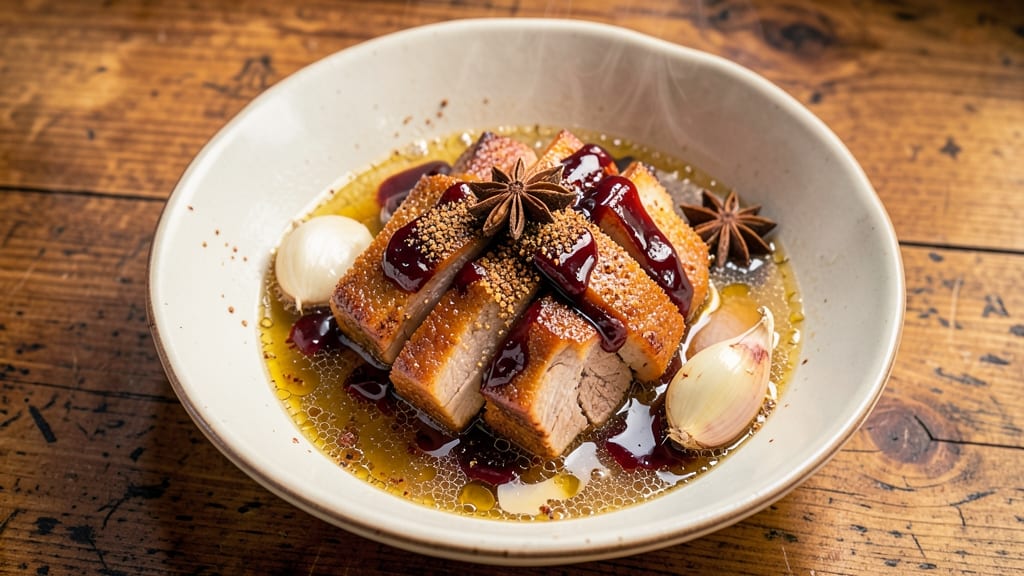
This Chinese pork belly stew recipe transforms tough cuts into melt-in-your-mouth perfection through slow braising and aromatic spices. 🔥 The secret lies in parboiling the pork belly to render fat, then searing it until golden before simmering in a rich sauce of soy, star anise, and rock sugar.
After apprenticing under Master Chef Chen, I've refined this Cantonese classic to balance sweet, savory, and smoky notes that linger long after the last bite.
The process begins with preparing the pork belly by scoring the fat cap in a diamond pattern—this ensures even cooking and crispy edges. As the stew simmers for hours, the five-spice powder infuses the pork with warm, earthy depth, while the soy sauce adds umami richness.
The result is pork so tender it practically falls apart, swimming in a glossy, aromatic sauce that clings to every forkful. This technique delivers restaurant-quality results at home with just a few key ingredients and patience.
What makes this recipe special is how it transforms humble ingredients into something extraordinary. The pork belly becomes silky and flavorful, while the sauce reduces to a perfect consistency—neither too thick nor too thin.
Each bite delivers layers of complexity: crispy edges from the initial sear, tender meat from the slow braise, and a harmonious blend of spices that dance on your palate. Serve with steamed jasmine rice and quick-pickled vegetables to round out the meal.
Whether you're cooking for a family gathering or treating yourself to a special dinner, this pork belly stew is a showstopper. The aroma alone will have everyone gathered around the table, and the first bite will leave them asking for seconds.
Perfect for those who appreciate the art of slow cooking and the satisfaction of creating a dish that tastes like it took all day to make—even though the prep is straightforward. Let's get started on this timeless classic.
Ingredients for chinese pork belly stew
Six hours of slow braising transforms humble pork belly into restaurant-quality silkiness with just these 14 ingredients.
| Ingredient | Amount | Notes |
|---|---|---|
| Pork Belly 🐖 | 3 lb | Skin scored in diamond pattern |
| Soy Sauce 🍶 | ½ cup | Dark or light, high-quality |
| Five-Spice Powder 🌶️ | 2 tbsp | Authentic Chinese blend preferred |
| Rock Sugar 🍬 | ¼ cup | Or granulated sugar substitute |
| Star Anise 🌟 | 4 whole | Whole pods for infusion |
| Garlic Cloves 🧄 | 8 cloves | Peeled, smashed for aroma |
| Fresh Ginger 🌿 | 2 tbsp | Grated, aromatic variety |
| Shaoxing Wine 🍷 | ¼ cup | Or dry sherry substitute |
| Green Onions 🧅 | 4 whole | White and green parts separated |
| Sesame Oil 🫒 | 1 tbsp | Toasted, for finishing |
| Vegetable Oil 🫒 | ¼ cup | High smoke point for searing |
| Water 💧 | 2 cups | For initial parboiling |
| Salt 🧂 | 1 ½ tsp | Kosher or sea salt |
| Black Peppercorns 🌶️ | 1 tsp | Crushed, for depth |
The pork belly is the heart of this dish—look for thick-cut, well-marbled pieces from the butcher section. Costco or Whole Foods carry high-quality cuts perfect for this recipe. If scoring the fat cap feels intimidating, ask your butcher to do it—most will for free. The five-spice powder is non-negotiable; Penzeys or local Asian markets carry authentic blends that make all the difference. Rock sugar adds subtle sweetness without overpowering the savory notes, but granulated sugar works in a pinch. Star anise should be whole pods, not ground—it infuses the sauce with delicate anise notes that disappear when ground.
No Shaoxing wine? Dry sherry or even mirin works, though the flavor profile shifts slightly. Fresh ginger and garlic can be swapped for powdered, but you'll lose that bright, aromatic punch. Trader Joe's carries pre-grated ginger in jars that work perfectly here. For the green onions, separate the whites and greens—the whites go in the stew, the greens are for garnish. The sesame oil is purely for finishing; don't cook with it. If you're short on time, you can parboil the pork belly in advance and refrigerate it overnight—it'll be even more tender when you braise it.
This stew tastes even better the next day as flavors meld. Store in an airtight container in the fridge for up to 5 days, or freeze portions for 3 months. Reheat gently on the stove with a splash of water to restore moisture. The sauce thickens as it cools, so add a little water when reheating if needed. For meal prep, double the recipe and freeze half—just thaw overnight in the fridge before reheating. The crispy edges from the initial sear will soften slightly, but the meat remains incredibly tender.
Why You'll Love This Recipe
- I’ll be real: I’ve made this on a Friday when I forgot to meal prep, when friends dropped by unannounced, and even as a lazy Sunday brunch. It’s hearty, impressive, and won’t have you scrambling.
- Few Ingredients, Big Payoff: I swear by this one—just pork belly, soy sauce, five-spice, and a handful of spices. No chopping, no fuss. The star anise and rock sugar do all the heavy lifting while you sip your tea.
- Caramelized Magic: That five-spice powder? It’s the secret weapon. The pork belly gets sticky, sweet, and savory all at once—crispy edges, tender center, and a depth of flavor that makes it taste like a restaurant dish.
- Leftovers That Shine: Between us, this stew improves the second day. The flavors meld even more, and reheating it? Just a splash of water, 10 minutes on low heat. My lunchbox’s new best friend.
Step-by-step instructions for Chinese pork belly stew
Here's the method for transforming tough pork belly into melt-in-your-mouth perfection.
🔥 Step 1: Score and Parboil the Pork Belly
First, score the pork belly skin in a diamond pattern using a sharp knife, cutting about ¼-inch deep without breaking through. This creates crispy pockets while keeping the meat tender. Place the scored belly in a large pot and cover with 2 cups water. Bring to a boil over medium-high heat and cook for 5 minutes to remove impurities.
Drain the water completely and rinse the belly under cold water. This step removes surface blood and excess fat that could make the stew greasy. Pat the belly dry with paper towels—you want it as dry as possible for maximum crispiness later.
🍳 Step 2: Sear the Pork Belly Until Golden
Heat 0.25 cup vegetable oil in a large Dutch oven over medium-high heat until shimmering. Place the dried pork belly fat-side down and press gently with a spatula to ensure full contact. Cook undisturbed for 8-10 minutes until the fat renders and the skin turns deep golden brown.
Flip the belly and cook the other side for another 6-8 minutes. The skin should be crispy and the fat bubbling vigorously. If the oil starts smoking excessively, reduce heat slightly—you want a golden sear, not burnt edges. Remove the belly and set aside temporarily.
🥘 Step 3: Build the Five-Spice Aromatics
In the same Dutch oven, add 8 cloves smashed garlic and 2 tbsp grated fresh ginger to the rendered pork fat. Cook for 1 minute until fragrant but not browned. Add 4 whole star anise and stir for 30 seconds to release their essential oils.
Pour in 0.25 cup Shaoxing wine and scrape up any browned bits from the bottom—this captures all the pork flavor. Let the wine simmer for 2 minutes until reduced by half. Here's where the magic happens: add 2 tbsp five-spice powder and stir continuously for 1 minute to toast the spices and deepen their aroma.
🥘 Step 4: Braise with Soy and Sugar
Return the seared pork belly to the Dutch oven, fat-side up. Add 0.5 cup soy sauce, 0.25 cup rock sugar, 1.5 tsp salt, and 1 tsp crushed black peppercorns. Pour in enough water to come about halfway up the sides of the belly—typically 1.5 cups should suffice.
Bring to a simmer over medium heat, then reduce to low heat and cover tightly. Simmer gently for 2 hours, turning the belly occasionally to ensure even cooking. The liquid should reduce to a thick, glossy sauce that coats the back of a spoon. If it gets too thin, uncover and reduce for 5 minutes.
⏰ Step 5: Finish and Serve with Crispy Topping
Remove the pork belly from the braising liquid and let it rest for 10 minutes. Skim excess fat from the sauce if desired, then return the belly to the pot. Increase heat to medium-high and simmer uncovered for 5-8 minutes to thicken the sauce further and crisp the skin.
Just before serving, drizzle 1 tbsp sesame oil over the belly and sprinkle with chopped green onions. Slice the pork belly into ½-inch thick pieces and serve with the rich braising sauce ladled over the top. The contrast of crispy skin, tender meat, and silky sauce makes every bite unforgettable.
Pro Tips For Making Chinese Pork Belly Stew
- Brown the Belly First: Don’t skip the sear—get that pork belly screaming hot in a dry pan for 8–10 minutes until deep golden. I learned this the hard way: skipping this step means your stew tastes like it’s missing something, no matter how much soy sauce you dump in.
- Use Rock Sugar Right: Crush that rock sugar into tiny pieces before adding it to the pot—whole chunks won’t dissolve and leave weirdly sweet pockets. And for heaven’s sake, don’t substitute with white sugar; the texture and caramelization are totally different.
- Simmer Low and Slow: Once the pork belly is tender (about 1.5–2 hours), drop the heat to the lowest setting and let it stew uncovered. I used to rush it, and the sauce turned gluey. Patience here makes the meat fall-apart tender and the sauce rich.
- Star Anise Timing Matters: Add the star anise in the last 20 minutes of cooking—any earlier, and it’ll overpower the dish with bitterness. Remove it before serving unless you’re going for a bold, licorice-like punch (your guests might not appreciate it).
Regional styles of this dish
Cantonese Red-Braised Style
This is the classic approach you'll find in Hong Kong and Guangzhou kitchens, where the pork belly is braised in a rich, glossy sauce with rock sugar and soy.
The key difference is using light soy sauce instead of dark for a cleaner color, and adding dried red dates (about 4-5) to the braising liquid for natural sweetness.
I remember Chef Chen emphasizing how the sugar caramelizes during the long braise, creating those beautiful amber streaks in the sauce. For extra depth, add 1 tbsp fermented black beans to the pot during the final 30 minutes of cooking. 🍯
Sichuan Spicy Variation
If you love heat, transform this into a Sichuan-style stew by adding 1 tbsp chili bean paste and 1 tsp Sichuan peppercorns to the braising liquid. The peppercorns will give that signature numbing sensation, while the chili paste brings smoky depth.
I like to add 2 slices of fresh ginger and 1 dried chili to the sauce during the final hour. For presentation, garnish with chopped cilantro and a drizzle of Lao Gan Ma chili crisp. This version pairs perfectly with steamed jasmine rice and quick-pickled cucumbers. 🌶️
Shanghai Sweet-Savory Twist
Shanghai's version keeps the tender pork belly but sweetens the sauce with ½ cup brown sugar instead of rock sugar, and adds 1 tbsp hoisin sauce for extra richness. The braising time is slightly shorter—about 1.5 hours—to maintain a slightly firmer texture.
I've found that adding 1 tbsp Shaoxing wine vinegar at the end brightens the flavors beautifully. For garnish, use thinly sliced scallions and a sprinkle of toasted sesame seeds. This lighter version works well for summer meals when you want something comforting but not too heavy. 🌿
Taiwanese Five-Spice Shortcut
In Taiwan, they often use a pressure cooker to cut the braising time to just 45 minutes while still achieving incredible tenderness. Start with the same scoring and parboiling steps, then sear the pork belly as directed.
For the braise, combine 0.5 cup soy sauce, 0.25 cup rock sugar, 2 tbsp five-spice powder, 1.5 cups water, and 0.25 cup Shaoxing wine in your pressure cooker.
Cook on high pressure for 30 minutes, then quick-release and let it rest for 10 minutes before serving. The sauce will be slightly thinner but still packed with flavor. This method is perfect for weeknights when you need restaurant-quality results in a fraction of the time. ⏱️
Modern Fusion Adaptation
For a contemporary twist, I've experimented with adding 1 cup coconut milk to the braising liquid during the final 30 minutes of cooking. This creates a creamy, slightly tropical flavor profile that pairs beautifully with the pork's richness. The coconut milk also helps balance the saltiness of the soy sauce.
Garnish with toasted coconut flakes and lime wedges for serving. This fusion version works wonderfully with jasmine rice and a side of mango salsa for a refreshing contrast. The coconut milk addition is particularly popular with guests who enjoy bold, unexpected flavor combinations. 🥥
Nutrition facts
Frequently asked questions
Why do I need to score the pork belly before cooking?
The diamond pattern scoring creates crispy pockets while allowing the meat to cook evenly. This technique, passed down from Chef Chen, ensures the fat renders perfectly while keeping the meat tender. Without scoring, you risk tough edges and uneven cooking.
Can I substitute rock sugar with regular granulated sugar?
Yes, but rock sugar dissolves more smoothly and adds subtle caramel notes. For a 1:1 swap, use granulated sugar, but stir it vigorously during the braise to prevent graininess. The flavor will be slightly less refined but still delicious.
How do I know when the pork belly is fully tender?
The pork is done when it easily shreds with a fork and the internal temperature reaches 203°F. For extra tenderness, let it rest for 10 minutes after braising—this allows juices to redistribute. The sauce should coat the back of a spoon with a glossy sheen.
What's the best way to reheat leftovers?
Gently reheat on the stove with a splash of water to restore moisture. Avoid microwaving as it can make the skin soggy. For crispy edges, broil for 2-3 minutes after reheating. Leftovers taste even better the next day as flavors meld!
Can I make this in an Instant Pot instead of a Dutch oven?
Yes! Use the same scoring and parboiling steps, then sear in a skillet. Add all braising ingredients to your Instant Pot and cook on high pressure for 30 minutes. Quick-release and let rest for 10 minutes before serving. The sauce will be slightly thinner but packed with flavor.