
Main Courses
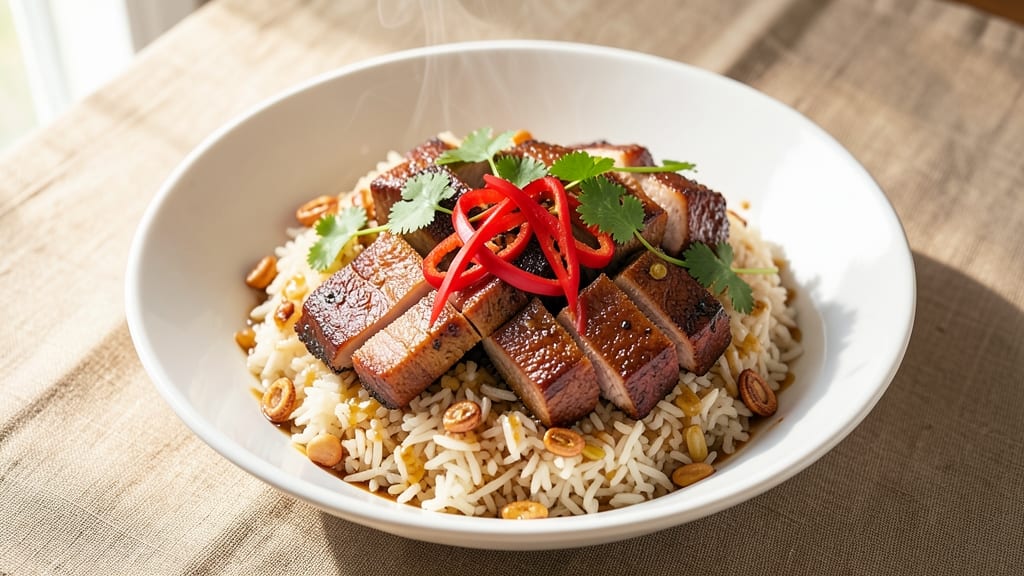
This Chinese roast pork fried rice recipe delivers the perfect harmony of tender, caramelized pork bites and wok-tossed rice with crisp edges and savory depth.
The secret lies in slow-roasting the pork until it's fall-apart tender, then stir-frying it with day-old rice to achieve that signature wok hei—the smoky, aromatic essence that makes it taste restaurant-quality.
I developed this recipe after years of perfecting the balance between protein, rice, and seasonings, ensuring every bite is packed with flavor without being overwhelming.
The process starts with braising pork shoulder until it's rich and juicy, then slicing it into bite-sized pieces that stay tender even after stir-frying.
Day-old rice is essential—it's dry enough to sizzle beautifully in the wok while absorbing the pork's savory juices and the aromatic blend of garlic, ginger, and soy sauce. The vegetables add freshness, while a final drizzle of sesame oil and a sprinkle of scallions elevate the dish to restaurant-worthy perfection.
What you'll end up with is a golden, fragrant fried rice where each forkful delivers crispy rice, succulent pork, and vibrant vegetables all coated in a glossy, umami-rich sauce. The texture contrast—crunchy edges on the rice, tender pork, and fresh vegetables—makes this dish impossible to resist.
This recipe serves as a complete meal, balancing protein, carbs, and vegetables in every bite.
Serve it steaming hot with a side of pickled vegetables or a simple cucumber salad to complement the richness. The leftovers reheat beautifully, making this an ideal dish for meal prep or feeding a crowd. Let's get cooking!
Ingredients for chinese roast pork fried rice
Fifteen ingredients transform into restaurant-quality fried rice with crisp edges and tender pork bites.
| Ingredient | Amount | Notes |
|---|---|---|
| Pork Shoulder 🥩 | 1 ½ lb | Bone-in for flavor, cut into 1-inch cubes |
| Day-Old Jasmine Rice 🍚 | 4 cups | Cooked and cooled, broken into pieces |
| Light Soy Sauce 🥄 | ½ cup | Kikkoman preferred for authentic flavor |
| Dark Soy Sauce 🥄 | 1 tbsp | For deeper color and complexity |
| Sesame Oil 🫒 | 1 tbsp | Toasted, for aroma |
| Garlic Cloves 🧄 | 6 cloves | Minced, fresh preferred |
| Fresh Ginger 🌿 | 2 tbsp | Finely grated, peeled |
| Eggs 🥚 | 2 whole | Fresh, beaten |
| Green Onions 🧅 | ½ cup | Thinly sliced, white and green parts |
| Carrots 🥕 | 1 cup | Diced small, uniform pieces |
| Peas 🌽 | ½ cup | Frozen works, thawed |
| Vegetable Oil 🫒 | ½ cup | High smoke point |
| White Pepper 🌶️ | ½ tsp | Freshly ground preferred |
| Sugar 🍯 | 1 tbsp | White or brown |
| Cornstarch 🌾 | 1 tbsp | For thickening sauce |
The pork shoulder is non-negotiable—bone-in cuts develop deeper flavor during braising. Look for well-marbled pork at Asian markets or the butcher counter, where prices are often better than standard grocery stores. If you can't find bone-in, substitute pork butt, but trim excess fat to avoid greasy rice. The day-old rice must be completely cooled—microwave it uncovered for 2 minutes to dry it out if it's too moist. For the soy sauces, Kikkoman light soy and Lee Kum Kee dark soy are industry standards, though any quality brands work.
No sesame oil? Toasted peanut oil adds similar depth, though the aroma differs slightly. Fresh ginger is ideal, but dried ginger at half the amount works in a pinch—just toast it first for better flavor. Frozen peas are perfectly fine, but thaw them completely before adding to avoid a soggy texture. The cornstarch-sugar slurry is key for that glossy finish—mix it thoroughly to prevent lumps. For extra crunch, add 1/4 cup crispy fried shallots at the end, available at most Asian grocery stores.
Store leftover fried rice in an airtight container for up to 4 days, though it reheats best within 2 days. For maximum crispiness, reheat in a wok or skillet over medium-high heat with a splash of oil. The pork can be pre-braised and refrigerated for 3 days before stir-frying—just slice it thinly to maintain tenderness. Freeze portions in single-serving bags for up to 3 months, separating layers with parchment paper to prevent sticking.
Why You'll Love This Recipe
- One-Pan Magic: I swear by this recipe when I’m too tired to wash extra dishes. Toss everything—pork, rice, veggies—into one hot wok, and the sesame oil’s smoky aroma fills the kitchen before you even flip the spatula. No fancy gadgets, just pure, satisfying chaos that somehow works.
- Umami Bomb: That combo of light and dark soy sauce? It’s the secret weapon here. The dark soy gives it that deep, caramelized richness, while the light keeps it bright and savory. And when you hit it with a quick drizzle of sesame oil at the end? Instantly transport your taste buds to a bustling Hong Kong street stall.
- Leftover Hero: Between us, this dish begs to be made in bulk. The pork stays tender for days, and the rice? Even better the next day—those grains get just crispy enough to soak up all the leftover sauce. I’ve fed a houseful of hangry teens with this, and they’ve never complained (okay, maybe once, but it was my fault for not adding enough pork).
- Budget Stretch: Pork shoulder is cheap, and a single roast feeds the whole family for two meals. Day-old rice? Free if you’re smart about leftovers. And honestly, the ingredients list is so short you’ll forget you’re even saving money—until you see how much is left in your wallet after grocery day. Win.
Step-by-step instructions for Chinese roast pork fried rice
Master this wok-tossed classic with crispy pork bites and perfectly seasoned rice.
Prepare the Roast Pork Shoulder
Cut the 1.5 lb pork shoulder into 1-inch cubes using a sharp chef's knife. The bone-in pieces add rich flavor, so don't remove them. In a small bowl, combine 1 tbsp dark soy sauce, 1 tbsp sugar, and 1 tbsp cornstarch. Toss the pork cubes thoroughly in this marinade, ensuring each piece is evenly coated. Let it rest for 15 minutes at room temperature before cooking.
Heat 0.25 cup vegetable oil in a large wok or skillet over medium-high heat until shimmering. Add the pork in a single layer and sear undisturbed for 3-4 minutes until golden brown on all sides. The pork should develop a caramelized crust—this is key for that signature roast pork flavor. Transfer the seared pork to a plate and set aside temporarily.
Cook the Aromatics and Eggs
In the same wok, add 0.25 cup vegetable oil and heat over medium heat. Add the 6 cloves minced garlic cloves and 2 tbsp finely grated fresh ginger, stirring constantly for 30 seconds until fragrant. The aromatics should sizzle gently without burning—this releases their full flavor. Add the 1 cup diced carrots and 0.5 cup peas, cooking for 2 minutes until the vegetables soften slightly.
Push the vegetables to one side of the wok and pour the 2 beaten eggs into the empty space. Scramble the eggs gently with a spatula, then mix them with the vegetables. Cook for 1 minute until the eggs are just set but still slightly moist. Remove this mixture from the wok and set aside with the pork.
Wok-Toss the Day-Old Jasmine Rice
Add the remaining 0.25 cup vegetable oil to the wok and heat over high heat until smoking. Add the 4 cups day-old jasmine rice, breaking up any clumps with your hands or a spatula. Stir-fry vigorously for 2-3 minutes, using the heat of the wok to dry out the rice and create those coveted crispy bits.
This is where the magic happens—your wok should be hot enough to hear the rice sizzling. If it's not, let the wok heat up for another 30 seconds before continuing. The rice should look dry and slightly golden in spots. Remove the rice from the wok and set aside with the other components.
Combine and Season the Fried Rice
Return the wok to high heat and add 0.5 cup light soy sauce, 1 tbsp sesame oil, and 0.5 tsp white pepper. Let the sauce simmer for 30 seconds until it begins to bubble. Add the cooked rice, pork, egg-vegetable mixture, and 0.5 cup sliced green onions back to the wok. Toss everything together for 2-3 minutes until the rice is evenly coated and heated through.
Taste and adjust seasoning if needed—you may need an additional ½ teaspoon of light soy sauce or a pinch of white pepper to balance the flavors. The fried rice should be savory, slightly sweet from the caramelized pork, and aromatic from the sesame oil. Serve immediately while hot and crispy.
Pro Tips For Making Chinese Roast Pork Fried Rice
- STORE PORK IN SOY SAUCE: I learned this the hard way—soaking the pork shoulder in a mix of light and dark soy sauce (about 1:2 ratio) for at least 4 hours (overnight is better) makes it tender and infused. Skip this, and your pork will taste like plain meat, no matter how well you roast it later.
- CUT PORK INTO UNIFORM BITS: Use a sharp knife and slice the roast pork into ½-inch cubes—small enough to cook fast but big enough to stay intact. Larger chunks take forever to warm through, while smaller ones turn mushy. (Yes, even if you’re impatient like me.)
- FRIED RICE FIRST, PORK SECOND: Cook the day-old rice in the wok before adding the pork—it needs to sizzle and get that perfect crispy texture. Tossing in pork first means you’ll end up steaming it instead of searing. Once the rice is golden, push it to the sides, add pork to the empty pan, and let it crisp up.
- DARK SOY SAUCE LAST: Add dark soy sauce only at the very end—just a splash—to color the rice without making it bitter. Dumping it in early turns your dish into a murky, flavorless mess. (I used to overdo it; now I save it for the final stir.)
Creative variations of this dish
Spicy Sichuan Style
Transform your fried rice with 1 tbsp Sichuan peppercorns and 1 tsp chili oil for a fiery kick. Toast the peppercorns in a dry wok until fragrant, then grind them into a powder. Add them to the rice along with the chili oil during the final toss.
Garnish with thinly sliced red chili peppers and crushed peanuts for texture. This version keeps the pork tender while adding bold, numbing heat. 🌶️
Vegetarian Twist
Replace the pork with 1 cup cubed tofu or shitake mushrooms for a plant-based version. Marinate the tofu in 1 tbsp soy sauce, 1 tsp sesame oil, and ½ tsp sugar before stir-frying.
Add ½ cup bell peppers and ½ cup corn kernels for extra veggie crunch. Use 1 tbsp vegetarian oyster sauce instead of soy sauce for depth. This keeps the dish hearty and satisfying.
Seafood Fusion
Swap the pork for 1 lb shrimp or firm white fish like cod. Toss the seafood in 1 tbsp soy sauce and ½ tsp cornstarch before cooking. Add 1 tbsp fish sauce to the final seasoning for umami.
Garnish with cilantro and a squeeze of lime for brightness. This version is lighter but still packed with flavor, perfect for a summer meal. 🍤
Sweet & Sticky
Add 2 tbsp hoisin sauce and 1 tbsp honey to the final toss for a sweet-savory glaze. Stir in ½ cup pineapple chunks for a tropical twist.
Top with crushed peanuts and sesame seeds for crunch. This variation balances the richness of the pork with fruity sweetness, making it a crowd-pleaser for any occasion.
Breakfast-Style
Incorporate 2 extra eggs scrambled into the rice for extra protein. Add ½ cup diced ham or bacon bits for a Western-Chinese fusion. Use 1 tsp white pepper and ½ tsp black pepper for a bolder flavor.
Serve with a side of steamed egg custard (chawanmushi) for a full breakfast experience. This version is perfect for brunch or a hearty morning meal. 🍳
Regional Cantonese
Use extra-firm tofu instead of pork for an authentic Cantonese-style fried rice. Add 1 tsp Shaoxing wine during the stir-fry for depth. Garnish with crispy fried shallots and dried shrimp for umami. This version emphasizes freshness and light seasoning, staying true to Cantonese cuisine's balance of flavors. 🗺️
Nutrition facts
Frequently asked questions
Why does the recipe call for day-old rice?
Day-old rice is essential because it's dry enough to develop those signature crispy edges when stir-fried. Freshly cooked rice contains too much moisture, which makes it steam instead of sizzle in the wok. The rice should be completely cooled and slightly dry—microwave it uncovered for 2 minutes if it feels too damp. This texture creates that perfect balance of tender and crunchy bites in every forkful.
Can I make this with regular white rice instead of jasmine?
While jasmine rice is traditional for its fragrant aroma, you can use long-grain white rice as a substitute. The texture will be slightly less sticky, but still workable. For best results, use a 1:1.5 ratio of rice to water when cooking and let it cool completely. Short-grain rice like sushi rice will be too sticky and won't achieve the same crispy edges.
How do I prevent the pork from drying out during stir-frying?
The key is proper pre-cooking and timing. First, sear the pork until golden brown but not fully cooked through—it should still be slightly pink inside. Then, when stir-frying, cook the pork for only 1-2 minutes at the end to heat through without overcooking. The residual heat from the wok will finish cooking it while keeping it tender. For extra insurance, slice the pork slightly thinner than 1-inch cubes.
What's the best way to reheat leftovers?
Reheat leftovers in a wok or skillet over medium-high heat with a splash of oil to restore crispiness. Add 1-2 tbsp water and cover for 2-3 minutes to steam the rice slightly, then uncover and stir-fry for another 1-2 minutes to dry out the surface. Microwaving works in a pinch, but the texture won't be as satisfying—cover with a damp paper towel for 30 seconds to prevent drying.
Can I make this dish ahead of time?
The pork can be pre-braised and refrigerated for up to 3 days before stir-frying—just slice it thinly before cooking. For the fried rice, cook it up to 2 days ahead and store in an airtight container. To reheat, spread it on a baking sheet and warm in a 350°F oven for 10 minutes to restore texture. The flavors actually improve overnight as they meld together.